REGA Membership: Why Expats Need Air Rescue Insurance in the Alps
Most expats move to Switzerland for the pristine mountain air and the promise of weekend hikes in the Alps, but few realize that a single misstep on a trail can lead to a financial catastrophe. I remember my first summer in the Bernese Oberland, looking up at the peaks and assuming my standard insurance had me covered, only to discover that a helicopter rescue could cost more than my first car. This guide solves the mystery of REGA membership and why it is a non-negotiable safety net for anyone living in Switzerland.
What Exactly is REGA and Why is it Iconic in Switzerland
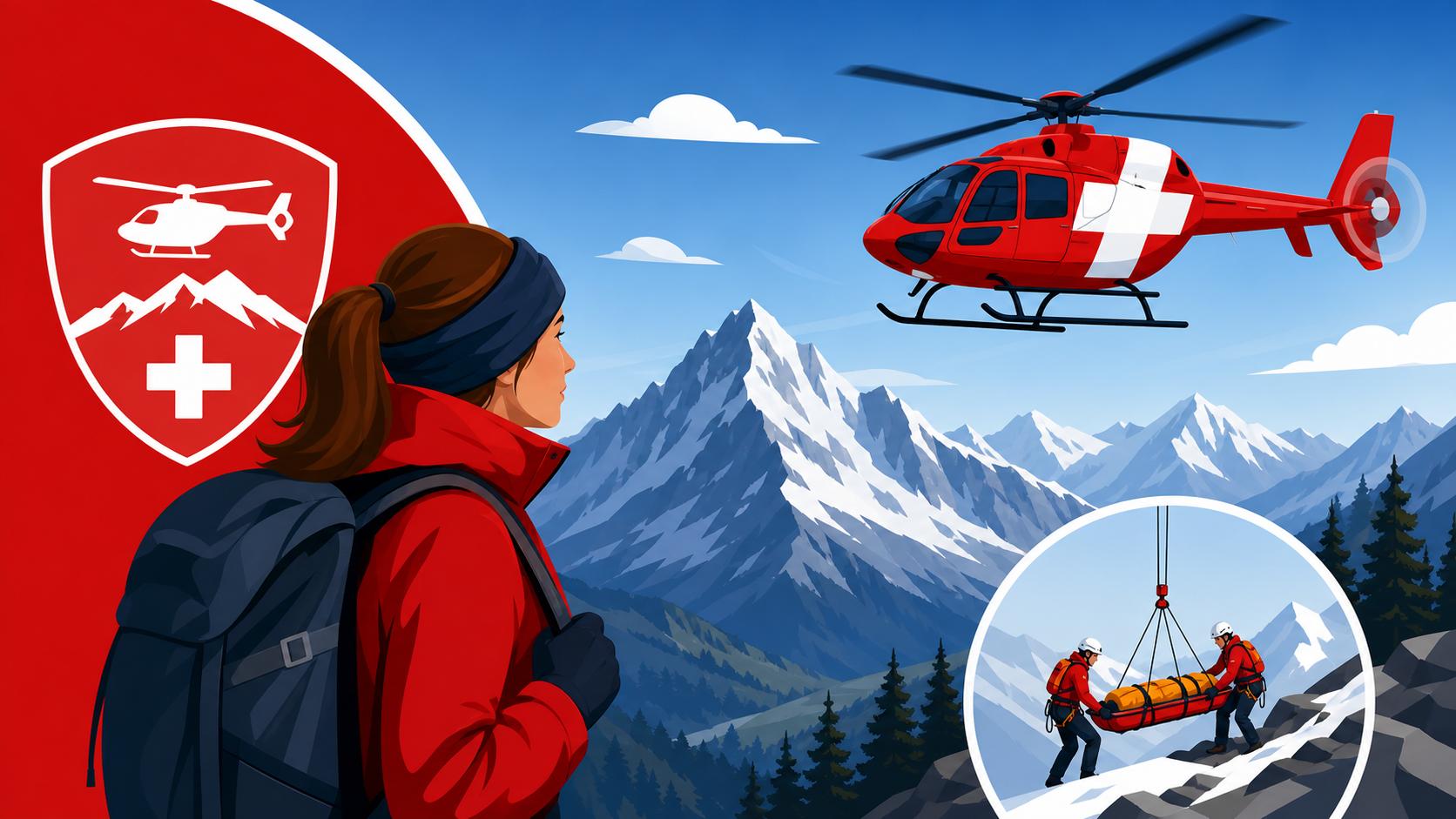
If you have spent more than a week in Switzerland, you have likely seen the distinctive red and white helicopters buzzing toward a mountain peak or landing near a highway. This is REGA, the Swiss Air Rescue Guard. Founded in 1952, it is a non-profit, privately funded foundation that operates under the umbrella of the Swiss Red Cross. For locals, the "red card" is a rite of passage, a symbol of being prepared for the rugged reality of Alpine life.
The Mission of the Swiss Air Rescue Guard
REGA's primary mission is to provide emergency medical assistance by air. They operate a fleet of specialized helicopters and ambulance jets, staffed by highly trained pilots, paramedics, and emergency physicians. Unlike many other countries where air rescue is a purely state-run military or police function, REGA is a foundation supported by its "patrons." They aren't just for mountain climbers; they respond to serious road accidents, farm injuries in remote valleys, and even life-threatening medical emergencies in suburban areas where an ambulance might be too slow.
Understanding how this fits into the broader Healthcare in Switzerland for Expats: The Complete System Overview (2027) is essential. While the Swiss medical system is world-class, it is highly decentralized. REGA acts as the glue that connects remote accidents to high-tech trauma centers in Zurich, Bern, or Geneva.
The Patronage Model Explained
The most confusing part for newcomers is that REGA is not "insurance" in the legal sense. When you pay your annual fee, you become a "patron" (Gönner in German). This distinction is vital. Legally, REGA is not obligated to provide free services. However, their charter allows them to waive the costs of rescue missions for their patrons if those costs are not covered by the person's insurance.
In my experience, this "discretionary" waiver is almost always applied, provided you are a paid-up member. This unique Swiss approach relies on social solidarity. Millions of residents pay a small annual fee, and in return, the foundation ensures that no one is left with a CHF 5,000 bill after being winched out of a canyon. It’s a peace-of-mind purchase that costs less than a decent dinner in Zurich.
The Financial Gap Why Your Basic Health Insurance is Not Enough
Many expats arrive with a sense of security because they have signed up for Understanding KVG/LAMal: Mandatory Basic Health Insurance Explained. They assume "mandatory" means "comprehensive," but the Swiss system has specific gaps, particularly regarding transport and rescue. If you find yourself in a situation where a helicopter is required, the costs can be staggering, and the law is surprisingly stingy.
The 50 Percent Rule for Medical Transport
Under the Swiss Health Insurance Act (KVG), basic insurance only covers 50% of the cost of medically necessary transport, up to a very low annual limit (usually CHF 500 for transport and CHF 5,000 for rescue). While CHF 5,000 sounds like a lot, a single helicopter mission involving a doctor, a winch operator, and a pilot often starts at CHF 3,500 and can quickly exceed CHF 10,000 depending on the complexity and duration.
If you are hiking and suffer a non-life-threatening injury—perhaps a broken leg that prevents you from walking but doesn't put your life in immediate danger—the insurance company might argue that the rescue was not "medically necessary" in the strictest sense, or they will only pay their 50% share of the small cap. You are left to foot the remainder of the bill. This is why Does Basic Swiss Insurance Cover Ambulance Rides? The 50% Rule Explained is one of the first things I tell my friends to research.
Search and Rescue vs Medical Rescue
This is the "trap" many foreigners fall into. There is a legal difference between "rescue" (saving someone from a life-threatening situation) and "search" (looking for someone who is lost). Most basic insurance policies do not cover "search" costs at all. If you get lost in a sudden fog on a ridge and the police have to call in a helicopter to find you, you could be billed for every minute that bird is in the air.
REGA patrons, however, are typically covered for these search costs. For an expat who might not be familiar with how fast the weather changes in the Alps, this is the most valuable part of the patronage. Even if you have a premium global plan from a provider like Cigna Global, having the local REGA membership ensures there are no administrative delays or "out-of-network" disputes when you are sitting on a cold rock at 2,500 meters.
Breaking Down REGA Membership Costs and Coverage
Joining REGA is arguably the easiest administrative task you will ever do in Switzerland. Unlike the paperwork-heavy process of Mandatory Registration: How to Sign Up for Health Insurance Within 90 Days, REGA takes five minutes online. The costs are standardized across the country and haven't changed significantly in years, making it an incredible value.
Annual Contribution Rates for 2026
The pricing for REGA is designed to be accessible for everyone. As of 2026, the rates remain very low:
- Individuals: CHF 40 per year.
- Couples: CHF 80 per year (for two people living in the same household).
- Families: CHF 80 per year (includes parents and all children under the age of 18).
- Small Groups/Flatshares: There are even options for shared households in some cantons.
For the price of a few tubes of high-quality sunscreen or a bulk order of vitamins from iHerb, you cover your entire family for a year. When you consider that a standard ambulance ride in a city like Zurich can cost CHF 700, the CHF 40 contribution for helicopter access is an absolute bargain.
What is Actually Covered for Patrons
While the waiver of costs is at REGA's discretion, it generally covers:
- Rescue Flights in Switzerland: Any helicopter mission triggered by an accident or acute illness.
- Search Operations: Working with the Swiss Alpine Club (SAC) to find missing persons.
- Repatriation Flights: If you are injured abroad and need to be flown back to Switzerland for surgery or recovery, REGA operates ambulance jets for this exact purpose.
- Air Ambulance Coordination: Professional medical advice for patrons who fall ill while traveling outside the country.
I always suggest that expats supplement this with Supplementary Health Insurance (VVG): What It Covers and When to Buy It for broader dental or private ward coverage, but REGA remains the specialist for the "extraction" phase of an emergency.
| Feature | Basic KVG Insurance | REGA Patronage |
|---|---|---|
| Annual Cost | CHF 300 – 600+ monthly | CHF 40 – 80 annually |
| Search Operations | Usually 0% coverage | Often 100% waived |
| Transport Coverage | 50% (capped at CHF 500/year) | Remainder often waived |
| Rescue Coverage | 50% (capped at CHF 5,000/year) | Remainder often waived |
| Intl. Repatriation | Rarely covered | Included for patrons |
| Primary Focus | Hospitals and Doctors | Air Rescue and Extraction |
REGA vs Other Insurance Types Which Do You Need
It is important to understand where REGA fits into the ecosystem of Swiss insurance. It does not replace your health insurance, nor does it replace your Occupational Accident Insurance (UVG): What Happens When You Ski and Crash?. Instead, it acts as a secondary layer that mops up the costs those other policies leave behind.
REGA and UVG (Accident Insurance)
If you are employed in Switzerland for more than eight hours a week, your employer provides UVG. This insurance is actually quite good—it usually covers 100% of medical costs related to accidents, including rescue. So, you might ask: "If my work insurance covers 100%, why do I need REGA?"
The answer lies in the "grey areas." UVG only covers accidents. If you have a heart attack or a stroke while hiking, that is considered an illness, not an accident. In that scenario, your basic health insurance (KVG) kicks in, and you are back to the 50% coverage rule. REGA doesn't care if it was a fall or a fainting spell; they rescue you regardless. Furthermore, if you are traveling abroad, your UVG might have limits that REGA’s international jets don't.
International Coverage and Cigna Global
For many expats, life isn't lived entirely within the Swiss borders. If you are a frequent traveler, you might already have a plan from Cigna Global to cover you in various countries. While these plans are excellent for hospital stays and specialist visits, they may not have the hyper-local logistics that REGA has in the Swiss Alps. REGA's jets are specialized flying ICUs. If you are hospitalized in a country with a lower standard of care, REGA can fly you back to a Swiss university hospital. They coordinate with your primary insurers to make the process seamless.
Real-World Scenarios Where REGA Saves the Day
To truly understand the value, you have to look at how emergencies play out in the Swiss landscape. It’s not always about a dramatic fall off the Eiger; sometimes it’s much more mundane.
The "Twisted Ankle" on a Sunday Afternoon
Imagine you are hiking the path between Männlichen and Kleine Scheidegg. It’s a "leisurely" walk, but you trip and severely break your ankle. You cannot walk, and the path is too narrow for a 4×4 vehicle. The only way out is a helicopter. Because this isn't a life-threatening emergency, your KVG might only pay a fraction of the bill. Without REGA, you might receive a bill for CHF 4,000 for a 15-minute flight. With REGA, that bill is almost certainly waived.
When you're recovering from such an injury, you'll likely be ordering supplements or braces from iHerb to help with the healing process. Those costs add up, so saving thousands on the initial rescue is a massive relief for your household budget.
Winter Sports and the Ski Piste
Skiing is the national sport, but it’s also a leading cause of helicopter missions. If you are involved in a collision on the slopes, the piste rescue team will often call for air support if they suspect a back or neck injury. While your Accident Insurance (UVG): Occupational vs. Non-Occupational Coverage should cover this, having a REGA membership ensures that any gaps in the "search" or "transport to a different canton" are covered without you having to fight with HR or an insurance adjuster.
The Solo Hiker and the REGA App
One of the best perks of being a patron is the REGA mobile app. In a crisis, every second counts. If you are alone and injured, you might not know your exact coordinates. The REGA app allows you to raise the alarm with a single swipe, automatically transmitting your GPS coordinates to the rescue center.
This is much more effective than calling Emergency Numbers 144 vs 112: Which to Call in a Swiss Medical Crisis, as the operators can see exactly where you are on a topographical map. I never go into the mountains without checking that my phone is charged and the app is updated.
How to Become a Member and Stay Safe
Joining is a simple matter of visiting the REGA website and filling out your details. You will receive a physical card in the mail (the famous red card), but these days, everything is digital. Your patronage begins the moment you pay your contribution.
Steps to Take After Joining
Once you have your membership, there are a few things you should do to ensure you're actually prepared:
- Download the App: Install the REGA app and run a test to make sure it has the necessary permissions for your GPS.
- Add Your Family: If you have the family plan, ensure all members are listed. This is crucial for Maternity and Child Healthcare in Switzerland: From Pregnancy to Pediatrics considerations if you’re taking toddlers into the hills.
- Check Your Other Policies: Take a look at The Swiss Franchise System: How Deductibles and Copays Work to see how much you would owe out-of-pocket for the hospital stay after the rescue.
- Carry the Card: Even though it's digital, having the physical card in your hiking pack is a good backup in case your phone dies.
When to Call REGA vs 144
If you are in a city or a town with road access, you should generally call 144 for an ambulance. However, if you are in the terrain—mountains, forests, or remote lakes—and the situation is urgent, use the REGA app. The dispatchers are trained to decide whether a helicopter or a land-based rescue is more appropriate. They work closely with the Emergency Medical Services: Ambulances, REGA, and Crisis Protocols to ensure the fastest response.
Integration into the Swiss Way of Life
Being a REGA patron is more than just a financial decision; it’s part of the local culture of responsibility and preparedness. The Swiss take great pride in their mountains, but they also respect their dangers. By contributing your CHF 40 or 80, you are supporting a service that keeps everyone safe, from the elite climber to the tourist who got a bit too close to a cow in a pasture.
For an expat, this is one of those small details that makes you feel "integrated." When you can tell your visiting parents not to worry about the hike because "we have REGA," you’ve truly mastered one of the quirks of living in the Helvetia. It allows you to focus on the beauty of the landscape and the health of your family, perhaps supported by products from iHerb or the security of a Cigna Global policy, without the hovering fear of a catastrophic rescue bill.
If you are still navigating the early days of your move, make sure to read up on Finding Medical Care in Switzerland: Doctors, Specialists, and Referrals so you know where you’ll be taken once the helicopter lands. Switzerland is a land of incredible beauty, but it rewards the prepared. REGA is the ultimate tool for that preparation.
Disclaimer
The information provided in this article is for general informational purposes only and does not constitute legal or financial advice. REGA patronage is not a contract of insurance, and the waiving of rescue costs is at the sole discretion of the REGA foundation. While the information is based on current 2026 standards, policies and costs may change. Always consult directly with REGA and your primary health insurance provider to understand your specific coverage limits.