Tipping and Restaurant Etiquette in Switzerland for Newcomers
Ah, the eternal expat question, isn't it? You've just arrived in Switzerland, landed a fantastic job, found a surprisingly quiet apartment, and are finally venturing out for your first authentic Rösti or Fondue. The meal is delightful, the service impeccable, and then the moment of truth arrives: the bill. You stare at it, then at the server, then at your partner, a silent panic rising. How much do you tip? Is it already included? Will you offend them by tipping too little, or worse, by tipping too much? Believe me, we've all been there. This guide is here to unravel the often-confusing world of tipping and restaurant etiquette in Switzerland, so you can dine out with confidence and enjoy the culinary delights this country has to offer.
The Great Tipping Conundrum: Is It Expected in Switzerland?
Let's cut right to the chase, because this is often the biggest source of anxiety for newcomers. Unlike countries such as the United States, where tipping forms a significant portion of a server's income, or even places like the UK where a service charge might be added, Switzerland operates on a different system entirely. This isn't just a cultural nuance; it's enshrined in law, and understanding it is key to navigating your dining experiences.
The Swiss "Service Included" Reality
Here's the golden rule, the one you need to tattoo on your brain (not literally, of course, that would be excessive!): Service is legally included in all prices in Switzerland. This has been the case since 1974. What does that mean for you? It means that the price you see on the menu, whether it's for a gourmet meal in Geneva or a simple lunch in a Bernese Beizli, already factors in the cost of service. Waitstaff and other service personnel in Switzerland are paid proper, respectable wages, often protected by collective bargaining agreements (GAVs). They don't rely on your tips to make a living wage.
This is a huge relief for many expats, but it also creates a lingering doubt: if it's included, why do some people still tip? The answer lies in the nature of Swiss generosity and appreciation. A tip here isn't a wage subsidy; it's a genuine gesture of thanks for exceptional service. Think of it as a bonus for going above and beyond, not a mandatory percentage. If you've just come from a country where 15-20% is the absolute minimum, it takes a while to recalibrate your brain to this reality. You might initially feel guilty leaving "just" a few francs, but trust me, it's perfectly fine. No one is going to chase you down the street for not leaving a 10% tip.
When and How Much to Tip Or Not To
So, with service included, when do you tip, and how much? This is where it gets a little more nuanced, depending on the situation and how pleased you were with your experience.
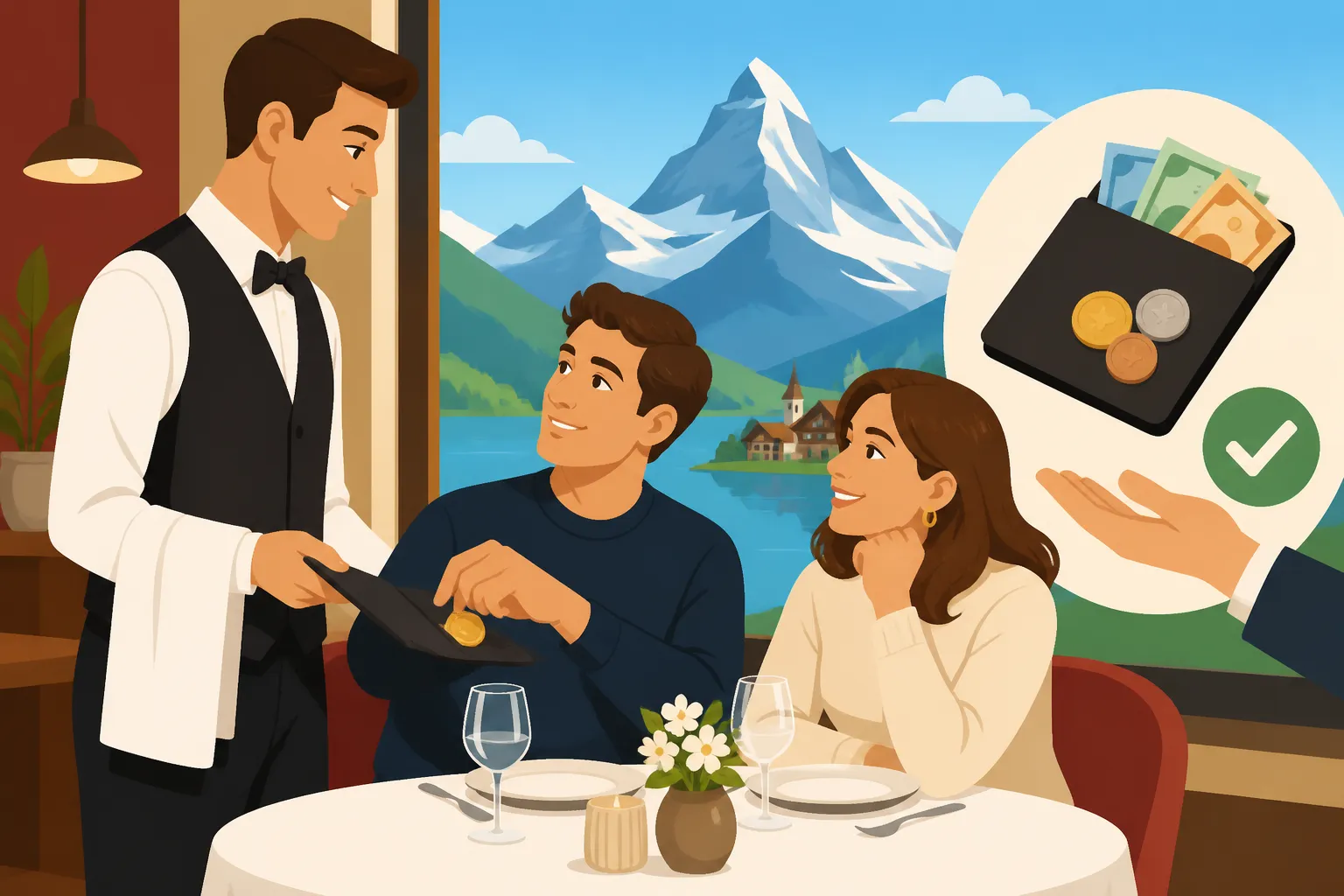
Generally, for good service, the most common practice is to round up the bill to a convenient, higher amount. For example, if your bill is CHF 47, you might say "Make it 50, please." If it's CHF 82, you might round up to CHF 85 or CHF 90. For larger bills, say over CHF 100, leaving an extra CHF 5-10 for excellent service is considered a kind gesture. It's more about convenience and showing appreciation than adhering to a strict percentage.
Let's consider a few scenarios:
- A Casual Lunch: You grab a quick bratwurst and a drink for CHF 22. You might just pay CHF 22. Or, if the service was speedy and friendly, you could round up to CHF 23 or CHF 25.
- A Nice Dinner: Your party of four has a lovely meal, and the bill comes to CHF 185. You were happy with the attentive server and delicious food. You might tell them to make it CHF 190 or even CHF 200. This is seen as a very generous tip, reflecting your satisfaction.
- Just Coffee: You're at a café, and your cappuccino costs CHF 5.20. You hand over a CHF 10 note. You might just take your change. Or, if the barista was particularly charming, you could say "Keep the change" for the 80 rappen.
- Subpar Service: And here's the best part – if the service was genuinely bad, slow, or unfriendly, you are absolutely not obligated to tip. Simply pay the exact amount. This is an accepted practice and won't cause a scene. It's a quiet way of communicating your dissatisfaction, though most Swiss servers are professional and courteous.
Paying with Card vs. Cash:
If you're paying with cash, it's easy: just tell the server the amount you want to pay. For example, if the bill is CHF 63 and you want to leave CHF 2, you hand them a CHF 100 note and say "65."
When paying by card, many payment terminals will prompt you to enter the amount first, or ask if you want to add a tip. If it asks, you can add your preferred extra amount (e.g., CHF 2, CHF 5) before swiping your card or entering your PIN. If it doesn't prompt, you can tell the server your desired total, and they will usually adjust it manually before you tap or insert your card.
What about over-tipping?
Sometimes, new expats, used to higher tipping percentages, might leave a 15-20% tip. While certainly not illegal, it can sometimes be met with a confused look or even a polite attempt by the server to return some of the money, as if you've made a mistake. It's not meant as an insult, but rather a reflection of the different expectations. A tip that's too generous might actually feel awkward for some Swiss service staff. Aim for genuine appreciation, not obligation.
Navigating Swiss Restaurant Culture Beyond the Tip
Beyond the tipping question, there are other aspects of Swiss dining etiquette that might differ from what you're used to. These cultural norms contribute to the overall dining experience and understanding them will make you feel more at home.
Reservation Habits and Punctuality
Let's be frank: the Swiss like things organized, and dining out is no exception. In most popular restaurants, especially in major cities like Zurich, Geneva, or Basel, and particularly on weekend evenings, reservations are highly recommended, if not essential. Just walking in and expecting a table for four at 7 PM on a Saturday in a trendy spot is often a recipe for disappointment. Always best to call ahead or book online. Many establishments now use online booking systems, making it straightforward.
Punctuality is also key. If you've booked a table for 7:30 PM, the expectation is that you'll arrive at 7:30 PM. Running a little late? A quick phone call to let the restaurant know is not just polite, it's expected. They appreciate knowing if they need to hold your table or adjust their schedule. Swiss people value efficiency, and respecting their time helps everything run smoothly.
For those planning a special meal, perhaps in a charming restaurant you discovered while on a Weekend Getaways from Switzerland: Easy Cross-Border Escapes adventure or after an exciting day trip booked through a platform like GetYourGuide, remember to secure your reservation well in advance. Planning is part of the Swiss way!
Decoding the Bill and Payment Methods
Once your meal is done and you're ready to leave, don't expect the bill to magically appear at your table. Swiss servers generally won't bring the bill until you explicitly ask for it. A polite "Zahlen bitte" (German), "L'addition s'il vous plaît" (French), or "Il conto per favore" (Italian) will do the trick, depending on the language region.
Payment Options:
- Cash: Still widely accepted and often preferred by smaller establishments.
- Cards: Debit cards (Maestro, PostFinance Card) and credit cards (Visa, Mastercard, American Express) are universally accepted in most restaurants.
- TWINT: This is Switzerland's incredibly popular mobile payment app. If you plan to live here, you need to get on the TWINT train. Many restaurants, shops, and even street vendors accept it. It's fast, secure, and very Swiss. If you're keen on understanding more about how payments work here, you might find our guide on Credit Cards vs Debit Cards: Navigating TWINT and Cashless Payments quite useful.
Splitting the Bill:
Unlike some cultures where everyone throws in their share regardless, in Switzerland, it's common to ask to split the bill, especially among friends or colleagues. The server will usually ask "Zusammen oder getrennt?" (Together or separate?), "Ensemble ou séparé?" or "Insieme o separatamente?" If you want to split, they'll usually ask each person what they had, or you can suggest splitting it equally. They are usually very efficient about this. However, it's always easier for the staff if you decide before the bill is presented.
Dining Pace:
Swiss dining tends to be a more leisurely affair than in some faster-paced countries. Meals are meant to be enjoyed, not rushed. Don't expect your server to hover or bring the next course immediately after you finish the last. This isn't poor service; it's a cultural norm. If you need something, a polite glance or subtle hand gesture will usually get their attention.
Beyond Formal Dining: Casual Eats and Special Situations
While the previous sections focused mainly on traditional restaurant settings, Switzerland has a diverse food scene. Tipping and etiquette can vary slightly depending on the type of establishment.
Cafés, Bars, and Takeaways
- Cafés: For just a coffee or a quick pastry at a café, tipping is less common. You might round up to the nearest franc if paying with cash, or just pay the exact amount. If you're sitting for an hour with table service, a small round-up is a nice gesture for good service, similar to a casual lunch. If you're interested in the vibrant coffee scene, our guide on Swiss Coffee Culture and the Best Cafés in Major Cities offers some great insights.
- Bars: At a bar, if you're just ordering a drink at the counter, tipping is generally not expected. If you have table service and order multiple rounds, you might round up the bill by a few francs (e.g., CHF 2-5) if the bartender was attentive and friendly.
- Takeaways/Food Trucks/Self-Service: Absolutely no tipping expected here. The prices are fixed, and you're not receiving personal table service.
- Food Delivery Services: For delivery riders, a small tip of CHF 2-5 is appreciated, but still not mandatory. It's purely a gesture of thanks for bringing your food right to your door.
Specific Service Scenarios: Hairdressers, Taxis, and More
- Hairdressers/Barbers: For a good cut or color, it's common to round up the bill by CHF 5-10 or simply give a small cash tip directly to the stylist.
- Taxis: Similar to restaurants, rounding up to the nearest convenient franc is customary for a pleasant ride. For example, if the fare is CHF 28.50, you might pay CHF 30.
- Coat Check: If there's a coat check service at a fancy restaurant or club, there might be a small fixed fee (e.g., CHF 2-3). If it's free, leaving a CHF 1-2 coin is a nice touch.
- Toilet Attendants: While less common in Switzerland than in some other European countries, if you encounter a toilet attendant, a small coin (50 rappen or CHF 1) is customary.
- Hotel Staff (Housekeeping, Porter): For housekeeping, leaving a few francs (CHF 2-5) per night for an extended stay is a thoughtful gesture, often left on the pillow. For a porter who helps with luggage, CHF 2-5 per bag is appropriate. If you're booking your stay through a platform like
Booking.com, remember that these smaller tips are often separate from the booking cost. - Tour Guides: If you book a private tour or a small group experience, for example, exploring a city or a Swiss Chocolate: Factory Tours, Tastings, and the Best Brands experience, tipping your guide is more common. For an excellent half-day tour, CHF 10-20 per person is a good guideline. For a full-day tour, CHF 20-50 per person could be appropriate, especially if they went above and beyond. Using a platform like
GetYourGuidefor booking tours means you can often see reviews that might mention tipping culture for specific guides.
The Art of the Apéro
One of the most delightful aspects of Swiss social life is the Apéro (short for apéritif). This isn't quite a meal, but it's a crucial part of the social fabric. An Apéro is typically a pre-dinner gathering for drinks and small snacks, often held in a bar, a dedicated "Apéro" venue, or even at a private home. The snacks can range from simple crisps and nuts to elaborate platters of cheese, Gipfeli (croissants), mini-sandwiches, and local specialties.
The atmosphere is usually relaxed and social. Tipping etiquette here generally follows the bar rules: if you're getting drinks at a counter, no tip is expected. If there's table service and you're having several rounds, a small round-up of the bill for good service is appreciated. However, if it's a self-service buffet-style Apéro, or a private gathering, tipping simply isn't a thing. Our guide on Navigating the Apéro Culture: Social Etiquette for After-Work Drinks dives much deeper into this wonderful tradition.
To give you a clearer picture, here's a quick reference table for tipping in various Swiss scenarios:
| Service Type | General Tipping Expectation | Suggested Amount (for good service) | Payment Method Notes |
|---|---|---|---|
| Restaurants (Table Service) | Not mandatory, but appreciated | Round up to nearest CHF 5-10 for small bills, CHF 5-10 for larger bills (5-10%) | Can add on card machine, or state desired total with cash. |
| Cafés | Less common | Round up to nearest franc (CHF 1-2) if sitting down, or exact change for takeaway. | Cash preferred for small round-ups. |
| Bars (Table Service) | Not mandatory | Round up to nearest CHF 5 (or 5-10% for large tabs) | Cash preferred for smaller amounts. |
| Takeaways/Food Trucks | Not expected | CHF 0 | Exact payment. |
| Food Delivery | Appreciated | CHF 2-5 | Can often add via app, or cash to driver. |
| Taxis | Common | Round up to nearest CHF 5 | Can add on card terminal or cash. |
| Hairdressers/Barbers | Common | CHF 5-10 | Usually cash directly to stylist. |
| Hotel Porter | Common | CHF 2-5 per bag | Cash to porter. |
| Hotel Housekeeping | Thoughtful | CHF 2-5 per night | Cash left on pillow. |
| Tour Guides | More common | CHF 10-20 (half-day), CHF 20-50 (full-day) per person | Cash directly to guide. |
Knowing these norms will not only save you from awkward moments but also help you settle into the rhythm of Swiss life. Whether you're enjoying some delicious Regional Swiss Cheeses: Gruyère, Emmental, Appenzeller, and More or diving into a hearty Fondue and Raclette Culture: How and When the Swiss Eat Them, understanding the local customs will ensure you have a truly authentic and enjoyable experience. And remember, the Swiss appreciate genuine politeness and a simple "Danke" or "Merci" goes a very long way!
Disclaimer
Please remember that while this guide provides comprehensive and up-to-date information based on common practices, individual experiences may vary. Tipping culture can be subtly influenced by specific cantons, types of establishments, and individual staff. Always use your best judgment, and if in doubt, a small gesture of appreciation for excellent service is always welcome in Switzerland.