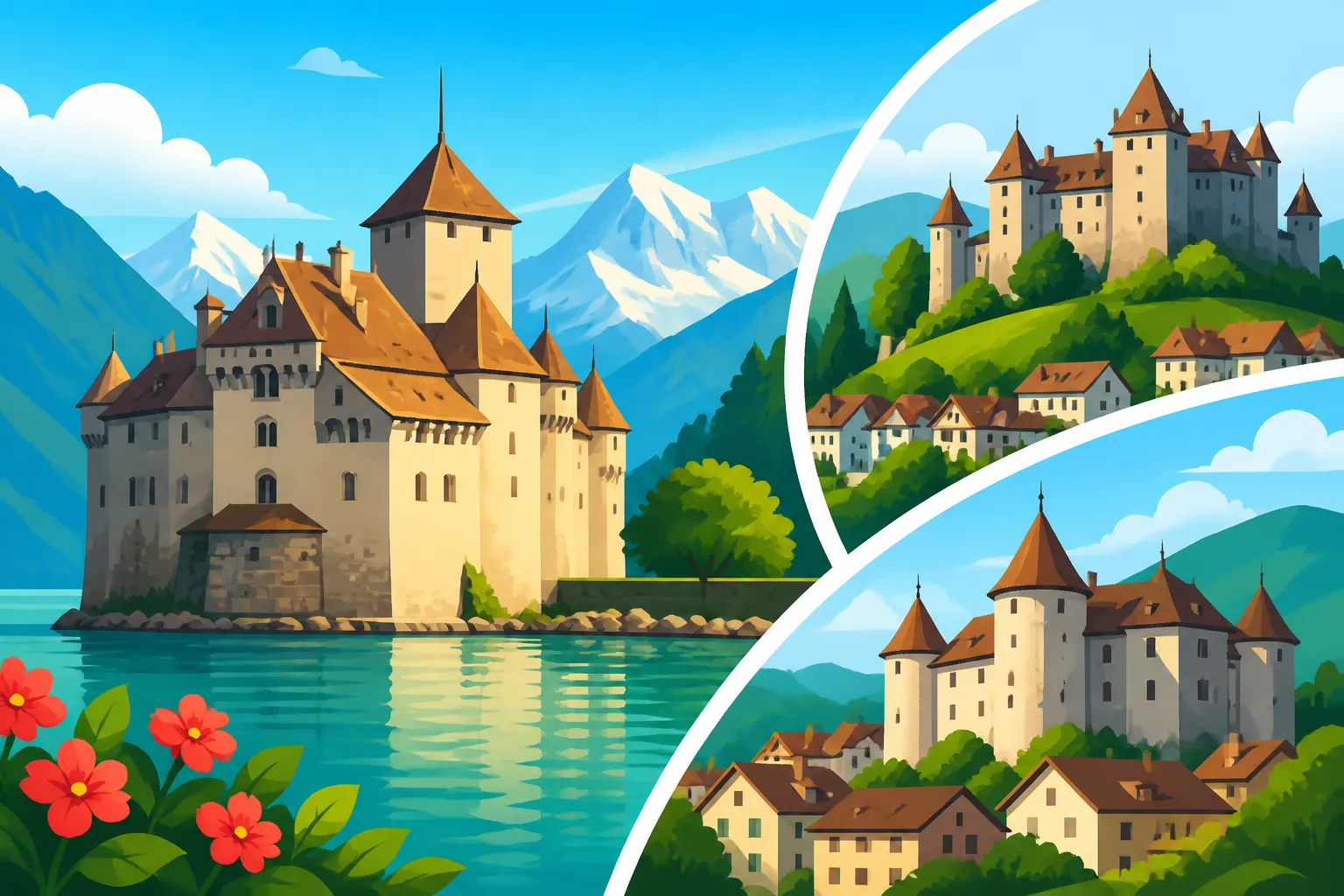
Castles to Visit in Switzerland: Chillon, Gruyères, and More
Ah, Switzerland! When you first arrive, everyone talks about the mountains, the chocolate, the precision trains, and perhaps, eventually, the baffling health insurance system. But one aspect that often gets overlooked, especially by us expats caught up in the daily grind, is the sheer historical richness. It's not just about shiny new things here; this country is absolutely dotted with magnificent, often fairytale-like castles and fortresses, each with its own story. Forget the idea that Switzerland is just clean and modern; it's also wonderfully ancient in places, and exploring its castles is a fantastic way to peel back those layers. This guide is all about helping you discover some of the most captivating castles in Switzerland, from the famous lakeside fortresses to hidden gems in medieval villages, making sure you don't miss out on these incredible slices of history.
The Regal Lakeside Legend: Château de Chillon
Let's kick things off with arguably the most iconic castle in all of Switzerland, one that has graced countless postcards and even inspired Lord Byron: Château de Chillon. It's not just a castle; it's a breathtaking experience that feels like stepping right into a medieval painting.
Where History Meets Lake Geneva's Azure Waters
Imagine a majestic stone fortress rising directly from the crystal-clear waters of Lake Geneva, with the snow-capped Alps providing a dramatic backdrop. That, my friends, is Château de Chillon. Located near Montreux in the Vaud canton, this castle isn't just picturesque; it's steeped in over a millennium of history. It began as a strategic Roman outpost, controlling the vital passage between Northern and Southern Europe through the Great St. Bernard Pass. Over centuries, it evolved from a simple fortress into a luxurious residence for the Counts of Savoy, and then later a state prison under Bernese rule.
Walking through Chillon is an absolute journey through time. You'll explore medieval great halls with their intricate wooden ceilings, underground dungeons where prisoners like the monk François Bonivard were chained (his story was immortalized in Byron's poem "The Prisoner of Chillon"), and the private chambers of the Dukes of Savoy, complete with period furniture and impressive armories. The transition from the stark, functional dungeons to the more ornate living quarters above ground is quite striking and really drives home the different eras and purposes of the castle. Don't forget to climb the tower for some truly panoramic views of the lake and mountains – it's worth every step! This place truly transports you, and if you're exploring the area, it pairs perfectly with other nearby attractions mentioned in our guide on Day Trips from Geneva: Montreux, Gruyères, and the Lavaux Vineyards.
Getting There and Making the Most of Your Visit
Getting to Chillon is delightfully easy, which is a common Swiss advantage, thankfully. It's situated right on the main road between Montreux and Villeneuve. If you're coming by train, which I highly recommend for the scenic journey, take an SBB train to Montreux. From there, you can either take a pleasant 45-minute walk along the lakeside promenade (highly recommended on a sunny day!), hop on a local bus (line 201) which stops right at the castle, or even arrive by boat. A boat trip from Montreux or Vevey across Lake Geneva, pulling up right to the castle, offers an unforgettable approach and stunning photo opportunities from the water. You can often find good deals on train tickets through platforms like Omio if you book in advance, especially outside peak hours.
Once you're there, plan to spend at least 2 to 3 hours exploring. There's a lot to see, and the self-guided tour with an audio guide (available in many languages) is incredibly informative. If you have the Swiss Travel Pass, entry is included, which is a fantastic perk. For those without, check the official website for current ticket prices and opening hours; they vary by season. You might also find combo tickets with nearby attractions through sites like GetYourGuide, which can offer good value. After your visit, a stroll back to Montreux offers plenty of lakeside cafes to reflect on the history you've just absorbed.
Gruyères Castle: A Walk Through Medieval Cheese Country
From the shores of Lake Geneva, let's head inland to a completely different, yet equally enchanting, castle experience: Gruyères Castle, nestled in the heart of the Fribourg canton. This isn't just about a castle; it's about an entire perfectly preserved medieval village perched on a hilltop.
The Fairytale Village and its Grand Fortress
Le Gruyères, as the village is known, feels like something out of a storybook. Cobblestone streets, charming houses, and, of course, the famous Gruyère cheese makers. At the very top, dominating the landscape, sits the magnificent Gruyères Castle. Unlike Chillon's lakeside drama, Gruyères offers classic medieval hilltop charm with sprawling panoramic views of the surrounding pre-Alpine landscape.
The castle itself dates back to the 13th century and was home to the Counts of Gruyères for over 500 years. The tour guides you through various eras, from medieval architecture to Renaissance art and even Romantic-era furnishings, reflecting the different families and periods of its occupation. You'll see beautiful stained glass, impressive tapestries, the Knights' Hall, and the Countess's chamber. What I particularly love about Gruyères is how integrated the castle feels with the village below. You can spend an entire day here, soaking in the atmosphere, exploring the village, and perhaps indulging in some local culinary delights, as outlined in our article on Swiss Food and Drink Culture: Regional Specialties and Dining Etiquette. And yes, the famous H.R. Giger Museum and Bar are also here, offering a stark and fascinating contrast to the medieval surroundings – definitely worth a peek if you're into sci-fi art.
Immersing Yourself in the Gruyères Experience
Reaching Gruyères is also straightforward. It’s well-connected by SBB trains, often requiring a change at Bulle, and then a short regional train ride up to Gruyères station. From the station, it’s a pleasant uphill walk through the village to the castle entrance. Again, checking Omio for train schedules and tickets is a smart move. If you’re driving, there’s parking available at the base of the village, and then it’s a pedestrian-only ascent, which really adds to the charm.
Give yourself a good 1.5 to 2 hours for the castle itself, plus ample time to wander the village, visit the Gruyère cheese factory (which is at the bottom of the hill, near the train station), and enjoy a traditional fondue or raclette. Seriously, you have to try the local cheese! The castle often hosts temporary exhibitions or events, so check their schedule before you go. The entry fee is reasonable, and again, the Swiss Travel Pass covers it. For longer stays, Booking.com can help you find cozy hotels right within the medieval village or in the charming towns nearby.
Beyond the Big Two: Other Swiss Castle Gems
While Chillon and Gruyères often steal the spotlight, Switzerland is home to many other incredible castles, each offering a unique glimpse into the past. Don't limit yourself – venture out and discover these lesser-known, but equally captivating, fortresses.
Schloss Thun: A Historic Icon with Panoramic Alpine Vistas
If you find yourself in the Bernese Oberland, Schloss Thun is an absolute must-see. Standing proudly above the historic town of Thun and overlooking the turquoise waters of Lake Thun, this 12th-century castle is instantly recognizable by its four distinctive corner towers. It was once the seat of the powerful Zähringen family and later the Bernese bailiffs.
What makes Schloss Thun truly special are its breathtaking views. From the castle's towers, you get a full 360-degree panorama of the town, the lake, and the majestic Bernese Alps – truly spectacular on a clear day. Inside, the castle now houses a museum showcasing the region's history, from medieval artifacts to traditional crafts. The centerpiece is the magnificent Knights' Hall, a vast, well-preserved medieval hall that gives you a real sense of its former grandeur. This makes for a perfect day trip from Bern, as explored in our guide on Day Trips from Bern: Thun, Interlaken, and the Emmental.
Getting to Thun is easy by SBB train. From the station, it's a short, albeit uphill, walk through the charming old town to the castle. Plan for about 1.5 to 2 hours inside the castle and museum, plus plenty of time to explore the lovely town of Thun, perhaps even combining it with a boat trip on Lake Thun.
The Three Castles of Bellinzona: A UNESCO World Heritage Site
For something truly unique, head south to the Italian-speaking canton of Ticino and discover the Castles of Bellinzona. This isn't just one castle; it's a trio of formidable fortresses – Castelgrande, Montebello, and Sasso Corbaro – that together form a UNESCO World Heritage site. Their strategic importance was immense, controlling access through the Alpine passes.
Castelgrande is the oldest and most imposing, rising directly from a rocky outcrop in the center of Bellinzona. It offers fantastic views and houses two museums within its walls. You can reach it via a lift from the city center, which is a surprisingly modern touch for such an ancient site! Montebello Castle sits slightly higher, connected to the city walls, and now houses the Archaeological and Civic Museum. Finally, Sasso Corbaro is the highest and most isolated, offering the most expansive views and housing the Museum of Art and Tradition of the Canton of Ticino.
Exploring all three castles requires a full day, especially if you want to soak in the atmosphere and visit the museums. There's a tourist train that connects them, or you can enjoy the walks between them (though be prepared for some inclines!). This cluster of castles really demonstrates medieval defensive architecture at its finest and provides a fascinating insight into Switzerland's historical connections with Italy.
Aigle Castle: Vineyards and Viticulture History
Nestled among the vineyards of the Chablais region in the canton of Vaud, Aigle Castle presents a different kind of charm. This 12th-century fortress, with its impressive towers and defensive walls, is beautiful in its own right, but what truly sets it apart is its unique focus: it houses the Museum of Vine and Wine.
If you're a wine enthusiast, this castle is a must-visit. You can explore the castle's historical rooms and then delve into the fascinating world of viticulture, learning about winemaking techniques, the history of Swiss wine, and, of course, sampling some local vintages. The views from the castle over the terraced vineyards and towards the surrounding mountains are absolutely stunning. It’s a wonderful way to combine history with a taste of local culture, offering a unique perspective that differs from the more military-focused castles.
Aigle is easily accessible by train, and the castle is a pleasant 15-minute walk from the station. Give yourself a couple of hours here, more if you plan to do a deep dive into the wine museum and enjoy a tasting. It's a fantastic stop if you're exploring the Vaud region and its famous wine trails.
Practicalities for Your Swiss Castle Adventures
Venturing out to explore these magnificent structures requires a little planning, but with Switzerland's excellent infrastructure, it's usually a breeze. Here are some pointers to ensure your castle visits are smooth and enjoyable.
Getting There: Public Transport Reigns Supreme
Seriously, Switzerland's public transport system is a marvel. For nearly every castle mentioned, you can reach it efficiently by train and/or bus. The SBB (Swiss Federal Railways) network is extensive, punctual, and comfortable. I can't stress this enough: invest in a The Half-Fare Travelcard (Halbtax): The Must-Have Pass for Swiss Residents if you plan to do even a few day trips, or consider the full Generalabonnement (GA) if you're a frequent traveler. It will save you a ton on fares.
You can check all train and bus connections directly on the SBB website or app. Platforms like Omio can also be helpful for planning longer journeys and comparing routes. Most castle websites will also provide detailed directions for public transport. Driving is an option, of course, but navigating city centers and finding parking can be a hassle, especially in popular tourist areas. Plus, who wants to worry about parking when you could be gazing at a medieval fortress?
Tickets, Tours, and Smart Savings
Entry fees for castles can vary, but generally, they are in the range of CHF 10-15 for adults. Many offer discounts for students, seniors, and children.
- Swiss Travel Pass: As mentioned, if you have a Swiss Travel Pass, many major castles, including Chillon and Gruyères, offer free entry. This pass is a game-changer for tourists and even some residents who plan extensive travel.
- Family Passes: Some castles offer family tickets, which can be more economical than buying individual tickets.
- Online Booking: While not always strictly necessary, booking tickets online in advance can save you time queuing, especially during peak season. Websites like GetYourGuide sometimes offer combination tickets that bundle castle entry with other nearby attractions or even guided tours, which can be a convenient way to organize your day.
- Audio Guides: Most major castles offer excellent audio guides in multiple languages. These are invaluable for understanding the history and significance of each room and artifact. Don't skip them!
When to Visit and What to Expect
Switzerland's castles are beautiful year-round, but the experience can certainly change with the seasons.
- Spring and Autumn: These are arguably the best times. The weather is usually mild, the crowds are thinner, and the surrounding landscapes are stunning – blooming flowers in spring, vibrant foliage in autumn.
- Summer: While beautiful, be prepared for more tourists, especially at popular spots like Chillon. Go early in the morning or later in the afternoon to avoid the busiest times.
- Winter: Many castles remain open in winter, and they can look incredibly atmospheric dusted with snow. Just be aware that some outdoor areas or connecting paths might be slippery, and opening hours might be reduced. Check ahead!
Always wear comfortable shoes, as you'll be doing a lot of walking, often on uneven cobblestones or up many stairs. And don't forget your camera – you'll want to capture these magnificent structures!
Beyond the Walls: Making a Full Day of It
A castle visit doesn't have to be just about the castle itself. Many are located in regions rich with other attractions, offering fantastic opportunities to combine history, culture, and nature for a truly memorable Swiss day out.
Culinary Delights and Local Flavors
As you might have gathered from our mention of Gruyères, many castles are located in regions famous for their food. Why not pair your medieval exploration with a local gastronomic experience? After visiting Gruyères Castle, head down to the village for an authentic cheese fondue or raclette. Near Chillon, you're on the shores of Lake Geneva, so fresh fish from the lake is a delicious option, perhaps with some local Lavaux wine. Aigle, with its wine museum, obviously invites you to sample the local vintages.
These culinary stops aren't just about eating; they're an integral part of understanding the local culture and economy that sustained these castles and their inhabitants over centuries. Exploring local markets or visiting small producers can add another layer of authenticity to your trip.
Overnight Stays and Extended Exploration
While many castles make for fantastic day trips, some areas truly deserve an overnight stay or even a weekend. This allows you to explore at a more relaxed pace, enjoy the evening ambiance, and perhaps visit multiple attractions. For instance, staying in Montreux allows you to fully appreciate Lake Geneva, visit Chillon, and even take a scenic train journey deeper into the Alps. Staying in the Bellinzona region lets you explore all three castles without rushing, and maybe even hop across the border into Italy.
Booking.com is an excellent resource for finding accommodation, whether you're looking for a charming boutique hotel in a medieval town or a modern stay with mountain views. Sometimes, staying just outside the main tourist hubs can offer more local experiences and better value.
Understanding the Historical Tapestry
Swiss castles, whether grand fortresses or elegant châteaux, tell a fascinating story of a nation at a crossroads. They protected vital trade routes, served as administrative centers for powerful feudal lords, and witnessed centuries of shifting alliances and local conflicts before Switzerland evolved into the neutral, federal state we know today.
As you wander through these ancient stones, remember that you're walking in the footsteps of dukes, knights, prisoners, and ordinary people whose lives were shaped by these very walls. Each castle is a testament to human ingenuity, power struggles, and the enduring beauty of architectural heritage. They are a tangible link to a past that often feels very distant in the modern, efficient Switzerland, reminding us that this country has layers of rich, complex history waiting to be discovered.
| Castle Name | Canton | Main Highlight | Estimated Visit Time | Cost Range (Adult) |
|---|---|---|---|---|
| Château de Chillon | Vaud | Lakeside setting, Byron's dungeons | 2-3 hours | CHF 13-15 |
| Gruyères Castle | Fribourg | Medieval village setting, Giger Museum nearby | 1.5-2 hours | CHF 12-14 |
| Schloss Thun | Bern | Panoramic Alpine views, Knights' Hall | 1.5-2 hours | CHF 10-12 |
| Bellinzona Castles (3) | Ticino | UNESCO site, three strategic fortresses | Full day (for all 3) | CHF 8-10 (each) |
| Aigle Castle | Vaud | Wine museum, vineyard views | 1.5-2 hours | CHF 10-12 |
Disclaimer
Please remember that information regarding opening hours, ticket prices, and transport options can change. While I strive to provide the most accurate and up-to-date details, it is always best to check the official websites of the castles and public transport providers (like SBB) before planning your visit. Enjoy your historical explorations in Switzerland!