Buying a Used Bicycle: Checking Frame Numbers for Stolen Bikes
Finding a reliable second-hand bike in Switzerland can feel like a high-stakes scavenger hunt where the prize is a commute that doesn't cost a fortune. I remember my first week in Basel, staring at the rows of shiny commuter bikes and wondering how a "bargain" on a local marketplace could turn into a legal nightmare if the police decided to check my frame number. This guide solves the anxiety of navigating the used bike market by teaching you exactly how to verify frame numbers and spot red flags before you hand over your hard-earned Swiss francs.
The Cultural Landscape of the Swiss Used Bike Market
Switzerland is a cycling paradise, but its high-value bike market makes it a primary target for professional theft rings and opportunistic thieves alike. While you might assume that a country known for its low crime rate would be immune to bike theft, the reality is quite different. Thousands of bicycles disappear every year from train stations and public squares, often ending up on popular resale platforms like Tutti, Anibis, or Facebook Marketplace within hours.
When you are first navigating the Cost of Living in Switzerland 2026: Budgeting for Singles and Families, finding a used bike is often one of the first ways to save money. However, the Swiss legal system takes the concept of "receiving stolen goods" (Hehlerei) very seriously. If you are caught with a stolen bike, even if you bought it in good faith, the police can seize it without compensation, and you could find yourself facing a stressful investigation. This is particularly daunting for expats who are still trying to understand local norms and regulations.
Where Most Expats Go Wrong
The most common mistake is assuming that a friendly-looking seller or a "too-good-to-be-true" price is just a stroke of luck. In a country where the Cost of Living Realities: Groceries, Telecoms, and Household Expenses are consistently high, a premium carbon-frame mountain bike being sold for 200 francs should immediately trigger your internal alarm. Thieves often target newcomers because they are less likely to ask for original receipts or know about the national bike databases.
Before you head out to meet a seller, ensure your phone is equipped with a local data plan. Using a service like Airalo can be incredibly helpful here, as you will need a stable internet connection to check frame numbers against national databases in real-time while standing on a street corner in Zurich or Geneva.
The Importance of the Velobörse
If you want to bypass the risk of individual sellers, look for a local Velobörse. These are organized bike markets, often run by Pro Velo, where the organizers perform a basic check on the items being sold. It is a much safer environment for someone new to the country. However, even at a Velobörse, knowing how to verify the bike’s history yourself adds an extra layer of protection. This is especially true if you plan on Taking Bicycles on Swiss Trains: Mandatory Reservations and Velo Tickets, as SBB staff and transport police do occasionally conduct checks at major hubs.
Understanding the Frame Number and Where to Find It
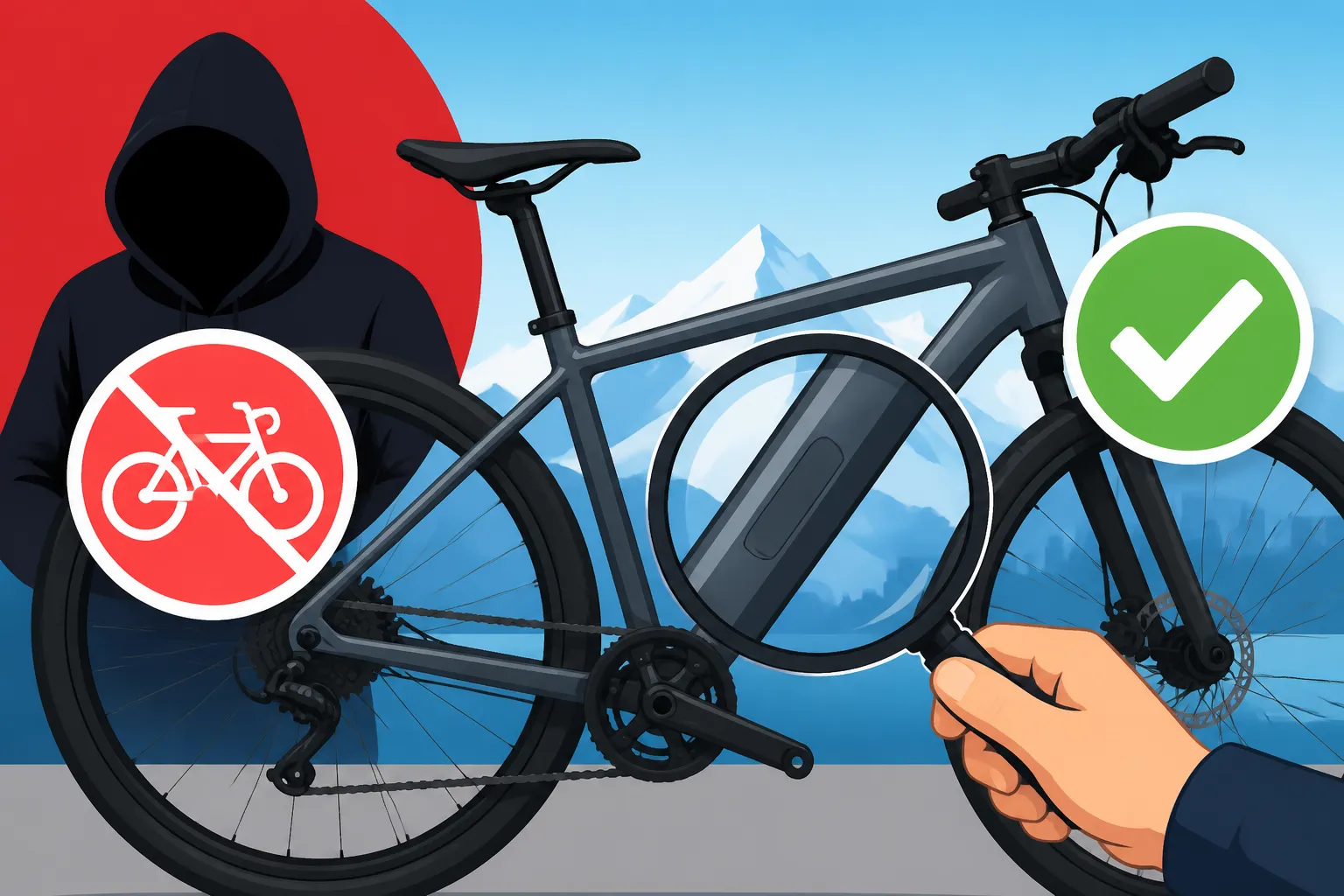
The frame number, or Rahmennummer, is the most critical piece of identifying information on a bicycle. Think of it as a VIN for a car. It is a unique alphanumeric code stamped into the metal of the frame during manufacturing. Unlike a sticker or a paint job, this number is permanent and nearly impossible to remove without leaving obvious signs of tampering.
When you meet a seller, your first task is to locate this number. If the seller seems impatient or tries to distract you while you are looking for it, consider that a major red flag. A legitimate seller who has nothing to hide will understand why you are being thorough.
Common Locations for Frame Numbers
The location of the frame number can vary depending on the brand and age of the bike. Here is a breakdown of where you should look:
| Location | Description | Frequency |
|---|---|---|
| Bottom Bracket | Underneath the pedals where the cranks meet. Flip the bike over to see it. | Very Common |
| Head Tube | The front of the frame where the handlebars connect to the fork. | Common on Newer Bikes |
| Seat Tube | Near the top of the tube where the seat post is inserted. | Occasional |
| Rear Stay | On the horizontal or diagonal bars leading to the rear wheel axle. | Common on Mountain Bikes |
| Down Tube | On the underside of the main large tube connecting the front to the pedals. | Less Common |
How to Identify Tampering
Thieves who are aware of frame number checks may attempt to file down the number or paint over it. Run your finger over the area where the number should be. It should feel like a clean, industrial stamp. If the metal feels uneven, or if there is a thick, localized patch of paint that doesn't match the rest of the frame, walk away immediately.
If you have just moved into a new apartment found through HousingAnywhere and are looking to furnish your life with a commuter bike, don't let the excitement of a new home cloud your judgment. A tampered frame number is a guaranteed sign of a stolen bike.
How to Verify the Bike Against National Databases
Once you have located the frame number, you need to check it against the various registries used in Switzerland. Unlike some countries with a single central registry, Switzerland uses a combination of private databases and police-accessible records.
As an expat, you should familiarize yourself with platforms like Veloregister.ch and Bike-ID. These are the most common places where owners report their bikes as stolen. While these databases are not 100% exhaustive, they are the best tool available to a private buyer.
Real-Time Verification Steps
- Ask for the number in advance: When messaging the seller on Tutti or Marketplace, ask for the frame number before you even meet. If they refuse to provide it, do not waste your time traveling to see the bike.
- Search the databases: Enter the number into Veloregister and Google. Sometimes, owners will post about their stolen bikes on local forums or Reddit.
- Check for a "Velovignette" history: While the old mandatory insurance sticker (Vignette) was abolished years ago, many older bikes still have them. These stickers often had numbers linked to the owner's Private Liability Insurance (Privathaftpflicht): Why Expats Need It. While not a direct theft check, a mismatch between the sticker’s age and the seller’s story can be telling.
- Verify the owner’s identity: Ask to see the seller's ID. In Switzerland, it is perfectly acceptable to ask for a simple written sales contract (Kaufvertrag). This contract should include the seller’s name, address, the frame number, and the price. If the seller refuses to sign a basic piece of paper, they likely don't want their name associated with the transaction.
Using Technology to Stay Safe
Meeting a stranger for a transaction requires caution. Ensure your mobile device has a strong signal so you can verify details on the spot. If you are using an eSIM from a provider like Airalo, you can quickly look up the specific bike model's original retail price to see if the seller's asking price makes sense. Comparing prices on sites like Amazon Germany for similar components can also help you determine if the bike is being sold for parts or as a complete unit.
The Legal and Financial Consequences of Buying Stolen Property
In Switzerland, the law is clear: you cannot acquire legal ownership of stolen property, even if you paid for it. If the original owner or the police track the bike to you, you are legally required to return it. This means you lose the bike and the money you paid for it.
Furthermore, if you are found with a stolen bike, you might have to prove that you didn't know it was stolen. This is where having a written contract and a record of your frame number check becomes your shield. Without these, you could technically be investigated for "Hehlerei." This can have long-term consequences, potentially affecting your ability to renew permits if it leads to a criminal record.
Insurance Considerations
Once you buy a bike, you should immediately consider Adding Bicycle Theft Coverage to Your Hausratversicherung. Most household insurance policies in Switzerland cover bike theft, but they usually require you to provide the frame number and proof of purchase to pay out a claim. If you bought a stolen bike and then it gets stolen from you, your insurance company will likely discover the original theft during their investigation and deny your claim—leaving you twice the victim.
If you find yourself in a complex situation where you've unintentionally purchased a stolen item, you might wonder, Do I Need Legal Expenses Insurance (Rechtsschutzversicherung) in Switzerland? The answer is often yes. Legal insurance can help you navigate the process of clearing your name and potentially pursuing the seller for a refund, though the latter is often difficult if they used a fake profile.
The Debt Register and Fraud
While it might seem unrelated, buying stolen goods can sometimes lead to broader financial headaches. If the person who sold you the bike is involved in larger fraudulent activities, your interaction with them could inadvertently flag you in systems you’d rather avoid. You certainly don't want a simple bike purchase to lead to a situation where you have to worry about What is a Betreibung? How an Unpaid Bill Ruins Your Swiss Credit Score. Always keep your transactions transparent and documented.
Protecting Your New Investment
Once you have verified the frame number and completed the purchase, the work isn't over. You need to ensure your "new" used bike stays in your possession. Bike theft in major cities like Zurich and Geneva is highly organized.
Invest in High-Quality Locks
Do not rely on the cheap cable locks sold at supermarkets. Most veteran expats in Switzerland will tell you that a U-lock or a heavy-duty folding lock is mandatory. You can often find much better deals on high-security brands like Abus or Kryptonite on Amazon Germany compared to local specialty shops. Spending 80 francs on a lock for a 300-franc bike might seem excessive, but it is the only way to ensure your bike isn't stolen within the first week.
Register the Bike in Your Name
Now that you are the owner, register the frame number in your own name on the national databases. This makes it much harder for someone else to sell it if it is ever stolen from you. It also serves as proof of ownership if the bike is ever recovered by the police.
If you are a student or a new resident, you probably already went through the process of Registering Your Address at the Kreisbüro Within 14 Days of Moving. Think of bike registration as the same type of essential "Swiss admin." It takes ten minutes but saves hours of grief later.
Follow Local Etiquette
Finally, be mindful of Swiss Everyday Rules: Recycling, Quiet Hours, and Neighborhood Etiquette. This applies to where you park your bike. Avoid blocking sidewalks or leaving your bike in "no parking" zones at train stations. The city of Zurich, for example, is notorious for removing bikes parked illegally. If your bike disappears, check with the local "Fundbüro" (lost and found) before assuming it was stolen—they might have simply impounded it.
For those who find the logistics of bike ownership too cumbersome, there is always the option of using the excellent public transport network. You might evaluate whether SBB Travelcards: Is the Generalabonnement (GA) Worth the CHF 4000+ Cost? makes more sense for your lifestyle, especially if you live in a hilly city where cycling requires a lot of effort.
Important Disclaimer
This guide is for informational purposes only and does not constitute legal advice. While I have lived in Switzerland for many years and navigated these systems personally, laws and police procedures can change. Always consult with local authorities or a legal professional if you find yourself involved in a dispute regarding stolen property. For more official information on Swiss residency and legal requirements, refer to the Federal Office of Justice or your local cantonal migration office.