Getting Married in Switzerland on a Tourist Visa: Preparation of Marriage Visa
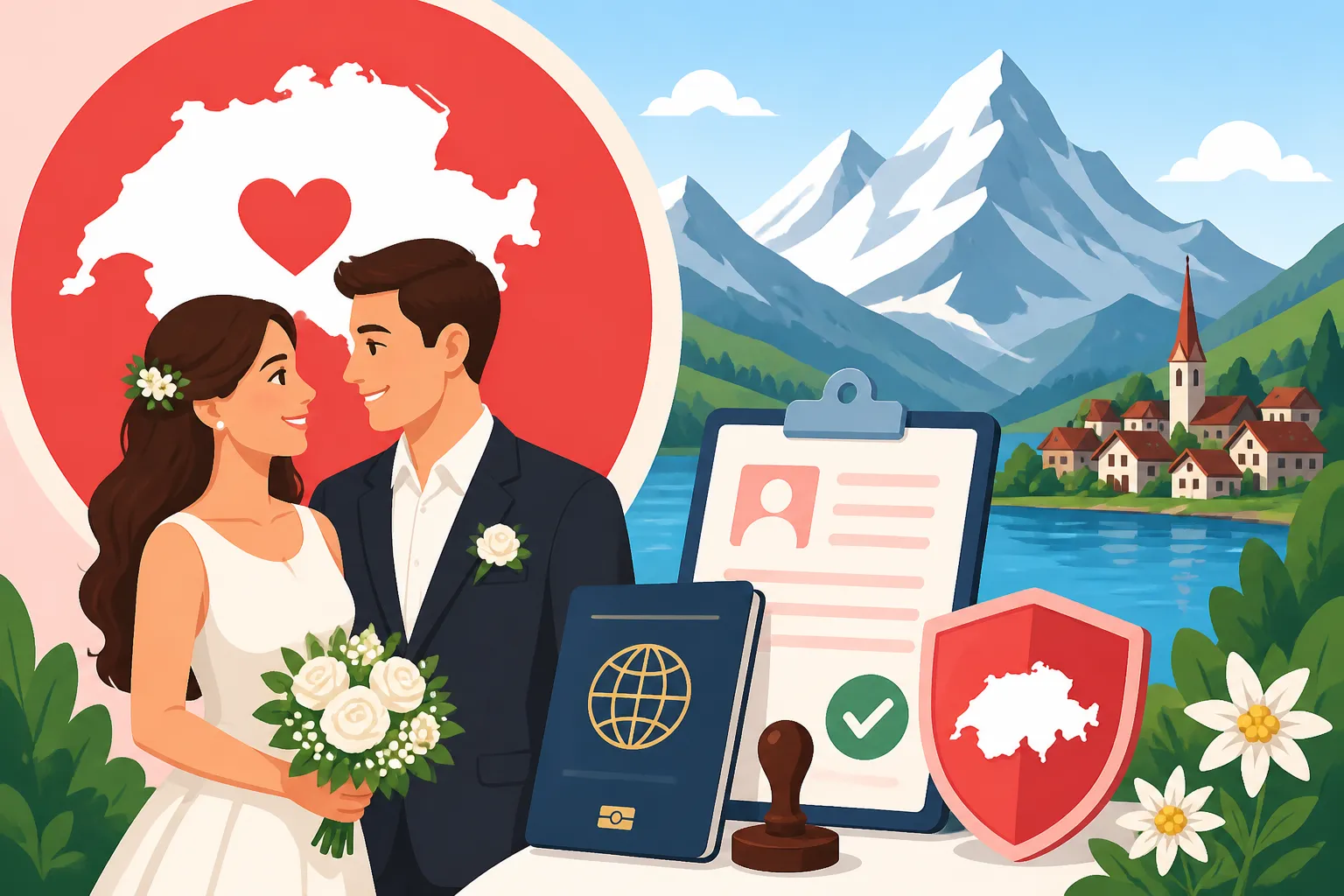
Getting married in Switzerland while on a tourist visa sounds like a romantic Alpine dream until the reality of Swiss bureaucracy hits your inbox. I remember standing in the cold outside a Zivilstandsamt with a stack of "incorrectly" translated documents, feeling like my wedding was slipping away into a sea of red tape. This guide solves the mystery of the preparation of marriage visa and the exact steps to navigate the administrative maze.
The Reality Check: Can You Actually Get Married on a Tourist Visa?
The short answer is yes, but the long answer involves a very specific distinction between a standard Type C Schengen tourist visa and the "Preparation of Marriage" visa. Many couples assume they can simply fly into Zurich or Geneva, walk into a city hall, and exchange vows. In Switzerland, the civil ceremony is the only legally binding one, and the authorities are notoriously strict about the legal status of the foreign partner during this process.
If you are a non-EU/EFTA national, you cannot simply use a standard tourist visa to move here permanently after the wedding. While you can technically get married on a tourist visa, the Migration Office often requires you to apply for a specific Type D visa if your intention is to stay in Switzerland afterward. This is where the confusion often begins. If you tell a border guard you are here "just for a holiday" but you have a wedding dress and a stack of birth certificates in your suitcase, you are going to have a very difficult afternoon at customs.
The Schengen Visa (Type C): Tourist and Short-Business Rules for TCNs governs short stays, but it does not grant you the right to residency. If your goal is to marry and then immediately apply for a residency permit, you should ideally be looking at the specific preparation of marriage track. This track ensures that once the "I do" is said, your transition to a B permit is a matter of administrative processing rather than a frantic flight back to your home country to restart the visa process from scratch.
The Preparation of Marriage Process (Vorbereitung der Eheschliessung)
Before you can even think about a visa, you must initiate the "Preparation of Marriage" at the civil registry office (Zivilstandsamt) in the commune where one of the partners lives. If both partners are abroad, you usually start this at the Swiss embassy or consulate in your home country. This is not a simple form; it is a comprehensive background check on your eligibility to marry under Swiss law.
The list of documents required is enough to make any expat’s head spin. You will typically need a certified copy of your birth certificate, a certificate of civil status (proving you aren't already married), and a valid passport. The kicker? These documents must usually be no older than six months. If your home country takes four months to issue a birth certificate, you have a very narrow window to get everything translated and apostilled.
For these documents, Swiss authorities are incredibly picky about the quality of the translation. Using a professional service like RushTranslate is often a lifesaver here because they understand the specific formatting and certification requirements that Swiss civil registrars demand. Once your documents are ready, you will also need to prove you have adequate health insurance for your stay. Many expats opt for Cigna Global during this transitional period, as it provides the comprehensive coverage that satisfies the requirements for a Type D visa application while you wait for the marriage to be finalized.
Required Documentation Checklist
| Document Type | Requirement | Notes |
|---|---|---|
| Birth Certificate | Original with Apostille | Must be issued within last 6 months |
| Civil Status Certificate | Proof of Single/Divorced | Often called a "Certificate of No Impediment" |
| Passport | Original + Copy | Must be valid for at least 6 months post-wedding |
| Proof of Residence | For the Swiss partner | Usually a Wohnsitzbescheinigung |
| Divorce Decree | If applicable | Must be final and legally binding |
| Translation | Professional Certification | RushTranslate is highly recommended for accuracy |
Navigating the Type D Visa for Marriage Preparation
If you are a "Third-Country National" (non-EU/EFTA), you will likely need to apply for a Type D National Visa specifically for the purpose of getting married. Unlike the Type C visa, which is for short visits, the Type D is your "entry ticket" for long-term residency. You apply for this at the Swiss representation in your home country after the civil registry office in Switzerland has confirmed that your marriage preparation is complete.
The wait times for this can be grueling. It is not uncommon for the process to take anywhere from three to six months. During this time, the cantonal migration office will review your file. They aren't just looking at your wedding date; they are checking your financial stability and whether the marriage might be a "marriage of convenience" (Scheinehe). You might even be called in for an interview where they ask surprisingly personal questions about your relationship history.
While you are waiting for this approval, it is vital to keep your Swiss Visas and Work Permits: The Complete 2027 Guide for Expats nearby to understand how this visa interacts with your eventual right to work. One of the biggest frustrations for my friends who went through this was the "black hole" period—that time between arriving on the marriage visa and actually receiving the work authorization. To keep your stress levels low, ensure your Cigna Global policy is active from the moment you land, as the Swiss system will not allow you to register at the commune without proof of valid insurance.
The Interview and the "Scheinehe" Check
Switzerland takes the integrity of its residency permits very seriously. Because marriage to a Swiss citizen or a B/C permit holder grants significant rights, the authorities are on high alert for sham marriages. This is a hurdle that often catches expats off guard. You might be asked to provide "proof of relationship," which can include photos of your holidays together, flight itineraries, or even logs of your WhatsApp messages over the last year.
It feels intrusive, and frankly, it is. But validating your relationship is a standard part of the preparation of marriage. If the registrar or the migration office has doubts, they can delay the marriage indefinitely. If you have been living together abroad, things are much easier. If you met online and have only seen each other twice in person, expect a much more rigorous interrogation.
During this phase, any inconsistencies in your documentation can trigger a red flag. This is why having your foreign documents handled by RushTranslate is so important; a mistranslated term on a divorce decree or a birth certificate can lead the Swiss authorities to believe you are hiding something. Once the civil registry office is satisfied, they will issue a "Authorization for the Celebration of Marriage," which is valid for three months. You must get married within this window, or you have to start the entire process over again.
What Happens After the "I Do"?
The wedding ceremony is over, the fondue has been eaten, and the guests have gone home. Now the real administrative work begins. Getting married does not automatically give you a residency permit; it gives you the right to apply for one. You must take your marriage certificate to the local migration office or Kreisbüro to begin the process of family reunification.
You will likely be transitioning to The Swiss B Permit: Eligibility, Renewal, and Restrictions track. This permit is usually tied to your spouse. One major benefit of getting married in Switzerland on the correct visa is that you are often allowed to start Working on a Dependent Visa: Rules for Spouses of B/C Permit Holders almost immediately after your permit is processed. However, be prepared for a few weeks of "limbo" where you have a temporary paper permit (the "Meldebestätigung") while your biometric card is being printed.
Don't forget that once you are a resident, you must switch from your international insurance to a Swiss-compliant KVG plan. While Cigna Global is fantastic for the visa application and the "gap" period, the Swiss law requires you to join a local provider within 90 days of your residency starting. This transition is a key part of your Family Reunification: Bringing Your Spouse and Children to Switzerland journey, ensuring that your new life in the Alps starts on solid financial and legal ground.
Common Pitfalls and How to Avoid Them
The biggest mistake I see couples make is timing. They book a caterer and a venue for August, but they don't submit their Translation and Apostille Requirements for Marriage Certificates paperwork until May. In Switzerland, the paperwork dictates the date, not your preferences. Never put down a non-refundable deposit on a wedding venue until you have the "Authorization for the Celebration of Marriage" in your hand.
Another pitfall is the language requirement. Some cantons, particularly in the German-speaking regions, may require the foreign partner to show a basic understanding of the local language (A1 level) before they will approve the marriage residency permit. While this isn't always required to get married, it is increasingly becoming a factor in the Language Requirements for Swiss Permits: A1 to B2 Standards Explained for those who want to stay long-term.
Lastly, pay attention to the "Freshness Rule" for documents. Many countries issue birth certificates once in a lifetime. Switzerland is not one of those countries. They want a "recent" extract from the registry. If you show up with the original yellowing birth certificate your parents got when you were born, the Zivilstandsamt will reject it. You must order a new one, get it apostilled, and then have it handled by a service like RushTranslate to ensure it meets the local standards.
Useful Resources for Your Swiss Wedding Journey
To help you keep track of the different moving parts, here are some key areas you should research as you prepare:
- Swiss Visas and Work Permits: The Complete 2027 Guide for Expats: For a bird's-eye view of the entire immigration landscape.
- Translation and Apostille Requirements for Marriage Certificates: To understand exactly how to "Swiss-proof" your foreign documents.
- Health Insurance Requirements for Sponsoring a Tourist Visa Letter: To ensure your financial and medical bases are covered during the application.
- The Swiss B Permit: Eligibility, Renewal, and Restrictions: To see what your life will look like after the wedding.
- Working on a Dependent Visa: Rules for Spouses of B/C Permit Holders: To plan your career transition in Switzerland.
Summary of the Marriage Visa Timeline
Getting married here is a marathon, not a sprint. To help you visualize the journey, consider this typical timeline:
- Month 1-2: Gather original documents from your home country and ensure they have the proper Apostille. Use RushTranslate to get everything into the local Swiss language (German, French, or Italian).
- Month 3: Submit the "Preparation of Marriage" application at the Zivilstandsamt. If you are abroad, do this via the Swiss Embassy.
- Month 4-5: Wait for the background checks and potential interviews. During this time, ensure you have international coverage like Cigna Global to satisfy visa requirements.
- Month 6: Receive the "Authorization for the Celebration of Marriage" and, if applicable, your Type D entry visa.
- Month 7: Enter Switzerland, get married at the civil registry, and immediately register at the commune to apply for your B Permit.
Final Thoughts for the Happy Couple
Switzerland is a magnificent place to start a life together, but it demands respect for its rules. The bureaucracy isn't trying to stop you from being happy; it's simply verifying every "i" is dotted and every "t" is crossed. If you stay organized, use professional services for your translations and insurance, and remain patient with the timelines, you will find that the system eventually works in your favor. Just remember to keep your sense of humor when the fourth clerk asks for a document you’ve already provided twice—it’s just part of the Swiss initiation!
Disclaimer
This guide is for informational purposes only and does not constitute legal advice. Immigration laws and cantonal requirements in Switzerland can change frequently. Always consult with the official Swiss State Secretariat for Migration (SEM) or a qualified immigration lawyer before making legal decisions.