Emergency Preparedness: Sirens (Sirenentest) and Nuclear Bunkers
Every newcomer to Switzerland eventually experiences that heart-stopping moment on the first Wednesday of February when the sirens start wailing across the city. I remember my first winter in Zurich, clutching my coffee and staring out the window, convinced a major catastrophe was unfolding while my neighbors calmly continued their grocery shopping. This guide explains the Swiss philosophy of emergency preparedness, the annual siren test, and those mysterious nuclear bunkers located in your basement.
The Annual Siren Test: Why the Noise Matters
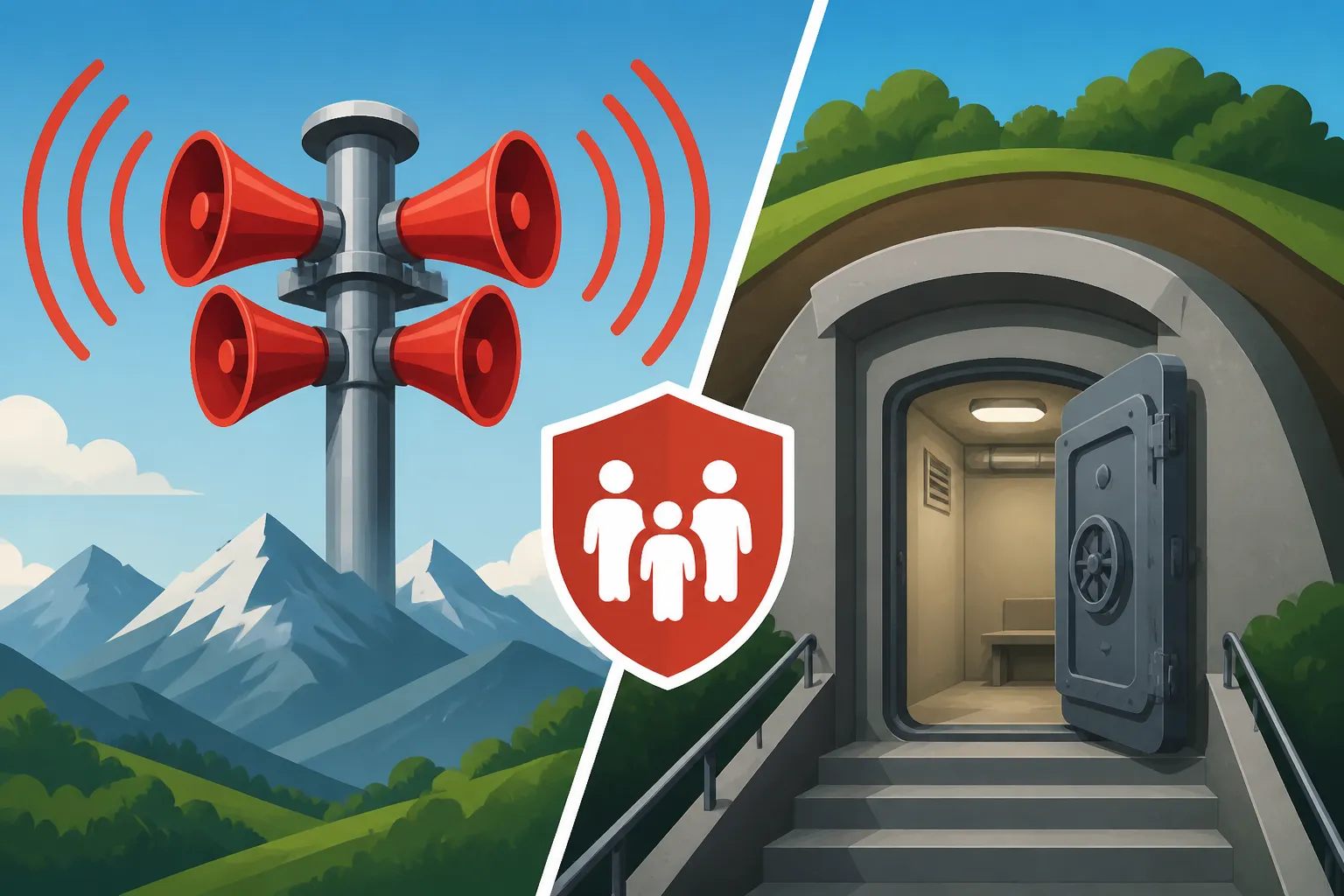
If you are currently living in a flat you found through HousingAnywhere or a local agency, you might have noticed a small speaker or a siren horn on a nearby rooftop. These are not relics of the Cold War; they are part of a highly active and regularly maintained national warning system. Switzerland takes its neutrality and safety seriously, and the annual siren test (Sirenentest) is the most visible—and audible—manifestation of that commitment. It occurs every year on the first Wednesday of February, starting at 1:30 PM, and covers the entire country.
The test serves two primary purposes: to ensure the technical functionality of the thousands of sirens spread across the cantons and to remind the population of what to do in the event of a real emergency. For an expat, the sound can be jarring, but for the Swiss, it is a routine part of the calendar, much like the changing of the seasons or the arrival of the tax bill. Understanding the schedule and the sounds can save you a significant amount of stress and prevent you from clogging up emergency lines with unnecessary calls.
Decoding the February Ritual
During the test, the authorities trigger the "General Alert," which is a steady oscillating tone that lasts for one minute. This is repeated after a short interval. If you are a parent, you will find that schools often use this day as a teaching moment to explain civil defense to children. In a real emergency, this sound indicates that the population should listen to the radio or check the Alertswiss app for instructions. Since the Swiss system relies heavily on digital communication now, having a reliable data connection is vital. If your local Swiss SIM is acting up, having a backup through a provider like Airalo can ensure you still get push notifications from the federal authorities.
The second part of the test involve the "Water Alert," which is only tested in areas downstream of dams. This sound consists of twelve deep continuous tones, each lasting twenty seconds. It is a much more localized signal and is meant to trigger immediate evacuation to higher ground. When you are Renting in Switzerland: The Complete 2027 Guide for Expats, it is worth asking if your neighborhood falls into a water alert zone, especially if you are living near the Limmat in Zurich or the Rhone in Geneva.
The Difference Between General Alert and Water Alert
The General Alert is your signal to stop what you are doing and seek information. In the 2026 landscape, this increasingly means looking at your smartphone rather than traditional transistor radios. The Federal Office for Civil Protection (FOCP) manages the Alertswiss platform, which provides real-time updates on everything from chemical spills to natural disasters like floods or forest fires. This integration of old-school sirens and modern tech is quintessentially Swiss: redundant, thorough, and highly organized.
The Water Alert is far more time-sensitive. If you hear the twelve deep tones and it is not the first Wednesday of February at 2:00 PM, you must leave the area immediately. This is not a "wait and see" situation. Swiss dams are incredibly well-built, but the country prepares for the absolute worst-case scenario. When moving into a new place, part of Registering Your Address at the Kreisbüro Within 14 Days of Moving is becoming aware of your local surroundings, including whether you are in a potential flood path.
Living Above a Fallout Shelter: The Swiss Bunker Mandate
Switzerland is famous for having enough nuclear bunker spots to house its entire population—and then some. This "shelter for all" policy was born out of the Cold War era and remains a legal requirement today. If you live in a modern apartment block, you likely have a heavy steel door in your basement that leads to a room with reinforced concrete walls and a ventilation system. For many expats, this is the strangest part of Swiss domestic life, transforming a standard storage area into a Cold War relic.
The law dictates that every inhabitant must have a protected place in a shelter near their place of residence. If a building was constructed after the 1960s and has more than a certain number of rooms, the owner was required to build a shelter. This is why when you are Decoding Swiss Apartment Ads: What 2.5, 3.5, and 4.5 Rooms Actually Mean, the "cellar" or "Keller" listed is often more than just a place for your skis; it is a certified civil defense structure.
The Federal Shelter for All Law
The Federal Act on Civil Protection and Civil Defense ensures that the infrastructure is never neglected. Even though the threat of global nuclear war has fluctuated over the decades, the Swiss government maintains these spaces as a multi-purpose insurance policy. They are inspected regularly by cantonal authorities. If your building does not have its own bunker, the owner must pay a "shelter tax" to the commune, which in turn guarantees you a spot in a large public shelter nearby, often located under schools or administrative buildings.
As a resident, you have the right to know where your designated spot is. You can usually find this information by contacting your local commune office. While it might seem like overkill, the Swiss view this as a basic utility, not unlike water or electricity. This level of state-mandated safety is part of why the Cost of Living in Switzerland 2026: Budgeting for Singles and Families includes various indirect costs, as the maintenance of this massive infrastructure is baked into the national economy and rental prices.
Your Private Bunker vs. Public Shelters
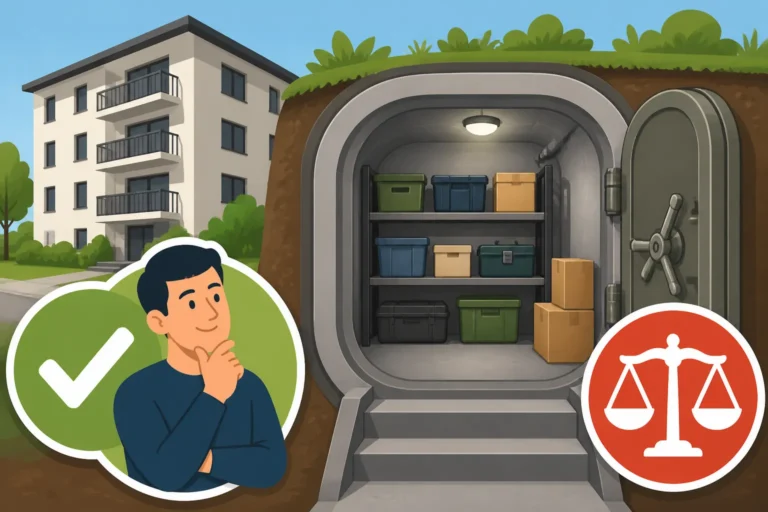
Most expats will interact with their "private" bunker as a storage unit. It is perfectly legal to store your wine, winter tires, and old boxes there, provided you can clear the space within 24 hours if an emergency is declared. However, there are strict rules about what you can and cannot do to the structure. You cannot drill into the reinforced walls or remove the heavy ventilation equipment. For more details on this, see our article on Using Your Apartment's Nuclear Bunker (Schutzkeller) for Storage: Legal Rules.
Public shelters, on the other hand, are massive underground complexes. Some are large enough to house thousands of people and even include hospital facilities. During the annual siren test, some communes offer "open bunker" days where you can tour these facilities. It is a fascinating, if slightly surreal, experience that highlights the incredible engineering feats the Swiss have performed to ensure their survival. If you are living in a shared flat or a "WG," make sure everyone in the household knows whether you have a basement shelter or if you need to head to the local schoolhouse.
Practical Emergency Kits: What to Keep in Your Cellar
The Swiss government recommends that every household keeps a "Notvorrat" or emergency stock. This is not about being a "prepper" in the extreme sense; it is about being self-sufficient for approximately one week in case of a supply chain disruption or a natural disaster. In a country that runs like clockwork, the idea of the supermarkets being empty feels impossible, but the Swiss philosophy is built on the phrase "expect the unexpected."
Your emergency kit should be stored in a cool, dry place—ideally your cellar or bunker. If you are ordering specialized storage containers or long-term food supplies, you might find that ordering through Amazon Germany offers a wider selection of bulk items that can be delivered directly to your Swiss address, though you should be mindful of customs limits.
Food and Water Stockpiling the Swiss Way
The official recommendation includes nine liters of water per person, along with non-perishable food that does not require cooking. Think crackers, canned meats, nuts, and chocolate (it is Switzerland, after all). I always suggest including a few items that bring comfort during a stressful time. When I first moved here, I didn't take the Notvorrat seriously until a massive snowstorm in the mountains cut off my village for two days. Having a stock of food meant I didn't have to worry about the local Volg running out of bread.
| Item Category | Recommended Quantity (per person) | Notes |
|---|---|---|
| Drinking Water | 9 Liters | Replace every 6-12 months |
| Staple Foods | 1 Week Supply | Rice, pasta, canned goods |
| Hygiene Items | 1 Kit | Soap, toilet paper, disinfectant |
| Medications | 1-2 Week Supply | Personal prescriptions and painkillers |
| Lighting | 1 Set | Flashlight, spare batteries, candles |
| Cash | Small Denominations | In case card readers are down |
It is also important to consider your pets. If you have brought a dog or cat with you, ensure you have enough kibble and water for them as well. The Swiss authorities provide detailed checklists online, and following them is considered a mark of a "well-integrated" resident. This sense of responsibility is tied to the same community spirit required for Household Contents Insurance (Hausratversicherung): Burglary and Fire Coverage; you protect yourself to avoid becoming a burden on the system.
Communication and Power during a Crisis
In a modern crisis, the loss of power is often more disruptive than the loss of food. A battery-powered or hand-crank radio is a staple of the Swiss emergency kit. While we all rely on our phones, cell towers can become congested or fail during a major event. Having a dedicated way to receive FM signals is a backup that the FOCP still highly recommends.
Additionally, a high-capacity power bank is essential. To stay connected to international news or family abroad, many expats keep an eSIM profile from Airalo active as a secondary data source. If the primary Swiss networks are throttled for emergency use, having access to an alternative roaming network can be a lifector. Don't forget a physical map of your local area and a list of emergency numbers, including the local police and the Health & Medical contacts you’ve established since moving.
Navigating the Legal and Social Aspects of Preparedness
Being prepared in Switzerland is as much a social obligation as it is a personal safety measure. There is a specific etiquette involved in how you manage your emergency resources and how you interact with your neighbors regarding safety. If you are seen as someone who ignores the local rules—like those who try to do laundry during the restricted "quiet hours" or who fail to maintain their basement storage—it can affect your standing in the neighborhood.
Integration is a buzzword in Switzerland, and it applies to safety, too. Understanding the emergency protocols shows that you are committed to the Swiss way of life. This is often looked upon favorably if you ever decide to transition from a residency permit to a permanent one, as outlined in our guide to Banking and Finance for Expats in Switzerland: The 2027 Guide.
Your Responsibilities as a Tenant
As a tenant, you have a duty to keep the access to the bunker clear. If you have stuffed your cellar unit so full that the heavy steel door cannot be swung open, you are technically in violation of civil defense regulations. During the annual inspections, the "Hauswart" (caretaker) or a cantonal official might ask to see the shelter. Keeping your space organized is not just for your benefit; it is a legal requirement for the safety of everyone in the building.
If you find that your shelter is damp or the ventilation system is making strange noises, you should report it to your landlord immediately. They are responsible for the structural maintenance, but you are the "eyes on the ground." This relationship is part of the broader framework of Swiss rental law, and having Private Liability Insurance (Privathaftpflicht): Why Expats Need It is often required by landlords to cover any accidental damage you might cause to these specialized fixtures.
Integration through Information
The Swiss government produces information in multiple languages, including English, to ensure that the international community is not left in the dark. I highly recommend attending any local "welcome talks" organized by your commune. They often give out brochures that detail the specific emergency assembly points for your neighborhood. Knowing where to go without having to look it up on a map in the middle of the night provides an incredible sense of security.
Furthermore, being the "informed expat" can help you build bridges with your Swiss neighbors. I once helped an elderly neighbor set up the Alertswiss app on her phone, and that small act of "digital preparedness" did more for our neighborly relationship than a dozen polite nods in the hallway. It shows that you care about the collective well-being of the building.
The Psychological Shift: Embracing Swiss Realism
Living in Switzerland requires a psychological shift from "it will never happen" to "I am ready if it does." This isn't about living in fear; it's about the peace of mind that comes from being organized. The Swiss don't build bunkers because they are scared; they build them because they are pragmatic. This realism extends to all parts of life here, from the way people drive to the way they manage their finances.
When you see the sirens being tested, don't roll your eyes at the "excessive" noise. Instead, take it as a reminder to check your smoke detector batteries and rotate the water bottles in your Notvorrat. This mindset is what keeps the country stable and functioning, even when the rest of the world feels chaotic.
Why Switzerland is "Prepared but Not Paranoid"
The distinction between preparedness and paranoia is important. In many countries, having a nuclear bunker and a week's worth of food would make you a "survivalist." In Switzerland, it just makes you a resident. The infrastructure is hidden in plain sight—underneath the parks where you jog, the schools where your children learn, and the parking garages where you leave your car.
This cultural trait is likely a result of Switzerland's history of armed neutrality. By being "too difficult to invade" and "too prepared to fail," the country has maintained its independence. When you adopt these habits, you are participating in a centuries-old tradition of self-reliance. It is the same discipline required for Converting Your Foreign Driver's License to a Swiss Fahrausweis; you follow the rules not just to avoid a fine, but because the rules are there to ensure the system works for everyone.
Emergency Apps and Digital Readiness
The Alertswiss app is your most important tool. It allows you to customize notifications for your specific canton and even your current GPS location. If there is a "boil water" advisory in your village or a localized power outage, you will know within seconds. The app also includes instructions on how to provide first aid and what to do in various scenarios, making it a comprehensive digital survival manual.
I always tell new arrivals to keep their phones charged and their data plans active. While Switzerland has great public Wi-Fi, you don't want to be hunting for a Starbucks signal during an emergency. Having a secondary data option like Airalo can be a lifesaver if you are traveling between cantons and find yourself in a dead zone of your primary carrier. Also, make sure you've paid your Serafe Fee 2026: Paying the Mandatory CHF 335 Media Tax, as this funding supports the national broadcasters who are legally obligated to provide emergency information over the airwaves.
Summary Checklist for New Expats
To wrap things up, here is a quick checklist to ensure you are up to the Swiss standard of emergency readiness within your first month of arrival:
- Download Alertswiss: Set up your location and notification preferences immediately.
- Locate Your Bunker: Find the heavy door in your basement or ask the commune for your public shelter location.
- Check the Calendar: Mark the first Wednesday of February so you aren't surprised by the sirens.
- Build Your Notvorrat: Start with water and non-perishable food. Rotate items as they near their expiration dates.
- Test Your Connections: Ensure you have a backup plan for mobile data and a way to receive FM radio.
- Organize Your Cellar: Ensure your storage doesn't block the air vents or the main shelter door.
Living in Switzerland is an adventure in organization. While the sirens and bunkers might seem intimidating at first, they are actually some of the most comforting features of the country. They are a silent promise that, no matter what happens, there is a plan in place to keep you safe.
Disclaimer
This guide is intended for informational purposes only and represents the personal experiences and observations of a veteran expat. While every effort has been made to ensure the accuracy of the information provided, emergency protocols and Swiss laws can change. Always consult official government sources, such as the Federal Office for Civil Protection (FOCP) or your local cantonal authorities, for the most current and legally binding emergency instructions. The author and publisher are not responsible for any actions taken based on the contents of this article.