Denner and Aldi: Budget Grocery Shopping in Switzerland
Walking into a Swiss supermarket for the first time feels like a personal attack on your bank account. I vividly remember my first week in Geneva, staring at a pack of chicken breasts that cost more than my entire lunch back home, wondering if I’d have to survive on tap water and fresh mountain air. This guide solves the mystery of the Swiss grocery hierarchy, showing you how to master Denner and Aldi to actually keep some of your hard-earned salary.
The Reality of the Swiss Grocery Hierarchy
When you first arrive and start looking at Where to Live in Switzerland: Cantons, Cities, and Commuter Zones, you likely notice two names everywhere: Migros and Coop. These are the giants, the cultural institutions that dominate the landscape. However, for an expat trying to manage the Cost of Living in Switzerland 2026: Budgeting for Singles and Families, shopping exclusively at these two can lead to a very lean month. There is a specific social hierarchy to shopping here that you need to understand to survive. Migros and Coop offer an incredible experience, but they are priced for the Average Salary for Software Engineers in Zurich (2026 Benchmarks), not necessarily for someone just getting their footing or trying to save for a weekend in the Alps.
The frustration most of us feel isn't just about the prices; it's the lack of choice. Switzerland isn't part of the EU, which means high import duties protect local farmers. You can read more about the specifics in Why Groceries in Switzerland Are So Expensive: Tariff Protection Explained. This protectionism creates a "Swiss price" that is often 30% to 50% higher than in neighboring Germany or France. This is where the discounters—Denner, Aldi, and Lidl—come in. They are the release valves for the high-pressure Swiss economy. If you are using a service like HousingAnywhere to find your first apartment, my best advice is to check the proximity to a Denner or an Aldi before you sign that lease. It will change your monthly budget more than any other factor.
Validation is important here: it is okay to feel annoyed that a bell pepper costs three francs. We all went through that phase of converting prices back to our home currency and nearly crying in the produce aisle. But once you pivot your strategy toward the budget kings, the "Swiss tax" on your life starts to feel a lot more manageable. You don't have to sacrifice quality; you just have to sacrifice the prestige of the luxury supermarket carrier bag.
Denner The Neighborhood Powerhouse
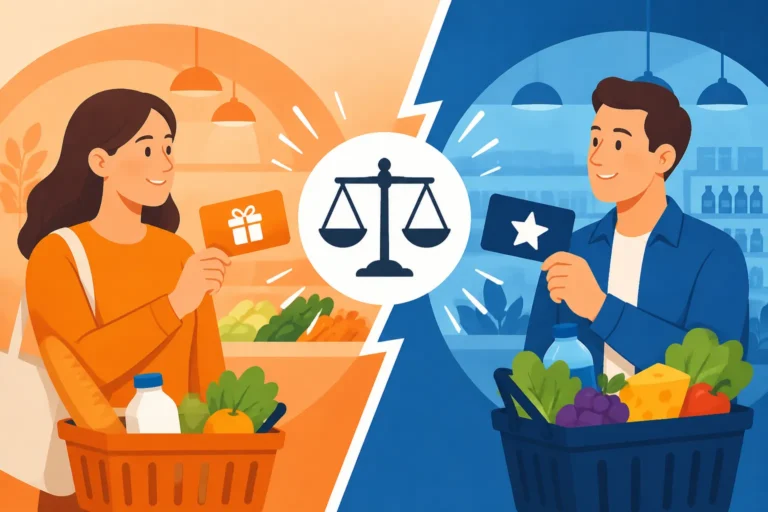
Denner is a fascinating Swiss anomaly. It is actually owned by Migros, but it operates with a completely different soul. While Migros famously refuses to sell alcohol or tobacco due to its founder's legacy, Denner is where the Swiss go for exactly those things. But for the savvy expat, Denner is much more than a liquor store. It is the king of the "Aktion" (sale). I’ve spent years navigating their narrow aisles, and the trick is to learn their rhythm. They don't have the massive, airy floor plans of a suburban Coop; they are often tucked into basements or corner lots in city centers.
The beauty of Denner lies in its branded goods. While Aldi and Lidl focus heavily on their own private labels, Denner stocks the big names—Coca-Cola, Kellogg's, Nestlé—but at prices that frequently undercut the big two by a significant margin. Their wine selection is arguably the best value-for-money in the country. Many expats make the mistake of thinking "budget store equals bad wine," but Denner’s buyers are legendary in Switzerland. You can find a bottled-in-Switzerland Pinot Noir for 8 CHF that would easily cost 15 CHF elsewhere. This is essential knowledge when you are navigating Cost of Living Realities: Groceries, Telecoms, and Household Expenses.
Another lifesaver is the Denner "Wochenaktion." Every week, they release a flyer with massive discounts on bulk items. We’re talking 50% off laundry detergent or "Buy 3, Get 2 Free" on olive oil. Since space is often tight in Swiss apartments, you have to be strategic, but if you have a cupboard, fill it when Denner has an Aktion. When I first moved here, I didn't realize that these sales were the only way locals actually afforded their household staples. Now, I never buy trash bags or coffee pods unless I see that yellow Denner discount sticker. It is the ultimate insider move for anyone trying to master Budgeting in Zurich and Geneva: Managing Expat Expenses in High-Cost Cities.
| Feature | Denner | Aldi Suisse |
|---|---|---|
| Primary Vibe | Neighborhood convenience / Branded sales | Large format / Private label quality |
| Best For | Wine, Beer, Branded snacks, Household chemicals | Organic produce, Fresh meat, Dairy, Weekly specials |
| Alcohol/Tobacco | Full selection (Wide range) | Limited but high-quality selection |
| Store Locations | Often city centers and near train stations | Usually suburban or larger residential zones |
| Loyalty Program | None (Direct discounts) | None (Direct discounts) |
Aldi Suisse High Quality at German Prices
Aldi Suisse is not the Aldi you might know from the US or the UK. In Switzerland, Aldi had to "Swissify" to survive. This means the stores are cleaner, the lighting is better, and the product quality is remarkably high. They have leaned heavily into the "Swissness" of their products, sourcing a huge percentage of their milk, cheese, and meat from Swiss farmers, but using the efficient German logistics model to keep prices down. If you are comparing shoppers, you’ll find that Migros vs Coop: Decoding the Swiss Supermarket Loyalty Programs offers some perks, but Aldi’s flat pricing often beats a Coop "point reward" any day of the week.
The "Backbox" at Aldi is a genuine expat secret. Their in-store bakery produces fresh bread, croissants, and pretzels throughout the day that are often better than the pre-packaged stuff at more expensive stores. When you're trying to save money, a 1.50 CHF fresh loaf of bread and a 4 CHF pack of Swiss alpine cheese from Aldi makes a world-class lunch for under 6 CHF. I’ve spent many Saturday mornings at Aldi filling my cart with their "L’Antica" Italian range and their "Gourmet" seasonal lines. The quality-to-price ratio is simply unbeatable, especially for meat, which is usually the most painful part of a Swiss grocery bill.
One thing to watch out for at Aldi is the "Special Buys" section. This is where they sell everything from ski gear to power tools and kitchen appliances. While it’s tempting, remember that if you’re buying electronics, you might want to compare with Amazon Germany for a wider selection, though for immediate household needs, Aldi’s weekly specials are fantastic. If you find yourself heading to the border for a bigger shop, make sure your Airalo eSIM is active so you can check prices in real-time. Many expats use Aldi as their "base" for 80% of their shopping and only hit the bigger stores for very specific niche items.
Strategic Tips for the Frugal Expat
To truly win at Swiss grocery shopping, you need a multi-store strategy. No single store will give you everything at the best price. I usually start my week by checking the digital flyers for both Denner and Aldi. If Aldi has a sale on organic beef, I go there. If Denner has a deal on my favorite brand of coffee, I make a stop there. It sounds like a lot of work, but in a country where the Cost of Living in Switzerland 2026: Budgeting for Singles and Families is so high, these small wins add up to thousands of francs over a year.
Timing is also everything. If you go to Denner or Aldi about an hour before closing (especially on a Saturday), look for the red "50%" stickers on perishables. The Swiss are very strict about freshness dates, and they will slash prices on perfectly good meat, salad, and bread just to clear the shelves. I’ve managed to get high-end entrecôte for the price of a burger just by timing my visit right. This is particularly helpful if you are staying under the Meat Import Limits: Why You Can Only Bring 1kg Across the Border and can't always make it to Germany or France for your protein.
Lastly, don't be afraid of the "cheap" brands. In many countries, the budget brand is a gamble. In Switzerland, the baseline for food safety and quality is so high that even the lowest-priced flour or pasta at Aldi is excellent. When you are first setting up your kitchen and navigating Cost of Living Realities: Groceries, Telecoms, and Household Expenses, start with the budget lines. You can always "upgrade" later if you really notice a difference, but for 90% of your pantry staples, Denner and Aldi are more than sufficient. Combining these trips with occasional orders from Amazon Germany for bulk dry goods or specialty international items will keep your kitchen well-stocked without draining your savings account.
Cross Border Shopping vs Discounters
A common rite of passage for expats living in places like Basel, Geneva, or Lugano is the "border run." It is tempting to think that you should do all your shopping in France, Germany, or Italy. However, you have to factor in the cost of transport and, more importantly, your time. With strict Cross-Border Shopping: Import Duty Limits for Meat, Alcohol, and Cheese, you can quickly get hit with heavy fines at the customs office if you aren't careful. For example, you are only allowed 1kg of meat per person. If you're caught with 5kg of chicken, the fine will negate any savings you made at the German Edeka.
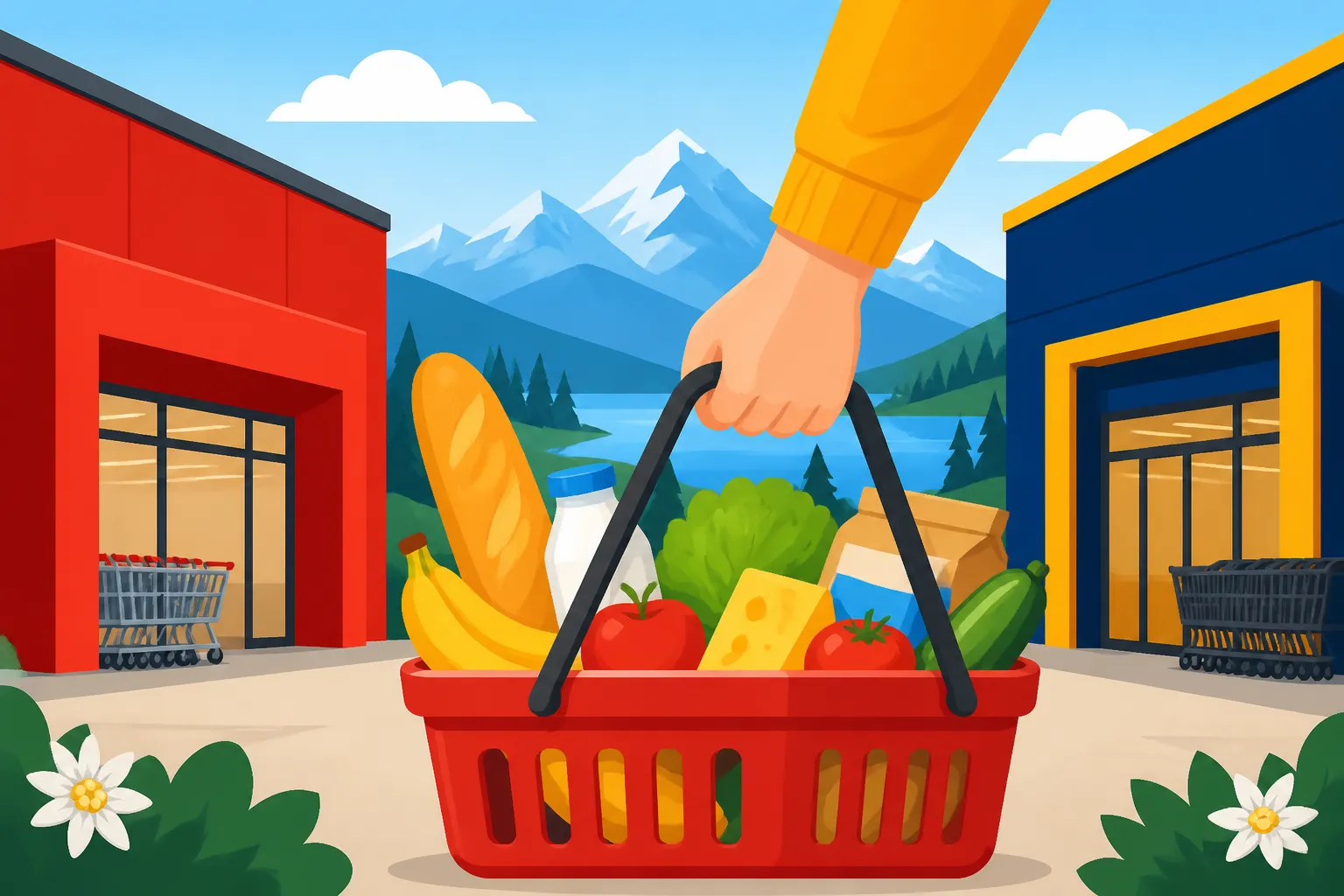
This is why Denner and Aldi are so vital. They provide a "middle ground." You get prices that are significantly lower than the Swiss average without the stress of crossing a border and playing chicken with the customs officers. I’ve found that for a single person or a couple, the savings of a border run are often eaten up by the fuel or train ticket. If you live in the center of Zurich or Bern, a weekly trip to Aldi is much more sustainable. Use your Airalo data to stay connected while you're out and about, and keep a digital list of your "price anchors"—the items you know the price of by heart—so you can spot a true bargain when you see one.
In the end, shopping at Denner and Aldi isn't just about saving money; it’s about integration. You’ll see everyone there—from students to well-dressed professionals. In Switzerland, being "frugal" (or sparsam) is actually a respected trait, not a sign of struggle. Embracing the discounter lifestyle is one of the fastest ways to feel like a local and move past the initial shock of Swiss prices. You’ll soon realize that while the country is expensive, it is also highly navigable if you know where to look and which yellow or blue sign to follow.
Disclaimer
This article is for informational purposes only. Prices, store policies, and import regulations in Switzerland can change frequently. Always check local cantonal rules and current customs limits before making significant financial decisions or traveling across borders for shopping.