Do I Need a Criminal Record Check for a Swiss B Permit?
Navigating the labyrinth of Swiss bureaucracy often feels like trying to solve a Rubik's Cube while blindfolded. I distinctly remember the cold sweat I broke into at the migration office when the clerk asked for a document I hadn't even heard of. This guide solves the mystery of whether a criminal record check is mandatory for your Swiss B permit.
The Reality of the Swiss B Permit Application Process
When you first arrive in the land of chocolate and precision watches, you quickly learn that the "B permit" is the holy grail of temporary residency. Whether you are coming for a high-flying job in Zurich or moving to be with a partner in Vaud, the cantonal authorities want to know exactly who is entering their borders. The Swiss authorities operate on a principle of "public order and security," which is a fancy way of saying they don't want any trouble.
The question of a criminal record check isn't just a "yes" or "no" answer because Switzerland is a confederation of 26 cantons, each with its own slightly different way of doing things. While federal law sets the baseline, the person sitting across from you at the Mandatory Registration: How to Sign Up for Health Insurance Within 90 Days office might have specific requirements based on your country of origin.
Generally, the Swiss B permit is an initial residence permit that is valid for one to five years. It is usually tied to a specific purpose, such as employment or family reunification. Because this permit grants you significant rights to live and work in the country, the authorities take the vetting process seriously. They are looking for "good character," and a clean criminal record is the primary evidence of that.
Nationality Matters: EU/EFTA vs. Third-Country Nationals
The biggest factor in whether you will be asked to produce a criminal record check from your home country is your passport. Switzerland has bilateral agreements with the European Union and the European Free Trade Association, which makes life significantly easier for those citizens.
For EU/EFTA nationals, the process is often based on trust and declaration. When you fill out your application for The Swiss B Permit: Eligibility, Renewal, and Restrictions, you will likely find a section where you must declare that you have no pending criminal proceedings and no past convictions. In many cases, the canton will not require you to provide a physical document from your home country’s police department. However, they do reserve the right to ask for one if they have a reason to be suspicious or if you are applying for certain sensitive jobs.
Third-country nationals (everyone from the US, Canada, UK, India, etc.) face a much stricter regime. For these applicants, providing a certified criminal record check from your country of residence for the past several years is almost always a requirement. This is part of the broader EU/EFTA vs Third-Country Nationals: Immigration Differences in Switzerland framework that governs how the Swiss state manages its borders. If you fall into this category, you should start the process of obtaining your home-country record months before you plan to move, as some national police agencies are notoriously slow.
The Swiss Criminal Record Extract (Strafregisterauszug)
If you are already living in Switzerland—perhaps you are on an L permit and are now Converting an L Permit to a B Permit: Timeline and Requirements—the authorities will almost certainly check your Swiss record. This is known in German as a Strafregisterauszug, in French as an Extrait du casier judiciaire, and in Italian as an Estratto del casier giudiziale.
Even if you aren't asked for it during the permit process, you might need it for a job or to rent a particularly competitive apartment. You can order this document online through the Federal Office of Justice. It costs about CHF 20 and arrives in the mail within a few days. The digital version is also highly common and is digitally signed to prevent tampering.
The Swiss authorities have a very integrated system. When you apply for a permit renewal, the cantonal migration office will often perform an internal check of the Swiss database. If you have been a "good resident" and haven't had any run-ins with the law here, this part of the process is invisible and seamless. It is only when there is a "hit" on your record that the bureaucracy starts to grind its gears.
Dealing with Foreign Documents and Translations
If you are a third-country national or an EU citizen who has been asked to provide a foreign record, you cannot simply hand over a piece of paper in your native language. The Swiss authorities typically require documents to be in one of the national languages: German, French, or Italian. In some expat-heavy cantons like Zug or Geneva, they might accept English, but you should never assume this.
This is where the process gets expensive and tedious. You will likely need a certified translation. Services like RushTranslate are often used by expats to ensure that their documents meet the rigorous standards of the cantonal offices. A simple translation by a friend won't cut it; the office needs to see the stamp of a recognized professional.
Furthermore, depending on which country the document is coming from, you might need an Apostille. This is an international certification that verifies the authenticity of the document. If your home country is a member of the Hague Convention, this is a straightforward, if annoying, extra step at your local government office. If not, you might need full legalization through the Swiss embassy in your home country.
| Requirement Type | EU/EFTA Citizens | Third-Country Nationals |
|---|---|---|
| Self-Declaration | Mandatory on application form | Mandatory on application form |
| Home Country Record | Rarely required (case-by-case) | Almost always mandatory |
| Swiss Record Check | Internal check by authorities | Internal check by authorities |
| Certified Translation | If requested, must be translated | Mandatory for all foreign docs |
| Apostille/Legalization | Usually not required | Often required for non-Hague docs |
The "Good Character" Requirement and its Impact
Why do they care so much? Switzerland places a high value on social harmony and the rule of law. The B permit isn't just a work authorization; it's a residency right. When the migration office reviews your file, they are looking at more than just your employment contract. They want to ensure you won't become a burden on the state or a threat to the community.
This vetting doesn't stop at the initial application. Every year or two, when you receive your Verfallanzeige (the renewal notice), you are essentially being re-evaluated. If you have accrued significant debt, it can be a problem. In fact, Financial Independence Checks: Why Betreibungen (Debt) Stops Permit Renewals is a very real thing in Switzerland. While a parking ticket won't lose you your permit, a criminal conviction or a history of unpaid bills suggests to the authorities that you aren't integrating well into the Swiss system of order.
If you are aiming for long-term residency, such as The Swiss C Permit (Permanent Residency): Fast-Track and Standard Routes, the criminal record check becomes even more critical. For the C permit, you must prove that you have been a model resident for five or ten years. Any entry in the Strafregister during your B permit years could potentially reset your clock or lead to a denial of the permanent residency status.
What Happens if You Have a Record?
If you do have a criminal record in your home country or have had a "mishap" in Switzerland, it is not an automatic "no" for a B permit, but it does make the process significantly more complex. The Swiss authorities distinguish between minor infractions (like a small fine) and serious crimes that carry a prison sentence.
For minor offenses, you may be asked to provide a written explanation of the circumstances and what you have done since then to rectify your behavior. The migration office has "discretionary power," meaning a human being will look at your file and make a judgment call. They look at the nature of the crime, how long ago it happened, and your current situation in Switzerland.
However, for serious offenses, the consequences are severe. There is a specific legal framework for the Revocation of Residency: Crimes and Offenses That Trigger Deportation. If a resident is convicted of a crime that carries a certain threshold of punishment, the migration authorities are often legally mandated to revoke the permit and initiate deportation proceedings. This is why it is vital to be 100% honest on your application. Discovery of a hidden criminal past is considered "fraudulent behavior" and is often a swifter path to deportation than the original crime itself would have been.
Essential Documentation Beyond the Record Check
While you are scrambling to get your police certificates and using RushTranslate for your birth certificates, don't forget that the B permit is a package deal. The criminal record check is just one piece of the puzzle. You will also need to prove you are not a financial risk, which means showing an employment contract or proof of sufficient funds.
Crucially, you cannot finalize your residency without proving you have health insurance. The Swiss system is mandatory, and you have 90 days from arrival to get it sorted. Many expats opt for international providers like Cigna Global during their transition or as part of a supplementary package to ensure they have the highest level of care while navigating the local KVG rules. Proving you are covered by a reputable insurer is another way of showing the authorities that you are a responsible resident who won't rely on the Swiss social safety net.
You will also need to provide:
- A valid passport or ID card.
- A copy of your rental agreement (to prove you have a place to live).
- Your Passport Photos for Swiss Visas: Exact Size and Background Rules compliant photos.
- The arrival certificate from your local Registering at the Kreisbüro: What Documents Do Expats Need to Bring? visit.
Practical Tips for a Stress-Free Application
Having lived through this several times, I can tell you that the secret to success is over-preparation. The Swiss migration officers are generally very helpful, but they have zero patience for missing documents or "I'll bring it next week."
- Start Early: If you are a non-EU citizen, request your home country’s criminal record check as soon as you have a job offer. Some FBI or state-level checks in the US can take weeks or months.
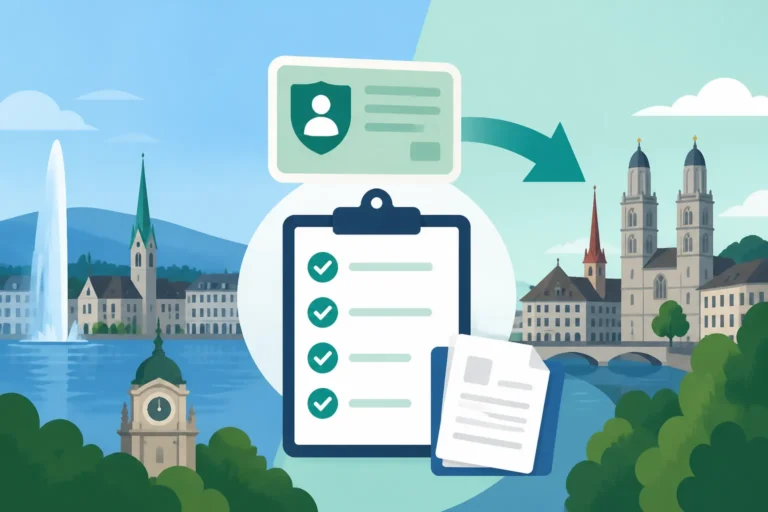
- Check the Canton: Go to the website of the "Migration Office" (Migrationsamt/Office de la population) for your specific canton. Zurich’s requirements might differ slightly from Geneva’s.
- Be Honest: If you have a DUI from ten years ago, disclose it. It’s better to explain it than to have them find it and assume you are trying to hide a dark past.
- Organize Your Dossier: Put everything in a clean folder. When you hand over a perfectly organized stack of papers, including your certified translations and proof of insurance from Cigna Global, it sends a message that you are a serious, organized person who will fit right into Swiss society.
Remember that Residence Permits in Switzerland: L, B, C, and G Permits Explained isn't just about the law; it's about the administrative process. If you follow the steps, pay your fees on time, and keep your record clean, the B permit will be your gateway to an incredible life in the heart of Europe.
Disclaimer
This guide is for informational purposes only and is based on personal experience and general administrative practices in Switzerland as of 2026. Immigration laws and cantonal requirements can change without notice. Always consult the official website of the Swiss State Secretariat for Migration (SEM) or your specific cantonal migration office for the most up-to-date and legally binding information. For complex legal issues or prior criminal convictions, it is highly recommended to seek advice from a qualified Swiss immigration lawyer.