Verpflichtungserklärung: Sponsoring a Visitor’s Financial Guarantee Letter
Hosting loved ones from home is often the highlight of expat life, but when your visitors come from countries that require a visa for Switzerland, the joy can quickly be overshadowed by a mountain of paperwork. I still remember the first time I tried to host my cousin; I thought a simple invitation letter would suffice, only to realize the Swiss authorities wanted a legally binding financial guarantee. This guide will walk you through the nuances of the Verpflichtungserklärung, ensuring you understand your liabilities and the step-by-step process to get your guests here without a hitch.
What is the Verpflichtungserklärung and Why Does Switzerland Require It
The Verpflichtungserklärung, or Declaration of Guarantee, is essentially a formal promise made by a Swiss resident to the authorities. In this document, you agree to cover any costs that the state might incur because of your visitor. Switzerland is part of the Schengen Area, and one of the primary requirements for entry is proving that the visitor has "sufficient means" to support themselves during their stay. If the visitor cannot prove they have roughly CHF 100 per day (or CHF 30 for students), the authorities will demand a guarantee from a local host.
The Concept of Financial Solvency
For the Swiss government, the Verpflichtungserklärung is a risk-mitigation tool. They want to ensure that if a visitor falls ill, overstays, or requires emergency assistance, the Swiss taxpayer isn't left picking up the tab. When you sign this, you are proving your own solvency. You are effectively telling the Migration Office, "I have enough money to support this person, and I take full responsibility for them." This is particularly relevant when applying for Schengen Visa (Type C): Tourist and Short-Business Rules for TCNs, where the financial bar is set quite high.
When Is a Declaration of Guarantee Necessary
Not every visitor needs this. If your guest is from a country with a visa-waiver agreement (like the US, UK, or Canada), they usually won't encounter this. However, for "Third-Country Nationals" from many Asian, African, and South American nations, the Swiss representation abroad may issue a form to the applicant if their personal bank statements don't meet the requirements. The visitor starts the process at the embassy, and only then do you, the host, step in to finalize the guarantee on the Swiss side. It is a dual-layered process that requires coordination between both parties.
The Legal Responsibility of the Sponsor
Signing this letter is not a mere formality; it is a legally binding contract with the Swiss Confederation. By signing, you commit to covering costs up to CHF 30,000. This includes living expenses, medical costs not covered by insurance, and even the costs of a forced repatriation if the person refuses to leave. It is vital to understand that this liability remains even if your relationship with the visitor sours during their trip. You are the financial anchor for their entire stay in the Schengen zone.
Eligibility Criteria for Being a Sponsor in Switzerland
Before you head to your local commune, you need to make sure you actually qualify to be a sponsor. The Swiss authorities are very picky about who they allow to take on this financial burden. They don't just look at your bank account; they look at your legal standing in the country. If you are still navigating the basics of your own residency, you might want to review Swiss Visas and Work Permits: The Complete 2027 Guide for Expats to ensure your status is secure.
Permit Requirements for Hosts
To be a sponsor, you generally need to be a Swiss citizen or hold a valid residence permit. Typically, those with a B Permit or a C Permit are eligible. If you are on a short-term L Permit, you might find it significantly harder, or even impossible, to act as a sponsor, as your own stay in Switzerland is considered temporary. The authorities want to see that you have a long-term stake in the country and won't just leave if a large bill for your visitor arrives.
Financial Thresholds and Proof of Income
There is no "magic number" that applies to every canton, but generally, the Migration Office looks for a disposable income that comfortably exceeds the subsistence level. They will look at your last three salary slips and your current employment contract. If you are self-employed, they will likely ask for your last audited tax return. They are looking for stability. If you have any outstanding debts, it could be a deal-breaker. This is why Checking Your Debt Register Extract (Betreibungsauszug) for Loans is an essential step before you even apply to be a sponsor. A single "Betreibung" (debt entry) can lead to an immediate rejection of your guarantee.
Household Size and Living Arrangements
The authorities also consider your current living situation. If you are living in a small studio and want to host a family of four, the Migration Office might question the feasibility of the arrangement. While they don't always conduct home visits for tourist visas, they do look at the "reasonableness" of the stay. They want to ensure that the visitor has a place to sleep that doesn't violate local housing standards. If you've recently moved, make sure you have finished Registering at the Kreisbüro: What Documents Do Expats Need to Bring? so your current address is correctly reflected in the system.
The Step-by-Step Application Process for the Guarantee Letter
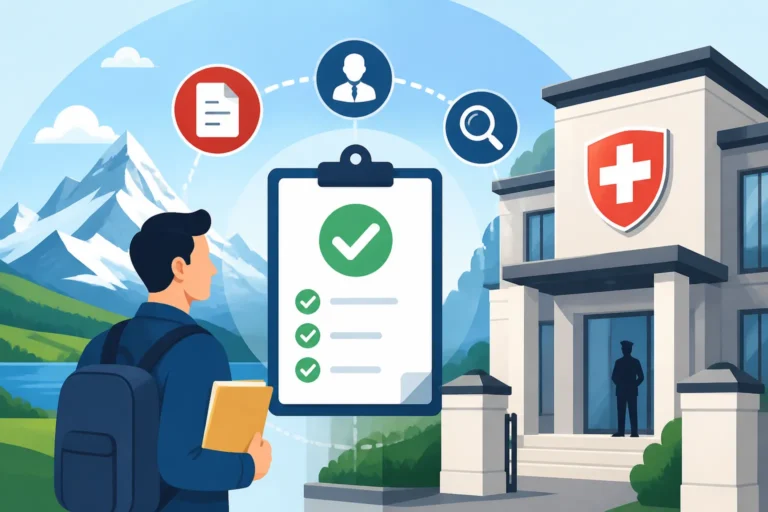
The process can feel like a game of bureaucratic ping-pong between the Swiss embassy in the visitor's home country and your local migration office. Knowing the order of operations is the best way to keep your sanity intact.
Initiating the Visa Process at the Swiss Representation
The process does not start with you. Your visitor must first book an appointment at the Swiss Embassy or a service provider like VFS Global in their home country. They submit their visa application and explain that they have a host in Switzerland but perhaps lack the full required funds. If the embassy agrees to proceed, they will hand the visitor a specific "Declaration of Guarantee" form with a reference number. The visitor must then scan or mail this form to you in Switzerland. You cannot simply download a generic form and fill it out; it must be the specific one issued to your guest.
Submitting the Form to the Cantonal Migration Office
Once you have the form from your visitor, you fill out your section and take it to your local commune (Gemeinde) or the cantonal migration office, depending on where you live. For example, in Zurich, you often start at the Registering Your Address at the Kreisbüro Within 14 Days of Moving office you are familiar with, but for the guarantee, you might be directed to the cantonal office at Berninastrasse. You will need to bring your ID, your residence permit, your last three months of salary slips, and a fresh Betreibungsauszug (debt register extract).
Fees and Processing Times
The Swiss government doesn't do anything for free. You will be charged a processing fee, which varies by canton but is usually between CHF 50 and CHF 100. Once you submit the documents, the cantonal office will take anywhere from a few days to a few weeks to verify your financials. If they approve it, they will update the system electronically, and the Swiss embassy in the visitor's country will be notified that the guarantee has been accepted. Only then can the visa be issued.
| Step | Action Item | Responsible Party | Location |
|---|---|---|---|
| 1 | Visa Application | Visitor | Swiss Embassy Abroad |
| 2 | Issuance of Form | Embassy Official | Swiss Embassy Abroad |
| 3 | Financial Verification | Sponsor (You) | Cantonal Migration Office |
| 4 | Debt Check | Sponsor (You) | Betreibungsamt |
| 5 | Approval Notification | Migration Office | Electronic System |
| 6 | Visa Issuance | Embassy Official | Swiss Embassy Abroad |
Essential Documentation and Translations
Swiss bureaucracy thrives on precision. If a document is not in one of the national languages (German, French, or Italian) or English, you are going to need a professional translation. This is where many expats get stuck, especially if they are providing documents from their home country to prove additional assets or relationships.
Proving Your Financial Standing
While salary slips are the standard, sometimes the authorities ask for more. If you receive bonuses or have significant savings, providing bank statements can help. If these statements are from a foreign bank, they must be clear and, in some cases, translated. Using a service like RushTranslate can be incredibly helpful here, as they provide certified translations that meet the rigorous standards of Swiss cantonal offices. Don't try to use a basic online translator for financial documents; the authorities will spot it immediately and reject the file.
Certified Translations and Notarization
If you are proving a relationship—for example, if you are sponsoring a nephew and need to provide birth certificates to prove the family link—those documents must be officially recognized. Often, an apostille is required, followed by a certified translation. Again, RushTranslate is a reliable partner for these types of "official" needs, ensuring that the German or French version of your document is legally equivalent to the original. For more on this, see Translation and Apostille Requirements for Marriage Certificates. If a signature needs to be witnessed, you may also need to look into Finding English-Speaking Notaries for Visa Documents in Switzerland.
Travel Insurance Requirements for Visitors
A crucial part of the guarantee process is ensuring the visitor has adequate health coverage. The Swiss government will not approve a visa without proof of travel medical insurance that covers at least EUR 30,000 and includes repatriation. While there are local Swiss providers for this, many expats prefer to use international giants like Cigna Global to ensure their guests have robust coverage that handles direct billing and high-limit emergencies. Having a policy from Cigna Global can provide peace of mind, knowing that if your guest ends up in a Swiss hospital, the insurance company—not your personal bank account—will handle the astronomical costs. You should check the specific Health Insurance Requirements for Sponsoring a Tourist Visa Letter to ensure the policy you choose is compliant.
Risks and Potential Pitfalls for Sponsors
It’s easy to get caught up in the excitement of a visit, but you must look at the risks with a clear head. When you sign that Verpflichtungserklärung, you are opening yourself up to significant financial exposure.
Liability for Medical and Repatriation Costs
Switzerland has some of the highest healthcare costs in the world. If your visitor has an accident and their travel insurance has a loophole or a low limit, you are the one the hospital will come to for payment. Even if you think Is Basic Health Insurance (KVG) Mandatory for Expats? A Plain-English Guide gives you a safety net, remember that your personal insurance does not cover your guests. If your guest overstays their visa, the costs of the police intervention and the flight back to their home country will be billed to you. This can easily reach the CHF 30,000 limit of the guarantee.
Debt Register Extracts and Credit Standing
As mentioned, your "Betreibungsauszug" is your passport to being a sponsor. If you have been a bit lax with paying your Swisscom bill or a library fine, and it has gone to the debt collection stage, you will likely be disqualified as a sponsor. The Swiss system is interconnected; the migration office can see your credit standing almost instantly. Maintaining a clean financial record is not just good for your future mortgage; it’s essential for your ability to interact with the immigration system.
Reasons for Application Denials
The most common reason for a guarantee being rejected is "insufficient financial means." This doesn't necessarily mean you are poor; it means that based on your income, expenses, and the number of people you want to host, the "risk" is too high for the canton. Other reasons include a lack of clear purpose for the visit or if the visitor has previously violated Schengen visa rules. If you are denied, you usually have the right to appeal, but this is a long and expensive process that rarely finishes before the intended travel dates.
Practical Tips for a Smooth Visitor Visa Experience
After going through this several times with family from across the globe, I’ve learned that a little bit of proactive planning goes a long way. The "Swiss way" is all about following the sequence exactly as prescribed.
Timing Your Application
Start early—but not too early. A Schengen visa application can usually be submitted no earlier than six months before the trip. However, because the Verpflichtungserklärung involves physical mail or multi-office processing, you should aim to have the visitor start their application at the embassy at least 8 to 12 weeks before their flight. Last-minute applications in Switzerland are a recipe for stress and expensive "express" fees that don't always speed things up.
Handling the Appointment at the Local Kreisbüro or Commune
When you go to your local office to sign the papers, be prepared. Bring your original residence permit, your original employment contract, and physical copies of your last three payslips. Some offices are moving toward digital uploads, but in my experience, the clerk still wants to see the originals and stamp them. Being polite and having your "Dossier" organized in a clean folder often makes the process much smoother. Swiss officials appreciate "Ordnung" (order), and it can sometimes result in faster processing.
Communicating with the Swiss Embassy Abroad
While you are dealing with the local office in Switzerland, stay in constant contact with your visitor. Once you receive the approval from your canton, send a scan of the confirmation to your visitor. Even though the system is electronic, embassies sometimes have delays in their internal database. Having a PDF proof of the approved guarantee can help the visitor if they need to follow up with the embassy staff in their home country. Transparency is your best friend during this process.
Disclaimer
The information provided in this article is for general informational purposes only and does not constitute legal or professional advice. Swiss immigration laws and cantonal requirements are subject to frequent changes. Always consult with the official website of the State Secretariat for Migration (SEM) or your local cantonal migration office for the most current regulations and forms. We are not responsible for any visa denials or financial liabilities incurred as a result of using this guide.