Transferring a B Permit from Geneva to Zurich: Document Checklist
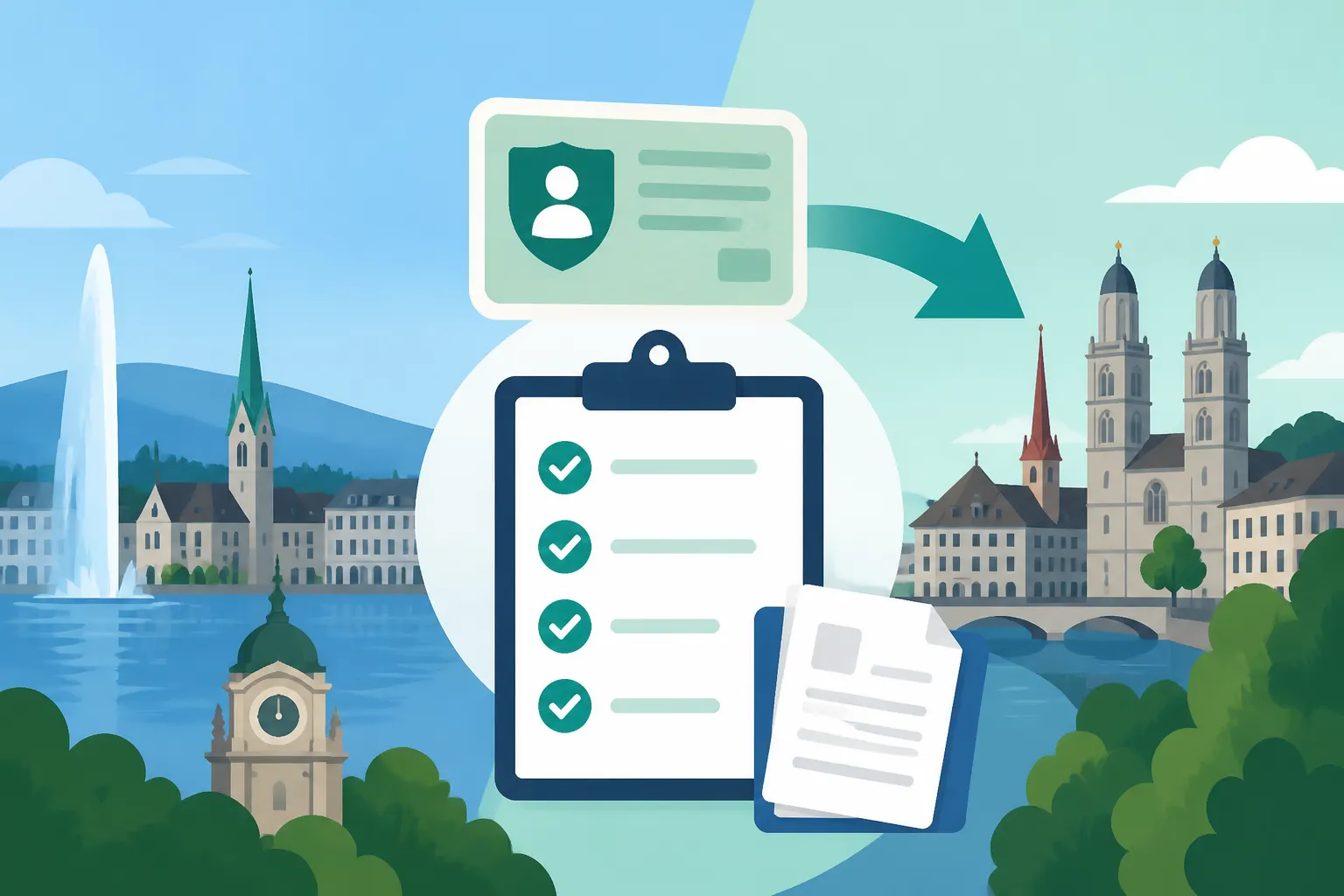
Moving from the French-speaking lakeside of Geneva to the bustling, German-speaking streets of Zurich feels like moving between two different countries. I remember the sinking feeling in my stomach when I realized my Geneva B permit wasn't a magic ticket that worked everywhere without a paperwork battle. This guide breaks down the exact steps and document checklist you need to transfer your residency legally and smoothly.
The Reality of Cantonal Sovereignty in Switzerland
When you first arrive in Switzerland, it is easy to assume that a federal residence permit is just that—federal. However, Switzerland operates on a deeply decentralized system where the cantons hold the primary power over immigration and residency. Your B permit is technically issued by the Canton of Geneva, and while it allows you to live and work in Switzerland, your "domicile" is registered with the Geneva authorities. Moving to Zurich is not just a change of address; it is a change of jurisdiction.
For EU/EFTA citizens, this process is generally a matter of notification and registration thanks to the Agreement on the Free Movement of Persons. However, if you are a Third-Country National (non-EU/EFTA), your B permit might be "tied" to your employer or your specific canton. If your permit has a condition linked to your current job in Geneva, moving to Zurich requires a more formal approval process from the Zurich Migrationsamt. You should check if you have Tied vs Untied B Permits: Can You Freely Change Employers? before you sign a new lease in the German-speaking part.
The cultural shift is also reflected in the administration. In Geneva, you deal with the Office Cantonal de la Population et des Migrations (OCPM), which often feels a bit more "Latin" in its pace. In Zurich, you will be dealing with the Migrationsamt and the local Kreisbüro, where efficiency is the gold standard, but the rules are enforced with literal precision. Knowing this difference helps manage your expectations when you realize that Zurich authorities expect every document to be perfectly translated and organized.
Step One: The Departure from Geneva (Abmeldung)
Before you can officially become a Zurich resident, you must "close the book" on your life in Geneva. This process is known as the Abmeldung in German or Annonce de départ in French. You cannot be registered in two places at once in Switzerland, and Zurich will often ask for proof that you have deregistered from Geneva before they finalize your new permit.
You should visit the OCPM or your local commune office in Geneva about two weeks before your move. You will need to tell them your exact departure date and your new address in Zurich. This is also a critical time to settle any outstanding municipal obligations. For instance, if you have been paying church tax, you might want to look into How to Officially Leave the Church in Switzerland to Stop Kirchensteuer to ensure those records are updated before the move.
The Geneva authorities will provide you with a departure certificate (Attestation de départ). Keep this document in your "life in Switzerland" folder; you will need it for everything from canceling your Geneva internet contract to proving to your health insurance provider that your premiums need to be recalculated for your new Zurich neighborhood.
Step Two: The 14-Day Registration Window in Zurich
Once you have physically moved your boxes across the "Röstigraben," the clock starts ticking. You are legally required to register in Zurich within 14 days of your arrival and, crucially, before you actually start working at a new job in the canton.
In Zurich, the registration happens at the Kreisbüro (District Office) if you live in the city, or at the Gemeindehaus (Town Hall) if you are living in one of the surrounding gold-coast towns like Meilen or Küsnacht. You must show up in person. Unlike some administrative tasks in other countries, this is not something you can easily do via a web portal as a foreigner transferring a permit. You are following The 14-Day Registration Rule: Signing Up at the Gemeinde/Commune which is strictly enforced.
If you are moving with a family, every member needs to be present, or you must have very specific powers of attorney. The Zurich authorities will take your Geneva B permit card and, in most cases, send it back to the Geneva office while they issue you a new Zurich-based residence card. This transition period can take a few weeks, so it is wise to have a digital scan of your old permit before you hand it over.
The Comprehensive Document Checklist for Zurich
Zurich is known for its love of documentation. To make this transfer successful on your first visit to the Kreisbüro, you need to bring a complete "Bewerbungsmappe" of your life. If any of your original documents (like marriage or birth certificates) are only in French or another language not recognized in Zurich, you will likely need certified translations. This is where services like RushTranslate become invaluable, as they can provide the certified English or German versions that Zurich officials require.
Personal Identification and Permits
- Valid Passport: Ensure it has at least six months of validity remaining.
- Current Geneva B Permit: The physical plastic card.
- Departure Certificate: The Attestation de départ you received from Geneva.
- Passport Photos: Even though they will likely take your biometrics again, bringing 1-2 Swiss-standard photos is a safe backup.
Proof of Domicile in Zurich
- Signed Rental Contract: Zurich will not register you without a valid lease. If you are staying in temporary housing, you need a signed "Wohngeberbestätigung" (Confirmation from the provider/landlord). This is a pillar of Renting in Switzerland: The Complete 2027 Guide for Expats.
- Room Counting Compliance: Ensure your apartment is large enough for your household, as Zurich has strict rules on the number of people per room.
Professional and Financial Status
- New Employment Contract: If you are moving for work, you need the signed contract showing your salary, start date, and "Pensum" (workload percentage). This relates directly to how they calculate your Salary and Compensation: Navigating Swiss Pay, Bonuses, and Deductions.
- Current Lohnausweis: Your most recent salary certificate from your Geneva employer.
- Debt Register Extract: While not always mandatory for the permit transfer itself, having a "clean" record is vital for your residency. You can learn How to Get a Betreibungsauszug at the Office des Poursuites if you haven't already.
Civil Status Documents
- Marriage/Birth Certificates: Especially if you are moving with a spouse or children. Again, if these are in non-Swiss languages, RushTranslate can ensure they meet the Migrationsamt standards.
| Document Category | Item Required | Why It Matters for Zurich |
|---|---|---|
| Residency | Attestation de Départ (GE) | Proves you are no longer taxed in Geneva. |
| Housing | Mietvertrag (Lease) | Confirms your new tax municipality (Gemeinde). |
| Employment | Arbeitsvertrag | Determines if your B permit remains valid. |
| Identity | Passport & Physical B Permit | Legal basis for your presence in Switzerland. |
| Health | Insurance Policy | Proves coverage under the mandatory KVG/LAMal. |
Updating Your Health Insurance and Social Security
One of the most surprising things for expats moving from Geneva to Zurich is that their health insurance premiums will change. Health insurance in Switzerland is cantonal and even zip-code dependent. Geneva traditionally has some of the highest premiums in the country, while Zurich is often slightly lower—though still significant.
When you move, you must notify your health insurance provider immediately. They will issue a new policy based on your Zurich address. If you are currently using an international plan like Cigna Global during a transition or as a supplement, you need to ensure they have your updated Zurich address to maintain compliance with local regulations. Understanding how the system works is essential, so take a moment to review Healthcare in Switzerland for Expats: The Complete System Overview (2027).
While your basic insurance (KVG/LAMal) is mandatory, the move is a good time to reassess your coverage. If you are a high-earner or have specific needs that the basic Swiss system doesn't fully cover, maintaining a policy with Cigna Global can provide that extra layer of international flexibility that many expats prefer. You will also need to ensure your employer has updated your Accident Insurance (UVG): Occupational vs. Non-Occupational Coverage to reflect your new workplace in Zurich.
The Cultural and Linguistic Transition
Moving from Geneva to Zurich isn't just about the permit; it's about the language. In Geneva, you likely got by with French or even a high degree of English in international circles. In Zurich, while English is widely spoken in business, the local administration runs on High German, and the social life runs on Swiss German (Züritüütsch).
When you go to the Kreisbüro, the officials will usually speak English, but all the forms will be in German. It is a sign of "integration" to attempt the process in German or to have your documents professionally translated beforehand. Using RushTranslate for your official records shows the Zurich Migrationsamt that you are serious about the move and have prepared your dossier with the expected Swiss precision.
The social integration is also different. Zurich has a very active "Verein" (club) culture. To truly settle in and ensure your permit renewals go smoothly in the future, you might want to look into volunteering or joining local groups. This is often looked upon favorably when you eventually apply for The Swiss C Permit (Permanent Residency): Fast-Track and Standard Routes.
Handling the Financial Implications of the Move
Your tax situation will change the moment you register in Zurich. Geneva and Zurich have different tax rates (Steuerfuss). Generally, Zurich's cantonal tax is slightly lower than Geneva's, but this can vary depending on which specific municipality in Zurich you choose. If you are on a B permit, you will still be subject to "Quellensteuer" (tax at source), but the rates applied will be those of Canton Zurich.
You must also consider your pension. Your "Pillar 2" (LPP/BVG) funds will move with you to your new employer's pension fund. It is your responsibility to ensure the "Freizügigkeitsleistung" (vested benefits) from your Geneva job are transferred to your new Zurich-based fund. Failure to do this can result in your retirement savings being scattered across different institutions.
If you are a Third-Country National, the Migrationsamt in Zurich will also look at your financial stability. They may check if you have any outstanding debts or if you have relied on social assistance. Ensuring your financial records are clear is a prerequisite for a smooth transfer. If you are unsure about the financial landscape of your new home, checking a guide on Banking and Finance for Expats in Switzerland: The 2027 Guide can prevent costly mistakes during the transition.
Potential Pitfalls to Avoid
The most common mistake expats make is waiting too long to register. The 14-day rule is not a suggestion; it is a legal requirement. If you are caught living in Zurich while still registered in Geneva, you could face fines and complications with your permit renewal.
Another pitfall is the "Tied Permit" issue mentioned earlier. If your B permit in Geneva was granted under a specific quota for a specific role, Zurich has the right to review your "Inländervorrang" status again. This is the process where How Employers Prove They Couldn't Find a Swiss/EU Worker (Inländervorrang) is verified. Usually, for internal company transfers or high-demand roles, this is a formality, but for non-EU citizens, it is a hurdle that requires proactive communication with the Zurich Migrationsamt.
Lastly, don't forget the small things. Your driving license, your car registration (if you have one), and even your dog's registration must be moved to Zurich. Switzerland's love for order means that if you miss one of these "small" registrations, it can come back to haunt you when you eventually apply for Becoming Swiss: Naturalization and Citizenship Process in 2027.
Summary of the Transfer Process
To summarize, moving your B permit from Geneva to Zurich involves:
- Deregistering in Geneva and getting your Attestation de départ.
- Moving and signing a lease in Zurich.
- Visiting the Zurich Kreisbüro within 14 days with your full document dossier.
- Ensuring all non-German documents are translated by a service like RushTranslate.
- Updating your health insurance (consider Cigna Global for international continuity) and social security.
- Managing the transition of your pension funds and tax records.
By following this checklist and staying ahead of the deadlines, you can focus on enjoying the beauty of Lake Zurich and the efficiency of your new home, rather than stressing over administrative delays.
Disclaimer
The information provided in this guide is for informational purposes only and does not constitute legal or professional immigration advice. Swiss immigration laws and cantonal regulations are subject to frequent changes. Always verify requirements with the official website of the Zurich Migrationsamt or the Geneva OCPM before making any legal decisions regarding your residency.