Dining Out in Switzerland: Reservations, Tipping, and Mealtimes
Stepping into the Swiss dining scene as an expat can feel like navigating a charming, but sometimes bewildering, obstacle course. You're trying to enjoy a meal, but suddenly you're questioning unwritten rules about tipping, wondering why the kitchen closed at 9 PM, or simply reeling from the price of a simple glass of tap water. This guide is here to demystify dining out in Switzerland, offering practical advice on everything from making reservations to understanding mealtimes, so you can confidently savor those delicious, albeit pricey, Swiss culinary delights.
Navigating Swiss Restaurant Culture: More Than Just Food
Dining out in Switzerland is often a beautiful experience, offering everything from quaint, rustic eateries to Michelin-starred marvels. However, the cultural nuances can be a bit of a curveball for those accustomed to different norms. It's not just about what you eat, but how you eat it, and the unspoken rules that govern the whole interaction.
Punctuality and Greetings: First Impressions Matter
The Swiss famously appreciate punctuality, and this extends to your dining experience. If you’ve made a reservation, arriving on time is not just polite, it’s expected. Don't stress about being five minutes early, but certainly don't saunter in fifteen minutes late without calling. When you arrive, especially at a more formal establishment, it's common to wait at the entrance to be seated. You'll usually be greeted with a friendly "Grüezi" (Swiss German), "Bonjour" (French), or "Buongiorno" (Italian), depending on the region. A polite return greeting goes a long way. In a more casual "Beiz" (a traditional pub-style eatery), it might be more acceptable to find an empty table yourself, but if in doubt, always wait for guidance.
Once seated, the initial interaction might feel a bit more formal than what you're used to. Don't mistake efficient service for unfriendliness; it's simply a different approach. The staff are typically very professional and will attend to you, but they might not hover over your table or engage in prolonged small talk. It’s about doing their job well and letting you enjoy your meal, rather than trying to become your new best friend. Remember, the Swiss value directness and efficiency, so clear communication is appreciated.
Service Style and Expectations: Efficiency Over Effusiveness
You might notice that Swiss service, while impeccable in its precision, often lacks the effusiveness found in American or even some other European countries. Waitstaff are trained to be attentive without being intrusive. They'll bring your food promptly, clear dishes efficiently, and generally ensure your needs are met. What they might not do is check on you every five minutes, ask how "everything is tasting," or bring the bill before you've explicitly requested it.
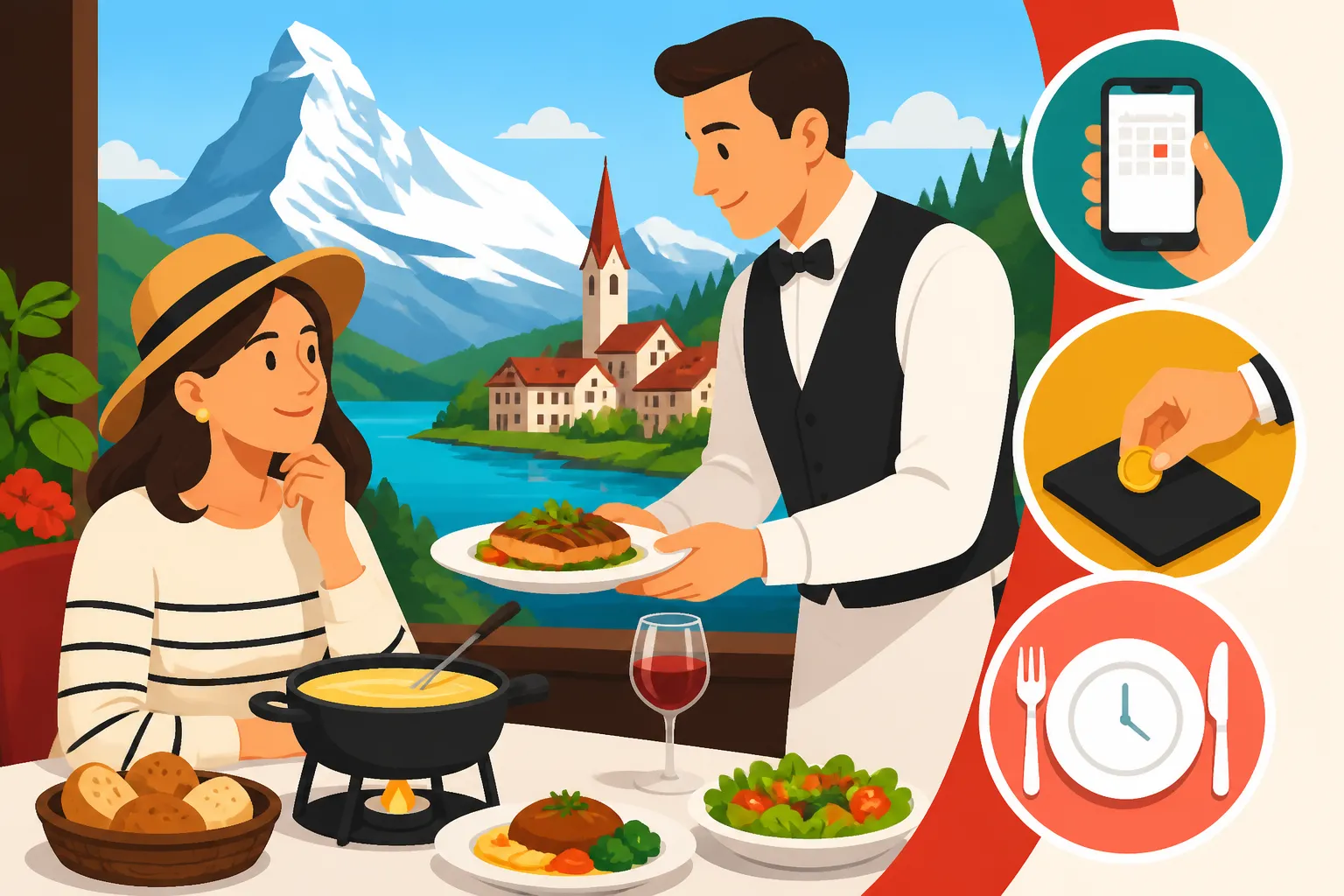
This can be a pleasant change for some, and frustrating for others who prefer constant engagement. If you need something, don't hesitate to politely catch your server's eye and ask. When you're ready for the bill, a simple "Zahlen bitte!" (German), "L'addition, s'il vous plaît!" (French), or "Il conto, per favore!" (Italian) will do the trick. They will usually bring a payment terminal to your table, allowing you to pay by card. The process is generally smooth and quick, allowing you to settle up and depart without fuss. This efficient, no-nonsense approach to service is a hallmark of the Swiss dining experience and, once understood, can be quite refreshing.
Social Etiquette at the Table: Quiet Appreciation
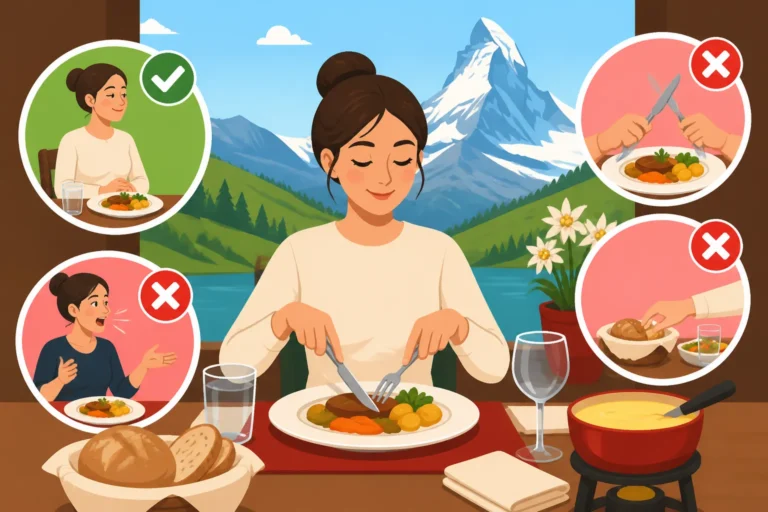
The dining table in Switzerland, especially in finer establishments, is generally a place for polite conversation and appreciation of the food. While lively discussions are fine, loud boisterous laughter, excessive mobile phone use (especially speakerphone calls), or generally disruptive behavior are frowned upon. Picture a refined hum rather than a cacophony. People tend to speak in moderate tones, allowing others to enjoy their meals without undue disturbance.
A common scenario that often leaves expats scratching their heads is when it comes to splitting the bill. Unlike cultures where a single bill is paid and friends sort it out later, the Swiss are often meticulous. It's perfectly normal to ask for separate bills ("Getrennte Rechnungen, bitte!" or "Des additions séparées, s'il vous plaît!"), or for each person to pay for exactly what they consumed down to the last franc and centime. Don't be surprised if your Swiss dining companions pull out calculators or meticulously tally up items. It's not being cheap; it's simply how things are often done here – fair and precise. Embracing this detail-oriented approach will help you fit right in.
Understanding Swiss Mealtimes and Dining Schedules
One of the biggest adjustments for expats, particularly those from Southern Europe or North America, is the Swiss approach to mealtimes. The kitchens here operate with military precision, and if you miss the window, you might find yourself out of luck for a warm meal. It’s a good idea to reset your internal clock when it comes to breakfast, lunch, and dinner.
Lunch (Mittagessen/Déjeuner): Efficiency is Key
Swiss lunch, or Mittagessen in the German-speaking parts and Déjeuner in Romandie, typically takes place between 12:00 PM and 1:30 PM, sometimes stretching to 2:00 PM. This is often a relatively quick affair, especially during the work week. Many restaurants, especially those catering to the business crowd or local workers, offer a "Mittagsmenü" or "Plat du jour" – a fixed-price menu that usually includes a starter (often a soup or salad), a main course, and sometimes a small dessert. These menus are excellent value for money compared to ordering à la carte, and they are designed to be served and consumed efficiently.
Don't expect a two-hour leisurely lunch unless you're in a more upscale or specific "slow food" establishment. The idea is to fuel up and get back to work. If you're out exploring, look for signs advertising these daily menus. They often change daily or weekly, offering a taste of local, seasonal ingredients. Missing the lunch window usually means you'll be limited to cold sandwiches, salads, or possibly a cheese platter if you're lucky until dinner service begins.
Dinner (Abendessen/Dîner): Earlier Than You Think
Dinner service in Switzerland starts noticeably earlier than in many other countries. While you might find restaurants serving from 6:00 PM, the peak dining time is often between 7:00 PM and 8:00 PM. Crucially, many restaurant kitchens close around 9:00 PM or 9:30 PM, especially outside of major city centers like Zurich or Geneva. If you arrive past 9:00 PM expecting a full hot meal, you might be met with closed doors or a stern "Küche ist geschlossen" (kitchen is closed).
This is a common frustration for new arrivals, particularly those from Mediterranean cultures where dinner might begin closer to 9:00 PM or 10:00 PM. It’s important to plan ahead. If you’re traveling, factor in earlier dining times. Even in cities, while some places might stay open later, it's not the norm. If you're really in a bind and the kitchen is closed, you might still be able to order a "Plättli" – a cold platter of local cheeses and cured meats – which can be surprisingly satisfying and often available until closing time. Don't underestimate the delicious simplicity of a good Hobelkäse with some crusty bread!
Beyond Core Meals: Apéro and Zwischenmahlzeiten
The Swiss don't just eat at set times; they also have a strong culture of Apéro (apéritif) and Zwischenmahlzeiten (snacks). The Apéro is a beloved social ritual, usually taking place after work, anytime from 5:00 PM to 7:00 PM. It's a chance to unwind with a drink – often wine, beer, or a non-alcoholic spritzer – and some light snacks like nuts, olives, or small bites of cheese and crackers. Many bars and some restaurants offer special Apéro deals, and it's a fantastic way to socialize and bridge the gap between work and an earlier dinner. If you want to dive into Apéro Culture: Socializing with Coworkers After Work, you'll find it's a quintessential Swiss experience.
Beyond the Apéro, you'll find that bakeries (Bäckerei/Boulangerie) are your best friend for any in-between meal hunger pangs. They offer an incredible array of fresh sandwiches, pastries, and savory tarts that can easily serve as a light lunch or substantial snack. Even supermarkets like Coop and Migros have dedicated sections for ready-to-eat meals and sandwiches. So, while hot meals have strict timings, you're rarely far from something delicious to tide you over.
The Truth About Tipping in Switzerland
Ah, tipping! This is perhaps one of the most confusing aspects of dining out in Switzerland for many expats. Coming from countries where a 15-20% tip is mandatory or strongly expected, the Swiss system can feel counter-intuitive. Let's clear the air and set realistic expectations. To get a really detailed dive, you might want to check out the article on Tipping in Switzerland: Is Service Included in Restaurant Bills?.
Service Charge Included: It's the Law
Here's the fundamental truth: in Switzerland, a service charge is always included in the price of your meal. This has been enshrined in law for decades, meaning staff are paid a living wage (by Swiss standards, which is already quite high) and do not rely on tips for their basic income. The prices you see on the menu are the prices you pay, and that covers the service.
This is a stark contrast to places like the US, where tips form the bulk of a server's salary. In Switzerland, the service staff are professionals, and their compensation is built into the overall cost of operations, which contributes to why dining out here can feel so expensive. Don't feel guilty if you don't leave an additional tip. You are not short-changing your server; they are compensated fairly regardless.
When and How to Tip (If at All): Rounding Up
While not mandatory, leaving a small token of appreciation for truly excellent service is a common gesture. This isn't a percentage, but rather rounding up to the nearest franc, or adding a few francs.
Here's how it generally works:
- For bills under CHF 20-30: You might round up to the nearest whole franc or add CHF 1-2. So, if your coffee costs CHF 4.50, you might say "5 francs, bitte" (or "cinq francs, s'il vous plaît") when paying.
- For larger bills: For a meal costing, say, CHF 85, you might round up to CHF 90. For a truly exceptional experience, you might leave CHF 5 or even CHF 10, but this is a personal choice, not an obligation.
- Cash vs. Card: If you're paying with cash, you can simply tell the server the total amount you want to pay, including the "tip," and they will give you change from that. If paying by card, most terminals will offer an option to add a tip, or you can manually enter the higher amount. Some people prefer to leave a few coins in cash on the table if they are paying by card, just to ensure it goes directly to the server.
Cultural Nuances of Tipping: Appreciation, Not Expectation
The key difference is that tipping in Switzerland is an expression of appreciation, not an expectation or a supplementary income for the staff. A server will never be offended if you don't tip, especially if the service was merely adequate. They will, however, appreciate the gesture if you found the service to be genuinely outstanding – friendly, efficient, and going above and beyond.
Don't let the pressure or your cultural conditioning make you over-tip, as this can sometimes be viewed as ostentatious or simply unnecessary. A simple "Danke schön!" or "Merci beaucoup!" and rounding up a few francs is more than enough. It demonstrates that you understand the system and appreciate the hard work. Remember, the Cost of Living in Switzerland 2026: Budgeting for Singles and Families already includes higher prices across the board, so feel confident in sticking to the cultural norm.
Making Reservations and Dealing with Availability
Ah, the Swiss love for planning! This extends significantly to dining out. Unlike some spontaneous cultures where you can often just walk into a popular spot on a Friday night, in Switzerland, planning ahead is often the key to avoiding disappointment, especially if you have a specific restaurant in mind.
When to Reserve and Why: Avoid Disappointment
While you might get lucky at a casual pizzeria on a Tuesday evening, securing a table at popular restaurants – especially during peak hours (7 PM-8 PM), on weekends (Friday and Saturday nights), or for groups – almost always requires a reservation. Many smaller, highly-regarded local Beizen fill up quickly with regulars. International restaurants, trendy spots in city centers, and anything with a view are also likely to be fully booked.
Furthermore, if you're dining around Public Holidays in Switzerland: National and Cantonal Days Off, or during special events (like a major local festival), reservations become even more crucial. Some restaurants might even have limited seating or special menus during these times. It's not uncommon for popular places in Geneva or Zurich to be fully booked a week or two in advance for prime weekend slots. Don't take the chance; a quick call or online booking can save you from wandering aimlessly on a hungry stomach.
Online Booking vs. Phone Calls: Language and Convenience
Switzerland has embraced online booking systems, making it much easier for expats to secure tables without language barriers. Many restaurants use platforms like TheFork (LaFourchette in French-speaking regions) or have their own direct booking systems on their websites. A quick Google search for the restaurant name usually brings up their website with booking options. Websites like GetYourGuide might also offer special dining experiences or food tours that you can book online, combining a meal with a cultural activity.
However, sometimes a phone call is still the best, or only, option. This is especially true for smaller, family-run establishments or if you have specific requests (e.g., dietary needs, a preferred table). If you're in a German-speaking region and your German isn't quite there yet, try starting with "Sprechen Sie Englisch?" (Do you speak English?). Most staff in tourist areas or larger cities will be able to help. In Romandie, "Parlez-vous anglais?" will be your go-to phrase. Don't be shy; they're generally used to it. And if you're planning a trip, consider using Omio to book your train tickets to different cities, then use Booking.com to find hotels, and simultaneously scope out dining options.
Table: Reservation Methods Comparison
| Method | Pros | Cons | Best For |
|---|---|---|---|
| Online Portal | Easy, 24/7, no language barrier | Not all restaurants use them, less flexible for special requests | Popular restaurants, large cities, quick bookings, if you struggle with language |
| Restaurant Website | Direct, often shows real-time availability | Not always in English, may require a login | Specific restaurants you've researched, checking menus in advance |
| Phone Call | Best for special requests, last-minute checks | Requires local language skills, only during opening hours | Smaller, traditional eateries, dietary restrictions, larger groups |
| Walk-in | Spontaneous, no commitment | High risk of no table, especially during peak times and weekends | Casual cafes, off-peak hours, very small groups (1-2 people) |
Dealing with Cancellations and No-Shows: A Matter of Respect
Just as the Swiss value punctuality, they also value commitment to reservations. If you've booked a table and your plans change, it is considered extremely rude and unprofessional to simply not show up. Always call or use the online system to cancel your reservation as soon as possible. This allows the restaurant to reallocate the table and avoid lost revenue.
Many high-end restaurants, especially in places like Zurich and Geneva, now take credit card details to secure reservations and may charge a no-show fee if you don't cancel within a specified timeframe (e.g., 24 hours). This is less common in casual eateries but is a growing trend. Being considerate and communicating changes to your booking demonstrates respect for the establishment and its staff, and keeps you in good standing for future visits.
Decoding the Menu: Costs, Drinks, and Dietary Needs
The menu in a Swiss restaurant is more than just a list of dishes; it's often the first indicator of the high cost of living here, and a map to navigating your meal choices. Understanding what to expect regarding prices, drinks, and how to communicate your dietary preferences will make your dining experience much smoother.
The Price Tag Shock: Validating Your Feelings
Let’s not beat around the bush: dining out in Switzerland is expensive. Period. Many expats arrive here, see the prices on the menu, and frankly, feel a bit of sticker shock. And you know what? That's completely valid. A main course can easily set you back CHF 30-50, and a simple pizza might be CHF 20-25. Even a humble glass of wine or a beer often costs CHF 7-10. This is the reality of the Swiss economy – high wages, high quality, and high operating costs translate directly to high consumer prices.
The cost is influenced by several factors:
- High Labor Costs: Staff wages are among the highest globally.
- Quality Ingredients: Switzerland prides itself on quality, often sourcing local and organic produce, which comes at a premium.
- Rent and Utilities: Operating a restaurant in prime Swiss locations is incredibly expensive.
- Taxes: VAT (Mehrwertsteuer) is applied to food and drinks, though it's lower for food to be consumed on-site than for takeaway.
So, when you see those prices, understand that it's not designed to gouge tourists or expats; it's simply the reflection of the economic structure here. Budgeting for meals out is crucial if you want to avoid a financial surprise. If you want to understand more about how these costs fit into the broader picture, read up on the Cost of Living in Switzerland 2026: Budgeting for Singles and Families. For those times when you want to save money, remember that Grocery Shopping: Coop, Migros, Aldi, Lidl, and Denner Compared offers excellent alternatives for self-catering.
Beverages: Tap Water, Wine, and Soft Drinks
The first question many expats ask is about tap water. In Switzerland, tap water is of excellent quality and perfectly safe to drink. However, when dining out, asking for "Leitungswasser" (German) or "une carafe d'eau" (French) – meaning tap water – may or may not be free. Some restaurants will happily bring you a carafe for free, especially if you're ordering other drinks. Others might charge a small fee (CHF 2-5) for "service," "washing," or simply because it's their policy. It can feel irritating, but it’s a reality you’ll encounter. Don't expect it to always be free. If you want free water, be prepared to pay for a bottled water instead, which will be much more expensive, or simply order another beverage.
When it comes to alcohol, local Swiss wines are a delight, though not widely exported. You'll find excellent options from the Valais, Vaud, and Geneva regions. Don't shy away from trying a local Fendant or Chasselas white wine, or a Dole red. The markup on wine can be substantial, so if you're on a budget, a glass of open wine (Offenwein/vin ouvert) is usually more economical than a full bottle. Beers are also popular, with plenty of local brews alongside international brands. Soft drinks, like in most of Europe, come in smaller portions and at a higher price than in North America.
Vegetarian, Vegan, and Allergy Considerations
Switzerland has made significant strides in accommodating dietary needs, but it's still a journey. Vegetarian options are widely available, with most restaurants offering at least one or two meat-free main courses. You'll find plenty of delicious options, from pasta dishes to hearty salads and traditional cheese-based meals like Fondue and Raclette Culture: How and When the Swiss Eat Them. Vegan options are becoming more common, especially in larger cities and trendier establishments, but in more traditional or rural settings, it might be challenging beyond a side salad or plain vegetables.
For allergies, Swiss restaurants are generally quite good, but it's always best to communicate clearly and in advance if possible. Common phrases to learn:
- "Ich bin Vegetarier/in" / "Je suis végétarien/ne" (I am vegetarian)
- "Ich bin Veganer/in" / "Je suis végétalien/ne" (I am vegan)
- "Ich habe eine Nussallergie" / "J'ai une allergie aux noix" (I have a nut allergy)
- "Ohne Milchprodukte, bitte" / "Sans produits laitiers, s'il vous plaît" (Without dairy, please)
- "Glutenfrei" / "Sans gluten" (Gluten-free)
Don't assume, always ask. If you're concerned about finding options for specific dietary requirements, booking through a platform like Booking.com that allows you to filter for hotels with specific restaurant types can be helpful, or use GetYourGuide to find local food tours that cater to specific needs.
Exploring Different Dining Experiences Beyond the Fancy
While Switzerland is famous for its high-end dining and traditional fondue, the culinary landscape is far richer than just those extremes. There's a whole world of dining experiences to explore, catering to different tastes and budgets.
Traditional Swiss Eateries (Beizen/Bistros): Hearty Comfort
The Beiz (in German-speaking Switzerland) or Bistro (in Romandie) is the beating heart of Swiss local dining. These are traditional, often unpretentious, eateries serving hearty, regional comfort food. Think Zürcher Geschnetzeltes (sliced veal in cream sauce), Rösti (crispy fried grated potatoes), Wurstsalat (sausage salad), or a simple Älplermagronen (Alpine macaroni and cheese). These places are where you’ll truly taste the Swiss Food and Drink Culture: Regional Specialties and Dining Etiquette.
The atmosphere is typically warm, lively, and very Swiss. You'll often find regulars chatting at the bar, enjoying a beer or a glass of local wine. Prices here tend to be a bit more reasonable than in fine dining establishments, making them a great option for an authentic and satisfying meal. Don't expect elaborate presentations, but do expect generous portions of delicious, traditional food. Finding a good local Beiz is like finding a hidden gem, and it's a fantastic way to immerse yourself in the culture.
International Cuisine and Casual Dining: Global Flavors
Switzerland's major cities, particularly Zurich and Geneva, are incredibly international hubs, and their dining scenes reflect this diversity. You'll find a vast array of international cuisines, from fantastic Italian trattorias (a legacy of Italian immigration) to vibrant Asian eateries, authentic Indian restaurants, and contemporary fusion spots. These cities are where you can find everything from a quick falafel to an exquisite sushi experience.
Casual dining options are also abundant. Burger joints, pizzerias (often with wood-fired ovens), and trendy cafes offering brunch are increasingly popular. These places often have a more relaxed vibe, longer serving hours, and sometimes slightly more budget-friendly options than traditional Swiss restaurants. For those looking for something beyond traditional Swiss fare, the cities offer a truly global culinary journey. Remember to check out resources on Zurich Expat Healthcare Guide: Hospitals, Clinics, and Emergency Contacts or Geneva Expat Healthcare Guide: International Clinics and Public Hospitals as these areas often have a high concentration of international dining options.
Food Trucks, Markets, and Self-Catering: Budget-Friendly Options
If your wallet is feeling the pinch, or you simply prefer a more casual approach, Switzerland offers excellent alternatives. Food trucks have become popular in cities, especially during lunchtime, offering diverse and often delicious options at a fraction of restaurant prices. You can find everything from gourmet burgers to ethnic street food. Keep an eye out for them in city squares or near business parks.
Local markets are another treasure trove. Farmers' markets offer fresh, seasonal produce, and many have stalls selling ready-to-eat meals, snacks, or baked goods. Visiting Swiss Farmers' Markets: Where and When to Shop Local is not just a way to save money, but also a wonderful cultural experience. And of course, there's always the option of self-catering. Swiss supermarkets like Coop, Migros, and even budget chains like Aldi and Denner (which you can learn more about in Grocery Shopping: Coop, Migros, Aldi, Lidl, and Denner Compared) offer high-quality ingredients, ready-to-eat meals, and an array of delicious Regional Swiss Cheeses: Gruyère, Emmental, Appenzeller, and More that can make for a fantastic and much cheaper meal at home or as a picnic. Enjoying a picnic by a lake or in a park with fresh Swiss bread, cheese, and a bottle of local wine is a quintessentially Swiss experience, and one that won't break the bank!
Disclaimer
The information provided in this guide is intended for general informational purposes only and does not constitute legal, financial, or professional advice. While we strive to keep the information up-to-date and accurate, regulations, prices, and cultural norms can change. Always verify current details with official sources or consult with appropriate professionals. We are not responsible for any decisions made based on this information.