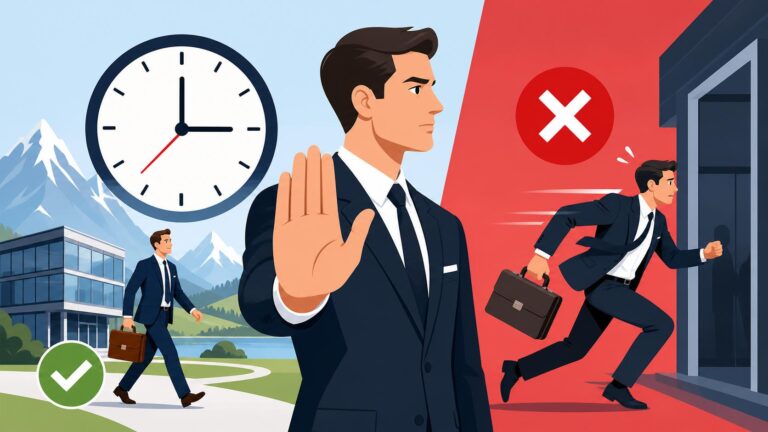
Apéro Culture: Socializing with Coworkers After Work
Entering a Swiss office can feel like walking into a silent library, where the only sound is the frantic clicking of mechanical keyboards. I spent my first six months in Zurich wondering if I would ever break the ice with my team of hyper-efficient engineers. This guide reveals the secrets of the Apéro, the primary social lubricant for integrating into Swiss workplace culture.
Decoding the Swiss Apéro: More Than Just Happy Hour
If you are coming from London, New York, or Sydney, you might assume that "after-work drinks" involve a messy crawl through several pubs ending with a late-night kebab. In Switzerland, the "Apéro" is a far more refined and strategically significant ritual. It is the bridge between the professional and the private, a sacred window of time—usually between 4:30 PM and 7:00 PM—where the rigid hierarchy of Working in Switzerland as an Expat: Jobs, Culture, and Employment Laws softens just enough to allow for genuine connection.
The Philosophy of the Pre-Dinner Drink
The Apéro isn't about getting drunk; it’s about "coming down" from the workday together. In the Swiss mindset, work is for work, and home is for family. The Apéro serves as the decompression chamber. I remember feeling a bit slighted when my colleagues would decline a drink at 8:00 PM but were more than happy to stand around a standing table with a glass of white wine at 5:00 PM. This is because the Apéro is designed to end before dinner time. It respects the boundaries of the Swiss evening while acknowledging that you are part of a team.
In many companies, these gatherings are semi-formalized. You might find that once a month, the "team lead" or a "birthday child" (the person celebrating a birthday) sponsors the snacks and drinks. Understanding The Swiss Corporate Culture: Meetings, Hierarchy, and Professional Etiquette is crucial here; even though the atmosphere is lighter, you are still "on the clock" in a social sense. You are being observed for your integration, your manners, and your ability to engage in small talk without overstepping.
When and Where: Office Lounges vs. Local Bars
Where your Apéro takes place says a lot about your company culture. Larger firms in Zurich or Basel often have dedicated "break zones" or rooftops for these events. If your office has a canteen, you might want to check out the Lunch Culture in Switzerland: Hot Meals and Canteen Subsidies to see how the space transitions from midday meals to evening socializing.
In smaller startups or creative agencies, the transition to a local bar is more common. However, the "standing" nature of the event remains. Swiss people love to stand while they drink. It allows for "circling"—moving from one group to another to ensure you’ve greeted everyone. If you find a seat and park yourself there for two hours, you’ve missed the point. The goal is visibility and brief, meaningful interactions with as many colleagues as possible.
Navigating the Unwritten Etiquette of Workplace Socializing
The first time I attended an Apéro, I made the classic "expat mistake." I grabbed a beer and started drinking before everyone had their glass. The silence that followed was deafening. There are very specific, almost liturgical rules to how you begin a Swiss social gathering, and breaking them can mark you as an outsider faster than your accent will.
The Eye Contact Rule: A Swiss Commandment
When the drinks are poured, no one drinks until the "Anstossen" (clinking of glasses) is complete. This is not a collective "cheers" where everyone raises a glass to the ceiling. You must clink glasses with every single person in your immediate circle, one by one. And here is the kicker: you must maintain intense, unwavering eye contact with the person you are clinking with.
I once asked a colleague why this was so important, and they joked that failing to look someone in the eye during a toast leads to seven years of bad luck (or worse, bad sex). In reality, it is about respect and presence. It says, "I see you as an individual, not just a cog in the machine." If you are in a large group, this can take a while. Be patient. If you are in a German-speaking canton, say "Prost." In Romandie, say "Santé." If you’ve been using GermanPod101 or FrenchPod101 to brush up on your basics, now is the time to use those polite phrases.
Conversation Do's and Don'ts: Avoiding the Taboos
Small talk in Switzerland is an art form of "polite distance." While the Apéro is more relaxed, it is not the place to vent about your boss or discuss your radical political views.
Safe Topics:
- Hiking and skiing: Ask about their favorite "Wanderweg" (hiking trail).
- Recent holidays: Swiss people travel extensively and love to share tips.
- The weather: Specifically, how the "Bise" (cold wind) or the "Föhn" (warm wind) is affecting everyone's mood.
- Local festivals: Showing interest in Swiss Everyday Rules: Recycling, Quiet Hours, and Neighborhood Etiquette and local customs goes a long way toward integration.
Taboo Topics:
- Salary: Never ask what someone makes. Even though you might be curious after seeing the Salary and Compensation: Navigating Swiss Pay, Bonuses, and Deductions, keep it to yourself.
- Politics: Unless everyone else is already debating, stay neutral.
- Religion: Unless you are discussing the architecture of a local church, avoid it.
Knowing Your Limits: Alcohol and Professionalism
While wine and beer are the staples of any Apéro, there is a very low tolerance for visible intoxication in a professional setting. The Swiss value "Beherrschung" (self-control). I have seen expats lose out on promotions because they treated a Thursday evening office Apéro like a frat party.
Stick to two glasses. If you don't drink alcohol, don't worry. Sparkling water (Süsswasser) or "Rimuss" (non-alcoholic sparkling grape juice) are perfectly acceptable. The point is the participation in the toast, not the ethanol content of your glass. Remember that Punctuality in Swiss Business: Why 5 Minutes Late is Unacceptable also applies to the end of the event. If the Apéro is scheduled to end at 6:30 PM, the room will start to clear at 6:25 PM. Don't be the last person standing with a half-full bottle.
| Apéro Element | Swiss Expectation | Expat Common Mistake |
|---|---|---|
| Timing | Immediate (5:00 PM sharp) | Showing up 30 minutes late |
| Toast | Eye contact with everyone | Looking at the glass while clinking |
| Food | Light snacks (chips, nuts, cheese) | Treating it like a full dinner |
| Language | Mix of Local & English | Refusing to try basic local greetings |
| Departure | Sudden and collective at the end | Trying to "keep the party going" |
Language Barriers and Building Rapport
One of the most intimidating aspects of the Apéro for a newcomer is the "switch." You might spend all day speaking English in a multinational office, but the moment the wine is poured, your colleagues often revert to their mother tongue. In Zurich, Basel, or Bern, this means Swiss German (Schwiizertüütsch). In Geneva or Lausanne, it’s French.
High German vs. Swiss German in Social Settings
If you are in the German-speaking part of the country, you likely learned "Hochdeutsch" (High German). At the Apéro, you will hear a dialect that sounds nothing like what you practiced on your commute. It is important to understand the nuances of High German vs Swiss German in the Workplace: What You Must Learn.
Don't be offended if they switch. It’s not meant to exclude you; it’s simply their "comfort language." However, if you make an effort to drop a few words of dialect—like "Zäme" (together) or "Merci vielmal"—you will see the atmosphere warm up instantly. I’ve found that using a platform like Lingoda to specifically practice conversational German helps build the confidence needed to jump into these rapid-fire social circles.
Addressing Your Colleagues: The Du vs. Sie Divide
The Apéro is often the place where the "Du" (informal you) is offered. In the Swiss workplace, the "Sie" (formal you) is the default, especially with superiors. However, after a glass of Pinot Noir, a senior manager might say, "Please, call me Hans."
This is a significant milestone. Once you are on "Du" terms, you generally stay there, but wait for the higher-ranking person to initiate. If you are unsure about the current social standing, check out the guide on Addressing Colleagues in German: Du vs Sie in Swiss Corporates to avoid an awkward social faux pas the next morning at the coffee machine.
Practical Tips for Integrating into Swiss Office Culture
Integration doesn't happen by accident; it requires a bit of social engineering. If you feel like you are always on the periphery of the group, it might be time to take the initiative.
Organizing Your Own Apéro: The Newcomer Rite of Passage
In many Swiss offices, it is customary for a new employee to "give an Apéro" after their probation period (usually three months). This is your chance to shine. You don’t need to spend a fortune, but quality matters.
A Successful Self-Organized Apéro Includes:
- The Announcement: Send a calendar invite at least a week in advance.
- The Spread: A mix of local cheeses (Gruyère or Appenzeller), some "Trockenfleisch" (dried meat), and perhaps some "Zopf" (braided bread).
- The Drinks: A crisp white wine (Fendant or Johannisberg), a few local craft beers, and plenty of sparkling water.
- The Speech: Keep it under two minutes. Thank everyone for helping you settle in and mention how much you enjoy Working in Zurich: Finance, Tech, and Salary Expectations or whichever city you are in.
By hosting, you transition from "the new person" to a contributing member of the social fabric. It shows you value the culture enough to participate in its most important ritual.
Leveraging Local Resources
If you find yourself struggling with the social cues, don't be afraid to ask a "work buddy." Most offices have that one person who knows everyone and everything. Invite them for a coffee first—perhaps read up on Finding an English-Speaking Family Doctor in major Cantons or other local life hacks to have something to talk about—and then ask them about the office social dynamics.
To keep your language skills sharp for these encounters, I highly recommend consistent practice. Tools like GermanPod101 or FrenchPod101 are excellent for learning the specific "slang" and social phrases that aren't usually taught in a formal classroom but are essential for surviving an hour of standing in a circle with eight Swiss accountants.
Personal Liability and Legal Peace of Mind
While it might seem overkill for a social event, the Swiss are a nation of "worst-case scenario" planners. If you are hosting an Apéro or even just attending one at a bar, remember that your actions carry weight. If you accidentally knock a glass of red wine onto a colleague's expensive MacBook or trip and cause damage to the venue, you will be glad you have your insurance sorted. Almost every landlord and employer expects you to have Private Liability Insurance (Privathaftpflicht): Why Expats Need It. It is a small price to pay for the peace of mind that allows you to actually relax and enjoy your drink.
In the end, the Apéro is about more than just wine and snacks. It is a ritual of belonging. It is the moment when the "Swiss Shell" begins to crack, and you realize that your colleagues are not just efficient workers, but people with dry wits, deep hobbies, and a profound pride in their local culture. So, stand up, grab a glass, look them in the eye, and say "Prost!" You’re on your way to becoming a local.
Disclaimer
The information provided in this article is for informational purposes only and does not constitute legal, financial, or professional advice. Swiss laws, workplace regulations, and social norms can vary significantly by canton and individual company policy. Always consult with your HR department or a legal professional regarding specific employment contracts or residency requirements. While we strive to keep our content up to date for 2026, the administrative landscape in Switzerland is subject to change.