Cross-Border Trips: Visiting Lyon and Annecy from Geneva
Living in Geneva, while absolutely stunning, can sometimes make you feel like you're in a bit of a bubble – especially when those Swiss prices start to sting! There’s a natural craving to escape, even if just for a day or a weekend, to a place with a different vibe, a different pace, and, let’s be honest, often a different price tag. If you've been yearning for an easy and enriching cross-border adventure that feels worlds away but is surprisingly close, then look no further than the delightful French cities of Lyon and Annecy. This guide is your complete companion to navigating these two gems from your Geneva base.
Why Lyon and Annecy Make Perfect Getaways from Geneva
As an expat in Switzerland, I know that feeling of wanting to explore, to soak in new cultures, but also the apprehension of complex travel logistics. That's why Lyon and Annecy stand out. They offer that perfect blend of foreign charm and convenient accessibility, making them ideal escapes from Geneva's sometimes predictable (though beautiful) routine.
The Allure of French Culture Just Next Door
Imagine stepping out of your front door in Geneva and, within a couple of hours, finding yourself immersed in a completely different language, architecture, and culinary landscape. That's the magic of heading to France. From Geneva, the border crossing into France is often seamless, sometimes barely noticeable depending on your mode of transport. You'll switch from hearing Swiss German, French, and Italian to predominantly French, and the cultural nuances are immediately apparent. It’s not just about the change in currency (hello, Euros!), but a subtle shift in atmosphere – a slightly more relaxed pace, perhaps, or a different approach to customer service.
For us expats, these short hops across the border are invaluable. They offer a tangible sense of discovery and a break from the routine without the stress of long-haul travel. You don't need to learn a new language from scratch; your Geneva French will serve you well. It's truly like unlocking a whole new playground right next to your own. Think of it as hitting the reset button on your "expat brain" for a day or two, returning refreshed and ready to tackle Swiss efficiency once again.
Distinct Experiences: Gastronomy vs. Alpine Charm
What makes Lyon and Annecy such a winning combination for cross-border trips is how incredibly different yet equally captivating they are. They cater to entirely different moods and desires, offering a fantastic contrast that can be tailored to your preference.
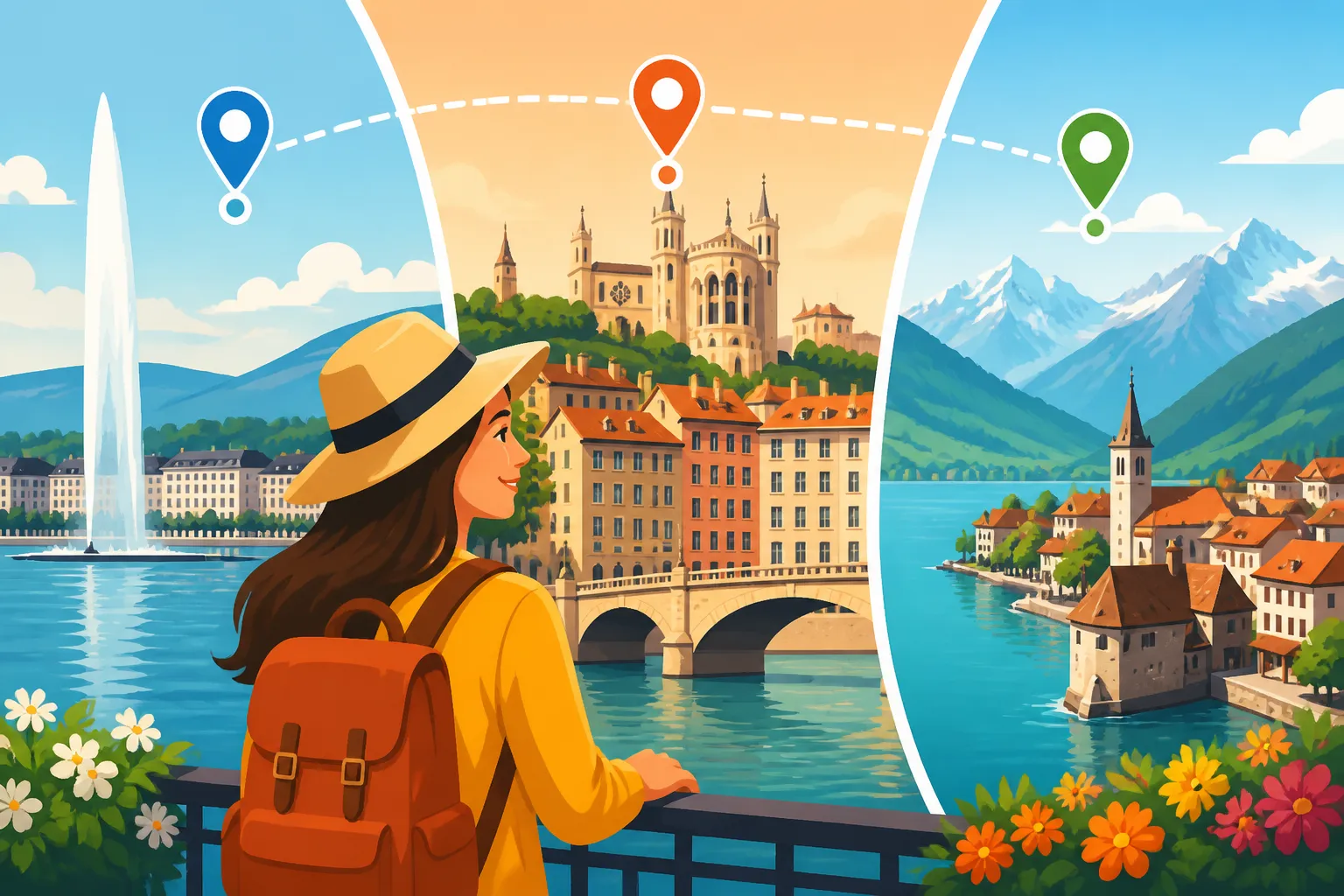
Lyon, just a couple of hours away, is France’s undisputed culinary capital. If your heart sings at the thought of rich, traditional French cuisine, bustling market halls, and elegant boulevards, Lyon is your gastronomic paradise. It's a city for walking, eating, and appreciating history and culture on a grand, urban scale. The Rhône and Saône rivers meander through it, adding to its picturesque charm, but it's the smells from the bouchons (traditional Lyonnaise restaurants) and the sheer variety of food that truly define the experience. It feels sophisticated, vibrant, and utterly French in the most delightful way.
Then there's Annecy, often dubbed the "Venice of the Alps," a mere 40-minute drive or bus ride from Geneva. This is where you go when you crave stunning natural beauty, a tranquil lake, and a storybook medieval town. Annecy is all about shimmering turquoise waters, quaint canals, flower-filled balconies, and the majestic Alps as a backdrop. It's a place for outdoor activities – cycling, swimming, boating – or simply meandering through cobbled streets, soaking up the serene, almost fairytale-like atmosphere. It’s a retreat, a breath of fresh air, and a visual feast that instantly transports you to a postcard scene.
So, whether you're yearning for an urban adventure filled with culinary delights or a serene escape into alpine beauty, Lyon and Annecy offer two distinct, unforgettable experiences, both easily accessible from your Swiss home.
Planning Your Trip: Logistics and Practicalities
Venturing out from Geneva into France is generally straightforward, but a little bit of planning goes a long way. Let's break down how to get there and what to consider for a smooth cross-border experience.
Transportation Options from Geneva
You've got a few excellent choices for getting to Lyon or Annecy, each with its own perks.
Train Travel: Fast, Scenic, and Stress-Free
For Lyon, the train is often your best bet. High-speed TGV trains connect Geneva to Lyon Part-Dieu station in about 2 hours. It’s incredibly efficient, comfortable, and you get to enjoy the changing scenery without worrying about traffic or navigation. Booking in advance is almost always cheaper, especially if you can snag a Prems fare. You can check schedules and book tickets directly through SBB, or for more options and sometimes better deals, I often use platforms like Omio. They consolidate various train and bus operators, making comparisons super easy. Remember, your SBB Travelcards: Is the Generalabonnement (GA) Worth the CHF 4000+ Cost? or The Half-Fare Travelcard (Halbtax): The Must-Have Pass for Swiss Residents might give you discounts on the Swiss portion of the journey to the border, but typically not on the French TGV segment unless you have a specific international pass.
For Annecy, the train journey is shorter and equally charming, taking about 1.5 to 2 hours from Geneva with a change (often in Annemasse or Aix-les-Bains), or sometimes a direct regional train. The final stretch into Annecy offers glimpses of the lake and mountains, setting the mood beautifully. Again, checking SBB or Omio will give you the most current options.
Bus Travel: The Budget-Friendly Alternative
If you're on a tighter budget or just prefer the bus, there are several reliable operators. Flixbus and BlaBlaCar Bus offer frequent services from Geneva to both Lyon and Annecy. The journey times are a bit longer than the train – around 2.5 to 3 hours for Lyon, and approximately 40 minutes to an hour for Annecy, depending on traffic and stops. However, the price difference can be significant, especially if you book well in advance. Buses are generally comfortable, often with Wi-Fi and power outlets, making them a perfectly viable and economical choice for cross-border trips. Plus, the bus station in Geneva (Gare Routière) is very central and easy to access.
Driving: Flexibility with Considerations
Driving offers the most flexibility, allowing you to explore the surrounding regions at your own pace. For Annecy, it's a quick 40-minute drive down the A41. For Lyon, it’s about 1.5 to 2 hours, mainly on the A1 and A42 motorways. However, there are a few things to keep in mind. You'll encounter tolls on the French motorways, which can add up. Parking in both cities, particularly Lyon, can be expensive and challenging to find, especially in the historic centers. Make sure your car insurance covers cross-border travel, and brush up on French driving laws. If you're using a Swiss car, remember the vignette is for Swiss motorways, not French ones. And of course, keep those Speeding Tickets in Switzerland: Income-Based Fines and Strict Radars in mind if you tend to have a heavy foot; French radar systems are also quite efficient! If you've converted your foreign license to a Swiss one, make sure you know the rules for driving abroad as well, though usually your Swiss license is valid.
Border Crossing Essentials for Swiss Residents
Since Switzerland is part of the Schengen Area, but not the EU, crossing the land border into France (which is both Schengen and EU) is usually straightforward for Swiss residents. However, it's not entirely invisible, and there are a few things you should always have on hand.
Documents and Currency
Always carry your valid passport or Swiss residence permit (Permis B, C, L, or G). While checks are rare, they can happen, and you don't want to be caught unprepared. For non-EU citizens, it's especially crucial to have your physical permit card with you.
Regarding currency, France uses the Euro (€), not Swiss Francs (CHF). While most places accept credit cards, it's always a good idea to have some Euros in cash for smaller purchases, markets, or in case of card reader issues. You can exchange money at banks in Switzerland, or simply withdraw Euros from an ATM once you're in France (though be mindful of potential foreign transaction fees from your Swiss bank or ATM charges from the French bank). Don't forget to check your mobile phone plan for roaming charges. Many Swiss Mobile Plans: Best Subscriptions and Prepaid eSIMs for Expats now include EU roaming, but it's worth double-checking to avoid bill shock. If you're a Cross-Border Commuter Taxes: Financial Guide for G Permit Holders, you're likely already well-versed in navigating these border practicalities!
Customs Limits and Declarations
This is a big one for anyone leaving Switzerland and returning, especially if you plan on stocking up on French goodies! Switzerland is not in the EU customs union, which means there are strict limits on what you can bring back without paying duties and VAT. This applies to things like meat, alcohol, and even certain types of cheese. For instance, the general limit for meat is often just 1kg per person per day. Exceeding these limits can lead to hefty fines and confiscation. Always check the current Swiss customs regulations before you go, which you can find on the Federal Customs Administration (FCA) website. It’s easy to forget when you’re used to seamless travel within the EU, but this is a critical difference. For a detailed breakdown, check out our guide on Cross-Border Shopping: Import Duty Limits for Meat, Alcohol, and Cheese. It might not seem like a big deal, but customs officials do check, especially on popular shopping routes and weekend evenings, and the penalties are significant.
Discovering Lyon: France's Culinary Capital
Oh, Lyon! If you're anything like me, a true food lover, this city will capture your heart (and stomach) instantly. It's not just a city with good food; it's a city defined by its food. Every street corner, every bustling market, every cozy bouchon tells a story of culinary heritage and passion.
Culinary Delights: Bouchons and Market Halls
Lyon's gastronomic reputation precedes it, and for good reason. The city is the birthplace of many classic French dishes, deeply rooted in the concept of hearty, delicious, and often rich peasant cuisine. You absolutely must experience a bouchon lyonnais. These traditional restaurants, often family-run, serve up specialties like quenelles de brochet (pike dumplings in a creamy sauce), saucisson de Lyon (a rich local sausage), tablier de sapeur (marinated and pan-fried tripe), and the famous salade lyonnaise with bacon, croutons, and a poached egg. Don’t expect delicate portions; bouchons are about generosity and flavor. Prices can vary, but you can usually find a good menu du jour (set lunch menu) for a reasonable price, especially outside the most touristy areas of Vieux Lyon. Reservations, especially for dinner, are highly recommended – Lyon locals take their dining seriously!
And then there's Les Halles Paul Bocuse, an indoor food market that is a temple to Lyonnaise gastronomy. Named after the legendary chef, it's a vibrant, bustling place where you can sample everything from oysters and fine cheeses to charcuterie, pastries, and wines. It's a feast for the senses, and wandering through it is an experience in itself. Grab a glass of local wine, sample some regional cheeses, or indulge in a plate of fresh seafood. Many stalls have small seating areas where you can eat on the spot. It's a bit on the pricier side, but the quality is exceptional, and it’s a quintessential Lyonnaise experience. Don't leave without trying some praline rose – candied pink almonds used in tarts and brioches, a truly unique Lyonnaise sweet treat.
Exploring Lyon's Historic Quarters
Beyond the food, Lyon is a city steeped in history, with distinct neighborhoods that tell different stories.
First, you have Vieux Lyon (Old Lyon), a UNESCO World Heritage site and one of Europe’s most extensive Renaissance quarters. Its narrow, cobblestone streets, colorful buildings, and hidden traboules (secret passageways used by silk workers to transport goods, now open to intrepid explorers) make for an endlessly fascinating wander. Pop into the Cathédrale Saint-Jean-Baptiste, a stunning example of Gothic architecture. It’s easy to get wonderfully lost here, discovering charming courtyards and artisan shops.
Above Vieux Lyon, perched on Fourvière Hill, you’ll find the magnificent Notre-Dame de Fourvière Basilica. This ornate basilica offers breathtaking panoramic views of the entire city, stretching to the Alps on a clear day. Right next to it are the ancient Roman theatres, remnants of Lugdunum, the Roman capital of Gaul. It's a stunning juxtaposition of ancient and modern, and the views alone are worth the funicular ride up.
The Presqu'île (peninsula) is Lyon’s vibrant heart, nestled between the Rhône and Saône rivers. Here you'll find grand squares like Place Bellecour (one of Europe’s largest pedestrian squares), elegant Haussmannian architecture, high-end shopping, and the impressive Opéra Nouvel. It's perfect for a leisurely stroll, people-watching, and indulging in some retail therapy or a well-deserved coffee.
Finally, don't miss Croix-Rousse, the historic silk weavers' district. It has a completely different feel – more bohemian, with steep streets, murals, and a village-like atmosphere. The unique architecture with tall buildings and large windows was designed to accommodate silk looms. Explore some more traboules here, and visit the Maison des Canuts to learn about Lyon’s silk heritage.
Suggested Itineraries and Local Tips
For a quick day trip, focus on Vieux Lyon, the Fourvière Basilica (for the views), and perhaps a stroll through the Presqu'île. Start early, grab a quick lunch at a bouchon or Les Halles, and enjoy the evening atmosphere. If you have a full weekend, you can comfortably add Croix-Rousse and dedicate more time to savoring Lyon's culinary scene. Many organized tours, which you can browse on platforms like GetYourGuide, offer a fantastic way to hit the highlights and get local insights, especially if you're short on time.
Lyon has an excellent public transport system, including a metro, tram, and bus network. The Lyon City Card can be a good investment if you plan to visit multiple museums and use public transport extensively. For getting around, stick to the metro for longer distances and then explore on foot. The city is generally safe, but like any large city, be mindful of your belongings in crowded areas. When dining, remember that French mealtimes are a bit later than Swiss ones; lunch often starts around 12:30 PM, and dinner rarely before 7:30 PM.
Experiencing Annecy: The Venice of the Alps
Just a stone's throw from Geneva, Annecy feels like stepping into a fairytale. It’s the kind of place that instantly makes you feel relaxed, its beauty almost unreal, a perfect antidote to any lingering Swiss administrative stress.
Lake Annecy and Its Waterfront Activities
Lake Annecy is often touted as one of the cleanest lakes in Europe, and its crystal-clear, shimmering turquoise waters are simply mesmerizing. On a sunny day, the lake truly comes alive. You can rent paddleboards, kayaks, or pedal boats directly from various points along the waterfront and spend hours gently gliding across the serene surface. Swimming is incredibly popular in the warmer months, with several designated beaches like Plage d'Albigny or Plage des Marquisats offering safe and inviting spots to take a dip.
For a more relaxed experience, consider a boat cruise. Various companies offer scenic tours, ranging from short hops to full circumnumnavigations of the lake, often with audio guides explaining the charming villages and castles dotting the shoreline. It’s a fantastic way to appreciate the scale and beauty of the surrounding Alps reflected in the water. For the active types, cycling around the entire lake is a popular pastime, with a well-maintained cycle path covering about 40 kilometers – an enjoyable way to see the different perspectives of the lake and its surrounding landscape. You can rent bikes easily in Annecy town. The overall vibe is one of gentle recreation, making it ideal for families or anyone looking to unwind amidst stunning natural beauty. You'll quickly see why it's a popular spot for Genevois to head when the Weather and Geography: Föhn Winds, Winter Readiness, and Alpine Living make conditions less favorable on the Swiss side!
The Old Town's Charm and Canals
Annecy’s Old Town, or Vieille Ville, is where the "Venice of the Alps" nickname truly comes to life. A labyrinth of narrow, cobblestone streets, pastel-colored houses, and picturesque canals fed by the Thiou River, it’s utterly enchanting. The canals are often adorned with vibrant flowers, creating picture-perfect scenes at every turn.
The most iconic sight is undoubtedly the Palais de l'Isle, an old prison and courthouse shaped like a ship, sitting dramatically in the middle of the Thiou canal. It's a true postcard image. Perched on a hill overlooking the town is the impressive Château d'Annecy, a former residence of the Counts of Geneva, now a museum offering fascinating insights into the region's history and art, along with more splendid views.
Wandering through the Old Town, you'll discover charming artisan shops, local boutiques, and inviting cafés with outdoor seating where you can enjoy a coffee or an apéro. Thursday and Sunday mornings see a vibrant market spill onto the streets, offering local produce, cheeses, and crafts – a fantastic opportunity to soak up the local atmosphere and perhaps grab some souvenirs (just remember those Swiss customs limits on your return!).
Outdoor Adventures and Scenic Views
Annecy isn't just about leisurely strolls and boat rides; it's a gateway to the pre-Alps, offering plenty of options for outdoor enthusiasts. For hikers, nearby mountains like Semnoz (often called the "Balcony of Annecy") offer various trails suitable for different fitness levels, rewarding you with incredible vistas of the lake and surrounding peaks. It's a fantastic contrast to the urbanity of Geneva or Lyon.
If you're feeling adventurous, Annecy is a renowned spot for paragliding. Imagine launching off a mountain slope and soaring over the turquoise lake with the Alps stretching out before you – it's an unforgettable experience for those brave enough! There are several reputable schools offering tandem flights, even for beginners.
Even if you're not an extreme sports enthusiast, simply finding a good viewpoint is easy. The Pont des Amours (Lover's Bridge) offers beautiful perspectives of the lake and the canals leading into it, perfect for photos and a romantic moment. Renting a bike and cycling along the lake shore path gives you continuous access to stunning scenery and plenty of spots to stop for a picnic.
Accommodation and Budgeting for Your French Escape
While day trips are certainly popular for both Lyon and Annecy, staying overnight allows for a deeper immersion. Let's talk about where to lay your head and how to keep your wallet happy.
Finding the Right Stay: Hotels, Apartments, and More
Both Lyon and Annecy offer a wide range of accommodation options to suit various tastes and budgets, from luxurious hotels to charming boutique stays and self-catering apartments.
In Lyon, you might prefer to stay in the heart of the action on the Presqu'île for easy access to shopping, dining, and public transport. Vieux Lyon offers characterful smaller hotels, though they can be pricier. The Part-Dieu area, around the main train station, is convenient for early departures or late arrivals but can feel a bit more business-oriented. For a more local, bohemian feel, consider Croix-Rousse. Platforms like Booking.com are invaluable here, offering a vast selection and customer reviews to help you choose. I've often found great deals by booking a few weeks in advance, especially outside major festival seasons.
Annecy, being smaller and incredibly popular, especially in summer, requires a bit more foresight when booking. Lakeside hotels offer stunning views but come at a premium. Staying in the Old Town puts you right amidst the charm, but be aware that some streets are pedestrianized, meaning a short walk with luggage might be involved. Many people opt for apartments or B&Bs outside the immediate center, which can be more affordable and offer a quiet retreat, especially if you have a car or don't mind a short walk. Again, Booking.com will be your friend, and for a more local, authentic experience, looking into guesthouses a little further from the central hustle can yield some lovely surprises. Remember, peak season (summer, Christmas markets) means higher prices and faster bookings for both cities, so plan ahead!
Managing Your Spending: Euros, Exchange Rates, and Tipping
Moving from Switzerland to France often feels like a refreshing sigh for your bank account. While France isn't "cheap," it's certainly more budget-friendly than Switzerland.
- Currency: As mentioned, France uses the Euro. It's wise to have some cash on hand for small purchases, market stalls, or places where card machines might be temperamental (though this is becoming less common). Inform your Swiss bank of your travel plans to avoid any card freezing issues due to unusual international transactions. Most major credit and debit cards (Visa, Mastercard) are widely accepted.
- Exchange Rates: Keep an eye on the current CHF to EUR exchange rate. While you can usually trust ATMs to give a fair rate, some smaller exchange bureaus might have less favorable terms.
- Tipping Culture: This is a key difference from Switzerland. In France, service charges are included in restaurant and café bills by law (often labelled "service compris"). This means tipping isn't mandatory or expected in the same way it is in the US, or even the small rounding up often done in Switzerland. However, it's customary to leave a small extra tip (a few Euros, or rounding up to the nearest Euro) if you received excellent service, especially in restaurants. For a simple coffee, leaving the change is perfectly fine. Don't feel pressured to leave 10-15% as you might elsewhere; it's truly a gesture of appreciation for exceptional service rather than a core part of the waiter's wage. Compared to Dining Out in Switzerland: Reservations, Tipping, and Mealtimes, you'll find the French approach much more relaxed.
- Rough Cost Estimates (per person per day):
- Budget (Picnics, street food, budget accommodation): €50-€80
- Mid-range (One restaurant meal, some activities, comfortable hotel): €100-€150
- High-end (Fine dining, premium experiences, luxury hotel): €200+
These are rough estimates and can fluctuate wildly depending on your choices, but they give you a sense that your Swiss Francs will likely stretch further here.
Final Considerations for a Smooth Return to Switzerland
After soaking up the French charm and probably indulging in a bit too much cheese and wine, it's time to head back to the land of mountains and punctuality. The return journey is generally smooth, but a few final points can make it even easier.
Re-Entry to Switzerland: What to Expect
When re-entering Switzerland, particularly by car or bus, you might encounter customs checks. As previously discussed, Switzerland is not part of the EU's customs union, so duty-free limits are strictly enforced. Be honest about what you're bringing back, especially for items like meat, dairy, alcohol, and tobacco. There are clear rules for how much you can bring back tax-free. For example, if you exceed the limit for meat, you'll pay duties on the excess, and if you haven't properly declared it, you could face hefty fines. These checks are more frequent on weekends and during peak holiday seasons, as Swiss customs knows many residents head across the border for cheaper goods.
If you’re driving, be prepared for potential traffic queues at the border crossings, especially on Sunday evenings or public holidays, as many people from Geneva and surrounding areas return home. Trains and buses usually have a quicker passage, as checks are less frequent or more streamlined.
As you cross back into Switzerland, your mobile phone will likely switch back to your Swiss network provider (like Swisscom, Salt, or Sunrise). Sometimes this can take a few minutes, but generally, connectivity is seamless. It’s always a small comfort to see "Welcome to Switzerland" pop up on your screen, letting you know you're almost home.
Cultural Nuances and Language Tips
While you've just been in France, a country with arguably the most significant cultural ties to Geneva, there are still subtle differences you might notice, especially when returning to the Swiss side. The French can be perceived as more direct or expressive in conversation compared to the often more reserved Swiss. Service might be a bit more casual in France, whereas in Switzerland, efficiency and politeness are paramount. It’s all part of the charm of cross-border living!
Even if your French is basic, making an effort to use a few common phrases in France goes a long way. "Bonjour" (hello), "Merci" (thank you), "S'il vous plaît" (please), "Pardon" (excuse me/sorry), and "Au revoir" (goodbye) are invaluable. Most people in tourist-heavy areas of Lyon and Annecy will speak some English, but attempting French shows respect and is almost always appreciated. Don’t be shy!
These cross-border trips to Lyon and Annecy are more than just a change of scenery; they're an essential part of the expat experience in Geneva. They offer a taste of broader European culture, a different pace of life, and a chance to truly appreciate the convenience of your Swiss base while indulging in a little foreign adventure. Happy travels!
Disclaimer
The information provided in this guide is for general informational purposes only and does not constitute legal, financial, or immigration advice. While we strive to keep the information up-to-date and accurate, regulations regarding travel, customs, visas, and local laws can change frequently. It is essential to consult official sources, such as government websites, embassies, or professional advisors, for the most current and specific information applicable to your individual situation before making any travel plans or decisions. We do not assume any liability for actions taken based on the information contained herein.