Cross-Border Trips: Visiting the Black Forest and Freiburg from Switzerland
After a while living in Switzerland, you've probably fallen head over heels for its pristine landscapes, efficient public transport, and perhaps even the charmingly strict quiet hours. But let's be honest, sometimes you just yearn for a change of scenery, a slightly different vibe, or perhaps just a meal that doesn't make your wallet weep quite as much. If that's you, then a cross-border trip to Germany's enchanting Black Forest and the vibrant city of Freiburg im Breisgau is exactly what you need, and this guide will walk you through everything you need to know to make it happen without a hitch.
Why the Black Forest and Freiburg are Perfect Swiss Escapes
Living in Switzerland, we're spoiled with incredible nature and picturesque towns, but venturing just across the border to Germany offers a delightful blend of familiar charm and unique cultural twists. The Black Forest, with its deep, dark woods, traditional villages, and whimsical cuckoo clocks, feels like stepping into a fairytale. Right on its doorstep, Freiburg im Breisgau provides a lively urban contrast, brimming with history, a youthful spirit, and an undeniable relaxed atmosphere. It's the perfect combination for a short, invigorating getaway from the Swiss routine.
The Allure of Freiburg im Breisgau
Freiburg is often dubbed the "jewel of the Black Forest," and for good reason. This vibrant university city, nestled on the western edge of the Black Forest, has a completely different energy from our typically reserved Swiss cities. You’ll feel it as soon as you step off the train or park your car – there’s a noticeable buzz, a friendliness, and a youthful exuberance that's infectious.
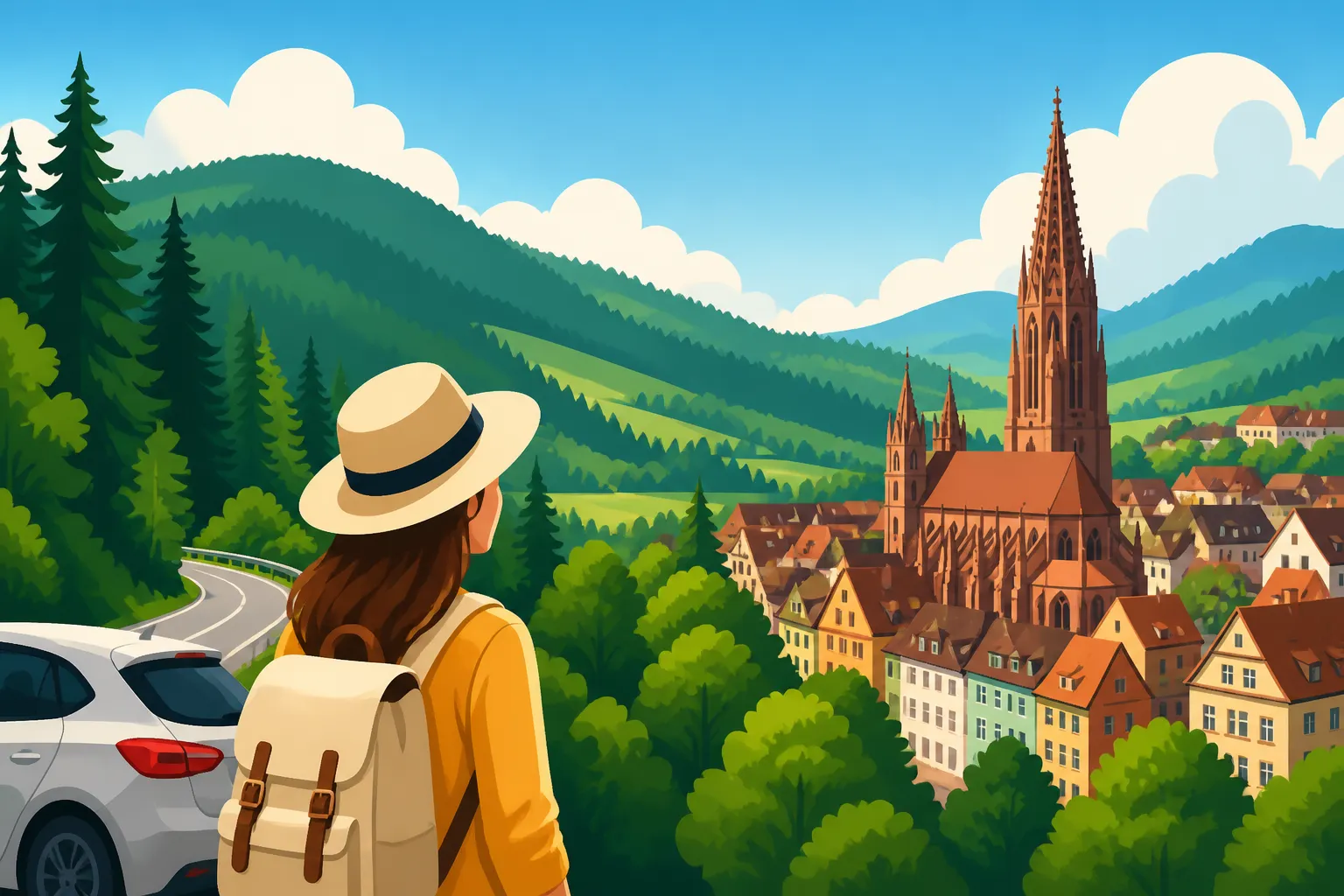
The city center is a delightful maze of narrow cobbled streets, historic buildings, and the famous Bächle – small, narrow gutters of running water that crisscross the old town. Legend has it that if you accidentally step into a Bächle, you'll marry a Freiburger. While that might just be a local joke, these charming waterways are a defining feature of the city, originally used for water supply and cleaning, now simply adding to its unique character. The iconic Freiburg Minster, a towering Gothic cathedral with its intricate spire, dominates the skyline and is a must-see. Its market square, bustling with vendors selling local produce, flowers, and delicious street food (the Lange Rote sausage is legendary here), truly encapsulates the city's lively spirit. Just exploring the nooks and crannies, stumbling upon hidden courtyards, and enjoying a coffee at an outdoor café is an experience in itself.
Exploring the Enchanting Black Forest
Beyond Freiburg's urban charm lies the vast, mysterious, and utterly beautiful Black Forest (Schwarzwald). This isn't just a forest; it's a region steeped in folklore, rich in tradition, and blessed with stunning natural beauty. Think rolling hills covered in dense pine and fir trees so dark they earn the "black" moniker, interspersed with sun-drenched valleys, sparkling lakes, and quaint villages seemingly frozen in time.
The Black Forest is renowned for its iconic cuckoo clocks, and you'll find workshops and stores everywhere, especially in towns like Triberg. It's truly fascinating to see how these intricate mechanisms are crafted. But it's not just about souvenirs. The region offers countless opportunities for outdoor activities. From gentle strolls around idyllic lakes like Titisee and Schluchsee to more challenging hikes through ancient forests, there's something for every fitness level. Imagine breathing in that crisp, pine-scented air, listening to the gentle gurgle of a forest stream, and perhaps even catching a glimpse of a deer. It's a wonderful escape from the often-manicured perfection we find in Switzerland, offering a raw, authentic connection with nature.
Planning Your Cross-Border Journey from Switzerland
Stepping across a border, even a friendly one like between Switzerland and Germany, always requires a bit of foresight. You want to make sure your journey is as smooth as that first bite of a Black Forest cake. From choosing your mode of transport to understanding the ins and outs of customs, a little planning goes a long way.
Transportation Options: Train, Car, or Bus?
This is often the first big decision when planning a cross-border trip. Each option has its pros and cons, especially when coming from Switzerland, where we have such a robust public transport network.
By Train:
Hands down, taking the train is one of the most comfortable and stress-free ways to get to Freiburg. Swiss Federal Railways (SBB) connects seamlessly with Deutsche Bahn (DB). You can often find direct connections from Basel SBB to Freiburg (Breisgau) Hbf in about 35-45 minutes. From Zurich, it's typically a direct journey or one change in Basel, taking around 2 to 2.5 hours. The scenic route through the Rhine Valley is quite pleasant, and you can just sit back, relax, and enjoy the ride.
One major advantage is the ability to snag Saver Day Pass (Spartageskarte) tickets or special offers if you book well in advance via the SBB website or platforms like Omio. These can significantly reduce the cost compared to last-minute purchases. If you have a The Half-Fare Travelcard (Halbtax): The Must-Have Pass for Swiss Residents, you'll also get discounts on the Swiss portion of the journey. For those without a car or who simply prefer not to drive, this is an excellent choice. No worries about parking, German traffic rules, or vignettes! You can learn more about finding cheaper fares through Supersaver Tickets on SBB: How to Find the Cheapest Train Fares.
By Car:
Driving offers immense flexibility, especially if you plan to explore the deeper reaches of the Black Forest beyond Freiburg. From Zurich, it's roughly a 1.5 to 2-hour drive, depending on traffic and your starting point. From Basel, it's even quicker, often under an hour. The drive is straightforward, mostly on autobahns.
However, there are costs and considerations. You'll need to purchase a Swiss Autobahn Vignette for your vehicle if you don't already have one, which is mandatory for driving on Swiss highways. While Germany doesn't have a vignette system for its regular autobahns, fuel costs and potential parking fees in Freiburg can add up. Plus, navigating German city traffic and finding parking can be a bit of a hassle. Make sure your car insurance covers cross-border travel, though for EU countries this is typically standard. You should also be familiar with Driving in Switzerland: Licenses, Buying Cars, and Strict Traffic Laws and remember that German rules, while similar, do have nuances.
By Bus:
Bus services like FlixBus offer a budget-friendly alternative, with direct connections from various Swiss cities (including Zurich and Basel) to Freiburg. The journey times are generally longer than by train, but the prices can be significantly lower, especially if booked in advance. This is a good option if you're really watching your pennies and don't mind a longer ride. You can check schedules and book tickets directly on their website or through aggregators like Omio.
Essential Border Crossing and Customs Tips
Crossing the Swiss-German border is generally very straightforward, especially for EU/EFTA citizens or those with valid Swiss residence permits. Switzerland is part of the Schengen Area, which means there are typically no routine passport checks at the land border. However, carrying your passport or a valid ID card is absolutely non-negotiable. Don't leave Switzerland without it! Border guards do conduct random checks, and you don't want to be caught without proper identification.
Currency: Germany uses the Euro (€), while Switzerland uses the Swiss Franc (CHF). While many places in Freiburg, especially larger shops, might accept CHF, you'll get a terrible exchange rate. It's always best to pay in Euros. You can withdraw Euros from ATMs in Germany or exchange some cash before you leave Switzerland. Keep in mind that using your Swiss debit or credit card for smaller purchases might incur foreign transaction fees from your bank, so a travel-friendly card or some cash is advisable.
Import Limits: This is where many expats get tripped up. While the prices for groceries, particularly meat, dairy, and alcohol, are significantly lower in Germany than in Switzerland, there are strict limits on what you can bring back without declaring it and paying import duties. Be mindful of these, especially if you're tempted to stock up. For instance, the general limit for meat is 1 kg per person, certain alcohol limits apply, and anything over a certain total value (currently CHF 300 per person for personal use) needs to be declared. For a detailed breakdown, check out Cross-Border Shopping: Import Duty Limits for Meat, Alcohol, and Cheese. Trust me, those Swiss customs officers at Basel-Rheinfelden are eagle-eyed, and nobody wants a surprise fine.
Getting There: Step-by-Step from Major Swiss Cities
Navigating public transport in a new country can feel daunting, but thankfully, getting to Freiburg and the Black Forest from Switzerland is pretty user-friendly. Whether you're coming from the bustling streets of Zurich or the international hub of Basel, the connections are frequent and relatively simple.
From Zurich and Basel to Freiburg
Let's break down the journey, focusing on the most common starting points for expats.
From Zurich:
Your best bet is almost always the train. You can take a direct InterCity (IC) or EuroCity (EC) train from Zurich Hauptbahnhof (main station) directly to Freiburg (Breisgau) Hbf. These trains often make a brief stop in Basel, but you usually don't need to change. The journey typically takes between 2 hours and 2 hours 30 minutes. Booking in advance through SBB or Omio is highly recommended to secure those cheaper "Supersaver" tickets. Look for "Sparbillett" on SBB's website. The route is quite pleasant, offering glimpses of the Swiss countryside before you cross into Germany.
If driving from Zurich, you'll head north on the A1 towards Basel, then cross into Germany near Weil am Rhein/Lörrach. From there, it's a straightforward drive north on the A5 to Freiburg. The journey is roughly 150-160 km, and without heavy traffic, it should take around 1 hour 45 minutes to 2 hours. Be aware that the stretch of autobahn between Basel and Freiburg can get quite congested during peak hours, especially Friday afternoons and Sunday evenings.
From Basel:
This is your easiest connection. Basel, straddling the Swiss, German, and French borders, is practically a gateway to Freiburg.
By Train: Direct trains from Basel SBB (the main station on the Swiss side) or even Basel Badischer Bahnhof (the German-operated station on Swiss soil) will get you to Freiburg (Breisgau) Hbf in a mere 35-45 minutes. These are frequent regional express (RE) or InterCity (IC) trains. It’s so quick, it almost feels like a commute rather than an international trip! The cost is also quite reasonable, especially if you catch a regional Baden-Württemberg ticket or a Sparpreis Europa ticket if booking through Deutsche Bahn.
By Car: From Basel, you simply cross the border (often without even realizing it much beyond a sign) and hop onto the A5 heading north. The journey is just about 60-70 km and takes approximately 45 minutes to an hour. It’s a very popular route for cross-border commuters, so expect traffic during rush hour.
By Bus: FlixBus also offers routes from Basel to Freiburg, often departing from the EuroAirport or near the main train stations. Again, this is a budget option, taking a bit longer but saving you some francs.
Reaching the Heart of the Black Forest
While Freiburg is an excellent base, many want to dive deeper into the Black Forest itself. Getting to specific towns like Triberg or Titisee requires a bit more planning, especially if you're relying on public transport.
Public Transport within the Black Forest:
If you're staying in Freiburg or elsewhere in the Black Forest region and primarily using public transport, the Konus Card is your best friend. This amazing card is often provided free of charge by your hotel, guesthouse, or campsite if you're staying in a participating municipality. It allows you to use buses and trains throughout the entire Black Forest region (excluding long-distance IC/EC trains) for free! This is an absolute game-changer for exploring without a car. Always ask your accommodation if they offer the Konus Card upon check-in. Without it, you'll be buying individual tickets, which can add up quickly.
- To Titisee: From Freiburg, you can take a regional train (Höllentalbahn) directly to Titisee, typically changing once at Himmelreich or Neustadt (Schwarzw). The journey is wonderfully scenic, passing through valleys and small villages. It usually takes around 45 minutes to an hour.
- To Triberg: Getting to Triberg from Freiburg involves a couple of train changes, usually in Offenburg and then in Villingen (Schwarzw). The total journey can take about 2 to 2.5 hours. It’s a bit of a trek, but the destination, with its famous waterfalls and cuckoo clocks, is often considered worth it.
- To Baden-Baden: If you're heading north to the elegant spa town of Baden-Baden, you can take a direct train from Freiburg, which typically takes around 45 minutes to an hour.
By Car for Black Forest Exploration:
This is where having a car really shines. The winding roads, scenic routes like the Schwarzwaldhochstraße (Black Forest High Road), and charming villages are best explored at your own pace. You can easily drive from Freiburg to Titisee in about 45 minutes, or to Triberg in just over an hour. Renting a car for a day or two from Freiburg or even Basel could be a worthwhile investment if your main goal is rural exploration. Just remember that some smaller roads in the Black Forest can be quite narrow and winding, so drive carefully.
Experiencing Freiburg: More Than Just a Day Trip
Freiburg is much more than a quick stopover; it's a city that invites you to linger, explore, and soak in its unique atmosphere. While you could cram the highlights into a day, dedicating at least a full day, if not a weekend, allows you to truly appreciate its charm and discover its hidden gems.
Must-See Sights and Activities in Freiburg
Freiburg's compact city center makes it incredibly walkable, perfect for leisurely exploration.
- Freiburg Minster (Münster unserer Lieben Frau): This stunning Gothic cathedral is the undisputed heart of the city. Its construction spanned centuries, resulting in a fascinating blend of architectural styles. Don't just admire it from the outside; step inside to marvel at its stained-glass windows, some of which date back to the 13th century. If you're feeling energetic, climb the 116-meter high tower for panoramic views across the city, the Rhine Valley, and on a clear day, even the distant Black Forest and Vosges mountains. The climb is narrow and steep in parts, but the reward is immense.
- The Bächle: You can't visit Freiburg without noticing the Bächle. These charming narrow water channels running alongside pavements are not just decorative; they’re part of Freiburg’s history and character. Kids love to play with toy boats in them, and as mentioned, mind your step! They're mostly harmless, but a quick splash is common.
- Münsterplatz Market: Surrounding the Minster, the Münsterplatz hosts a lively daily market (except Sundays). This is the perfect place to sample local produce, fresh flowers, and, most importantly, the famous "Lange Rote" (long red sausage) from a street vendor. It's usually served in a bun, without mustard, as tradition dictates. This bustling square is a fantastic spot for people-watching and soaking up local life.
- Schlossberg: Just east of the Old Town, the Schlossberg (Castle Hill) offers easily accessible green space and breathtaking views. You can walk up (about 15-20 minutes from the Schwabentor gate) or take the Schlossbergbahn funicular, which whisks you to the top in just a few minutes. Up there, you'll find the Schlossbergturm (a viewing tower), a restaurant, and plenty of benches to simply relax and enjoy the vistas. It’s a fantastic spot for a sunset picnic.
- Historic Gates (Martinstor & Schwabentor): These two impressive medieval gates once guarded the city. The Martinstor features a McDonald's cleverly integrated into its base, while the Schwabentor has a quaint chapel on its upper floor. They stand as proud reminders of Freiburg's rich past.
- The Augustinermuseum: Housed in a former Augustinian monastery, this museum displays art and sculptures from the Middle Ages to the 19th century, with a focus on art from the Upper Rhine region. It's a peaceful retreat and a great way to delve deeper into the region's artistic heritage.
Culinary Delights and Shopping
Freiburg is a foodie's paradise, especially after experiencing Swiss prices. You can enjoy hearty, delicious meals without feeling like you've taken out a second mortgage.
Local Cuisine:
Beyond the Lange Rote, you'll find plenty of traditional Baden cuisine. Try Schäufele (smoked pork shoulder), Spätzle (soft egg noodles, often served with cheese as Käsespätzle), or a classic Zwiebelkuchen (onion tart) in autumn. Given its proximity to France, you'll also notice some French influences in the cuisine. And of course, you absolutely must try a slice of authentic Black Forest cake (Schwarzwälder Kirschtorte), especially one that generously includes local Kirschwasser (cherry brandy).
For a truly authentic experience, seek out a traditional "Weinstube" or "Gasthaus" in the old town. These cozy establishments serve regional wines (from the nearby Kaiserstuhl and Markgräflerland vineyards) and hearty German fare. Don't be afraid to ask for recommendations from the staff – they're usually proud of their local specialties.
Shopping:
Freiburg offers a fantastic shopping experience, from international brands to charming independent boutiques. The main shopping streets like Kaiser-Joseph-Straße are lined with familiar names, but it's the smaller lanes and alleys of the Old Town where you'll find unique gifts, local crafts, and specialty stores. From cuckoo clocks (though you'll find more variety in the Black Forest itself) to artisanal cheeses and wines, there's plenty to tempt you. The prices for everyday items, especially groceries and clothing, are noticeably lower than in Switzerland, making it a popular spot for a "shopping spree" for many cross-border visitors.
Deep Dive into the Black Forest: Nature and Culture
Once you’ve had your fill of Freiburg’s urban delights, it’s time to truly immerse yourself in the Black Forest. This region is a treasure trove of natural wonders, traditional crafts, and unforgettable experiences. Whether you prefer a leisurely drive, an invigorating hike, or simply a taste of local culture, the Schwarzwald has something for everyone.
Top Attractions and Scenic Drives
The Black Forest is a vast area, and while it's impossible to see everything in one trip, some spots are simply iconic and worth prioritizing.
- Triberg Waterfalls: Located in the town of Triberg im Schwarzwald, these are Germany's highest waterfalls. While perhaps not as dramatic as some Alpine waterfalls, the Triberg Waterfalls are beautiful, cascading over multiple tiers, and easily accessible via well-maintained paths. There are three main entrances, and a small fee applies. The surrounding area is also famous for its cuckoo clocks, with numerous shops and even the world's largest cuckoo clock (a truly massive, functional one!) nearby. It's a wonderfully kitschy and charming experience, a real slice of traditional Black Forest tourism.
- Titisee and Schluchsee: These two stunning lakes are postcard-perfect examples of Black Forest beauty. Titisee is the more popular and commercialized, offering boat rentals, lake cruises, and plenty of shops and restaurants along its shore. It can get busy, especially on weekends and during summer, but its charm is undeniable. Schluchsee, a bit further south, is larger, quieter, and deeper, often described as more natural and serene. It's perfect for swimming, sailing, or a peaceful walk along its shores. Both lakes are excellent starting points for hikes.
- Schwarzwaldhochstraße (Black Forest High Road): If you're driving, this scenic route is an absolute must-do. Stretching for about 60 km between Baden-Baden and Freudenstadt, it winds through forests, over mountain passes, and past stunning viewpoints. Along the way, you'll find hiking trails, small villages, and opportunities to stop for a meal at traditional inns. The views, especially towards the Rhine Valley and even the distant French Vosges, are spectacular. It’s particularly beautiful in autumn with the vibrant foliage.
- Gengenbach: Often called one of Germany's prettiest towns, Gengenbach is a picturesque medieval gem with half-timbered houses, cobblestone streets, and a charming town square. It's particularly famous for its Advent calendar, where the town hall transforms into the "world's largest Advent calendar house" during the Christmas season. It’s less touristy than some other Black Forest towns but offers an authentic and beautiful experience.
- Cuckoo Clock Workshops: You can't leave the Black Forest without experiencing its most famous export. Many towns, especially Triberg and the surrounding Gutach valley, have workshops where you can see cuckoo clocks being made. Some offer demonstrations or tours, giving you a fascinating insight into the craftsmanship. Even if you don't buy one (they can be quite expensive!), it's a unique cultural experience.
Hiking, Wellness, and Local Traditions
Beyond the picturesque villages and famous landmarks, the Black Forest truly excels in offering active relaxation and a deep dive into regional traditions.
Hiking:
The Black Forest is a hiker's paradise, crisscrossed by thousands of kilometers of well-marked trails. From gentle valley walks to challenging ridge hikes, there’s a path for every ability. The "Westweg" is one of Germany's oldest long-distance trails, traversing the entire length of the Black Forest. However, there are countless shorter, equally rewarding loops. Apps like Komoot and local tourism websites are great resources for finding detailed trail information. Imagine hiking through dense spruce forests, emerging into sun-dappled clearings, and perhaps stumbling upon a remote farm selling fresh apple juice or schnapps. The air is crisp, the scenery is diverse, and the sense of tranquility is palpable. You might even find yourself on trails that connect to parts of the Via Alpina and Long-Distance Trails Across Switzerland, showcasing the seamless beauty of the Alpine region.
Wellness and Thermal Baths:
For centuries, the Black Forest has been known for its healing waters and thermal baths. The most famous spa town is undoubtedly Baden-Baden, an elegant destination that has attracted royalty and celebrities for generations. Here you can indulge in luxurious thermal spas like the Caracalla Therme or the historic Friedrichsbad (where a traditional Roman-Irish bath ritual is a must-try). But even smaller towns offer charming public pools and wellness centers. It’s the perfect way to unwind after a day of hiking or exploring, a stark contrast to the often utilitarian public pools you find in some parts of Switzerland.
Local Traditions and Food:
The Black Forest is rich in traditions. From the distinctive red pom-pom hats (Bollenhut) worn by women in some villages to the local folklore, there's a strong sense of cultural identity here. And, of course, the food. Beyond the cake, sample hearty traditional dishes, locally brewed beers, and, if you dare, a shot of Kirschwasser (cherry schnapps) or Zwetschgenwasser (plum schnapps). It's potent stuff, often served as a digestif after a big meal. Don't miss the opportunity to visit a local farm shop (Hofladen) to buy fresh eggs, homemade jams, cured meats, and other regional delicacies directly from the producers.
Practicalities for a Smooth Trip
Venturing out of Switzerland, even to a neighbor like Germany, requires a few practical considerations to ensure your trip is not just enjoyable but also hassle-free. From where to rest your head to how to keep your budget in check, a bit of forward thinking can save you headaches and help you truly relax.
Accommodation Options: From City Hotels to Forest Stays
Finding the right place to stay can really shape your experience in Freiburg and the Black Forest. Luckily, Germany offers excellent value compared to Swiss accommodation prices.
In Freiburg:
The city has a wide range of options, catering to all budgets and tastes.
- City Center Hotels: For convenience and easy access to sights, shops, and restaurants, staying in the Old Town or immediately adjacent areas is ideal. You'll find everything from charming boutique hotels to well-known chains. Platforms like Booking.com are invaluable for comparing prices and finding deals. Remember, Freiburg is a university city, so there are also plenty of hostels and guesthouses for those on a tighter budget.
- Apartment Rentals: If you're staying for more than a couple of nights or traveling with family, a self-catering apartment can be a fantastic option. Sites like GetYourGuide (which often lists unique local experiences, but sometimes includes accommodation) or Airbnb offer numerous choices. This can also save you money on meals, allowing you to buy fresh produce from the Münsterplatz market and cook your own meals.
In the Black Forest:
Here, the accommodation often becomes part of the experience.
- Traditional Gasthöfe (Inns): For an authentic Black Forest experience, consider staying at a family-run Gasthof or Hotel Garni (bed and breakfast) in one of the smaller villages. These often include breakfast and serve hearty regional dinners. They typically offer a warm, welcoming atmosphere and provide an excellent base for hiking.
- Wellness Hotels: Given the region's spa tradition, you'll find numerous wellness hotels, especially around Baden-Baden and other thermal spring locations. These offer a more luxurious experience, often with on-site spas, pools, and gourmet dining.
- Farm Stays (Ferien auf dem Bauernhof): For families or those seeking a truly rural experience, a farm stay is a wonderful option. Many working farms offer self-catering apartments or rooms, allowing you to experience farm life firsthand. This can be a delightful and memorable way to connect with the local culture.
- Campsites: If you're visiting in warmer months and enjoy the outdoors, the Black Forest has many well-equipped campsites, perfect for tents, caravans, or motorhomes.
Wherever you choose to stay, booking in advance, especially during peak season (summer, Christmas markets, or major festivals), is always a good idea to secure the best rates and availability.
Budgeting for Your Black Forest Adventure
Let's be real, one of the unsung benefits of venturing outside Switzerland is the sheer relief on your wallet. While Germany isn't cheap by global standards, it certainly feels like a bargain compared to the land of fondue and perfect watches.
Here’s a quick overview of what to expect:
| Expense Category | Switzerland (Average CHF) | Black Forest/Freiburg (Average EUR) | Notes |
|---|---|---|---|
| Coffee | 5.00 – 7.00 | 3.00 – 4.50 | Varies by café, but significantly cheaper. |
| Lunch Meal | 20.00 – 35.00 | 12.00 – 20.00 | Casual restaurant, main course. |
| Dinner Meal | 40.00 – 80.00+ | 20.00 – 40.00 | Mid-range restaurant, main course, excluding drinks. |
| Local Beer (0.5L) | 7.00 – 9.00 | 3.50 – 5.00 | At a restaurant/bar. |
| Supermarket Bread | 3.00 – 5.00 | 1.50 – 3.00 | Standard loaf. |
| Hotel/Night | 150.00 – 300.00+ | 80.00 – 150.00 | Mid-range, double room, good location. |
| Train Ticket Basel-Freiburg (one-way) | 25.00 – 40.00 | 10.00 – 20.00 (Sparpreis) | Can vary greatly with advance booking and Half-Fare Card. |
| Museum Entry | 10.00 – 25.00 | 8.00 – 15.00 | Average adult ticket. |
(Note: Prices are estimates for 2026 and can fluctuate. Exchange rates will also impact your true cost.)
As you can see, almost everything, from a simple cup of coffee to a full dinner, will be considerably less expensive than what you're accustomed to in Switzerland. This means your budget stretches much further, allowing for more spontaneous purchases, extra slices of Black Forest cake, or perhaps an additional night's stay. For specific items, you might even compare it to Grocery Shopping: Coop, Migros, Aldi, Lidl, and Denner Compared to truly appreciate the difference.
Tips for Saving Money:
- Book Train Tickets in Advance: As mentioned, Sparpreis tickets on Deutsche Bahn or Supersaver tickets on SBB can save you a bundle.
- Utilize the Konus Card: If your accommodation offers it, this free transport card is a massive saving for exploring the Black Forest without a car.
- Eat Local: Embrace the hearty, affordable local cuisine at traditional Gasthöfe or the market. Avoid tourist traps near major attractions.
- Picnics: Stock up at German supermarkets (Aldi, Lidl, Edeka) – they are significantly cheaper than Coop or Migros – and enjoy a scenic picnic by a lake or in the forest.
- Walk Everywhere in Freiburg: The city center is compact, so save on public transport within the city.
- Free Activities: Hiking, enjoying the Bächle, visiting the Minster (exterior and main nave are free) are all fantastic free ways to experience Freiburg and the Black Forest.
A trip to the Black Forest and Freiburg is not just an escape; it's a delightful blend of cultural immersion, natural beauty, and a welcome respite for your finances. So pack your bags, grab your passport, and get ready to experience a little German magic just a stone's throw from your Swiss home.
Disclaimer
Please remember that travel information, prices, and regulations can change rapidly. While every effort has been made to provide accurate and up-to-date information, it is always advisable to check the latest official sources for train schedules, customs regulations, and travel advisories before your trip. This guide is for informational purposes only and does not constitute professional advice.