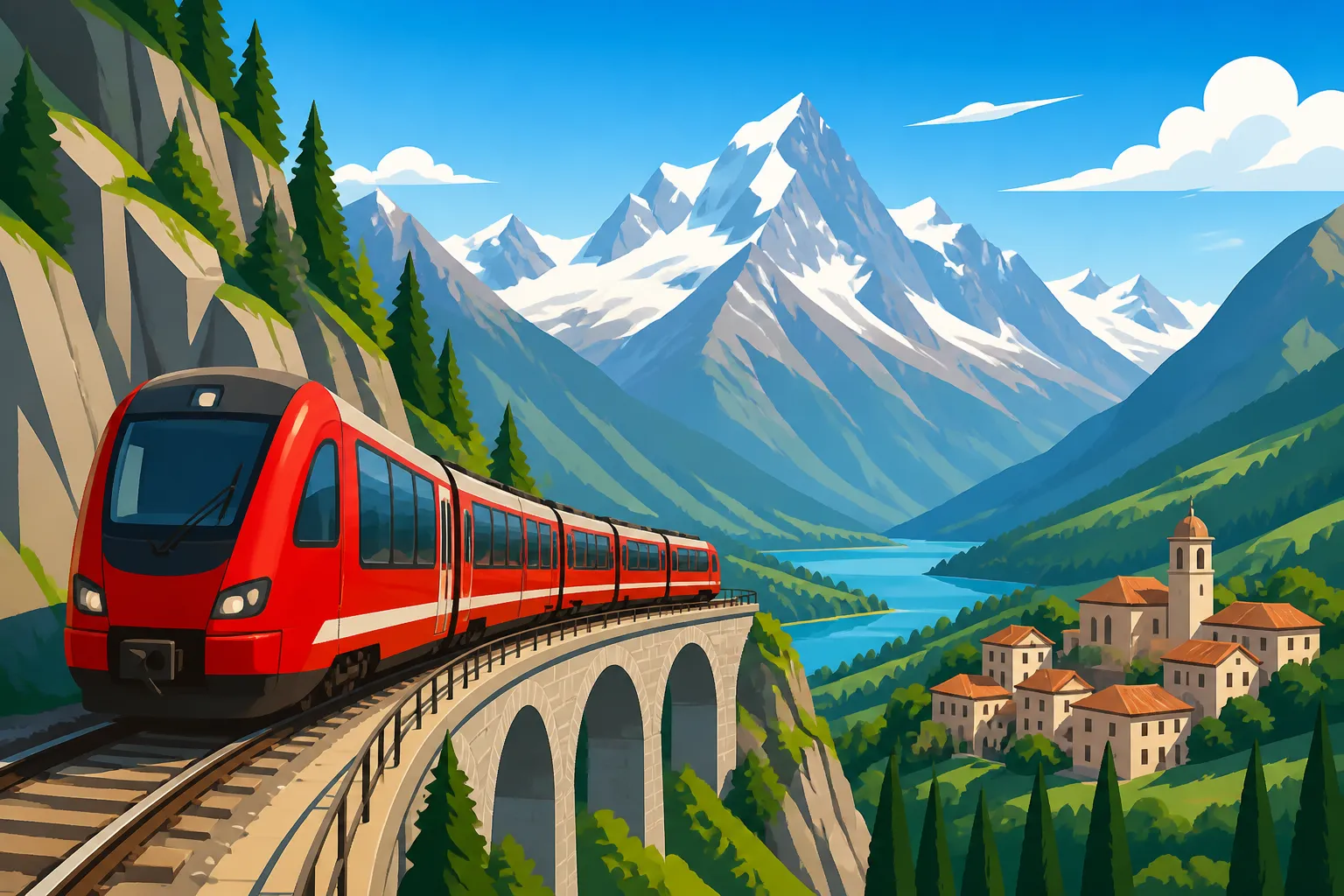
The Bernina Express: Crossing the Alps to Italy by Scenic Train
Moving to Switzerland means you quickly learn that the public transport system is less about getting from A to B and more about experiencing breathtaking beauty. But even after years here, the sheer number of scenic routes and special trains can be overwhelming, making it hard to choose which iconic journey is truly worth your precious weekend or vacation time. This guide is all about one of Switzerland's crown jewels, the Bernina Express, a spectacular train ride that doesn't just cross the Alps but plunges you deep into the heart of a UNESCO World Heritage site and offers a truly unforgettable journey from the mountains of Graubünden right into sunny Italy.
What is the Bernina Express and Why Expats Love It
When you first hear about "scenic trains" in Switzerland, it's easy to dismiss them as tourist traps. You think, "I live here, I see mountains every day!" But the Bernina Express is genuinely different. It’s not just about the destination; it’s about the incredible engineering, the dramatic landscapes, and the sheer audacity of a train clinging to mountainsides and crossing dizzying viaducts. For expats, it’s a tangible connection to the unique blend of natural beauty and human ingenuity that defines Switzerland, offering a perspective you simply can't get from a car or even a regular regional train.
History and UNESCO Status
The Bernina Express operates on the historic Rhaetian Railway (RhB) lines, specifically the Albula and Bernina lines. These lines weren't built for tourism initially; they were built to connect remote Alpine valleys and facilitate trade and travel across formidable mountain passes. The construction was an engineering marvel of its time, utilizing spirals, tunnels, and bridges to conquer extreme gradients without the need for cogwheels, a testament to early 20th-century innovation.
It's this blend of innovative engineering and natural integration that earned parts of the route, namely the Albula and Bernina lines, their UNESCO World Heritage status in 2008. The UNESCO designation isn't just a fancy badge; it recognizes the railway as an outstanding example of how human infrastructure can coexist harmoniously with a dramatic Alpine landscape. As you wind through the valleys, you'll see stonework bridges and tunnels that feel as much a part of the mountains as the rock faces themselves. This isn't some modern, jarring intrusion; it's a piece of living history that continues to operate daily, connecting communities and offering unparalleled vistas. For many, riding a UNESCO-listed railway is a truly special experience, unlike anything else.
Why It's a Must-Do for Expats
For us expats, the Bernina Express is more than just a beautiful train ride. It’s an immersion into a unique facet of Swiss culture and a gentle introduction to cross-border travel that feels adventurous yet entirely comfortable. You get to see the sheer scale of the Alps without breaking a sweat, watch the landscape shift from snow-capped peaks to palm trees, and even practice your Italian without feeling overwhelmed. It’s a fantastic option for hosting visiting family and friends who want that quintessential Swiss mountain experience but might not be up for a strenuous hike or a day on the ski slopes.
Furthermore, it’s a brilliant way to explore a different linguistic and climatic region of Switzerland and its immediate neighbor. You start in the German-speaking (or Romansh-speaking) high Alps of Graubünden and end up in the Italian-speaking Valtellina valley. It’s like a mini-European tour in a day! Many expats find that exploring different regions helps them understand the complex cultural tapestry of their new home. This journey is particularly rewarding for those who appreciate seeing the geographical and cultural transition firsthand, from rugged alpine terrain to vineyards and Mediterranean flair, all from the comfort of a panoramic carriage. It’s a chance to truly appreciate the diversity packed into this small, incredible country and its immediate surroundings.
The Iconic Bernina Express Route: From Chur/St. Moritz to Tirano
The Bernina Express is famous for its panoramic windows and spectacular route. While the full "official" Bernina Express route often starts in Chur, the capital of Graubünden, many people also hop on in the glitzy resort town of St. Moritz. No matter where you start, the journey south to Tirano, Italy, is an absolute feast for the eyes, packing in an incredible amount of diverse scenery in just a few hours.
The Northern Route: Chur/St. Moritz to Tirano
The journey from Chur to Tirano is approximately four hours long, covering 144 kilometers, passing through 55 tunnels, and crossing 196 bridges. If you start in St. Moritz, the journey is shorter, around two and a half hours. The Chur leg of the journey takes you through the stunning Albula Valley, where the railway performs incredible feats of engineering. You’ll wind through spiral tunnels like the one near Bergün/Preda, where the train gains elevation within the mountain itself – a truly mind-boggling experience.
Once you pass through the Engadin Valley and potentially pick up more passengers in St. Moritz or Pontresina, the train begins its ascent towards the Bernina Pass. This is where the landscape really becomes dramatic, with glaciers visible from the windows (like the Morteratsch Glacier) and the train climbing to its highest point at Ospizio Bernina, at an elevation of 2,253 meters above sea level. You’re truly in the high Alps here, often surrounded by snow even in late spring or early autumn. The air feels crisp, and the views are expansive, a vivid contrast to the lush valleys below.
After Ospizio Bernina, the train begins its equally impressive descent into the Poschiavo Valley, a Swiss Italian-speaking region, before eventually crossing the border into Tirano, Italy. This descent is punctuated by the iconic Brusio Circular Viaduct, a marvel that allows the train to lose altitude rapidly in a tight spiral without needing lengthy tunnels. You'll literally loop around, seeing the train disappear and reappear from different angles. It's truly a sight to behold and a photographer's dream, showing the ingenuity required to navigate such steep terrain.
Key Highlights and Photo Opportunities
The Bernina Express route is a continuous string of photo opportunities, so make sure your camera is charged and ready!
- Landwasser Viaduct: Just after Filisur, this curved single-track viaduct is an icon of the Rhaetian Railway, emerging dramatically from a tunnel and curving over the valley below. It's often featured in promotional images, and for good reason – it’s stunning.
- Spiral Tunnels of the Albula Line: While you can’t photograph the inside of the tunnels (unless you want a very dark picture!), the experience of the train winding through them to gain altitude is fascinating. Look out the window to catch glimpses of the track you were just on, far below.
- Morteratsch Glacier: As you approach the Bernina Pass, keep an eye out for the receding Morteratsch Glacier. While it’s sadly shrinking, its vastness is still impressive, a stark reminder of the raw power of nature in the Alps.
- Lago Bianco: The white lake at the top of the Bernina Pass, with its stunning turquoise waters, offers a serene and beautiful vista. It truly feels like you’re on top of the world.
- Alp Grüm: A small station perched high above the Poschiavo Valley, offering panoramic views down into the valley, across to the Palü Glacier, and the intricate railway lines carving their way down. It’s a popular spot for hikers to disembark, and you’ll want to have your camera ready as you pass by.
- Brusio Circular Viaduct: This is arguably the most famous part of the Bernina Express, a nine-arch spiral bridge that’s completely out in the open. The train completes a full 360-degree loop here, dropping altitude with remarkable elegance. Prepare for everyone on the train to have their phones out for this one! It's a feat of engineering that has to be seen to be believed and makes for incredible photographs.
- Changing Vegetation: Beyond the engineering, the most fascinating highlight is witnessing the dramatic change in vegetation and climate. From the snow-dusted, rugged peaks of the high Alps to the gentle slopes of the Poschiavo Valley with its characteristic stone houses, and finally, to the vineyards and palm trees of Tirano, the journey tells a powerful geographical story. It’s a remarkable transition from a typically Swiss landscape to something decidedly more Mediterranean.
Booking Your Bernina Express Journey: Tickets, Reservations, and Planning
Navigating the booking process for the Bernina Express can feel a bit daunting, especially with the different types of tickets and mandatory seat reservations. But trust me, a little planning goes a long way to ensure a smooth and enjoyable experience. The key is to understand that the "Bernina Express" is both a specific panoramic train service and a regular route on the Rhaetian Railway.
Understanding Tickets and Seat Reservations
Here's the crucial distinction:
- The Train Ticket: This covers the actual journey from your starting point to Tirano. If you have a GA (Generalabonnement) or a Half-Fare Travelcard (Halbtax), these are generally valid for the route itself, up to Tirano. You would just need a ticket from the border to Tirano if your pass doesn't cover it (which for the Bernina Express usually means your ticket is valid to Tirano as part of the Swiss public transport network's integrated offer). If you don't have a pass, you'll need to purchase a full-fare ticket. You can often find Supersaver Tickets on SBB if you book far enough in advance for the connecting regional trains.
- The Seat Reservation: This is mandatory for the actual Bernina Express panoramic train (the red train with the large windows). This reservation costs extra (typically CHF 28 in summer, CHF 20 in winter, though prices can fluctuate) and is not covered by any Swiss travel pass. It guarantees you a seat in the special panoramic carriages. Without it, even with a valid train ticket, you cannot board the Bernina Express. It's a bit like paying for an upgrade to a premium seat on an airplane.
So, for the Bernina Express specifically, you always need both: a valid train ticket for the route and a separate seat reservation for the panoramic train. Don't forget this, or you'll be scrambling at the last minute! This also applies if you are using a Saver Day Pass (Spartageskarte) – it covers the journey but not the reservation.
Best Platforms for Booking
You have a few good options for booking, depending on your preferences:
- Rhaetian Railway (RhB) Official Website: This is often the most straightforward place to book your Bernina Express seat reservation. You can also purchase your train tickets directly here if you don't have a pass. The RhB website is user-friendly and provides all the necessary information, including timetables and pricing for the panoramic carriages. They have a specific section for the Bernina Express where you can select your dates, departure station, and choose your seats.
- SBB (Swiss Federal Railways) Website/App: For your actual train tickets to the starting point of the Bernina Express (like Chur or St. Moritz), the SBB Mobile App is your best friend. You can also buy combined tickets and reservations for the Bernina Express on the SBB platform, which can simplify the process by keeping everything in one place. Make sure you select "Bernina Express" as the train type to ensure you get the panoramic carriage reservation.
- Third-Party Booking Platforms: For international travelers or those looking for packaged deals, sites like Omio can be useful. Omio allows you to search for train tickets across different operators and countries, potentially making it easier to plan your entire journey, especially if you're coming from further afield or looking for connecting routes. You might also find tours that include the Bernina Express on GetYourGuide, which bundles the experience with other activities or provides guided options, removing some of the planning hassle. Just double-check that any package clearly states whether the panoramic seat reservation is included.
- Travel Agents: If you prefer a more hands-off approach, especially for complex itineraries, a travel agent specializing in Switzerland can handle all bookings for you. This might be a good option if you’re organizing a trip for a larger group or combining the Bernina Express with other elements like Weekend Getaways from Switzerland: Easy Cross-Border Escapes.
Booking Tips:
- Book in advance! Especially during peak season (summer, Christmas, Easter), seats on the panoramic Bernina Express fill up quickly. I'm talking months in advance for popular dates. Don't leave it to the last minute!
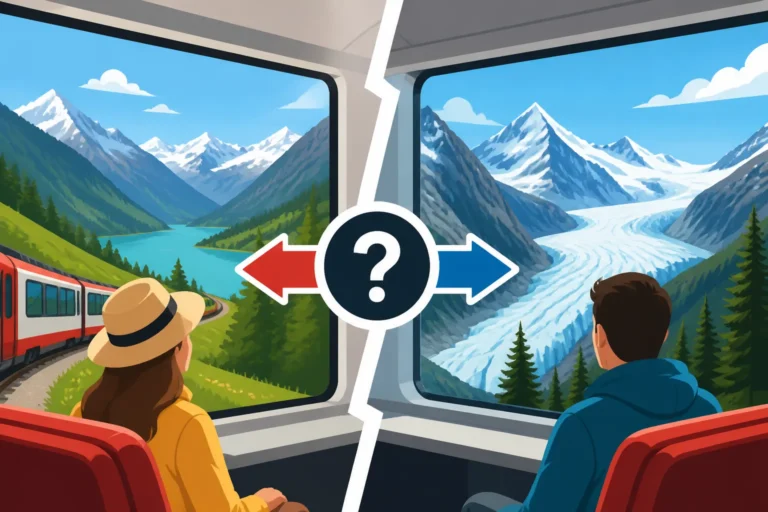
- Consider the direction. The best views are subjective, but many people prefer facing the direction of travel for the descent into Tirano. If starting in Chur or St. Moritz, that means generally sitting on the right-hand side for the best views of the valley as you descend, and for the Brusio Viaduct. However, the train does twist and turn, so you'll get great views from both sides at different points.
- Travel off-season. If your schedule allows, consider going in late autumn or early spring. The colors can be spectacular, and the crowds are significantly smaller. Plus, winter journeys offer magical snow-covered landscapes!
Maximizing Your Experience: Tips for the Best Views and Comfort
So you've secured your tickets and reservations – fantastic! Now let's talk about how to make sure your actual journey on the Bernina Express is as memorable and comfortable as possible. A little forethought can really enhance the experience, especially when dealing with the realities of a long, scenic train ride.
Best Seating for Views
This is the million-dollar question for many travelers, and it truly depends on the segment of the journey and your personal preference.
- Chur/St. Moritz to Tirano (Southbound):
- Right-hand side: For the most dramatic views down into the valleys, especially as you descend towards Alp Grüm and the Poschiavo Valley, and for the iconic Brusio Circular Viaduct, the right side is generally recommended. You'll get sweeping vistas of the landscapes the train is carving its way through.
- Left-hand side: Still offers fantastic views, particularly of the mountains you're climbing and the glaciers as you approach the Bernina Pass. Don't worry if you can only get seats on the left; the panoramic windows mean you'll still have an incredible perspective. Plus, the train twists and turns enough that you’ll catch glimpses from both sides at different points.
- Tirano to St. Moritz/Chur (Northbound):
- Left-hand side: If heading back north, this side offers the best views as you ascend, looking back down into the valleys and capturing the engineering marvels from a different angle.
My insider tip: While everyone scrambles for the "best" side, truthfully, both sides offer incredible scenery because the route is so dynamic. The large panoramic windows are designed to give you an expansive view no matter where you sit. Don't stress too much if you can't get your absolute preferred spot. Often, one of the best ways to experience it is to walk to the vestibule between carriages (if allowed and not crowded) for a different perspective, or even to the restaurant car if you feel like a change of scenery with a coffee in hand.
Packing Essentials and Onboard Services
To make your journey truly comfortable, here are a few things to consider bringing and what to expect onboard:
- Layers of Clothing: Even in summer, the altitude at Ospizio Bernina (2,253m) can be chilly, and if you get off briefly at a station like Alp Grüm, you'll feel the crisp mountain air. Conversely, Tirano can be quite warm, especially in summer. Layers are key to adapting to the microclimates along the route.
- Sun Protection: With those huge panoramic windows, the sun can stream in quite intensely. Sunglasses are a must, and sunscreen is advisable, especially if you're prone to burning.
- Camera and Extra Battery: You'll be taking a lot of photos. Make sure your camera or phone is fully charged, and consider a portable charger or extra battery pack.
- Snacks and Drinks: While there's a mini-bar service (with a trolley) and sometimes a full restaurant car (depending on the specific service you book), prices will be Swiss-level. Bringing your own snacks and drinks can save you money and ensure you have exactly what you want.
- Entertainment: For children, or for quiet moments, a book, puzzle, or fully charged tablet can be helpful. While the scenery is captivating, a 4-hour journey can feel long for some, especially the younger ones.
- Binoculars: To spot distant details, wildlife, or mountain peaks, binoculars can really enhance the viewing experience.
- Onboard Services:
- Mini-bar Service: Most Bernina Express trains have a trolley service offering drinks, coffee, and small snacks.
- Restaurant Car: Some services, especially those departing from Chur, include a full restaurant car. This is a great option for a more leisurely meal with changing views. Check your specific timetable when booking.
- Toilets: Available on all trains.
- Information: There's usually an audio guide (via headphones) that provides commentary on the highlights and history of the route in multiple languages, including English. Tune in to learn more about the incredible sights passing by your window.
Consider your luggage. If you're planning on Taking Bicycles on Swiss Trains or have larger bags, remember space in the panoramic carriages is slightly limited. Try to keep your essentials close at hand.
Beyond Tirano: Exploring Italy and Returning to Switzerland
Arriving in Tirano feels like stepping into a different world – the air is warmer, the architecture changes, and the aroma of Italian coffee fills the air. This small Italian town is the perfect gateway to explore the Valtellina valley or even venture further into Italy, but it also serves as a convenient turnaround point for those doing a day trip.
Day Trips to Tirano and Italian Connections
Many expats choose to experience the Bernina Express as a day trip. After the scenic journey, Tirano offers a charming, if small, experience.
- Explore Tirano: The town itself is pleasant to walk around. Don't miss the beautiful Sanctuary of the Madonna di Tirano, a significant basilica with stunning architecture, just a short walk from the train station. There are also several trattorias and pizzerias where you can enjoy an authentic, and significantly more affordable, Italian lunch than you'd find in Switzerland. Indulge in some local Valtellina wine or a strong Italian espresso. It’s a wonderful opportunity to truly feel like you’ve crossed into a different country, even if just for a few hours.
- Connecting to Milan or Lake Como: For those wishing to extend their Italian adventure, Tirano is well-connected by regional Italian trains to major cities. You can catch a train to Milan (around 2.5 hours) or a bus to Lake Como (Varenna or Menaggio are accessible, offering onward ferry connections), making it a fantastic starting point for Cross-Border Trips: Visiting Milan and Lake Como from Switzerland. These connections are budget-friendly and allow you to seamlessly transition from Alpine wonderland to bustling city or tranquil lakeside beauty.
- Bus Connections: RhB also offers a Bernina Express Bus service that connects Tirano to Lugano (another Swiss-Italian speaking city) during the warmer months, providing a different scenic journey through the Italian-speaking parts of Switzerland. This can be a great option for a round trip that doesn't retrace the exact train route.
For a day trip, plan about 2-3 hours in Tirano to enjoy a meal and a short stroll before catching your return train.
Overnight Stays in Tirano or Nearby
While a day trip is certainly doable, staying overnight in Tirano or the surrounding area can elevate the experience, allowing you to relax and soak in the Italian atmosphere without rushing.
- Tirano Accommodation: Tirano has a selection of hotels and B&Bs, many offering good value for money compared to Swiss prices. Staying overnight allows you to explore the town more thoroughly, enjoy a leisurely dinner, and perhaps even experience an Italian passeggiata (evening stroll). You can find plenty of options on platforms like Booking.com, which offers a wide range of hotels, guesthouses, and apartments to suit different budgets.
- Valtellina Valley Exploration: If you have more time, the Valtellina valley in Italy offers beautiful hiking, cycling, and wine-tasting opportunities. Towns like Sondrio or Bormio (famous for its thermal baths) are easily reachable by local Italian trains or buses and provide a deeper dive into Italian Alpine culture.
- St. Moritz or Engadin Valley: Alternatively, some travelers prefer to spend the night in the Engadin valley in Switzerland, perhaps in St. Moritz or a charming village like Pontresina. This allows you to experience the journey in two halves, breaking up the travel and providing more time to explore the high-Alpine region. You could enjoy a hike near Alp Grüm or Morteratsch one day, then continue your journey on the Bernina Express the next. Again, Booking.com is an excellent resource for finding a range of accommodations, from luxury resorts in St. Moritz to more rustic guesthouses in smaller Engadin villages.
When planning an overnight stay, remember to book your return Bernina Express seat reservation for the northbound journey as well. Keep an eye on the schedule; services can be less frequent in winter.
Comparing the Bernina Express to Regular Regional Trains
This is a common question, and it's a valid one! The Bernina Express runs on the same tracks as regular Rhaetian Railway regional trains. So, what's the difference, and is it worth the extra cost and mandatory reservation?
Cost and Flexibility Differences
Let's break down the practicalities:
-
Bernina Express (Panoramic Train):
- Cost: Requires a valid train ticket (which can be covered by a GA, Half-Fare, or point-to-point ticket) PLUS a mandatory seat reservation fee (approx. CHF 20-28, depending on the season and class).
- Flexibility: Limited. You are bound by your specific seat reservation time. If you miss it, you lose the reservation fee, and you'll need to catch a regional train instead.
- Experience: Guaranteed panoramic windows, often an audio commentary, and a specific "experience" train. It's designed for tourism.
-
Regular Regional Trains (Same Route):
- Cost: Only requires a valid train ticket. If you have a GA, Half-Fare, SBB Travelcards, or even a Day Trips by Train pass, it’s all you need. No additional reservation fee.
- Flexibility: High. You can hop on and off any regional train along the route, allowing you to stop for a hike at Alp Grüm or explore Poschiavo. You can often find trains every hour or two.
- Experience: Standard train carriages. While some newer regional trains have larger windows than older ones, they are not specifically panoramic. There's no audio commentary, and it's a regular commuter/regional service.
When to choose which:
- Bernina Express: Perfect for a special occasion, if you prioritize guaranteed panoramic views, comfort, and the "iconic" experience, and are happy with a fixed schedule. It's often recommended for first-time visitors or if you're hosting guests who want the full, curated experience.
- Regional Trains: Ideal for budget-conscious travelers, those with a GA or Half-Fare card who want to maximize flexibility, or anyone who wants to combine the scenic route with stops for hiking, exploring small towns, or photography. You still get the same amazing views out of standard windows, and it's less crowded.
It's a common expat "hack" to take the regional train on the Bernina route. You get the same stunning scenery for just the cost of your regular train ticket, and the freedom to get off and explore. Just be aware that regional trains might not always have the absolute best window arrangements, and you might be sharing your view with more commuters.
Views and Comfort Comparisons
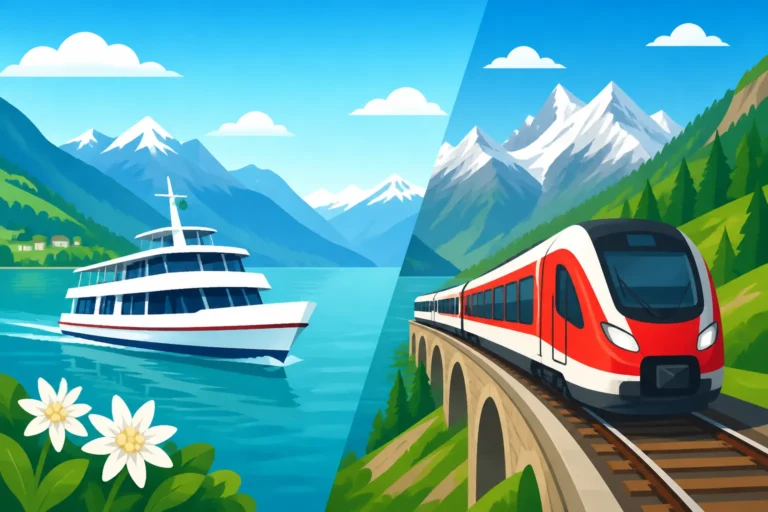
- Panoramic Windows vs. Standard Windows: The biggest draw of the Bernina Express is undeniably its vast panoramic windows that extend into the roof. This truly provides an immersive experience, allowing you to gaze up at the mountain peaks and glaciers without obstruction. Regional trains have standard windows; while they offer great views, they are not as expansive.
- Comfort: The Bernina Express panoramic carriages are generally modern and comfortable, designed with tourism in mind. They often have slightly more spacious seating and amenities geared towards a scenic journey. Regional trains are perfectly comfortable for daily travel, but they might be older, and during peak commuter times, they can be more crowded.
- Crowds: The Bernina Express, due to its popularity and mandatory reservations, can still feel quite full, but everyone has a seat. Regional trains can sometimes be empty, offering you an entire window to yourself, especially during off-peak hours. However, they can also fill up with hikers and locals at various points.
- Atmosphere: The Bernina Express has a distinct tourist atmosphere, with passengers eagerly looking out, taking photos, and listening to the commentary. Regional trains have a more local, relaxed feel.
Ultimately, both options deliver on the incredible scenery. The Bernina Express provides a slightly more refined and curated experience, but the regional trains offer unparalleled flexibility and the same world-class views for less money. For a truly unique experience, you could consider taking the Bernina Express one way and a regional train the other way, giving you the best of both worlds and allowing you to compare directly. Just remember that whatever you choose, this journey is a true gem of the Alps, offering a memorable passage into Italy.
Disclaimer
Please note that while I strive to provide accurate and up-to-date information, details such as prices, schedules, and regulations are subject to change. Always verify the latest information directly with the service providers (Rhaetian Railway, SBB, Omio, GetYourGuide, Booking.com, etc.) before making any travel plans or bookings. This guide is for informational purposes only and does not constitute professional advice.