Can I Own Property in Switzerland Without Any Residence Permit?
The dream of owning a piece of the Swiss Alps is often met with the cold, hard reality of the Lex Koller legislation. I remember standing in front of a beautiful lakeside apartment in Thun, ready to sign, only to be told my lack of a permanent residency card made the transaction nearly impossible. This guide breaks down exactly how you can—and sometimes cannot—buy property here without a permit.
The Lex Koller Reality: Can You Really Buy Without a Permit
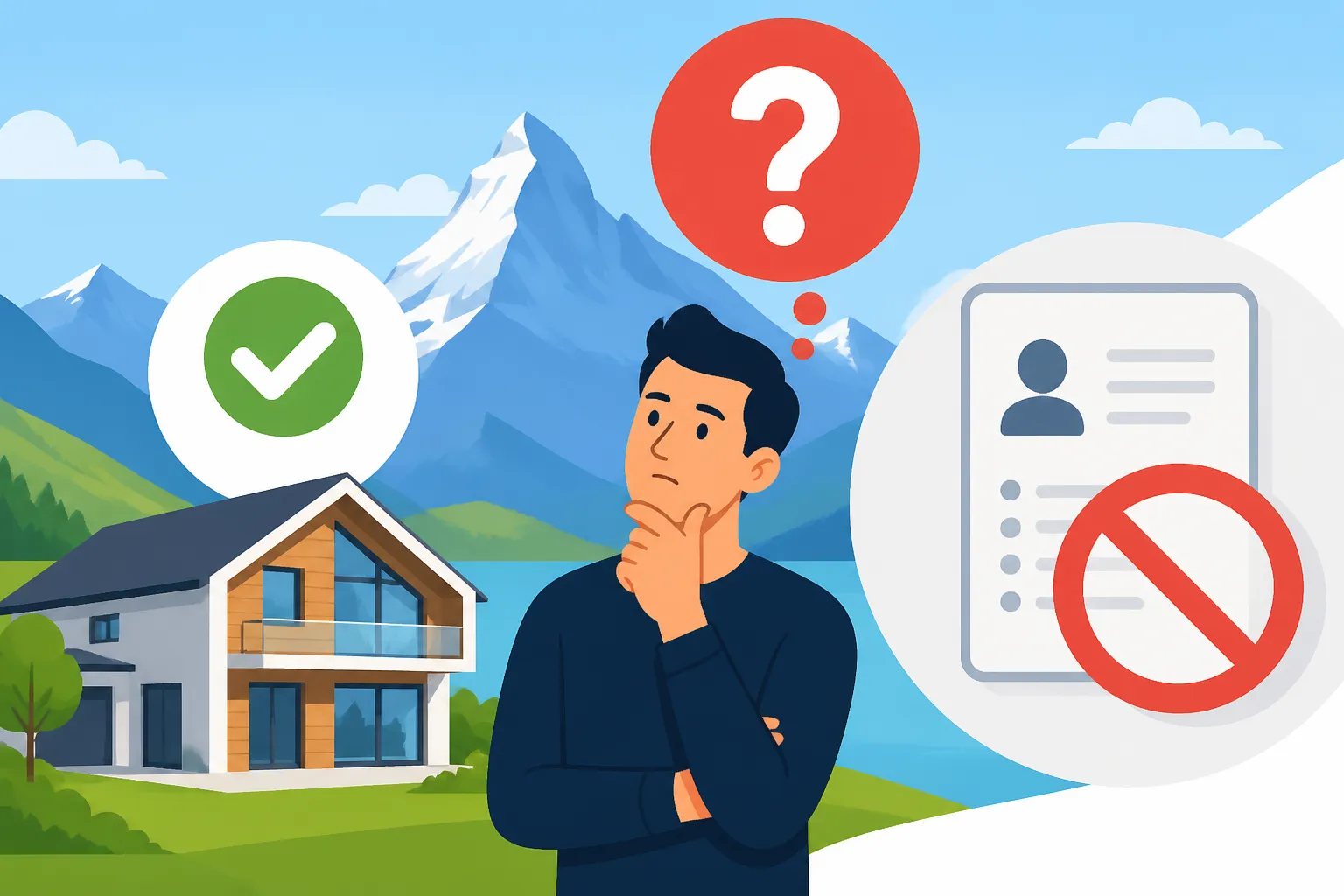
The short answer is a frustrating "it depends," but the long answer involves a 1983 law known as Lex Koller. This legislation was designed specifically to prevent the "over-alienation" of Swiss soil, meaning the government doesn't want foreign investors driving up prices for locals. If you do not have a residence permit and you do not live in Switzerland, you are classified as a "person abroad." For this group, purchasing residential property is strictly regulated and, in many urban areas, flatly prohibited.
When I first arrived, I assumed that having the cash was enough. It isn't. In major economic hubs like Zurich or Geneva, if you don't have a residence permit, you generally cannot buy an apartment or a house to live in. The system is designed to prioritize those who contribute to the local economy and social fabric. If you are still in the early stages of your move, you might want to look into Residence Permits in Switzerland: L, B, C, and G Permits Explained to see which path might eventually lead you to property ownership.
However, "it depends" exists because there are specific loopholes. These loopholes aren't for primary residences in cities, but rather for holiday homes in designated tourist zones. This is why you see so many foreigners owning chalets in Verbier but almost none owning townhouses in Bern. Understanding Lex Koller: Can Non-EU B Permit Holders Buy Property in Switzerland? is the first step in realizing that the rules for those already living here are vastly different from those trying to buy from the outside.
The Holiday Home Loophole: Buying in Tourist Zones
If your goal is a vacation retreat rather than a primary residence, the door is cracked open—but only in certain cantons. Cantons like Valais, Graubünden, Obwalden, and Ticino have specific quotas for holiday homes sold to non-residents. These are often located in mountainous regions or near major lakes. Even then, you are usually limited to a single property per family, and the living area typically cannot exceed 200 square meters.
The application process for a holiday home as a non-resident requires a special permit from the cantonal authorities. This isn't a residence permit, but a "license to purchase." During this process, you will likely need to provide certified translations of your financial history and identity documents. Using a service like RushTranslate can be a lifesaver here, as Swiss notaries are notoriously picky about the quality and certification of translated documents.
There are also strict "lock-in" periods. In many cantons, if you buy a holiday home without a residence permit, you are forbidden from reselling it for several years (often five to ten) unless you can prove extreme financial hardship or health issues. This prevents the "flipping" of Swiss real estate. If you plan on spending significant time in your new holiday home, remember that you still need coverage. Even for short stays, Healthcare in Switzerland for Expats: The Complete System Overview (2027) is worth reading, and many non-residents opt for Cigna Global to ensure they are protected while on Swiss soil without being part of the mandatory local system.
Buying Commercial Property: The Exception to the Rule
Surprisingly, the rules for commercial real estate are much more relaxed. Lex Koller generally does not apply to properties used for "permanent business activities." This means that as a non-resident without a permit, you can technically buy a warehouse, an office building, or a retail space. The logic is that business investment benefits the Swiss economy and doesn't compete with the local housing market.
This opens a unique door for those interested in Freelancing and Entrepreneurship: Setting Up a Business in Switzerland. If you can prove that the property is essential for a legitimate business operation, the restrictions melt away. I’ve known several expats who purchased commercial lofts to run design studios or tech startups long before they secured their permanent residency. However, you cannot simply buy a commercial building and live in the back room; the authorities do perform spot checks to ensure the property is being used for its stated purpose.
When venturing into commercial real estate, the legal hurdles shift from immigration law to contract law. You will be dealing with complex deeds and zoning regulations. Again, professional translations via RushTranslate will be necessary to ensure your business plan and financial proofs meet the Swiss standards. Managing the finances for such a purchase also requires a deep dive into Banking and Finance for Expats in Switzerland: The 2027 Guide to ensure you can even move the necessary capital into a local account.
Step-by-Step Guide for Foreign Buyers Without Residency
If you’ve found a property in a tourist zone or a commercial space that fits the criteria, the path to the finish line is long. Unlike the UK or the US, where a real estate agent handles much of the "feel-good" stuff, in Switzerland, the Notary is the king of the transaction. The Notary is an impartial public official who represents the law, not you. You will need to find one who is comfortable dealing with non-resident applications, which can be a specialty in itself.
| Category | Non-Resident (No Permit) | B Permit Holder (EU/EFTA) | B Permit Holder (Non-EU) |
|---|---|---|---|
| Primary Residence | Generally Prohibited | Allowed | Allowed |
| Holiday Home | Allowed (Quota Zones) | Allowed | Allowed |
| Commercial Property | Allowed | Allowed | Allowed |
| Mortgage Access | Very Difficult | Standard | Standard |
| Resale Restrictions | High (5-10 years) | None | None |
Financing is the biggest hurdle for the permit-less buyer. Swiss banks are conservative. While a resident might get a mortgage with a 20% down payment, a non-resident without a permit will likely be asked for 40% or even 50% down. They see you as a "flight risk." To navigate this, you'll need to master the details in Mortgages in Switzerland: The 2026 Down Payment and Amortization Rules and be prepared to show extensive global assets.
Once the financing is in place, the Notary will draft the deed and apply for the "authorization to acquire" from the cantonal commission. This can take several months. During this wait, you should ensure your documents are in perfect order. I once saw a deal fall through because a birth certificate translation was rejected for not being "apostilled" correctly. I always recommend using RushTranslate for these critical legal steps to avoid such heartbreak.
Finally, even after the sale is recorded in the Land Registry (Grundbuch), your obligations don't end. You will be subject to Swiss taxes on the property value and potential rental income. If you find the legal landscape too daunting, Finding English-Speaking Notaries for Visa Documents in Switzerland is an excellent resource to find a professional who can speak your language and guide you through the Lex Koller maze. For those spending half their year in their Swiss holiday home, maintaining a global health plan like Cigna Global ensures you have continuous coverage without the headache of navigating the local KVG/LAMal mandates as a non-resident.
Where to Live in Switzerland: Cantons, Cities, and Commuter Zones
Choosing the right location is the difference between a "Yes" and a "No" from the cantonal authorities. If you are dead set on the Lake Geneva region, you might find that while the city of Geneva is closed to you, certain parts of the Vaud countryside are slightly more accessible for holiday homes. You can explore these nuances in Where to Live in Switzerland: Cantons, Cities, and Commuter Zones. Each canton has its own "Lex Koller" officer who interprets federal law with local flavor.
In my experience, the German-speaking cantons tend to be more rigid with their quotas, while the mountainous French and Italian-speaking regions (Valais and Ticino) are more accustomed to foreign owners. However, the price of entry in these "open" zones is often a premium on the property price itself. You aren't just buying a house; you are buying the rare right to own Swiss land without being a Swiss resident.
Before you wire a single franc, make sure you have a clear exit strategy. The Swiss market is not a "get rich quick" environment. It is a "store your wealth safely for thirty years" environment. If you eventually decide that you want to move here full-time to simplify your property taxes and rights, your focus should shift toward the immigration side of things, starting with Buying a Property in Switzerland: Process, Fees, and Real Estate Reality to see how your status as an owner might (or might not) help your residency application.
Legal Disclaimer
The information provided in this guide is for informational purposes only and does not constitute legal or financial advice. Swiss real estate laws, including Lex Koller and cantonal quotas, are subject to frequent changes and local interpretations. Always consult with a qualified Swiss attorney or a licensed notary before entering into any real estate transaction in Switzerland. Ownership of property does not grant any right to a residence permit or Swiss citizenship.