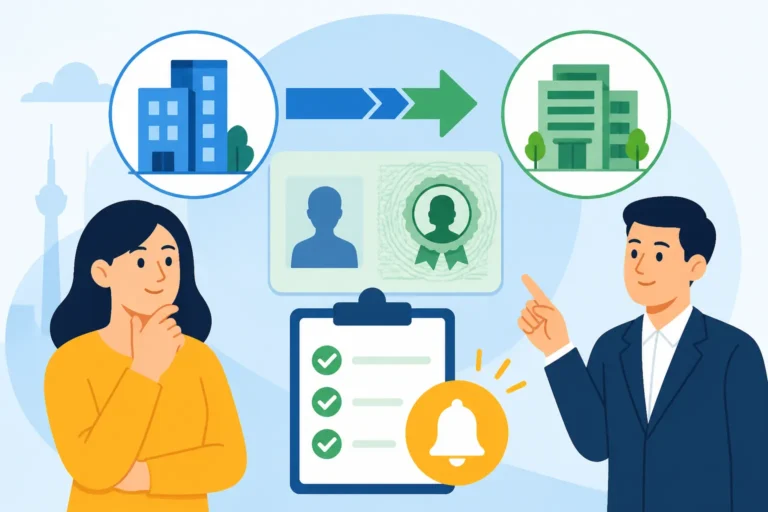
Intra-Company Transfers (ICT): Moving to the Swiss Branch of Your Company
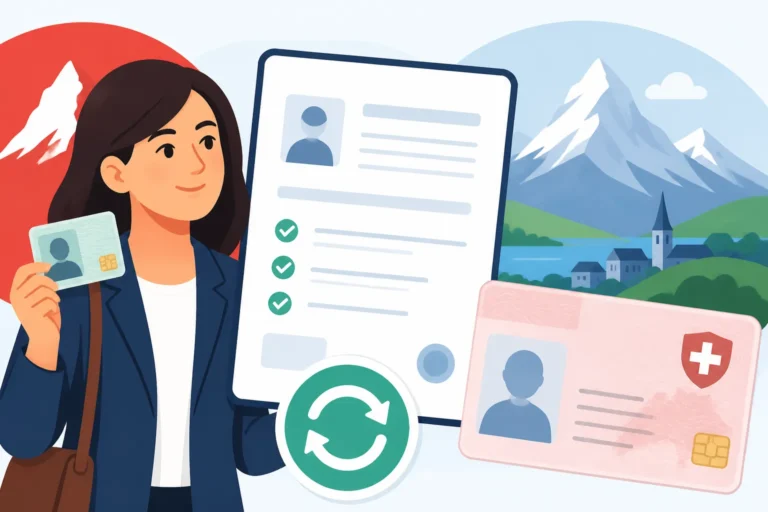
Getting the news that your company wants to relocate you to their Swiss office feels like winning the career lottery, until you see the mountain of paperwork involved. I remember sitting at my desk with three different browser tabs open, trying to figure out why my "transfer" wasn't as simple as a flight booking. This guide solves the confusion surrounding Swiss Intra-Company Transfers (ICT).
Understanding the Swiss ICT Framework
The Intra-Company Transfer, often referred to in official circles as the ICT, is a specific immigration pathway designed for multinational corporations to move their "best and brightest" across borders without the usual labor market testing required for local hires. While Switzerland is notoriously protective of its job market, the ICT serves as a lubricant for international business. However, don't let the corporate backing fool you into thinking it's a "set it and forget it" process.
Definition and Scope of the ICT Permit
An ICT permit is essentially a temporary work authorization granted to skilled employees of a foreign company who are being sent to a Swiss branch, subsidiary, or parent company. It is important to distinguish this from a standard local hire. In a local hire scenario, the Swiss entity must prove they couldn't find a Swiss or EU/EFTA citizen to fill the role. In an ICT scenario, the focus shifts from "could a local do this?" to "is this person essential to the global operations of the firm?"
The Swiss authorities recognize three main categories of transferees: executives/senior managers, specialists, and graduate trainees. Each has a different set of expectations regarding their background and the value they bring to the Swiss soil. If you are moving as a specialist, your knowledge must be proprietary or highly technical—something that cannot be easily taught to a new hire in Zurich or Geneva within a few months.
The Difference Between ICT and Local Hiring
One of the biggest shocks for expats is realizing that an ICT permit is often "tied" to the specific employer and the specific mission. Unlike a standard The Swiss B Permit: Eligibility, Renewal, and Restrictions which might eventually allow for more labor market flexibility, the ICT permit is predicated on the idea that you are here for a specific corporate purpose.
If you were to be hired locally by a Swiss firm, you would be entering the system under the general quota for third-country nationals (if you are non-EU/EFTA). The ICT has its own nuances regarding quotas, though they still fall under the broader umbrella of annual limits set by the Federal Council. The primary advantage of the ICT is the speed and the removal of the "Inländervorrang" (local priority) check, provided the internal nature of the move is legitimate.
Duration of Stay and Permit Types
When you are transferred, you won't just get a generic visa. You will likely be issued either an L permit (short-term) or a B permit (longer-term), but with "ICT" notations in the system. For most managers and specialists, the initial stay is often capped at three or four years, though extensions are possible depending on the project.
For graduate trainees, the duration is much shorter, usually limited to one year. It is vital to understand that the ICT permit is intended to be temporary. If your goal is permanent residency, you’ll need to eventually look into how the system handles the transition from a temporary transfer to a more permanent Residence Permits in Switzerland: L, B, C, and G Permits Explained status, which often requires a new application or a change in contract type.
Eligibility Requirements for ICT Candidates
Switzerland does not hand out ICT permits to everyone. The criteria are stringent, focusing on your rank within the company and your previous tenure. You cannot simply join a company on Monday and be transferred to their Basel office on Friday.
Senior Managers and Specialists
To qualify as a "Senior Manager," you must be at a level where you primarily direct the management of the organization or a major department. You should have wide-to-total autonomy in decision-making. The authorities will look at your job description and organizational chart to ensure you aren't just a manager in title alone.
"Specialists," on the other hand, are the technical backbone of the ICT program. You must possess "uncommon knowledge" essential to the company's service, research equipment, techniques, or management. When my friend moved here as a software architect for a major bank, he had to provide a detailed dossier explaining that his knowledge of the bank's proprietary legacy code was something no local hire could possibly possess.
Minimum Duration of Employment
You generally need to have been employed by the sending company group for at least six to twelve months immediately preceding the transfer. This rule exists to prevent "permit shopping," where companies hire foreign nationals specifically to bypass Swiss immigration laws by immediately "transferring" them into the country.
The authorities will ask for your previous payslips and a copy of your original employment contract from your home country. They want to see a stable, pre-existing relationship with the firm. If you’ve had a break in service or were a contractor before becoming a full-time employee, this can complicate the application and may require additional explanation from your HR department.
Salary and Employment Conditions
This is where many transfers hit a wall. Switzerland has some of the highest salaries in the world, and the law mandates that transferred employees must be paid according to "local and professional standards." You cannot be sent to Switzerland on your home country's salary plus a small "cost of living" adjustment if that total doesn't meet the Swiss threshold for your role and age.
The Cantonal Labor Office will review your proposed Swiss salary. If they feel it is too low—even if it seems high to you—they will reject the permit to prevent "wage dumping." You must also be provided with the same benefits and working conditions as a local Swiss employee. This includes adhering to rules regarding Understanding Swiss Payslips: Deductions for AHV, ALV, and NBU to ensure you are contributing correctly to the social system from day one.
The Step-by-Step ICT Permit Application Process
The ICT process is a collaborative effort between you, your company's HR, and the Swiss cantonal authorities. It is a multi-stage marathon, not a sprint.
The Role of the Employer
In the Swiss system, your employer is the "petitioner." They must initiate the process with the Cantonal Migration Office where the office is located. They have to justify the transfer, provide the corporate "why," and prove that the Swiss branch is an actual functioning entity capable of supporting the transferee.
I’ve seen cases where small startups tried to transfer founders and failed because they didn't have enough local substance yet. Your HR department will need to fill out forms like the "Gesuch Auslanderdienst," which is the formal request for a work permit. They are responsible for paying the administrative fees, which can range from a few hundred to a couple of thousand francs depending on the complexity and the canton.
Documentation and Translation Needs
The burden of proof is on you and your employer. You will need to provide diplomas, professional certifications, your CV, and a copy of your passport. Crucially, all documents that are not in one of the Swiss national languages (German, French, or Italian) or English must be officially translated.
For highly sensitive documents like birth certificates or marriage licenses required for your family, I always recommend using a reputable service like RushTranslate to ensure the formatting and legal terminology meet Swiss standards. The Swiss are sticklers for detail; a poorly translated diploma can lead to weeks of delays while they ask for "clarification." You may also need to look into Translation and Apostille Requirements for Marriage Certificates if you are bringing a spouse, as these often require an extra layer of international legalization.
Cantonal vs. Federal Approval
The Swiss immigration system is a two-key system. First, the Canton (e.g., Zurich, Geneva, Vaud) reviews the labor market aspects of your transfer. If they say "yes," they send the file to the State Secretariat for Migration (SEM) in Bern for federal approval.
The SEM has the final say. They check for national security issues and ensure that the canton isn't exceeding its allocated quotas. Only after Bern gives the "green light" is the authorization sent to the Swiss embassy in your home country (or directly to you if you are from a visa-exempt country). This process typically takes 8 to 12 weeks, though it can be longer during peak periods. For a bird's-eye view, check out Swiss Visas and Work Permits: The Complete 2027 Guide for Expats to see how this fits into the broader legal landscape.
Rights and Restrictions for ICT Transferees
Once you arrive with your shiny new permit, it’s important to know what you can and cannot do. An ICT permit is a "golden ticket" in many ways, but it has boundaries.
Tied vs Untied B Permits
As mentioned earlier, most ICT permits are "tied." This means the permit is legally linked to your current employer. If you decide you hate the job six months in and want to move to a different Swiss company, you cannot simply switch. Your new employer would have to start a brand-new "local hire" application for you, which involves proving they couldn't find a Swiss/EU person for the job—a much higher hurdle.
This "tied" status provides the employer with security, but it can feel restrictive for the employee. However, you do have the right to live anywhere within the canton of your work, and in some cases, with permission, you can live in a different canton than where you work. If your permit is a B permit, you are generally expected to stay for at least a year, and renewals are typically a formality as long as the assignment continues.
Family Reunification Rules
One of the best parts of the Swiss ICT path is the right to bring your family. Unlike some other countries where "dependents" are barred from working, Switzerland is relatively progressive here. Spouses of ICT holders (B or L permit) generally have the right to live and work in Switzerland.
You will need to go through the process of Family Reunification: Bringing Your Spouse and Children to Switzerland to ensure they have their own residence cards. Once they have their permit, they can enter the labor market without the same "local priority" checks that a fresh expat from outside the country would face. This makes the ICT move much more sustainable for dual-career couples.
Social Security and Pension Contributions
Even as a temporary transferee, you are part of the Swiss social system. You will see deductions on your payslip for AHV (Old Age and Survivors' Insurance) and ALV (Unemployment Insurance). Many ICT expats wonder why they are paying into a pension they might never draw from.
The reality is that Switzerland has bilateral social security agreements with many countries (like the US, UK, and Canada). These agreements often allow you to remain in your home country's social security system for a few years, or they ensure that the years you spend in Switzerland "count" toward your home country's pension. It is vital to discuss this with your HR before you move so you can obtain the necessary "Certificate of Coverage."
| Permit Feature | ICT L Permit | ICT B Permit |
|---|---|---|
| Typical Duration | Up to 12-24 months | 1 to 5 years (renewable) |
| Family Work Rights | Generally yes | Yes |
| Quota Source | Short-term quotas | Long-term quotas |
| Job Mobility | Very restricted | Restricted to employer |
| Path to C Permit | Rarely counts directly | Can count toward the 5/10 year rule |
Health and Financial Logistics for ICT Relocation
The administration doesn't stop once you have the permit. Moving to Switzerland is an expensive endeavor, and the first 30 days are a whirlwind of registrations.
Mandatory Swiss Health Insurance
Health insurance is not a "benefit" your company provides in the traditional sense; it is a legal requirement you must manage yourself. You have 90 days from the day you arrive to sign up for a plan. While you are waiting for your Swiss KVG (mandatory basic insurance) to be finalized, or if you want a higher level of global coverage that covers you during trips home, many expats look at international providers.
Options like Cigna Global can be useful for those who want a seamless transition or who have specific international needs that a standard local plan might not cover. However, you must eventually comply with the local law. For a breakdown of how the local system works, read Healthcare in Switzerland for Expats: The Complete System Overview (2027). Most people find the system confusing at first, especially the "Franchise" (deductible) system, so it's worth studying Is Basic Health Insurance (KVG) Mandatory for Expats? A Plain-English Guide before you sign any contracts.
Housing and Registration
In Switzerland, your permit is not "active" until you register with your local municipality (the Gemeinde or Kreisbüro). You must do this within 14 days of your arrival and before you start working. This is known as The 14-Day Registration Rule: Signing Up at the Gemeinde/Commune.
To register, you need a permanent address. This creates a "chicken and egg" problem: you need a bank account for a lease, a permit for a bank account, and an address for the permit. Most ICT expats start in "Serviced Apartments" that provide the necessary "Wohnungsbestätigung" (confirmation of residence) for the registration office. Once you are registered, you’ll receive your physical residence card in the mail a few weeks later. Don't forget to keep your Financial Checklist for Your First 30 Days as an Expat in Switzerland handy to manage the various deposits and fees.
Transitioning After Your ICT Assignment
What happens when the three-year assignment ends? For some, it's a flight home. For others, it's the start of a permanent life in the Alps.
Moving from ICT to a Local B Permit
If your company wants to keep you in Switzerland permanently, they will need to transition you from an ICT status to a local "Regular B" permit. This is not always a simple "box-ticking" exercise. The authorities may re-evaluate whether the position now qualifies as a local role and if the "local priority" rule should apply.
However, if you have been here for several years, have integrated well, and the company can show that your role is indispensable, the transition is usually successful. This is the moment your permit becomes "untied" from the ICT restrictions, allowing you more freedom in the Swiss labor market. It also starts the clock more firmly toward a future C Permit (Permanent Residency).
Returning Home or Moving to a Third Country
If you are moving on, you must "deregister" (Abmeldung) from your commune. This is a critical step that many people forget in the chaos of packing. Without a deregistration certificate, you cannot cancel your Swiss health insurance or your phone contracts.
You should also look into how to handle your Swiss medical bills one last time, ensuring you know How to Read a Swiss Medical Bill (Rückforderungsbeleg) and Claim Refunds so you don't leave money on the table. If you have been paying into the "Pillar 2" pension system, you might be able to withdraw those funds if you are moving to a non-EU/EFTA country, which can provide a significant "relocation bonus" for your next chapter.
Managing the Paperwork for Your Next Move
Whether you are staying or going, you will likely need your Swiss documents (like your "Arbeitszeugnis" or reference letter) translated into your next language. Again, services like RushTranslate are helpful for ensuring these professional documents carry the weight they deserve in your next destination. Moving within a global company is a career-defining moment, and having your Swiss experience documented correctly is the final piece of the puzzle.
Disclaimer
The information provided in this article is for general informational purposes only and does not constitute legal or professional immigration advice. Swiss immigration laws, quotas, and cantonal practices are subject to frequent change. Always consult with your company's HR department, a qualified immigration attorney, or the official Swiss State Secretariat for Migration (SEM) before making any relocation decisions. I am an expat sharing my lived experience and research, not a licensed legal professional.