Taking the fide Language Test in Zurich: Format and Passing Scores
Navigating the Swiss permit system often feels like a full-time job, especially when the dreaded requirement for language proficiency pops up on your renewal notice. I remember the cold sweat I broke into when my own letter arrived, realization hitting me that my "kitchen German" wouldn't cut it for a permanent residency application. This guide demystifies the fide language test in Zurich, breaking down its unique format and the specific scores you need to secure your future in Switzerland.
Why the fide Test is Different for Zurich Expats
For years, expats in Zurich leaned on the Goethe-Zertifikat or TELC exams to prove their German skills. While those are still valid, the fide test has become the gold standard for those of us living the daily grind in Switzerland. Why? Because fide was designed specifically for the Swiss context. Instead of analyzing high-level literature or debating global politics, you are tested on whether you can understand your landlord, talk to your doctor, or help your child with their school registration.
The fide test results in a "Language Passport," a document that the Migration Office in Zurich (the Migrationsamt at Berninastrasse) recognizes instantly. Unlike other exams that can feel like an academic hurdle, fide is a competency assessment. It acknowledges that you might be better at speaking than writing—or vice versa—and awards levels for each skill independently. This is crucial when navigating Language Requirements for Swiss Permits: A1 to B2 Standards Explained because it allows for a more nuanced look at your integration.
Living in Zurich, you also face the unique challenge of High German versus Swiss German. The fide test is conducted in High German (Hochdeutsch), but because it focuses on local scenarios, the examiners are accustomed to the "Swiss-isms" that naturally creep into an expat’s vocabulary after a few years in the Limmat city.
Breaking Down the fide Test Format
The fide test is split into two main sections: "Speaking and Understanding" and "Reading and Writing." You can choose to take both on the same day or split them up if you want to manage your stress levels.
Speaking and Understanding (Sprechen und Verstehen)
This is the part that usually keeps people up at night. It lasts about 40 minutes and is divided into three tasks. First, there is an introductory conversation. This isn't just "hello, my name is," but rather a chance for the examiner to gauge your comfort level. They might ask about your life in Zurich or your job.
The second task involves an information exchange. You’ll be given a scenario—perhaps you need to ask about a gym membership or find out why your trash wasn't picked up. You have to ask questions and process the answers. The third task is a role-play. This is where your real-world experience pays off. You might have to explain a problem to a pharmacist or discuss a project with a colleague.
The beauty of the fide system is its progressive nature. You don't "fail" the B1 and get nothing; the examiner assesses whether your performance met the A1, A2, or B1 criteria. Understanding the nuances of C Permit Language Requirements: Do I Need A2 Written and B1 Oral? is helpful here, as many find they naturally score higher in the oral section than the written one.
Reading and Writing (Lesen und Schreiben)
The written portion takes about 60 minutes. Again, the tasks are hyper-practical. You won't be writing essays on philosophy. Instead, you might have to read a notice from the city regarding a local festival or a letter from your insurance provider. When dealing with complex documents, some expats find that having their original home-country records handled by RushTranslate helps them understand the terminology used in official Swiss correspondence.
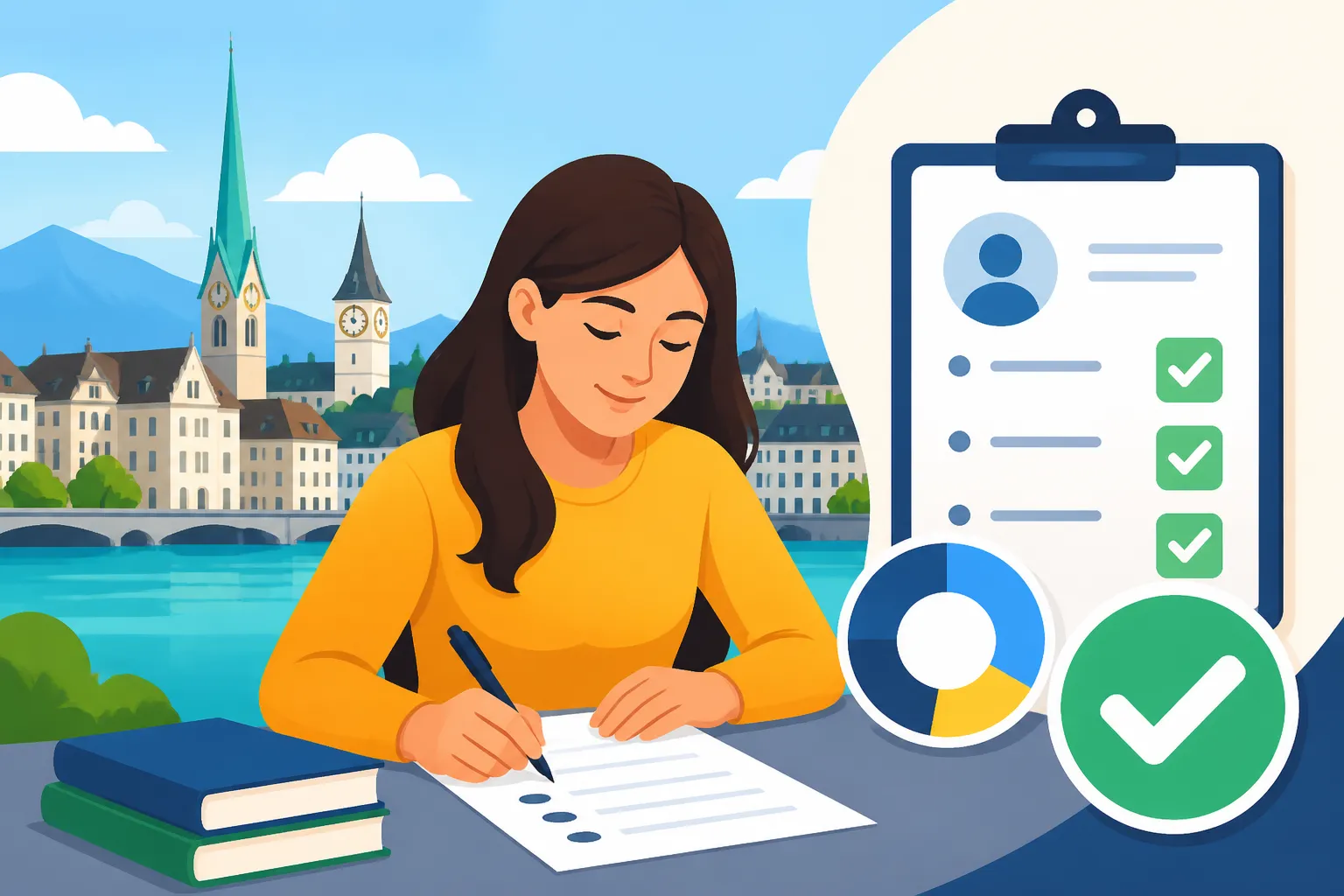
Writing tasks often involve filling out forms or writing a short message. For example, you might need to write an email to your child’s teacher explaining an absence or a short note to a neighbor about a shared laundry room issue. The focus is on communication, not perfect grammar. If the person reading your note understands that the laundry machine is broken and you've called the repairman, you've succeeded.
Scoring and the Language Passport
The fide test doesn't give you a "pass" or "fail" grade in the traditional sense. Instead, your performance is mapped against the Common European Framework of Reference for Languages (CEFR) for levels A1, A2, and B1.
| Goal | Required Spoken Level | Required Written Level |
|---|---|---|
| B Permit Renewal (Standard) | A1 | A1 (often not strictly enforced for EU) |
| C Permit (Standard – 10 years) | A2 | A1 |
| C Permit (Fast-track – 5 years) | B1 | A1 |
| Naturalization (Citizenship) | B1 | A2 |
Getting these levels recorded correctly in your Language Passport is the key to The Swiss C Permit (Permanent Residency): Fast-Track and Standard Routes. If you score a B1 in speaking but an A2 in writing, your passport will reflect exactly that. This is a lifesaver for those who can navigate a conversation at the Zurich HB but struggle with the complex cases of German grammar when putting pen to paper.
If you are aiming for The Early C Permit (Permis C Anticipé): Qualifying After 5 Years, you really need to focus on hitting that B1 in the oral section. Zurich is strict about these thresholds, and having a clear, official fide Language Passport makes the application at the communal office much smoother.
Where to Take the Test in Zurich
Zurich has several accredited fide test centers. Most are located in or around the city center, making them easily accessible by S-Bahn or tram. Popular spots include the Migros Club School (Klubschule Migros), specialized language schools like flying-teachers, and integration centers.
When you register, you’ll usually have to wait 2-6 weeks for a slot. I highly recommend visiting the center beforehand if you’re prone to test anxiety. Knowing exactly which tram stop to get off at—be it Oerlikon, Altstetten, or Limmatquai—can shave off those pre-test jitters. Also, remember that the results aren't instant. It takes about 4 weeks for the fide Secretariat in Bern to process your results and mail out your physical Language Passport.
If you are currently preparing your dossier for a permit upgrade, remember that the Migration Office looks at more than just language. They will check your financial status and your health insurance coverage. Many expats maintain international plans through Cigna Global alongside their mandatory KVG, and ensuring all your paperwork is in order while waiting for your test results is a smart move for Registering at the Kreisbüro: What Documents Do Expats Need to Bring?.
Practical Tips for Success
The best way to study for the fide test isn't by staring at a textbook; it’s by living your life in Zurich. Start saying "Grüezi" instead of "Hello." When you go to the local bakery, try to order in German. Listen to the announcements on the VBZ trams. These small interactions build the "Verstehen" (Understanding) muscles that the fide test prioritizes.
Another great tip is to join a local "Stammtisch" or an integration course. Many Zurich neighborhoods offer low-cost or even free conversation circles. These are fantastic because they simulate the exact role-playing tasks you’ll face in the exam. You’ll practice explaining why you’re late for a meeting or how to describe a symptoms to a doctor—exactly what the fide examiners want to hear.
Don't ignore the administrative side either. If you have certificates from other countries or old university transcripts that you think might help your case, using a service like RushTranslate to get them into a format the Swiss authorities recognize is a solid backup plan. While they won't replace the fide test for citizenship, they can help paint a picture of your overall education and integration when you are Naturalization Timeline: How Long It Actually Takes After Applying.
Common Pitfalls to Avoid
The biggest mistake I see expats make is over-preparing for grammar and under-preparing for scenarios. I’ve met people who can conjugate every irregular verb in the book but freeze up when asked to "call a plumber" during the role-play. The fide test rewards fluency and the ability to solve a problem over grammatical perfection.
Another pitfall is the timeline. Many people wait until their B permit is about to expire before booking the test. Given that it takes a month to get a slot and another month to get the results, you need to start the process at least 4-5 months before your permit expiry date. If you miss the window, you might find yourself Filing a Swiss Tax Return (C Permit or High Earners on B Permit) while still on a restricted permit, simply because your language paperwork was late.
Finally, don't let the "Swiss German" factor scare you. While the locals in Zurich speak Mundart, the test is strictly in High German. However, showing that you understand the local culture—mentioning things like the "Züri-Sack" or the "Räbeliechtli" parade—shows the examiner that you are truly integrated, which is the ultimate goal of the fide system.
Comparison: fide vs. Other Certificates
If you’re still on the fence about which test to take, consider your long-term goals. If you might move to Germany or Austria later, a Goethe certificate has more international recognition. But if your goal is strictly Swiss residency or citizenship, fide is almost always the smoother path.
| Feature | fide Test | Goethe/TELC |
|---|---|---|
| Context | Swiss Daily Life | General/Academic German |
| Flexibility | Individual grades for Speak/Write | Often must pass all parts at once |
| Recognition | Federal (Switzerland only) | International |
| Scoring | Modular (A1-B1) | Single Level (e.g., just B1) |
If you already have a Goethe certificate and are wondering if you need to take the fide as well, check Language Tests for C Permit: fide vs Goethe-Zertifikat Compared. In many cases, a recent Goethe certificate (usually within the last 5 years) can be "converted" into a Language Passport for a small fee, saving you the stress of a second exam. However, if your certificate is older, taking the fide in Zurich is often the fastest way to satisfy the Migrationsamt. For those aiming for the highest level of integration, knowing Can I Use a Goethe B1 Certificate Instead of fide for Naturalization? can save you significant time and money.
Disclaimer
This guide is for informational purposes only and reflects the personal experiences and research of the author. Immigration laws and language requirements in Switzerland are subject to change at the federal and cantonal levels. Always verify the current requirements with the Zurich Cantonal Migration Office or the official fide secretariat before booking your exam or submitting a permit application. Information regarding third-party services is based on general expat utility and does not constitute legal or official immigration advice.