What Does the Annual Sirenentest in February Actually Mean?
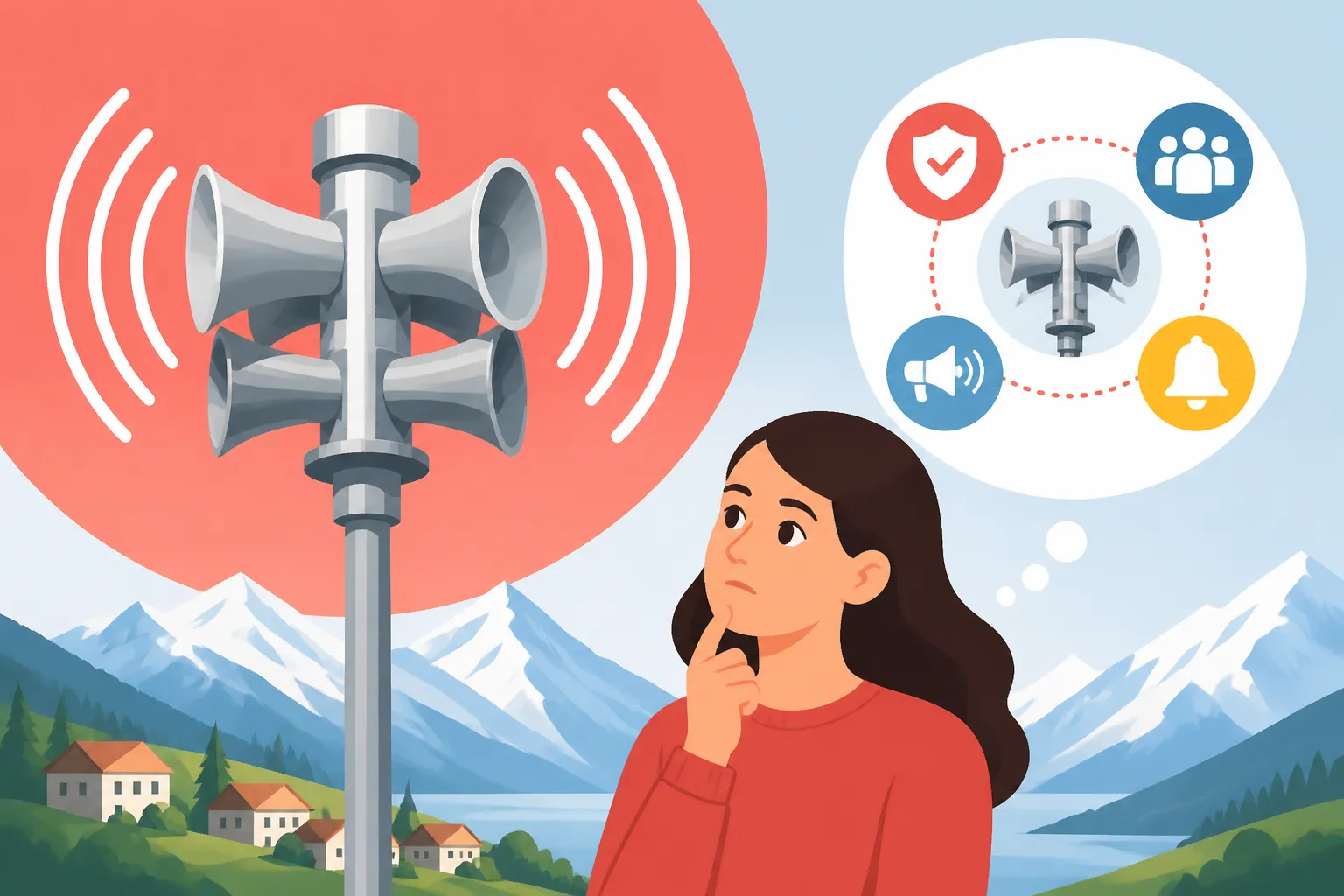
Every first Wednesday of February at precisely 1:30 PM, the Swiss air is pierced by a haunting, rising and falling howl that feels straight out of a Cold War thriller. I remember standing in the middle of a supermarket during my first winter in Basel, heart racing, wondering why everyone else was calmly comparing brands of chocolate. This guide demystifies the annual Sirenentest, explaining why it happens, what the different tones mean, and how you should actually react.
The Logistics of the National Siren Test
If you have recently finished Registering Your Address at the Kreisbüro Within 14 Days of Moving, you might not have been warned by your neighbors about this quirk of Swiss life. The siren test is a nationwide event coordinated by the Federal Office for Civil Protection (FOCP). It is not a localized drill but a synchronized check of approximately 5,000 stationary and 2,200 mobile sirens across every single canton.
The primary test for the "General Alert" begins at 1:30 PM and usually lasts until 2:00 PM. During this window, the siren produces a sound that oscillates—rising and falling in pitch—for one minute. This sequence is repeated once after a two-minute interval. For many expats, this is the most jarring part of the experience. The sound is incredibly loud, designed to be heard through triple-paned windows and over the noise of city traffic.
Following the general test, a specific "Water Alert" test occurs in areas downstream from dams. This happens between 2:00 PM and 3:00 PM. The sound is distinctively different: a series of twelve low-pitched, continuous tones, each lasting twenty seconds. If you are living in a lakeside city like Zurich or Geneva, or nestled in a valley in Valais, you are highly likely to hear both. When you are looking for a new home on platforms like HousingAnywhere, it is worth checking if your prospective apartment is in a water hazard zone, though in Switzerland, the safety protocols are so robust that this rarely impacts property values.
Decoding the Two Main Siren Signals
Understanding the difference between the sounds is vital for your peace of mind. While the February event is just a test, these sirens are functional tools used for real emergencies, ranging from chemical spills to natural disasters. In a country that prides itself on Quiet Hours (Ruhezeiten): Sunday Rules for Laundry, Mowing, and Noise, the sudden intrusion of a 160-decibel siren is meant to be impossible to ignore.
The General Alert is the "all-hazard" signal. It tells the population that there is a threat to safety and that they must seek information immediately. In a real-world scenario, this sound means you should head indoors, close all windows and doors, and turn on the radio or check official digital channels.
The Water Alert is more specific. It is only used in regions below dam installations. Because Switzerland is the "water tower of Europe," with hundreds of hydroelectric dams, the risk of a breach—however statistically unlikely—is taken seriously. This low-pitched drone is a signal to evacuate the immediate flood zone and move to higher ground. During the February test, technicians are often seen near the siren units, checking decibel levels and mechanical triggers. If a siren fails to sound, it is flagged for immediate repair.
| Signal Type | Sound Pattern | Timing in February | Meaning in Real Life |
|---|---|---|---|
| General Alert | Oscillating (rising and falling) | 1:30 PM – 2:00 PM | Immediate danger; seek info |
| Water Alert | 12 low-pitched, 20-second tones | 2:00 PM – 3:00 PM | Flood risk; evacuate to high ground |
| Alertswiss App | Push notification / Vibration | Simultaneous | Digital confirmation of the alert |
What to Do During the Test versus a Real Emergency
During the test on the first Wednesday of February, you are expected to do absolutely nothing. The authorities intentionally publicize the date weeks in advance through newspapers, social media, and radio. However, it is the perfect time to audit your own emergency readiness. As an expat, the language barrier can be the biggest hurdle during a crisis. While the sirens provide the "noise," the details are provided via the Alertswiss app and website.
I highly recommend downloading the Alertswiss app immediately. It provides real-time information in multiple languages, including English. During the February test, you will receive a test notification on your phone. To ensure you receive these alerts without interruption, especially if you travel frequently across the border, having a reliable data connection is key. Many expats use services like Airalo to maintain a secondary travel eSIM, but for daily life, your Swiss provider must be active.
In a real emergency, the protocol is simple:
- Listen to the siren.
- Switch on the radio (SRF, RTS, or RSI) or open the Alertswiss app.
- Follow the instructions of the authorities.
- Inform your neighbors, especially if they are elderly or do not speak the local language well.
If you find yourself in a situation where you need immediate medical help during a disaster, remember the distinction between Emergency Numbers 144 vs 112: Which to Call in a Swiss Medical Crisis. The siren does not mean you should call these numbers unless you have a personal life-threatening emergency; the lines must stay clear for the authorities to coordinate the larger response.
Switzerland’s Culture of Preparedness and Bunkers
The siren test is a symptom of a much larger Swiss philosophy regarding civil defense. This is a country that, until relatively recently, required a nuclear bunker spot for every single resident. When you are navigating the complexities of Renting in Switzerland: The Complete 2027 Guide for Expats, you will likely discover that your apartment building has a heavy steel door in the basement leading to a ventilated reinforced concrete room.
While most people now use these spaces for gym equipment or wine storage, their primary purpose remains linked to the sirens you hear in February. The Sirenentest is the auditory link to the physical infrastructure of the Emergency Preparedness: Sirens (Sirenentest) and Nuclear Bunkers system. It is also a good time to check your "Notvorrat" or emergency pantry. The Swiss government suggests every household keeps a week's worth of food, water, and a battery-powered radio. I often use the February test as a reminder to head to Amazon Germany to restock on long-term supplies like high-quality flashlights or portable power banks that might be cheaper across the border but are essential here.
The test can be particularly stressful for pets and small children. Dogs, with their sensitive hearing, often howl along with the sirens. If you are a new parent, checking the Maternity and Child Healthcare in Switzerland: From Pregnancy to Pediatrics resources might give you some tips on sensory management, but generally, staying calm yourself is the best way to reassure children that the "big noise" is just a check-up for the city.
For those living in major hubs, such as if you are following a Zurich Expat Healthcare Guide: Hospitals, Clinics, and Emergency Contacts or a Geneva Expat Healthcare Guide: International Clinics and Public Hospitals, the sirens might be accompanied by local police or civil protection vehicles. This is all part of the drill. The Swiss take these thirty minutes very seriously, and while it might feel like a nuisance or a relic of the past, it is one of the reasons the country remains one of the safest and most organized places in the world.
Practical Tips for Your First Sirenentest
If this is your first year in the country, do not be embarrassed if you feel a surge of adrenaline when the first siren wails. Even veteran expats who have lived here for a decade still find the sound a bit unsettling. The best way to handle it is to stay informed. You can check the official website of the Federal Office for Civil Protection for the exact schedule.
If you are a tenant, the siren test is also a good moment to reflect on your building's safety. Make sure you know where the basement shelter is and that the path to it is not blocked by old furniture. If you find your building's infrastructure lacking, you might want to look into Using Your Apartment's Nuclear Bunker (Schutzkeller) for Storage: Legal Rules to understand what your landlord is legally required to maintain.
Finally, use the day as a social icebreaker. Ask your Swiss colleagues about their "Siren stories." Many of them grew up with this as a tradition, and it is a great way to integrate into the local culture of responsibility and readiness. While the sirens are loud and perhaps a bit frightening, they are a testament to the Swiss commitment to ensuring that if the worst should happen, no one is left in the dark.
By 3:00 PM on that first Wednesday of February, the silence returns to the valleys and cities. The "Sirenentest" is over for another year, the mechanical "lungs" of the country have been tested, and you can go back to your Gruyère with the knowledge that the system is standing by, just in case.
Disclaimer
This guide is for informational purposes only. While every effort is made to ensure the accuracy of the dates and protocols regarding the Swiss national siren test, schedules can be changed by federal or cantonal authorities. Always refer to official government communications and the Alertswiss app for the most current emergency instructions. This content does not replace professional advice from civil protection experts or emergency services.