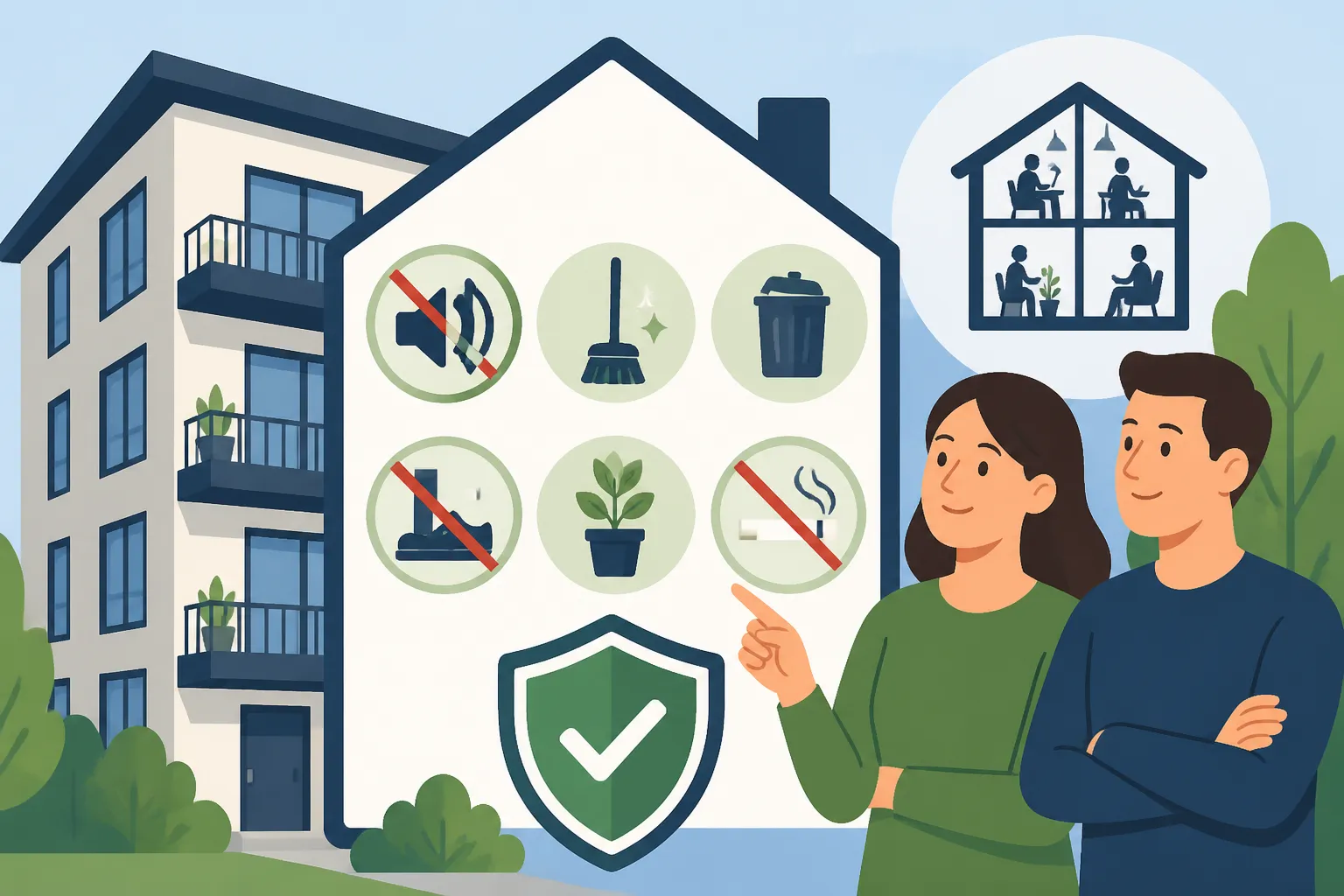
Building House Rules (Hausordnung): What Swiss Tenants Must Follow
Moving into a new apartment in Switzerland is often met with a mix of excitement and a very specific type of anxiety. You finally secured a place, but now you are faced with a multi-page document known as the Hausordnung. This guide explains the social and legal intricacies of Swiss house rules, helping you avoid common pitfalls and neighborly disputes that every expat eventually encounters.
The Legal Weight of the Hausordnung in Switzerland
When you sign your lease, you aren't just agreeing to pay rent; you are legally tethered to the house rules. In Switzerland, the Hausordnung is typically an integral part of your rental contract. It is not a set of friendly suggestions; it is a binding framework designed to ensure that dozens of people can live in close proximity without driving each other mad. As someone who has lived in both the bustling center of Zurich and the quieter suburbs of Vaud, I can tell you that while the rules might feel restrictive, they are the only thing keeping the peace.
Where to Find Your House Rules
The Hausordnung is usually attached as an appendix to your contract, but you might also find a laminated version tacked to the bulletin board in the entrance of your building. If you are still in the process of Moving to Switzerland: Shipping Your Belongings and Customs Clearance, you should ask your relocation agent or landlord for a copy in advance. This allows you to plan your move-in day accordingly, especially since many buildings forbid moving heavy furniture on Sundays.
If you are coordinating a complex international move, using a platform like Sirelo can help you compare moving companies that are well-versed in Swiss building restrictions. They can ensure your movers don't show up at 6:00 AM on a Saturday, which would immediately put you on the wrong foot with your new neighbors.
What Makes These Rules Legally Enforceable
Under Article 257f of the Swiss Code of Obligations, tenants are required to show "due consideration" to other residents. The Hausordnung defines what that consideration looks like in practice. If you repeatedly violate these rules, your landlord has the right to issue a formal warning (Mahnung). If you ignore the warning, you could face extraordinary termination of your lease. This is why it is vital to understand the specifics before you start hammering nails into the wall at 9:00 PM.
The Sacred Hours of Silence
In Switzerland, quiet hours are the foundation of the social contract. There are generally two types of quiet hours you need to memorize: the nighttime rest (Nachtruhe) and the midday rest (Mittagsruhe), plus the total silence of Sundays and public holidays.
Nighttime Quiet Hours: 10 PM to 7 AM
Generally, between 10:00 PM and 7:00 AM, you are expected to keep noise to "room volume." This means no loud music, no vacuuming, and no high-intensity workouts. I remember the first time I lived in an older "Altbau" apartment; the floors were so thin that even walking in heavy heels after 10:00 PM prompted a polite but firm knock on my door the next morning.
While the "no flushing the toilet after 10 PM" rule is largely an urban legend, some very old buildings do have requests regarding bathing or showering late at night due to noisy pipes. In modern buildings, this is rarely an issue, but it is always worth checking your specific Quiet Hours (Ruhezeiten): Sunday Rules for Laundry, Mowing, and Noise guidelines.
The Sacred Swiss Sunday
Sundays are a different beast entirely. In most of the world, Sunday is the day you catch up on chores. In Switzerland, doing loud chores on a Sunday is one of the fastest ways to become the building pariah. This includes glass recycling (the clinking of bottles is considered disruptive), mowing the lawn, or hanging your laundry out on a balcony where everyone can see it.
If you have just arrived and are trying to stay in touch with family back home to tell them about your move, make sure you have your data sorted. Using an eSIM from Airalo allows you to stay connected and make those long Sunday calls via VoIP without worrying about finding a local shop open to buy a SIM card—because, of course, almost everything is closed on Sundays.
The Midday Rest: Mittagsruhe
In many cantons, there is still a traditional "Mittagsruhe" between 12:00 PM and 1:00 PM or 1:30 PM. This is a time when construction workers take a break and residents are expected to keep noise to a minimum. While this is becoming less common in international cities like Geneva or Zurich, it is still strictly observed in smaller towns and villages. If you are planning to assemble IKEA furniture, avoid the noon hour.
The Battlefield of the Shared Laundry Room
If there is one place where the Hausordnung is enforced with religious fervor, it is the shared laundry room (Waschküche). Most Swiss apartments do not have a washing machine in the unit; instead, there is a communal room in the basement with a sign-up sheet.
Understanding the Washing Schedule
The schedule is king. If your slot is Tuesday from 7:00 AM to 12:00 PM, you must have your clothes out by noon sharp. I have seen wars started over a stray sock left in the drum at 12:05 PM. The house rules will also dictate that you must clean the lint filter and wipe down the machines after use. Failure to do so will almost certainly result in a passive-aggressive note—or worse, a report to the Verwaltung (property management).
For more on navigating this unique cultural experience, read our guide on Managing the Shared Waschküche: Wash Calendars and Cleaning the Lint Filter. It is arguably the most important "survival skill" for any expat living in a traditional Swiss building.
Common Areas and the Stairwell
The Hausordnung will also specify what you can and cannot keep in the hallway (Treppenhaus). Generally, the rule is: nothing. Fire safety regulations in Switzerland are extremely strict. This means no shoe racks, no strollers, and no decorative umbrellas in the common hallways. While it might seem convenient to leave your muddy hiking boots outside your door, your neighbors will likely view this as a violation of the building's aesthetic and safety standards.
| Topic | Generally Allowed | Strictly Forbidden / Restricted |
|---|---|---|
| Sundays | Reading, light cooking, quiet TV | Vacuuming, drilling, glass recycling |
| Hallways | Walking to your door | Shoe racks, bikes, strollers, trash bags |
| Laundry | During your assigned slot | Using machines outside of 7 AM – 10 PM |
| Balcony | Small plants, electric grills | Charcoal grills (often), hanging laundry |
| Guests | Occasional overnight visitors | Subletting without permission |
Myths and Realities of What Can Be Prohibited
There is a lot of misinformation floating around expat forums about what a Swiss landlord can actually forbid. While the Hausordnung is powerful, it cannot override Swiss federal law.
Pets and Musical Instruments
Your landlord cannot flat-out ban small pets like hamsters or canaries. However, for dogs and cats, the rules are different. If your contract says pets are subject to approval, you must get that approval in writing. Even if you have a "pet-friendly" apartment, the house rules will state that the pet cannot disturb the peace. If your dog barks all day while you are at work, you are violating the Hausordnung. Check our resource on Finding Pet-Friendly Apartments in Switzerland: What Landlords Allow for more specific tips.
Similarly, you have a right to play a musical instrument for a few hours a day (usually 2-3 hours), but not during quiet hours. However, instruments like drums or trumpets might be restricted more heavily due to the volume.
Smoking and Balcony Etiquette
Can you smoke on your balcony? Usually, yes. However, the Hausordnung may include clauses about "undue disturbance." If your smoke constantly drifts into your neighbor’s bedroom, they might have grounds for a complaint. The same applies to grilling. While electric grills are almost always fine, charcoal grills are often banned in the house rules because of the smoke and fire risk. Before you host a BBQ, see Can I Barbecue on My Balcony? Swiss Apartment Grilling Rules.
Managing Conflicts and the Passive-Aggressive Note
In Switzerland, direct confrontation is often avoided in favor of "the note." If you find a slip of paper under your door or taped to the elevator wall, don't take it personally—this is just the Swiss way of communication.
How to Respond to Complaints
If a neighbor complains that you are violating the Hausordnung, the best approach is to apologize and rectify the behavior immediately. If you feel the complaint is unjustified—for example, if they are complaining about a baby crying (which is legally protected "life noise")—you might need to seek help.
This is where joining a tenant association becomes invaluable. I highly recommend that every expat signs up for ASLOCA / Mieterverband: Why Every Swiss Tenant Must Join as soon as they get their keys. They can help you determine if a house rule is overstepping legal bounds and represent you if the landlord tries to penalize you unfairly.
Communication Tools for the Move
When you are first moving in and trying to navigate these rules, having reliable internet is essential for translating documents or looking up local regulations. Using Airalo for an immediate data connection ensures you aren't stuck without a way to Google "how to clean a Swiss lint filter" at 11:00 PM.
If you find that the apartment has issues upon move-in that aren't addressed in the rules, such as Reporting Mold or Damp in a Swiss Rental: Your Legal Options, you will need to act quickly to document everything.
Final Steps for a Harmonious Stay
The Hausordnung might seem daunting, but it is actually designed to protect you as much as your neighbors. It ensures that you have a quiet environment to sleep in and a clean basement to do your laundry.
Building a Bewerbungsmappe for the Future
Following the house rules isn't just about the present; it's about your future in Switzerland. When you eventually move to a new place, your current landlord will often be asked for a reference. Being known as a tenant who respected the Swiss Lease Contracts: Notice Periods and Termination Dates Explained and followed the Hausordnung will make it much easier to get your next apartment.
When preparing your Applying for a Flat: The Bewerbungsmappe (Application Dossier) Essentials, a clean record from a previous landlord is a gold star. If you are moving within the country, using Sirelo can help you find a moving company that will treat your current building with respect during the move-out process, ensuring you get your full deposit back.
Who Handles Repairs?
Finally, remember that the house rules often outline your responsibilities for minor maintenance. Generally, anything that costs under CHF 150-200 and doesn't require a specialist (like replacing a shower hose or a lightbulb) is your responsibility. For bigger issues, refer to Tenant Rights for Repairs: Who Fixes a Broken Appliance in Switzerland to ensure you aren't paying for things the landlord should cover.
By respecting the Hausordnung, you are signaling that you are integrating into the local culture. It might take a few months to remember that you can't vacuum on a Sunday, but once you adjust, you’ll find that the predictability and quiet of Swiss apartment living are actually quite wonderful.
Disclaimer
This guide is intended for informational purposes only and does not constitute legal advice. Swiss rental laws and individual Hausordnung documents can vary significantly by canton and property management company. Always consult your specific lease agreement or a qualified legal professional such as the Mieterverband or ASLOCA for advice regarding your specific situation.