TV and Streaming in Switzerland: Local Channels, Netflix, and VPNs
Ah, the blissful thought of settling into your new Swiss home, kicking back, and catching up on your favorite shows. Then reality hits: you switch on the TV, and it's all different, often in languages you might not fully grasp yet. Or worse, you log into your usual streaming services only to find your beloved series missing or the entire app unavailable. It's a truly exasperating moment, a small but significant hurdle in making Switzerland feel like home. This guide is here to walk you through the labyrinth of Swiss TV and streaming options, from understanding local channels to making sense of international platforms and even dabbling with VPNs, so you can reclaim your couch potato peace.
Navigating Swiss Local TV: More Than Just Fondue and Mountains
When you first arrive in Switzerland, the local TV landscape can feel like a foreign country in itself, quite literally. Unlike many places where TV access is purely opt-in, Switzerland has a unique system that requires a bit of understanding.
The Serafe Fee: The Elephant in the Room
Let's address the elephant in every Swiss living room first: the Serafe fee. Many expats, myself included, arrive thinking, "I don't even own a traditional TV, why do I have to pay for one?" This mandatory household fee, currently set at CHF 335 per year (as of 2026), is Switzerland's way of funding its public broadcasting corporations (SRG SSR), which include channels like SRF (German), RTS (French), and RSI (Italian).
The frustration is absolutely valid. In an age where streaming dominates, it feels archaic to pay for services you might not use. However, the Swiss system operates on the principle of solidarity: if you live in a Swiss household, you contribute. It’s not about owning a TV or radio; it’s about the possibility of reception. This covers everything from traditional broadcasts to online content from SRG SSR outlets, providing essential news, cultural programs, and entertainment in the country's national languages. Whether you're catching up on local news via SRF Tagesschau or enjoying a documentary on RTS, your Serafe contribution helps keep these services running.
For those just starting their Swiss journey, you might wonder about exemptions. While most households are liable, there are very specific circumstances where one might be exempt. For instance, individuals receiving certain types of social welfare benefits might qualify for a reduction or exemption, but these are rare and require applying through official channels. Similarly, if you're sharing a flat, the rule typically dictates that only one person per household is liable, meaning roommates don't each pay the full fee. This makes discussions about Who Pays the Serafe Bill in a WG (Shared Apartment)? quite common among new arrivals.
Free-to-Air Channels and Basic Cable Packages
Beyond the Serafe mandate, Switzerland does offer a selection of free-to-air channels, primarily the public broadcasters. Once you've paid your Serafe, you have access to the SRG SSR channels in your respective language region. These typically include SRF 1, SRF zwei, and SRF info for German-speaking Switzerland, RTS Un and RTS Deux for French-speaking areas, and RSI La 1 and RSI La 2 for the Italian region. These channels are your window into Swiss life, offering local news, current affairs, regional sports, cultural shows, and sometimes even local dramas and films.
Accessing these channels can be done in a few ways. If you have an older TV set, an antenna might pick up digital terrestrial broadcasts (DVB-T2, though increasingly less common). More commonly today, these channels are delivered via your internet provider as part of a basic digital TV package. When you're Setting Up Swiss Home Internet: Swisscom, Sunrise, and Salt Compared, you'll find that most providers like Swisscom, Sunrise, and Salt offer bundled packages that include basic TV services. These often come with a digital TV box that connects to your internet router, allowing you to access a range of channels, sometimes including a few international ones, in addition to the national broadcasters. It's a straightforward way to get up and running, though the channel selection outside of the main Swiss ones might feel a bit limited compared to back home.
The Global Powerhouse: Netflix and Other International Streaming Services in Switzerland
For many expats, "TV" today means Netflix, Disney+, Amazon Prime Video, and a host of other international streaming giants. You’ve probably already got subscriptions, and you expect them to just work. Well, they do, but often with a uniquely Swiss twist that can be a source of constant low-level annoyance.
Content Libraries: The Swiss Paradox
You’ve finally unpacked your last box, connected your smart TV, and eagerly logged into Netflix, only to scroll through a dramatically different library than the one you remember from your home country. This is the "Swiss Paradox" of streaming: while most major international streaming services are available here, their content libraries are often noticeably smaller or different.
Why the discrepancy? It all comes down to licensing agreements and geo-restrictions. Content distributors sell viewing rights on a country-by-country basis. A film studio might sell the rights to Netflix in the US, but to a local broadcaster or a different streaming service in Switzerland. This means that a show that’s a Netflix Original in your home country might not even be on Netflix Switzerland, or it might be available on a completely different platform. It's truly frustrating when you're halfway through a series, move to Switzerland, and suddenly it vanishes.
Beyond Netflix, other popular services like Disney+, Amazon Prime Video, and Apple TV+ generally offer consistent libraries globally, but even they can have regional variations, particularly with older content or specific films. Services like Sky Show (part of Sky Switzerland) offer a mix of international series and movies, often with a focus on HBO, Showtime, and Peacock content, similar to what you’d find in other European markets. HBO Max (or Max, as it's rebranding) might have different content availability compared to its US counterpart due to these same regional licensing deals. It's a continuous game of trial and error to figure out where your favorite content actually lives here. When you’re already trying to manage the overall Cost of Living in Switzerland 2026: Budgeting for Singles and Families, having to subscribe to multiple services just to piece together your preferred viewing can add up quickly.
The VPN Solution: Your Digital Passport
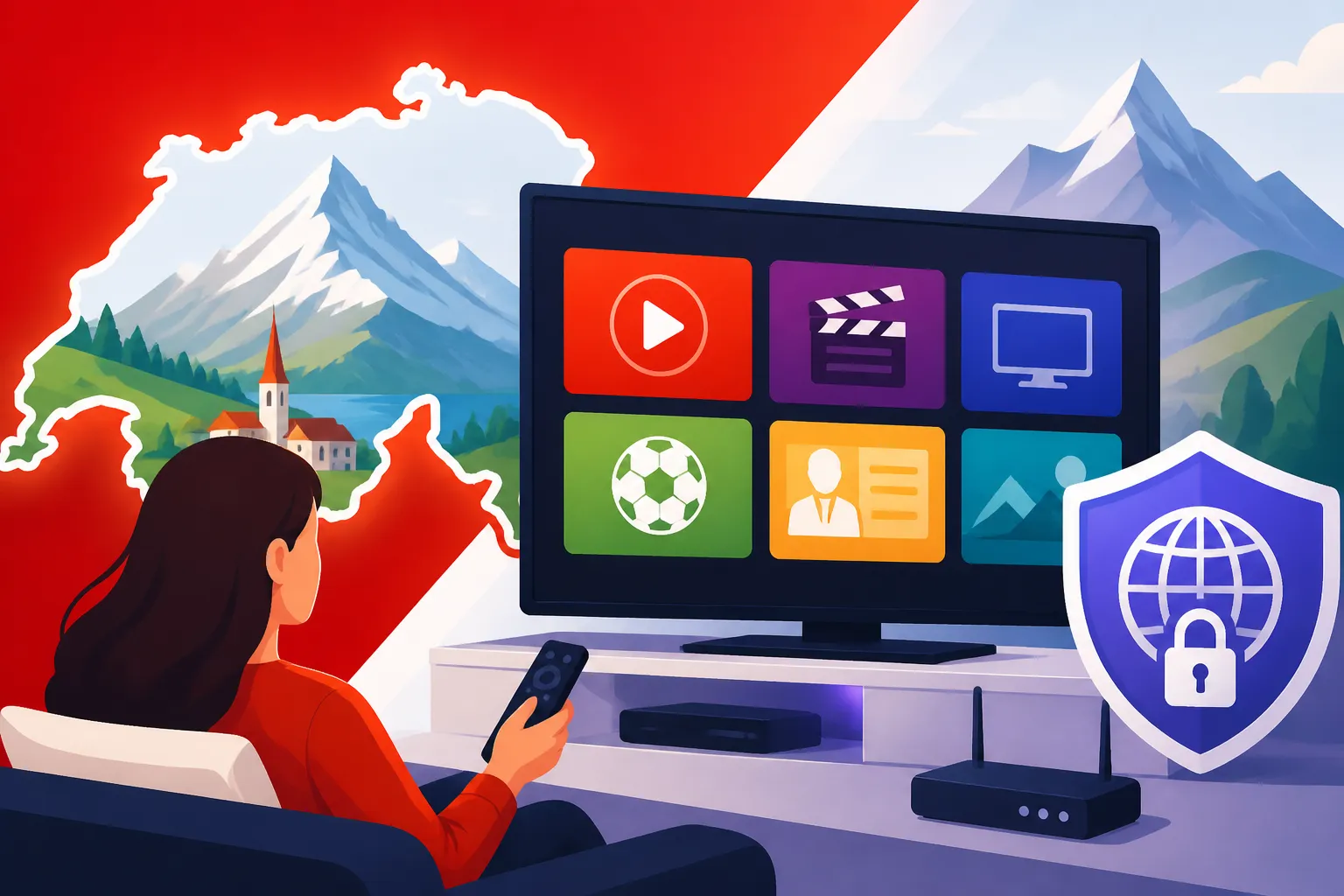
Given the content disparities, many expats quickly turn to Virtual Private Networks (VPNs) as a potential lifeline. A VPN essentially reroutes your internet traffic through a server in another country, making it appear as if you’re browsing from that location. In theory, this should trick Netflix (or any other service) into thinking you’re in your home country, thus granting you access to its full library.
In practice, it's a constant cat-and-mouse game. Streaming services are well aware of VPNs and invest heavily in technologies to detect and block them. While some VPN providers might work for a time, they often get blacklisted, and you find yourself locked out again. It’s important to understand that using a VPN to bypass geo-restrictions can also be against the terms of service of many streaming platforms, potentially leading to account suspension, though this is rare.
If you decide to try a VPN, choose a reputable provider that has servers specifically optimized for streaming. Even then, there's no guarantee. You might connect to a US server, only to find Netflix still shows you the Swiss library or, worse, an error message. My advice? Do your research, check recent user reviews for specific streaming services, and ideally, find a VPN that offers a free trial or money-back guarantee so you can test it before committing. While you might be familiar with services like Airalo for seamless data connectivity when you're traveling across borders, a VPN for content access is a completely different beast, requiring constant vigilance and updates to stay ahead of the streaming giants' blocking efforts.
Beyond the Big Names: Local Streaming and Niche Options
While international giants and VPN cat-and-mouse games dominate much of the expat streaming conversation, it’s worth exploring what Switzerland itself offers. Sometimes, the local options can surprise you with hidden gems or fill gaps the global platforms leave behind.
Swiss-Specific Streaming Platforms
Switzerland has its own ecosystem of streaming services that cater to local tastes and provide content in the national languages. The most prominent is Play Suisse, which is the SRG SSR's official streaming platform. If you're paying the Serafe fee, you effectively have access to Play Suisse for free. It aggregates content from SRF, RTS, and RSI, offering a wealth of Swiss films, documentaries, series, and cultural programs, often with subtitle options in other national languages (and sometimes English, if you're lucky!). It's a fantastic way to immerse yourself in Swiss culture and practice your German, French, or Italian.
Beyond Play Suisse, you'll find other providers that offer a mix of local and international channels, often with live TV, catch-up features, and recording capabilities. Services like Zattoo, Teleboy, and Wilmaa are popular. They typically offer a free basic tier with a limited selection of channels and ads, and then premium subscriptions that unlock more channels (including some international ones), HD quality, and ad-free viewing. These can be particularly useful if you want to watch live Swiss TV or specific sporting events that aren't available on the bigger international platforms.
Here’s a quick overview of some local streaming service categories and what they offer:
| Service Type | Examples | Key Features | Target Audience | Price Point (Approx.) |
|---|---|---|---|---|
| Public Broadcaster | Play Suisse | Swiss films, series, docs; multi-language subtitles | Anyone (free with Serafe) | Free (with Serafe) |
| Live TV/Catch-up | Zattoo, Teleboy, Wilmaa | Live TV, VOD, recordings, some international channels | Locals & Expats wanting traditional TV | Free (basic) to CHF 20-30/month (premium) |
| Sports Specific | Blue TV, DAZN (CH) | Regional sports rights (e.g., Swiss football, some int. leagues) | Sports enthusiasts | CHF 10-40+/month (add-ons) |
| Telecom Bundles | Swisscom TV, Sunrise TV | Integrated TV with internet/mobile; large channel list | Customers of major telecom providers | Included in bundles, or CHF 10-60/month |
These options can be a great complement to your international streaming subscriptions, especially if you're looking to integrate more local content into your viewing habits. When you’re figuring out your overall home setup, consider how these fit into your internet plan. Many providers offer attractive bundle deals, so it’s worth checking out your options for Setting Up Swiss Home Internet: Swisscom, Sunrise, and Salt Compared.
Sports Streaming and Niche Content
Sports fans, prepare for a challenge. The world of sports broadcasting rights is notoriously complex and highly regionalized. Watching your favorite football (soccer) league, F1 race, or American sports like the NFL or NBA in Switzerland can be a patchwork of subscriptions. You might find that one service has the rights to the Premier League, another to the Bundesliga, and yet another to the Champions League.
Blue TV (formerly Teleclub) is a major player in Switzerland for sports, offering a wide array of content, including Swiss Super League football, various international leagues, and ice hockey. DAZN is also present in Switzerland, but its content library here is significantly different from what it offers in Germany or the UK, for example, due to those pesky licensing agreements. You might get some European football or American sports, but rarely the comprehensive coverage you’d find elsewhere.
This often leads to the frustrating reality of needing multiple, often expensive, subscriptions to follow all your preferred sports. It's yet another area where the Swiss market feels a bit fragmented. After you've managed the huge task of relocating your entire life, perhaps with the help of moving services like Sirelo, settling into your new apartment means tackling these seemingly smaller, but equally complex, challenges of entertainment access. It's a stark reminder that even everyday leisure activities require careful planning and budgeting in Switzerland.
Practical Tips for Expats: Making Your TV Life Easier
Living in Switzerland means embracing a certain level of pragmatism, and your TV and streaming habits are no exception. Here are a few practical tips to help you navigate this entertainment landscape with less stress.
Language Barriers and Subtitle Options
One of the most immediate challenges you'll face with Swiss local channels, and even some international content, is the language barrier. Switzerland has four national languages – German, French, Italian, and Romansh – and public broadcasters naturally prioritize these. So, if you tune into SRF, you'll hear Swiss German or High German; RTS will be in French, and RSI in Italian.
However, many modern streaming platforms and even some digital TV boxes offer a saving grace: multiple audio tracks and robust subtitle options. This is a true lifesaver for expats. Before subscribing to an international service, or even when exploring Play Suisse, check for:
- Original Audio Tracks: Often, you can switch the audio to English, especially for US or UK productions.
- Subtitle Options: Most major streaming services provide a wide array of subtitles, including English, German, French, and Italian. This not only allows you to follow the storyline but can also be an excellent tool for language learning. Watching a Swiss show with English subtitles, or an English show with German subtitles, can really help your integration. Understanding the broader Language Skills for the Workplace: German, French, and English Demands might also help you appreciate the linguistic diversity you encounter on screen.
For local Swiss content, if English subtitles aren't available, try watching with subtitles in another national language you're learning. It's a challenging but rewarding way to pick up new vocabulary and phrases.
Bundling and Deals: Saving a Franc or Two
In Switzerland, bundling services can often lead to significant savings compared to paying for internet, TV, and mobile subscriptions separately. The major telecommunications providers – Swisscom, Sunrise, and Salt – are highly competitive in offering comprehensive packages tailored to various needs.
When you're shopping for your home internet, which is likely one of the first things you'll sort out, always investigate their TV and mobile add-on options.
- Swisscom: As the national incumbent, Swisscom offers a vast array of TV channels, including many international options, and excellent internet speeds. Their bundles can be comprehensive but are often on the pricier side.
- Sunrise: A strong competitor, Sunrise often provides attractive packages with good speeds and a flexible TV offering. They frequently run promotions that might include discounted mobile plans when bundled with internet and TV.
- Salt: Known for its aggressive pricing in mobile, Salt also offers compelling internet and TV bundles, particularly for those looking for high-speed fiber at a competitive cost.
Comparing these packages meticulously is crucial. Look at:
- Internet Speed: Do you need gigabit fiber, or is a slower, cheaper connection sufficient for your streaming habits?
- Channel List: Does the TV package include the international channels you care about, or is it mostly local content?
- Mobile Integration: Can you port your mobile number over, and are the mobile plan benefits (data, calls) good value when bundled?
- Contract Length and Cancellation Terms: Pay close attention to minimum contract durations and notice periods. Understanding Canceling Swiss Contracts: Deadlines for Internet, Mobile, and Insurance is vital, as Swiss contracts can be notoriously rigid.
Sometimes, smaller regional providers also offer excellent local deals, especially for internet and TV. While a lot of this research can feel overwhelming after a big move, taking the time to compare will save you hundreds of francs over the year. It's a prime example of how even small decisions can impact your overall Cost of Living in Switzerland 2026: Budgeting for Singles and Families.
Disclaimer
The information provided in this guide is for general informational purposes only and does not constitute professional advice. While we strive to keep the content up-to-date and accurate, regulations, prices, and service offerings in Switzerland can change rapidly. Always verify current details with official sources, service providers, or legal counsel as needed. We are not responsible for any actions taken based on the information in this guide.