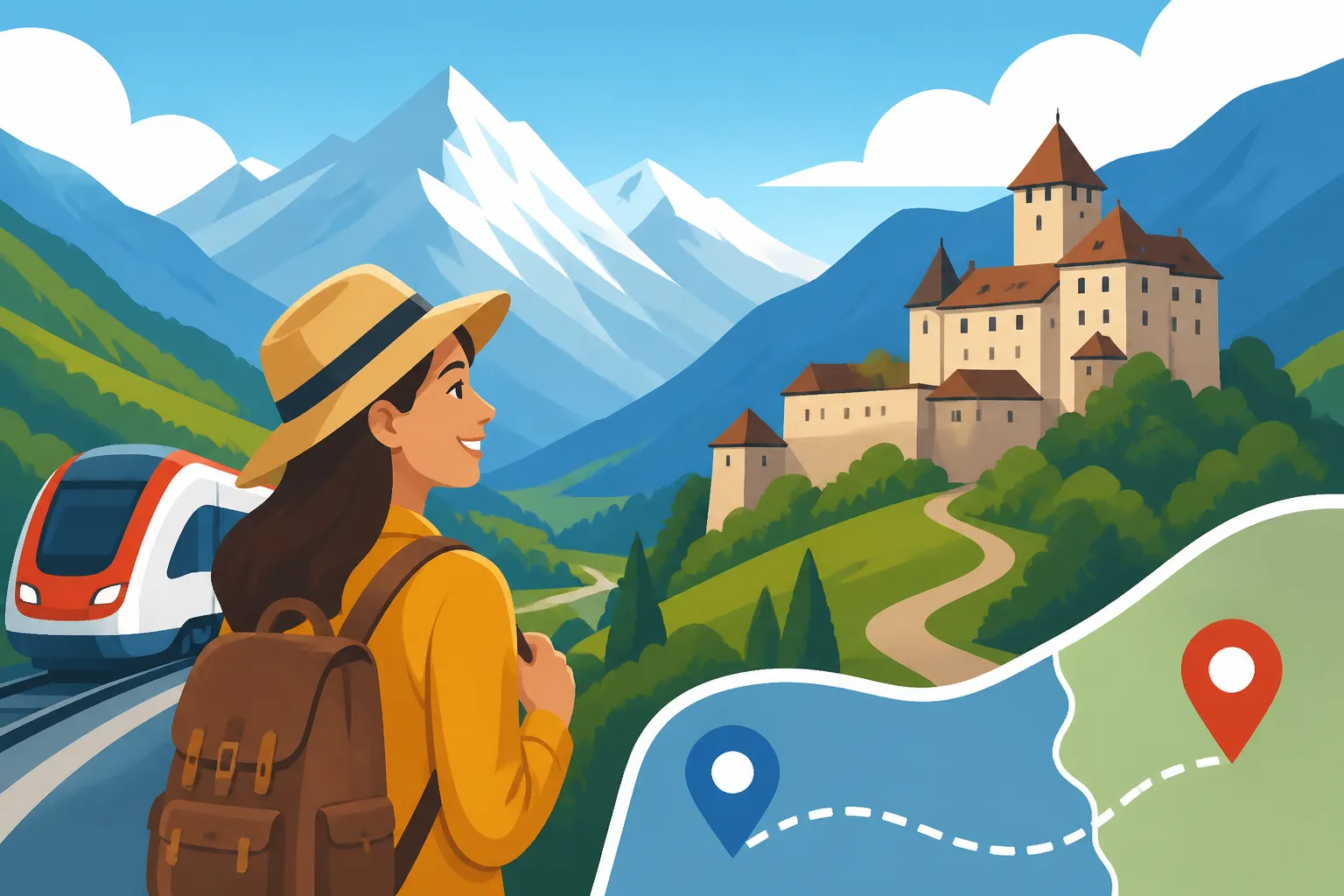
Visiting Liechtenstein for the Day From Switzerland
So, you've settled into Swiss life, perhaps explored the major cities like Zurich and Geneva, hiked a few peaks, and now that little red dot on the map, nestled right next door, has caught your eye: Liechtenstein. It's perfectly normal to wonder about this tiny principality – it’s often overlooked, yet it holds a unique charm and is surprisingly easy to visit for a day, offering a fascinating peek into a different, yet familiar, Alpine culture. This guide will walk you through everything you need to know to make your day trip to Liechtenstein smooth, enjoyable, and distinctly Swiss-adjacent.
Getting There: Your Gateway to the Principality
One of the first things that strikes expats is how interconnected everything is in this part of Europe. Liechtenstein, despite being its own country, feels very much like an extension of eastern Switzerland in terms of infrastructure and currency. Getting there is straightforward, whether you prefer the scenic route by public transport or the flexibility of your own car.
By Public Transport: The Sargans Connection
If you're like many expats, you've probably already fallen in love with Switzerland's incredibly efficient public transport system. The good news is, getting to Liechtenstein fits right into that seamless experience. Your main hub for reaching the principality by train is the Swiss town of Sargans. From major cities like Zurich, it's a direct train ride of about an hour and ten minutes, taking you right into the heart of the Rhine Valley. From St. Gallen, it's even quicker, typically under an hour.
Once you arrive at Sargans railway station, the transition is remarkably smooth. You simply step off the train and onto a waiting PostAuto bus. These distinctive yellow buses are Switzerland's rural transport backbone, and they extend their service right across the border into Liechtenstein. The most common bus route to Vaduz, the capital of Liechtenstein, is bus number 11 or 12, which takes approximately 20-30 minutes, winding its way through picturesque villages and along the Rhine River. It’s a pleasant ride that gives you a taste of the region before you even arrive in Vaduz itself.
You can easily purchase your train and bus tickets through the SBB Mobile app or at any SBB station. The cost is quite reasonable, especially if you have a Half-Fare Travelcard, which is almost a mandatory investment for anyone living in Switzerland. Don't forget to check the connection times in advance, especially on weekends, though services are generally frequent. For planning your journey, checking options on platforms like Omio can also provide a comprehensive overview of train and bus schedules from your starting point in Switzerland directly to Vaduz. If you're looking for more inspiration on car-free travel, you might find our guide on Day Trips by Train: The Best Swiss Destinations Within Two Hours helpful for other ideas in the region.
By Car: Scenic Drives and Parking Logistics
For those who prefer the open road and the freedom to explore at their own pace, driving to Liechtenstein is another excellent option. The drive itself is scenic, taking you through the rolling hills and charming towns of eastern Switzerland before crossing into the principality. Depending on where you start in Switzerland, the journey can be quite quick. From Zurich, it’s about an hour and a half to two hours, and from St. Gallen, it's even less.
The route generally involves using Swiss motorways, so remember that you'll need the annual motorway vignette (Autobahnvignette) affixed to your car's windshield. While there are no formal border controls between Switzerland and Liechtenstein, the roads seamlessly merge, and you might not even notice you've entered a new country unless you spot the small welcome sign. This means you won't be stopped to pay a separate fee for Liechtenstein's roads. If you're new to driving here, our guide on Driving in Switzerland: Licenses, Buying Cars, and Strict Traffic Laws offers essential insights into local regulations.
Once you arrive in Vaduz, parking is fairly abundant, though it comes with the usual Swiss-level price tag. There are several public car parks, such as City Parking or the underground car park at the Pfrundbauten. Keep an eye out for parking signs, usually marked with a "P". Rates vary but expect to pay a few Swiss francs per hour. The convenience of having your car allows you to venture beyond the capital and explore more remote parts of Liechtenstein, like the mountain village of Malbun or the traditional municipality of Triesenberg, without being beholden to bus schedules.
What to See and Do in a Day: Making the Most of Limited Time
Liechtenstein might be small, but it packs a punch when it comes to sights and experiences. In a single day, you can get a really good feel for the capital, Vaduz, and even venture a little further afield if you plan your time wisely.
Vaduz: The Capital's Highlights
Vaduz, the capital of Liechtenstein, is surprisingly compact, which makes it perfect for a day trip. Most of the main attractions are clustered around the pedestrian zone, known as the "Städtle," and can easily be explored on foot. As you arrive, one of the first things you’ll notice is the imposing Vaduz Castle, perched dramatically on a hill overlooking the town. This isn't just a historic relic; it’s the actual residence of the Prince of Liechtenstein, and because of this, it's not open to the public for tours. However, the views from the castle grounds, or even from the town below, are absolutely stunning and definitely worth a few photos. You can walk up to the castle in about 20-30 minutes, or take a tourist train that offers a scenic loop.
Back in the Städtle, you'll find a charming area filled with contemporary sculptures, quaint shops, and a few notable museums. The Kunstmuseum Liechtenstein (Liechtenstein Art Museum) boasts an impressive collection of modern and contemporary art, including pieces from the Prince's own private collection. Right next door is the Liechtenstein National Museum, which delves into the country's rich history, culture, and natural environment. And for something truly unique, don't miss the PostMuseum, a tiny but fascinating institution dedicated to Liechtenstein's philatelic history – yes, stamp collecting is a big deal here, and you can even buy some rare stamps as souvenirs! For those interested in exploring more cultural sites, our guide on Swiss Museums and Pass Options: Art, History, and Science provides further insights into the region’s cultural landscape.
Wandering through Vaduz, you'll also pass by the beautiful St. Florin Cathedral, a neo-Gothic structure that serves as the seat of the Catholic Archdiocese of Vaduz. The government building and the Landtag (parliament) are also in close proximity, showcasing the blend of historic and modern architecture that defines the capital. There are plenty of cafes and restaurants where you can grab a coffee or enjoy a traditional lunch, soaking in the relaxed atmosphere.
Beyond Vaduz: Exploring the Countryside
While Vaduz offers a great introduction to Liechtenstein, dedicating a few hours to explore beyond the capital can truly enrich your day trip. The principality's small size means you don't have to travel far to find different landscapes and experiences.
A popular choice, especially for those who love mountains (and who doesn't in this part of the world?), is a trip to Malbun. This charming alpine village transforms from a popular ski resort in winter into a tranquil hiking paradise in summer. From Vaduz, you can catch a PostAuto bus that will take you up the winding mountain roads to Malbun in about 30-40 minutes. Once there, you can enjoy easy walks, more challenging hikes, or simply breathe in the fresh mountain air and enjoy the panoramic views. If you're keen on discovering more about hiking in the region, our resource on Swiss Hiking for Beginners: Trail Grades and the SAC System can help you plan your alpine adventures.
Another fascinating stop is Triesenberg, a municipality just above Vaduz, known for its unique Walser culture and dialect. Here, you can visit the Walser Museum to learn about the history of this alpine people, whose origins trace back to the Valais region of Switzerland. The views from Triesenberg are also spectacular, offering a different perspective of the Rhine Valley and the surrounding mountains. And if you're a fan of fine wine, a visit to the Hofkellerei des Fürsten von Liechtenstein (the Prince of Liechtenstein's Winery) is highly recommended. You can enjoy a wine tasting and purchase some bottles directly from the cellar – a truly regal souvenir! These smaller excursions can be easily integrated into your day, especially if you're driving or leveraging Liechtenstein's excellent local bus network.
Practical Tips for Your Visit: Navigating the Nuances
Even though Liechtenstein feels very much like Switzerland, there are a few practical considerations that are good to keep in mind to ensure your day trip goes off without a hitch. These small details can often make a big difference in your experience.
Border Crossings and Currency
The first thing to understand is that despite being an independent nation, Liechtenstein has a customs union with Switzerland. This means that for all intents and purposes, it operates as part of the Swiss economic area. You won't encounter any formal border checks when crossing from Switzerland into Liechtenstein, especially if you're coming by road or bus. This seamless transition is a huge plus for day-trippers, as it means no time wasted with passport controls or customs declarations. You can move freely between the two countries, much like traveling between two cantons within Switzerland.
Crucially, the official currency of Liechtenstein is the Swiss Franc (CHF). This eliminates any hassle with currency exchange, as you'll be using the exact same money you use in Switzerland. Most places in Vaduz and other tourist areas accept major credit and debit cards, just like in Switzerland, but it’s always a good idea to have some cash on hand for smaller purchases or if you venture into very small, local establishments. The primary language in Liechtenstein is German, specifically a High Alemannic dialect very similar to Swiss German. However, in all tourist-facing businesses, museums, and larger shops, you’ll find that English is widely spoken and understood, so communication shouldn't be an issue for most visitors.
Getting Around Vaduz and Beyond
Once you've arrived, navigating Liechtenstein is surprisingly simple. Vaduz itself is very compact and pedestrian-friendly. The main attractions within the Städtle are all within easy walking distance of each other, allowing you to explore at a leisurely pace. There’s no need for taxis or public transport within the immediate capital unless you have mobility issues or want to reach the castle faster.
However, if you plan to explore beyond Vaduz, the Liechtenstein Bus network (LIEmobil) is exceptionally efficient and covers the entire country. The buses are clean, punctual, and connect all the major towns and villages. If you anticipate making multiple bus trips, consider purchasing a day pass directly from the bus driver or at a bus station, as this can be more economical than buying individual tickets. Some tourist passes, like the Liechtenstein Adventure Pass, even include unlimited public transport along with free entry to many attractions. This can be a fantastic way to maximize your sightseeing without constantly worrying about ticket costs. Comparing this to larger transport systems, it's a wonderfully contained network, perhaps less sprawling than something covered by a Generalabonnement (GA) in Switzerland, but equally effective for its scale.
For those who enjoy a bit of guidance or prefer to have their itinerary sorted, platforms like GetYourGuide can be useful. You might find curated tours that include transport and entry to specific attractions, saving you planning time. While unlikely for a day trip, if you ever consider extending your stay, services like Booking.com offer various accommodation options throughout the principality.
Making the Most of Your Day Trip: Combining Experiences
A day trip to Liechtenstein is definitely doable on its own, but its proximity to some beautiful parts of eastern Switzerland means you can easily combine it with other excursions to create an even richer and more diverse experience. Think of it as hitting two birds with one stone, or rather, two countries with one adventure!
Combining Your Trip with Eastern Switzerland
Given that Liechtenstein is nestled right against the Swiss canton of St. Gallen, it makes perfect sense to explore some of that region's treasures on the same trip. If you're coming from Zurich, for instance, you could plan a morning in Liechtenstein, seeing Vaduz and perhaps taking a quick bus ride to a nearby village like Triesenberg, and then head back into Switzerland for an afternoon activity. A fantastic option is to visit the UNESCO World Heritage-listed Abbey of St. Gall and its magnificent library in St. Gallen city. The intricate Baroque architecture and the ancient manuscripts are truly awe-inspiring and offer a stark contrast to Liechtenstein's smaller-scale charm.
Another wonderful pairing, especially if you're taking the train, is to stop in Rapperswil, often called the "Rose City," on your way to or from Sargans. Rapperswil is located on the upper end of Lake Zurich and boasts a charming medieval old town, a castle, and beautiful lakeside promenades. It's an ideal spot for a leisurely stroll, a coffee by the lake, or even a boat trip if time permits. This kind of planning allows you to see more of the diverse Swiss landscape and cultural offerings within a manageable timeframe. For more ideas on what to explore in the surrounding areas, check out our guide on Day Trips from Zurich: Rhine Falls, Rapperswil, and Lucerne.
Don't forget the Heidiland region, named after Johanna Spyri's famous novel character, Heidi. This picturesque area around Maienfeld and Bad Ragaz is easily accessible from Liechtenstein. You could visit the "Heididorf" (Heidi Village) in Maienfeld or, for a more relaxing end to your day, indulge in the thermal baths of Bad Ragaz, renowned for their healing waters. This could be a perfect way to unwind after a day of sightseeing. Our article on Swiss Spa and Thermal Baths: Where Residents Relax gives you an idea of what to expect from such an experience. These combinations are excellent ways to maximise your experience without feeling rushed.
Planning Your Logistics
Successful day trips are all about smart planning, especially when crossing borders, even informal ones. Start by deciding your primary mode of transport. If using public transport, download the SBB app and the LIEmobil app or use Omio to check schedules in advance. Buses to Malbun or Triesenberg from Vaduz run regularly but less frequently than city routes. Having the schedules at hand will save you precious sightseeing time. Remember that the last bus from Vaduz to Sargans needs to connect with your train back to Switzerland, so always build in a buffer.
For those driving, ensure your Swiss vignette is valid, and budget for parking. Map out your chosen attractions in Vaduz and any additional villages you wish to visit. While Liechtenstein is small, trying to cram too much in can lead to a rushed, less enjoyable experience. Vaduz itself, including the main museums, can comfortably fill 3-4 hours. Adding Malbun or Triesenberg will extend your day significantly. Consider what truly interests you – art, history, mountain views, or perhaps a unique stamp for your passport (you can get a souvenir stamp at the Liechtenstein Center in Vaduz, though it's not an official border stamp!). A relaxed pace will allow you to truly appreciate the unique charm of this little principality.
| Feature | Public Transport (Train + Bus) | Car |
|---|---|---|
| Cost | Moderate (SBB + PostAuto tickets, less with Half-Fare Card) | Higher (Fuel, Swiss Vignette, Parking Fees) |
| Travel Time | ~1.5 – 2 hours from Zurich to Vaduz (incl. transfer) | ~1.5 – 2 hours from Zurich to Vaduz |
| Flexibility | Limited to bus/train schedules, but very reliable | High, can explore remote areas easily |
| Convenience | Hands-free travel, easy navigation | Door-to-door, more luggage capacity |
| Parking | Not applicable | Paid parking in Vaduz (e.g., City Parking, Pfrundbauten) |
| Border Check | None | None |
| Environmental | Lower carbon footprint | Higher carbon footprint |
| Ideal for | Relaxed travel, enjoying scenery, budget-conscious travelers | Families, groups, those wanting to explore beyond main towns |
Disclaimer
The information provided in this guide is for general informational purposes only and is subject to change. While we strive to keep the content up-to-date and accurate, transportation schedules, prices, and regulations can vary. We recommend checking official sources like SBB, LIEmobil, and local tourist information centers for the most current details before planning your trip. We are not responsible for any inaccuracies or for actions taken based on the information presented herein.