Dog-Friendly Hikes and Outdoor Spots in Switzerland
Oh, the sheer joy of living in Switzerland with a dog! It’s truly a dream come true for nature lovers, but let's be honest, it can also feel like a bit of a bureaucratic puzzle trying to figure out where your furry companion is actually welcome. From public transport tickets to trail restrictions and finding somewhere to crash for the night that accommodates both you and your four-legged best friend, the learning curve is steep. This guide is here to untangle all those leashes and help you discover the most incredible dog-friendly hikes and outdoor spots across this stunning country, ensuring both you and your pup have the adventure of a lifetime.
Navigating the Rules of Dog Ownership and Public Transport in Switzerland
One of the first things you realize as an expat dog owner here is that Switzerland loves rules, and that extends to our canine pals! It's not enough to just leash up; there are specific expectations and regulations, especially when it comes to shared public spaces and transport. Getting this right from the start will save you a lot of headaches and ensure smooth sailing (or hiking!).
General Etiquette and Legal Requirements for Dogs
Before you even hit the trails, it’s important to understand the baseline. Firstly, your dog needs to be registered with your commune or Gemeinde, and they’ll also need to be microchipped and registered in the national ANIS database. This isn't just a formality; it ensures they can be identified if lost and links them to you for the annual dog tax (Hundesteuer), which varies by canton and commune but is mandatory. Beyond registration, the general rule of thumb is always to keep your dog under control, preferably on a leash, especially in crowded areas, nature reserves, or near livestock. Farmers here are incredibly protective of their animals, and rightly so; an unleashed dog chasing sheep is a serious offense and can have severe consequences. Always carry dog waste bags (Gassisäckli), readily available in dispensers in most towns and trailheads, and always clean up after your dog. Ignoring this is a quick way to earn dirty looks and potentially a fine. It's about respecting the pristine environment and local norms.
Another crucial point is understanding local signage. While many trails are implicitly dog-friendly, some areas, like certain nature reserves, children’s playgrounds, or protected wildlife zones, might have explicit "no dogs" signs. These aren't suggestions; they are strict prohibitions. Always keep an eye out for these signs, which are usually clearly marked with a red circle and a diagonal line over a dog symbol. Failing to observe these can result in hefty fines and, more importantly, can disturb local wildlife or agricultural practices. Remember, integration isn't just about learning the language, it's about understanding these subtle, yet significant, social contracts.
Taking Your Dog on Public Transport: SBB and Mountain Transport
One of the great joys of living in Switzerland is the phenomenal public transport system, and thankfully, our canine companions are usually welcome aboard! The Swiss Federal Railways (SBB) has a clear policy, but it's one many expats initially stumble over. For any dog larger than 30 cm shoulder height, you need to purchase a separate half-fare ticket (Halbtax für Hunde). Yes, even if you have a Half-Fare Travelcard (Halbtax): The Must-Have Pass for Swiss Residents yourself, your dog needs their own half-price fare. This applies to trains, PostBuses, and even most boats. Alternatively, if your dog is a frequent traveler, you can invest in a Dog Day Pass or a GA for dogs (Hunde-GA), which gives them unlimited travel for a flat annual fee, much like a human GA. This can be a real money-saver if you plan lots of adventures.
Smaller dogs (under 30 cm at the shoulder) that fit into a carrier or bag can travel for free as hand luggage. This is a fantastic perk for those with pint-sized pups! However, regardless of size, all dogs must be kept under control. On trains, they should ideally lie under your seat or next to you without obstructing the aisle. Muzzles are generally not required for well-behaved dogs, but it's always a good idea to carry one, especially if your dog tends to get anxious in crowded situations or if you're venturing into a less familiar area where local rules might differ slightly. I’ve seen many a busy SBB conductor suggest a muzzle during peak travel times. When planning your trips, you can check specific route details or even purchase dog tickets directly via the SBB website or the Omio platform, which often makes cross-border or complex routes simpler. Always double-check mountain railways and cable cars, as some have slightly different pricing or rules for dogs, though most are generally welcoming. You can usually find this information on their individual websites. For detailed fare information, our guide on Taking Your Dog on Swiss Trains and Mountain Railways is a lifesaver.
| Dog Travel Pass | Description | Cost (Approx. 2026) | Best For |
|---|---|---|---|
| Small Dogs (under 30cm shoulder height in carrier) | Travel free as hand luggage. | Free | Occasional travel, small breeds |
| Half-Fare Dog Ticket | 50% of a standard adult ticket fare. | Varies by route | Occasional trips, larger dogs |
| Dog Day Pass | Unlimited travel for one day on SBB network. | CHF 25 | Day trips, multiple journeys |
| GA for Dogs (Hunde-GA) | Unlimited annual travel on SBB network. | CHF 400 | Frequent travelers, daily commuters |
Top Dog-Friendly Hiking Regions and Trails
Switzerland is a hiker's paradise, and a significant portion of that paradise is open to our canine companions. From gentle lakeside strolls to challenging mountain ascents, there's a trail for every dog and owner duo. The trick is knowing where to look and what to expect from each environment.
Lake and Riverside Walks for Easy Outings
For those days when you want a relaxed stroll or a quick dip for your water-loving dog, Switzerland's numerous lakes and rivers offer fantastic options. Lake Zurich, for instance, has countless paths along its shores, particularly on the 'Goldküste' (golden coast) towards Rapperswil or the opposite side. While the main public bathing areas (Badis) often restrict dogs, you’ll find plenty of undeveloped spots where your dog can cool off, especially outside peak season. Think about the paths around the Greifensee or the Türlersee, both easily accessible from Zurich and offering lovely, relatively flat loops. Our Best Lakes for Swimming Near Zurich in Summer article might give you some specific spots, but remember to scout for dog-friendly access points.
Further west, Lake Geneva (Lac Léman) also has beautiful promenades. While the bustling city sections can be crowded, venture towards the Lavaux vineyards or the quieter towns like St-Saphorin, and you'll find charming paths where dogs are welcome, often leading to small, less crowded beach areas. In the French-speaking part of Switzerland, the banks of the Aare River near Solothurn offer particularly delightful walks, as do the sections along the Limmat near Baden. These river walks often come with the added benefit of shade on hot days and plenty of opportunities for a quick drink or a splash. Just be mindful of strong currents and respect any 'no swimming' signs, which are usually for human safety but apply to dogs too. For finding specific routes, apps like SwitzerlandMobility or Komoot (which our Hiking Apps for Switzerland: SwitzerlandMobility and Komoot guide covers) are invaluable resources, letting you filter by length, elevation, and often showing user-reported dog-friendliness.
Alpine Adventures with Your Canine Companion
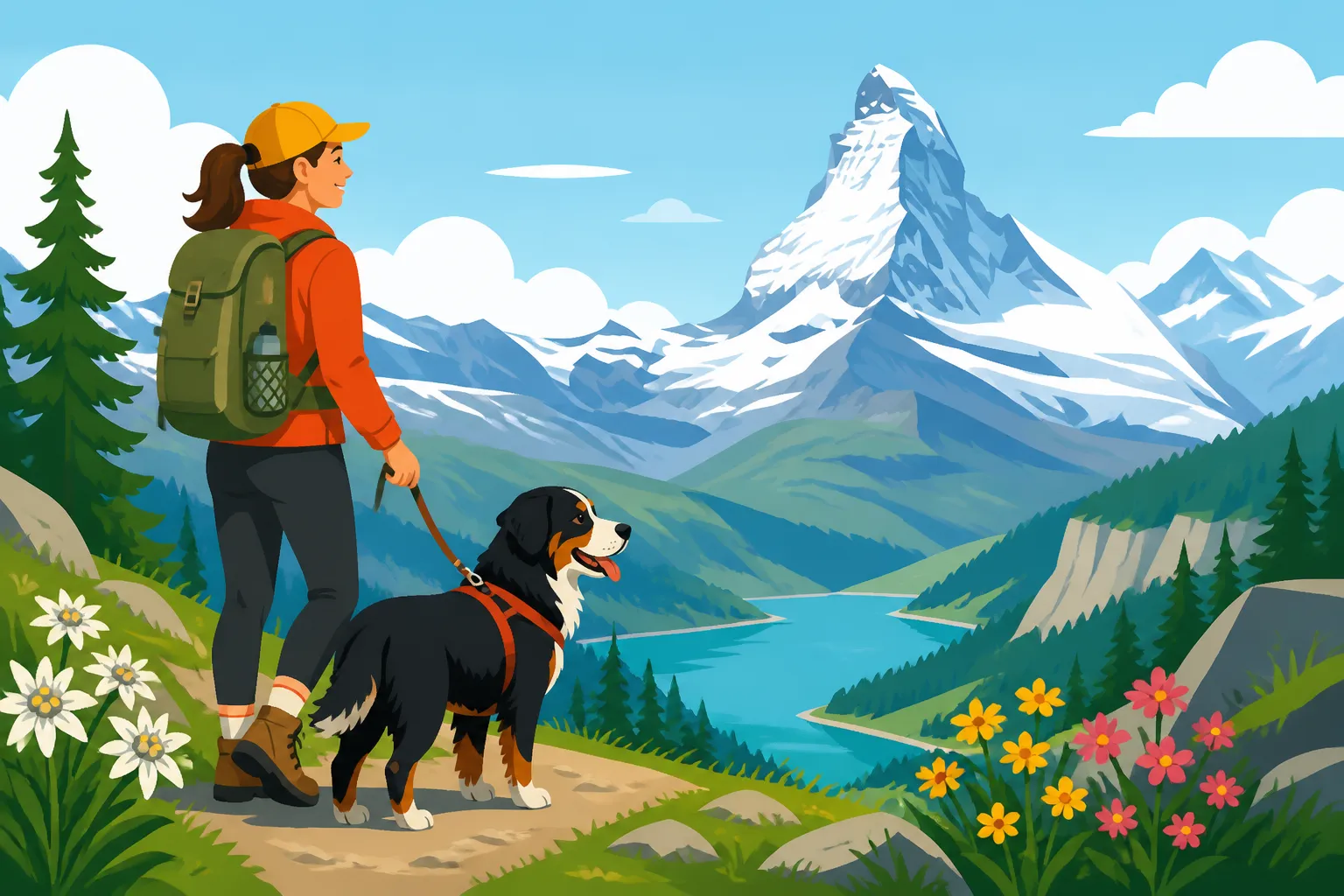
When it comes to the majestic Swiss Alps, the possibilities for dog-friendly hiking truly explode. Most hiking trails are open to dogs, provided they are kept on a leash, especially near grazing animals, and you clean up after them. Regions like the Bernese Oberland, with its iconic Grindelwald and Lauterbrunnen valleys, are fantastic. Many of the cable cars, such as the ones up to First or Mürren, allow dogs (with a ticket, of course), opening up high-alpine trails. You can embark on stunning hikes like the Panorama Trail from Männlichen to Kleine Scheidegg, offering breathtaking views of the Eiger, Mönch, and Jungfrau, all with your dog by your side. Just be sure your dog is fit for the altitude and terrain; steep ascents and descents can be tough on paws and joints, especially for older or smaller dogs.
Another brilliant region is Engadin in Graubünden, particularly around St. Moritz and Pontresina. The Engadin offers a huge network of trails, from high-alpine passes to picturesque valley walks, many of which are very dog-friendly. The trails around Lake St. Moritz or Lake Sils are particularly beautiful and accessible. Remember that the higher you go, the more changeable the weather can be, so always check forecasts and pack accordingly for both yourself and your dog – a dog coat or booties can be a lifesaver on rough terrain or in cold conditions. Always be aware of other hikers, especially families with children, and give them ample space. For multi-day adventures, some of the Swiss Alpine Club (SAC) Huts: Booking and Etiquette for Overnights might even allow dogs, but this is rare and needs to be confirmed well in advance directly with the hut warden. Otherwise, planning day trips that return you to a dog-friendly hotel or campsite is your best bet. Always bring enough water for both of you, especially on sunny, exposed trails, as natural water sources might be scarce at higher altitudes. Safety first, always – our Mountain Safety in Switzerland: Weather, Gear, and Emergency Numbers guide has vital information for high-altitude treks.
Beyond the Trails: Other Dog-Friendly Activities and Considerations
While hiking is probably the top activity for dog owners in Switzerland, there's more to explore with your furry friend. From city parks to specific accommodations, finding dog-friendly options requires a bit of research and understanding.
Parks, Swimming, and Urban Exploration with Dogs
Swiss cities, while often quite manicured, do offer some excellent spots for dogs. In Zurich, for example, the banks of the Limmat river offer lovely walks, and there are designated dog zones in larger parks like the Allmend Brunau, where dogs can run off-leash in specific areas. Just remember that even in off-leash zones, strict control is expected, and dogs must not bother other park-goers or local wildlife. For swimming, as mentioned earlier, most official "Badis" (public swimming areas) are off-limits for dogs, but many unofficial or quieter lake and river access points are available. During summer, you'll see plenty of locals letting their dogs cool off in the Wild Swimming and Lake Swimming Etiquette in Switzerland areas, as long as they're well-behaved and don't disturb others.
In Geneva, parks like Parc La Grange allow dogs on leash, and the larger Parc des Bastions offers good walking paths. Again, the key is always to clean up and ensure your dog is well-behaved. Basel has some great riverside paths along the Rhine, and specific areas for dogs in parks like Kannenfeldpark. Urban exploration means being prepared for crowds, so a well-socialized dog is a must. Many outdoor market areas are generally fine for dogs on a leash, but some indoor shops will have 'no dog' policies, usually indicated by a sticker on the door. When visiting smaller towns or villages, the main squares and pedestrian zones are usually welcoming, but always be ready to keep your dog close and calm. A coffee or an ice cream stop is often doable at outdoor seating areas, and you'll find many cafés and restaurants that welcome dogs on their terraces.
Pet-Friendly Accommodation and Dining Tips
Finding a place to stay with your dog in Switzerland can range from effortless to frustrating, depending on your budget and location. Many hotels, especially in touristy regions, proudly advertise themselves as "dog-friendly" or "pet-friendly." However, always double-check the fine print, as some might charge an additional fee per night for your dog, or have restrictions on dog size or the number of dogs allowed. Websites like Booking.com are excellent for filtering accommodations by "pet-friendly," making the search much easier. Even with an initial filter, a quick call or email to the hotel before booking is always a good idea to confirm their specific policies. Some hotels might even offer dog beds, bowls, or treats, adding a nice touch to your stay.
If hotels are out of your budget or preference, vacation rentals (holiday apartments) found on platforms like GetYourGuide or local Swiss sites often have pet-friendly options, giving you more space and flexibility. Camping is another fantastic, often more budget-friendly, option for dog owners, with many campsites across Switzerland welcoming dogs. Our guide on Camping in Switzerland: Best Sites and Wild Camping Rules offers more insights into this. When it comes to dining, as mentioned, outdoor terraces of restaurants and cafés are generally dog-friendly. For indoor dining, it's best to ask beforehand. You'll often find a small water bowl offered for your dog, especially in more rural, traditional restaurants (Gasthäuser). Embrace the directness of the Swiss: a simple "Dürfen Hunde rein?" (Can dogs come in?) in German or "Les chiens sont-ils autorisés?" in French will get you a clear answer and is usually appreciated.
Disclaimer
The information provided in this guide is for general informational purposes only and does not constitute legal or professional advice. While we strive to provide accurate and up-to-date information, rules and regulations regarding dog ownership, public access, and transport in Switzerland can vary by canton, commune, and specific establishment, and may change over time. Always verify specific rules with local authorities, transport providers, and accommodation providers before making plans. We cannot be held responsible for any inconvenience, fines, or issues that may arise from outdated or incorrect information.