Sunscreen and Dermatologist Checks: Skin Cancer Prevention in the Alps
Most expats arrive in Zurich or Geneva thinking the mild European climate means skin protection is a summer-only activity. I made that mistake my first winter in the Valais, ending up with a goggle tan that was actually a painful second-degree burn after a day of overcast skiing. This guide breaks down the high-altitude UV risks in the Alps and how to navigate the Swiss dermatology system for essential cancer screenings.
The Alpine Sun Trap: Why UV Radiation is Different in Switzerland
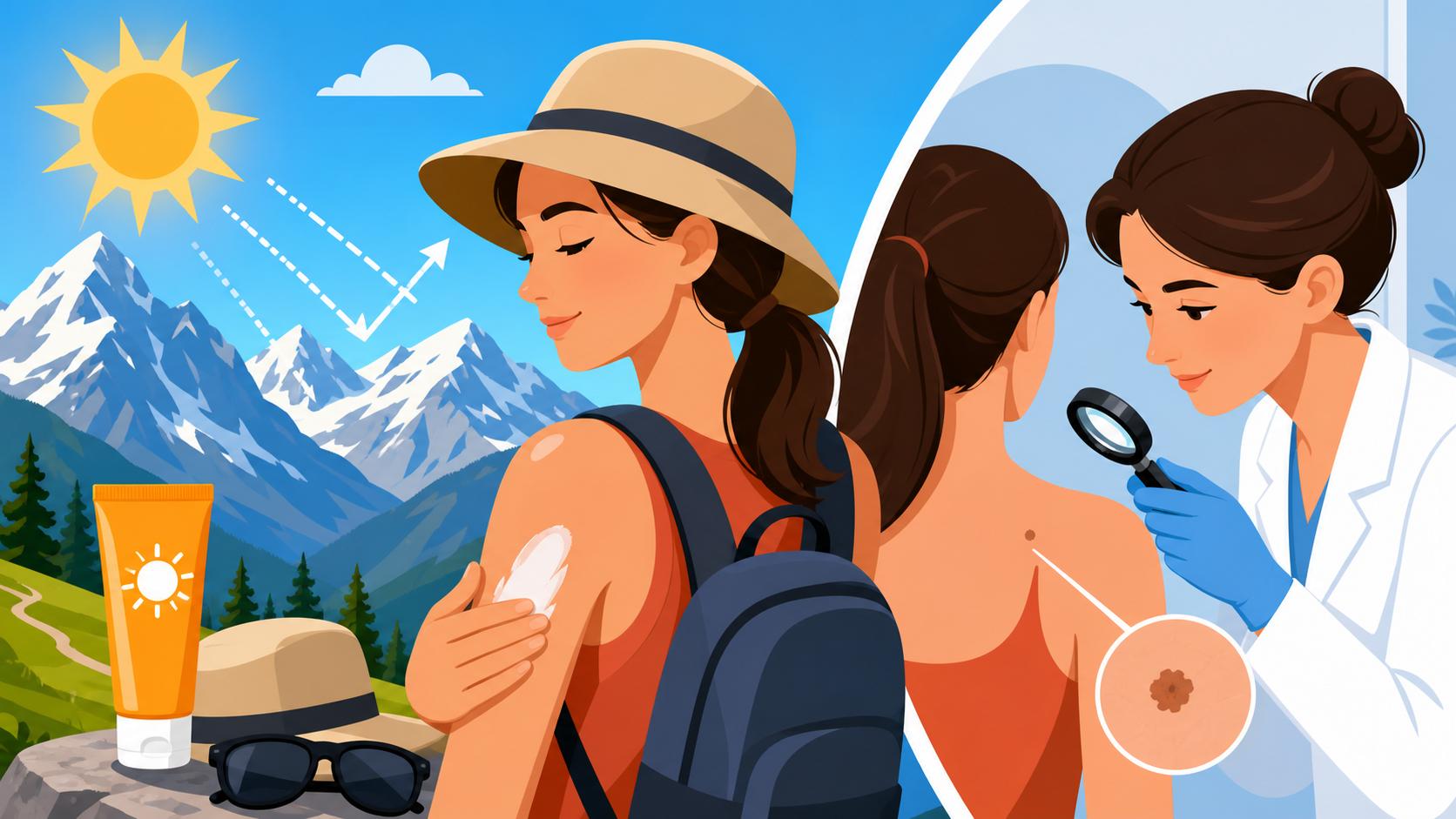
When you move to a country famous for its snow-capped peaks, your brain doesn't immediately associate it with the same skin risks as a beach in Australia or California. However, the geography of Switzerland creates a unique and often dangerous environment for your skin. For every 1,000 meters you climb in elevation, UV radiation levels increase by about 10% to 12%. When you are standing on top of the Jungfraujoch or spending a weekend in Zermatt, you are exposed to significantly higher levels of DNA-damaging rays than you would be at sea level.
The reflection factor is the second part of the alpine sun trap. While grass reflects only a small percentage of UV light, fresh snow can reflect up to 80% or 90% of those rays back up at your face. This means you are getting hit from above and below simultaneously. Even on a cloudy day, the thin mountain air allows a surprising amount of radiation to penetrate. I have seen countless newcomers neglect their skincare during a grey day in the mountains, only to realize by evening that they have a serious burn. This isn't just about the immediate discomfort; it is about the cumulative damage that leads to basal cell carcinoma or melanoma.
Many foreigners find that Routine Blood Tests: Why Swiss Doctors Don't Order Them Automatically is a reflection of the Swiss medical philosophy, which often emphasizes reactive care over certain types of preventative screening. However, when it comes to the sun, the Swiss are generally very aware of the risks. You will see local parents meticulously layering suncream on their children before a hike. As an expat, adopting this hyper-vigilance is essential. If you are used to a lower-altitude climate, your skin simply isn't "hardened" to the intensity of the Alpine sun.
Dermatologist Checks in Switzerland: How the System Works
Navigating the specialist system here can be a bit of a maze if you aren't familiar with how insurance tiers interact with preventative health. In Switzerland, a routine skin check (Hautcheck) is generally considered a preventive measure. Under the mandatory basic insurance, known as KVG, a routine screening without a specific "suspicious" reason is often not covered. You are expected to pay for these out of pocket unless you have a family history or a doctor has noted a specific mole that looks problematic.
If you have Supplementary Health Insurance (VVG): What It Covers and When to Buy It, you might find that your policy covers a portion of an annual skin checkup. This is one of the many reasons why veteran expats often suggest getting supplementary coverage as soon as you arrive. For those who prefer a more international approach or have complex medical histories, a provider like Cigna Global can offer more flexible access to specialists without the rigid gatekeeping often found in local basic plans. Having a policy through Cigna Global can sometimes simplify the process of seeing a high-end dermatologist in a city like Zurich or Geneva where waiting lists for new patients can be months long.
When you do decide to book an appointment, the process depends heavily on your insurance model. If you are on a Telmed or GP model, you technically need a referral first. You can learn more about this in our guide on Finding Medical Care in Switzerland: Doctors, Specialists, and Referrals. However, if you have a traditional model, you can call a dermatologist directly. Be prepared for a thorough examination. A Swiss "Muttermal-Check" usually involves a dermatoscope—a handheld microscope—and often a full-body map of your moles. It is professional, clinical, and very detailed. For those living in the northern cantons, Finding an English-Speaking Dermatologist in Winterthur or Zurich is relatively easy, but in smaller villages, you may need a basic grasp of German or French to explain your history of sun exposure.
Prevention Strategies: Beyond the Cream
In the Swiss context, prevention is a lifestyle, not just a product. Because the sun is so intense, the local "Apotheke" (pharmacy) is your best friend. Swiss pharmacies are much more than just places to pick up prescriptions; they are staffed by highly trained pharmacists who can give expert advice on UV protection. You will find that Pharmacies and Medication: Prescriptions, Costs, and OTC Regulations in Switzerland favor high-quality, often pharmaceutical-grade sunscreens that are specifically formulated for high-altitude use.
While you can find basic sunscreens at Migros or Coop, I highly recommend looking for brands labeled "Alpin" when you are heading to the mountains. These are usually thicker and contain less water to prevent the cream from freezing on your face in sub-zero temperatures, while providing SPF 50+ protection. If you have specific brands you prefer from back home—perhaps mineral-based sunscreens that aren't as common in local Swiss shops—you can often find them on iHerb. Using iHerb allows you to maintain your specific skincare routine while living in the Alps, ensuring you don't skip protection just because you don't like the texture of the local options.
Clothing is the other pillar of Swiss sun safety. You will notice that professional hikers and mountain guides often wear long sleeves even in the height of summer. This isn't because they are cold; it is because UPF-rated clothing is far more reliable than cream that can sweat off during a steep ascent. If you are shopping for gear, look for the "UV Standard 801" label, which is a rigorous testing standard often used in the DACH region (Germany, Austria, Switzerland). Combining high-quality gear with supplements like Vitamin D—which you can also source reliably via iHerb—helps manage the balance of staying protected while ensuring your body gets what it needs during the long, dark Swiss winters.
Navigating Costs and Billing for Skin Health
One of the biggest shocks for expats is receiving a bill for a "simple" specialist visit. A dermatologist appointment for a skin check can easily cost between CHF 200 and CHF 400 depending on the complexity and whether they take biopsies. Because of The Swiss Franchise System: How Deductibles and Copays Work, this cost will almost certainly come out of your own pocket if you haven't yet met your annual deductible (Franchise).
It is also important to understand the billing mechanics. Most dermatologists operate on the "Tiers Garant" system, meaning they send the bill to you, you pay it, and then you send the receipt to your insurance company for potential reimbursement. You can find a deep dive on this in our article on How to Pay Medical Bills: Tiers Garant vs. Tiers Payant Billing Systems. If you are worried about the financial impact of specialist visits, especially if you have a high-deductible plan, it is wise to budget for at least one specialist visit per year as part of your "true" cost of living. We have broken this down further in our guide on Out-of-Pocket Maximums: Calculating Your True Annual Healthcare Costs.
For those using international insurance like Cigna Global, the billing process can sometimes be handled directly between the clinic and the insurer, which saves you the administrative headache of the Swiss "Rückforderungsbeleg" (reimbursement slip) system. Regardless of how you pay, the investment in a dermatologist check is negligible compared to the cost and stress of treating advanced skin cancer. In a country where the mountains are your backyard, your skin health is as important as your hiking boots or your ski tuning. Don't let the beauty of the Alps blind you to the reality of the radiation levels; get checked, stay covered, and enjoy the peaks safely.
Table of Alpine UV Risks and Protection Levels
| Altitude | UV Increase | Recommended SPF | Suggested Gear |
|---|---|---|---|
| 500m (Zurich/Geneva) | Baseline | SPF 30 | Daily moisturizer with SPF |
| 1500m (Alpine Villages) | +15-20% | SPF 50 | Wide-brimmed hat, UV sunglasses |
| 2500m+ (Ski Resorts/Peaks) | +30% or more | SPF 50+ (Alpin) | Buff/Face shield, UPF 50+ clothing |
| Snow Reflection | +80% Reflection | SPF 50+ | Zinc stick for nose and lips |
Understanding these levels is crucial. I once spent a day on a glacier at 3,000 meters and even with SPF 50, I missed a small spot behind my ears. The result was a blistered mess that took weeks to heal. In the Alps, the sun is relentless, and the thin air offers no protection. Make it a habit to apply your sun protection before you even leave your apartment or chalet.
If you are new to the country, make sure you are also aware of Understanding KVG/LAMal: Mandatory Basic Health Insurance Explained so you know exactly what your legal obligations and rights are regarding medical access. The Swiss system is incredibly high-quality, but it requires you to be an active participant in your own care. Between using high-quality products from iHerb and ensuring your insurance through a provider like Cigna Global is robust, you can live a full, outdoor life in Switzerland without compromising your long-term health.
Skin Cancer Prevention Disclaimer
This article is for informational purposes only and does not constitute professional medical advice, diagnosis, or treatment. Always seek the advice of a qualified dermatologist or other healthcare provider in Switzerland with any questions you may have regarding a medical condition or skin concern. Reliance on any information provided in this guide is solely at your own risk. Insurance coverage for skin cancer screenings varies by provider and individual policy terms; always verify coverage with your insurer before booking appointments.