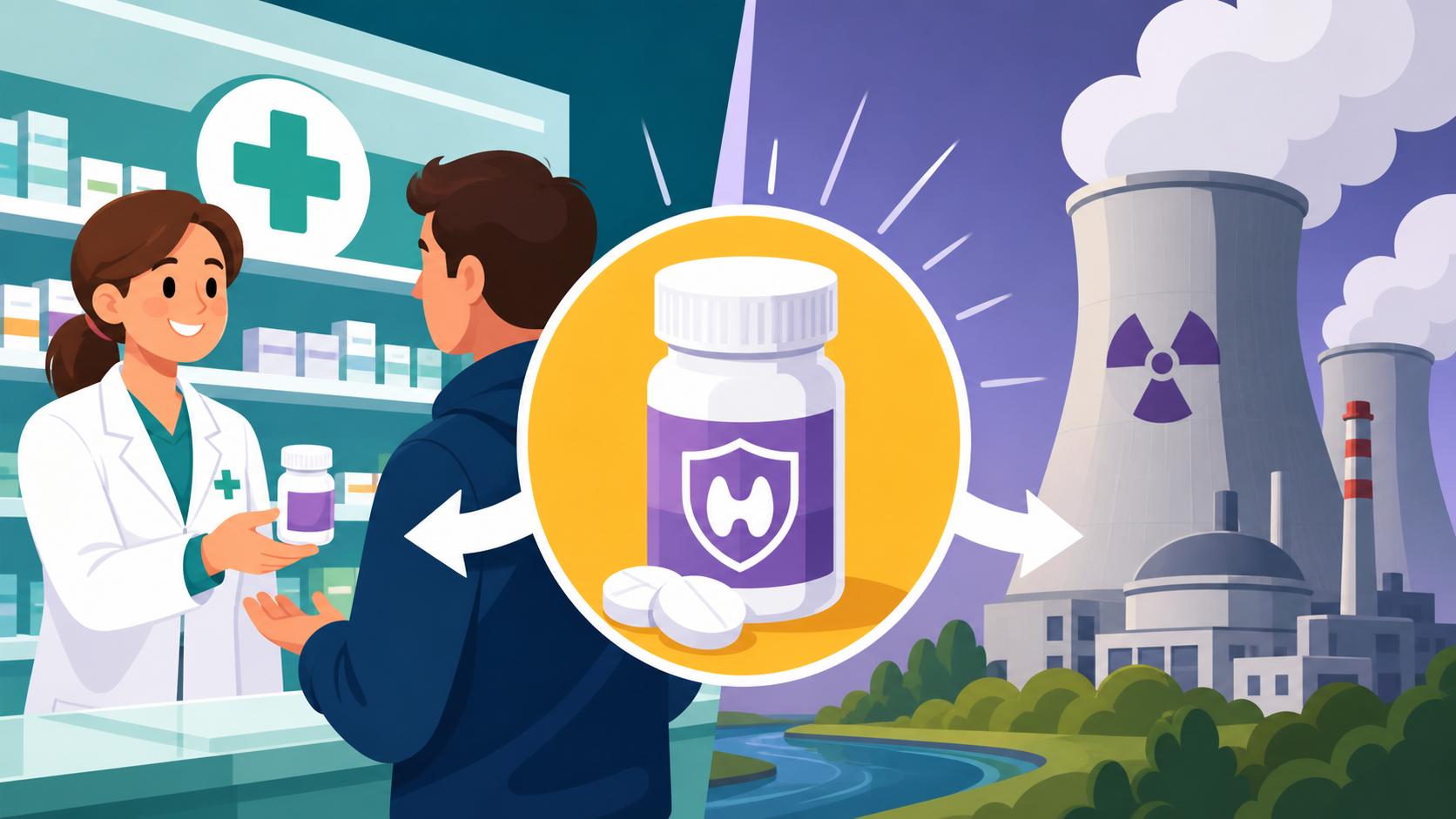
Iodine Pills Distribution: Why Swiss Pharmacies Hand Them Out Near Plants
You are settling into your new apartment in Canton Aargau or perhaps a quiet suburb of Zurich, finally figuring out which bin the compost goes in, when a strange voucher arrives in your mail. It is for "Kaliumiodid 65 AA Pot." and it tells you to head to your local pharmacy to collect a box of pills you never ordered. I remember staring at my first voucher with a mix of confusion and mild alarm, wondering if there was a localized health crisis I’d missed in the morning news. This guide will demystify the Swiss iodine pill distribution system, explaining exactly why these tablets are a standard part of your expat welcome kit and how to handle the logistics of nuclear preparedness in the Alps.
The Science of Thyroid Blocking and Public Safety
Switzerland’s relationship with nuclear power is pragmatic and deeply ingrained in its infrastructure. To understand why you are being handed a box of potassium iodide, you have to understand the specific risk associated with a nuclear incident: the release of radioactive iodine (I-131). When inhaled or ingested, this radioactive isotope is rapidly absorbed by the thyroid gland, which can lead to severe long-term health issues, including thyroid cancer.
The potassium iodide tablets provided by the Swiss government are not "anti-radiation" pills in a general sense; they are a very specific preventative measure. By taking a high dose of stable (non-radioactive) iodine at exactly the right moment, you "saturate" your thyroid. Think of it like a sponge that can only hold so much liquid. If the sponge is already full of clean water, it cannot soak up any more. By filling your thyroid with stable iodine, you prevent the radioactive version from finding a home in your body.
It is important to distinguish these high-dose emergency tablets from the daily iodine supplements you might find on iHerb for general metabolic health. The dosage in the government-issued boxes is significantly higher and intended only for acute, emergency use. Taking them without an official order from the authorities can actually be harmful, as excessive iodine can interfere with normal thyroid function or cause allergic reactions. While you might use iHerb to maintain your daily vitamin levels, the "red box" of Kaliumiodid should remain sealed in your medicine cabinet until a crisis occurs.
The 50km Radius Rule: Who Receives the Tablets
The Swiss federal government does not distribute iodine pills to every single resident simultaneously. Instead, the distribution is focused on the "danger zones" surrounding the country’s active nuclear power plants: Beznau 1 and 2, Gösgen, and Leibstadt. If you live within a 50-kilometer radius of any of these plants, you are legally entitled to—and required to store—these tablets.
Every ten years, the Swiss Confederation organizes a massive logistics operation to refresh the supply. Residents in the designated zones receive a voucher by mail. You simply take this voucher to your local pharmacy. If you’ve misplaced yours or recently moved to a new canton, it is worth checking the Zurich Expat Healthcare Guide: Hospitals, Clinics, and Emergency Contacts or your local municipal website to see if you fall within the zone. Even if you are outside the 50km radius, the cantons maintain large stockpiles that would be distributed via the Pharmacies and Medication: Prescriptions, Costs, and OTC Regulations network in the event of a national emergency.
For those of us living in international hubs like Basel or Zurich, the 50km radius covers a significant portion of the population. I recall moving from a "safe" zone to a "tablet" zone and the sheer efficiency of the pharmacy handover was a classic "Welcome to Switzerland" moment. You walk in, hand over the slip, and the pharmacist hands you a small, reddish box with instructions in multiple languages. It is a sobering but strangely comforting reminder of how seriously the Swiss take Emergency Medical Services: Ambulances, REGA, and Crisis Protocols.
Storage and Maintenance of Your Emergency Supply
Once you have your box of potassium iodide, the most important thing is where you put it. The Swiss authorities recommend keeping them in a dry, cool place that is easily accessible. Do not hide them in the back of a storage unit or in your basement bunker (unless that is where you plan to spend an emergency). They should be kept with your other essential medications.
The shelf life of these tablets is remarkably long—usually around ten years—but they do eventually expire. The box will have an expiration date clearly marked. When the federal government initiates a new distribution cycle, they will inform the public through the media and mailers. If you are a tenant, your landlord might even include information about this during your Swiss Apartment Handovers: Protocols and Deposits process, as keeping the tablets in the apartment for the next tenant is often a requirement when you move out.
If you lose your box, don't panic. You can usually obtain a replacement at a pharmacy for a small fee, though they are free during the official distribution windows. For expat families, ensuring every member of the household knows where the box is located is a key part of your home safety plan. It is also a good time to review other emergency memberships, such as REGA Membership: Why Expats Need Air Rescue Insurance in the Alps, to ensure you are fully covered for any type of Swiss adventure, whether it involves a nuclear alert or a hiking accident.
When to Take the Pills: Following Official Orders
The most critical rule regarding Swiss iodine pills is that you must never take them proactively. In the event of a nuclear accident, the Swiss authorities will use the national siren system to alert the population. This is the same siren you hear during the annual Emergency Preparedness: Sirens and Nuclear Bunkers test on the first Wednesday of February.
If the sirens wail outside of the scheduled test time, your first step is to listen to the radio (SRF) or check the Alertswiss app. The authorities will give very specific instructions on when to "shelter in place" and, if necessary, when to ingest the iodine tablets. The timing is hyperspecific; taking them too early or too late reduces their effectiveness.
For expats, this can be stressful if your German, French, or Italian isn't yet fluent. This is why having a reliable medical contact is essential. Whether you are using English-Speaking Therapists: Counseling and Psychological Support Directories to manage the anxiety of a move or you have international coverage through Cigna Global, knowing you have a professional to call can make a difference. Cigna Global is particularly useful for expats who want that extra layer of medical advice that transcends local linguistic barriers. While the government handles the pills, your private insurance provides the peace of mind for follow-up care.
| Feature | Emergency Iodine Tablets | Daily Iodine Supplements |
|---|---|---|
| Purpose | Blocks radioactive iodine absorption | Supports thyroid/metabolic health |
| Dosage | Extremely high (65mg per tablet) | Very low (micrograms) |
| Source | Swiss Government / Pharmacies | Health stores / iHerb |
| Usage | Only during a nuclear emergency | Daily as part of a diet |
| Cost | Free (with voucher) | Varies |
| Instructions | Follow federal radio orders | Follow bottle label |
Navigating the Pharmacy Visit as an Expat
When you take your voucher to the pharmacy, it is a great opportunity to familiarize yourself with the local healthcare landscape. Swiss pharmacists are highly trained and often speak excellent English, especially in the larger cantons. They can explain the dosage for children versus adults—which is crucial, as the tablets are often halved or quartered for younger family members.
If you are new to the country, you might also find yourself asking about Pharmacies (Apotheken) After Hours: Finding Emergency Medication or how to handle basic prescriptions. The iodine distribution is just one small part of a very robust Healthcare in Switzerland for Expats: The Complete System Overview (2027). While the iodine pills are free, most other medications will be subject to your deductible. Understanding The Swiss Franchise System: How Deductibles and Copays Work is vital before you start filling other prescriptions.
I’ve found that the pharmacy visit for iodine pills often leads to a broader conversation about home first-aid kits. Beyond the "red box," I always make sure to have a stock of basics for the flu or minor injuries, often sourced through a mix of local shops and iHerb for specific brands I miss from home. Having these items ready, alongside your government-issued iodine, means you won't be scrambling if a minor crisis—or a major one—hits.
Integration and the "Swiss Way" of Safety
Receiving iodine pills is, in many ways, a rite of passage for expats in Switzerland. It represents the "Total Defense" philosophy of the country. From the mandatory bunkers in apartment basements to the efficient distribution of medical countermeasures, the system is designed to be invisible until it is absolutely necessary.
As a veteran expat, my advice is to embrace the process. Don't let the box of pills sit in your "junk drawer" under old takeaway menus. Treat it with the same respect you would your Finding an English-Speaking Family Doctor (Hausarzt) in Major Cantons contact list. It is part of the high standard of living and safety that we pay for through our premiums and taxes.
If you have questions about how these emergency measures interact with your existing health conditions, don't hesitate to consult a specialist. If you're in the French-speaking part of the country, the Vaud Expat Healthcare Guide: CHUV and Riviera Medical Centers offers excellent resources for deep-diving into local medical protocols. Whether you are worried about the long-term effects of radiation or just want to know if you can take your vitamins at the same time, the Swiss medical community is incredibly accessible.
Practical Steps for New Arrivals
If you have just moved into a house or flat and haven't seen a voucher yet, here is your checklist:
- Check your location: Are you within 50km of Beznau, Gösgen, or Leibstadt? If so, you are in the distribution zone.
- Ask the landlord: During the move-in, ask if there are already iodine tablets in the apartment. They are often left behind by previous tenants.
- Visit the Gemeinde: If you are registered but have no voucher, your local town hall (Gemeinde/Commune) can tell you when the next distribution cycle is or how to get a voucher.
- Download Alertswiss: This is the official app for all Swiss emergencies, including fire, flood, and nuclear alerts. It provides instructions in English.
- Review your insurance: Ensure your Supplementary Health Insurance (VVG): What It Covers and When to Buy It is up to date, and consider an international provider like Cigna Global if you travel frequently or want specialized access.
Living near a nuclear plant might sound daunting, but in Switzerland, it is managed with a level of precision that makes it feel like just another part of the administrative landscape. You take your pills, you store them safely, and you go back to enjoying the mountain air, knowing that if the sirens ever do sound, you are prepared.
Disclaimer
This article is for informational purposes only and does not constitute professional medical or legal advice. Always follow the official instructions provided by the Swiss Federal Office of Public Health (FOPH) and your local cantonal authorities regarding the storage and ingestion of potassium iodide tablets. Consult with a qualified healthcare provider before taking any high-dose supplements, especially if you have pre-existing thyroid conditions or allergies.