How to Join REGA and What the Patronage Actually Covers
Many newcomers to Switzerland assume that because they pay hundreds of francs in monthly premiums, a helicopter rescue from a hiking trail or a ski slope is fully covered by their mandatory policy. I spent my first winter here under that exact same impression until a colleague showed me their five-figure bill for a simple ankle break on the slopes of Zermatt. This guide explains how REGA works, why it is a non-negotiable safety net for anyone living in the shadow of the Alps, and the exact steps to ensure you are not left with a mountain of debt after a mountain rescue.
The Reality of Swiss Rescue Costs vs Basic Insurance
The most dangerous myth among expats is that the red helicopters circling the peaks are a free public service like the fire department. In reality, Swiss air rescue is a private, non-profit foundation that operates outside the standard state-funded emergency infrastructure. While the Healthcare in Switzerland for Expats: The Complete System Overview (2027) is incredibly robust, it has a very specific and often punishing gap when it comes to transportation and rescue.
Under the mandatory basic insurance (KVG/LAMal), the law only requires insurers to cover 50% of the costs of an emergency rescue, and even then, there is usually an annual cap, often as low as CHF 5,000. When you consider that a single REGA flight can easily exceed CHF 10,000 depending on the complexity of the winch operation and the flight duration, that 50% "coverage" leaves you with a life-altering bill. I have seen families forced to dip into their relocation savings just to pay for a 20-minute flight because they didn't understand the Does Basic Swiss Insurance Cover Ambulance Rides? The 50% Rule Explained.
Furthermore, "rescue" and "transportation" are treated differently by insurance companies. If you are in a life-threatening situation, it is a rescue. If you are simply unable to move but not in immediate danger of dying, it might be classified as transport. This distinction can lead to endless bureaucratic arguing between your insurer and the rescue service. This is where REGA patronage becomes your best friend; it acts as the bridge that covers what your insurance refuses to pay.
What Does REGA Patronage Actually Cover
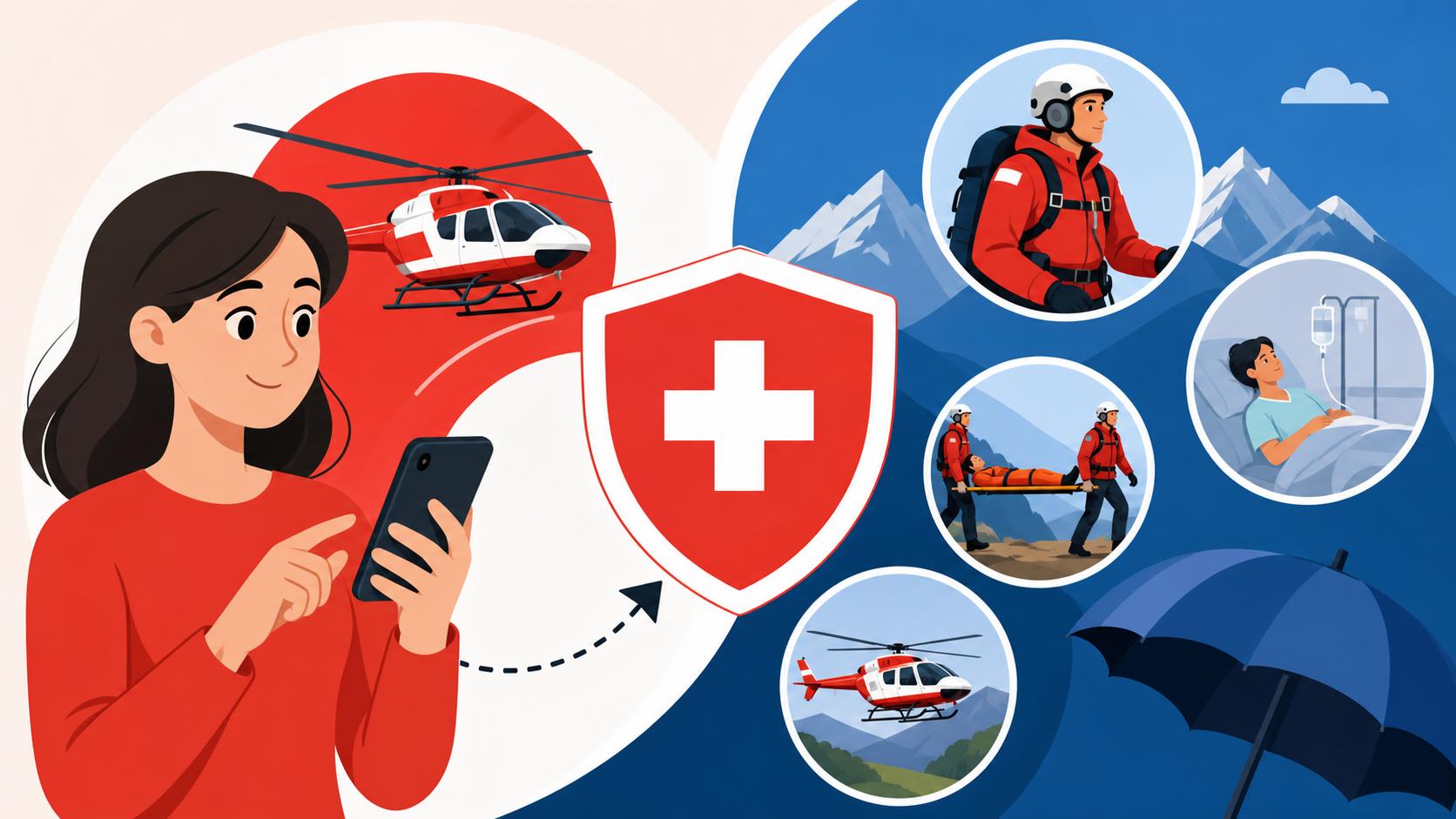
It is vital to understand that REGA is not an insurance company; it is a patronage system. When you pay your annual fee, you become a "Gönner" or patron. In return, REGA may, at its own discretion, waive the costs of a rescue mission that are not covered by your health or accident insurance. While "discretionary" might sound legally shaky, REGA has a decades-long track record of honoring this for its patrons.
The coverage extends far beyond just being plucked off a mountain. It includes:
- Search and Rescue: If you go missing while hiking in the Jura or the Alps, REGA coordinates with local police and alpine rescue teams.
- Medical Repatriation: If you are injured or fall seriously ill abroad and need to be flown back to Switzerland for treatment, REGA operates a fleet of ambulance jets. I once spoke to an expat who was repatriated from a remote part of Thailand; without his REGA patronage and a high-tier policy from Cigna Global, the cost would have been over CHF 80,000.
- Assistance for Family Members: Depending on your patronage level, REGA can also assist in bringing family members home if a tragedy occurs while traveling.
| Service Type | Basic Insurance (KVG) | REGA Patronage |
|---|---|---|
| Helicopter Rescue (CH) | 50% (often capped at 5k) | Waives remaining costs |
| Ambulance Jets (Global) | Very limited to none | Waives remaining costs |
| Search Missions | Often excluded | Waives remaining costs |
| 24/7 Medical Advice | Not standard | Included via emergency desk |
| Alpine Winch Ops | Partial coverage | Waives remaining costs |
For those of us who travel frequently or have family visiting from overseas, having that extra layer of security is essential. While REGA handles the Swiss side, I always recommend expats look into Supplementary Health Insurance (VVG): What It Covers and When to Buy It to ensure their general medical costs are covered if they are transported to a private clinic rather than a public hospital.
How to Join REGA Step by Step
Joining is perhaps the easiest administrative task you will encounter in Switzerland. Unlike the mountains of paperwork required for a residency permit, becoming a REGA patron takes about five minutes. You do not need a medical exam, and there are no "pre-existing condition" exclusions for the rescue waiver.
1. Choose Your Patronage Category
REGA offers three main categories:
- Individual: For single adults (usually CHF 40 per year).
- Family: Covers spouses or partners and all children under 18 (usually CHF 80 per year). This is a bargain for anyone managing Pediatric Care: Checkups, Vaccination Schedules, and School Health for active kids who might take up skiing or mountain biking.
- Small Family: For single parents and their children (usually CHF 70 per year).
2. Sign Up Online
You can visit the REGA website and pay via credit card or TWINT. You will receive a digital patronage card immediately. I highly recommend setting this up the moment you receive your Mandatory Registration: How to Sign Up for Health Insurance Within 90 Days. Waiting until the day before a ski trip is risky because the patronage technically needs to be active before the incident occurs.
3. Download the REGA App
This is the most critical step. The REGA app allows you to raise an alarm with a single swipe. It automatically transmits your GPS coordinates to the dispatch center. In the fog or the dark, trying to explain to a dispatcher in broken German where you are on a trail is nearly impossible. The app bypasses the language barrier and tells them exactly where to send the helicopter. If you are also managing chronic conditions, having your medical history summarized in your phone alongside this app is a smart move; I often order my maintenance supplements through iHerb and keep a list of current medications in my emergency contact info for the flight medics to see.
Why REGA Isn't a Substitute for Comprehensive Insurance
A common mistake I see in expat forums is people thinking they can cancel their expensive accident insurance because they have REGA. This is a dangerous misunderstanding of the Emergency Medical Services: Ambulances, REGA, and Crisis Protocols. REGA covers the cost of the rescue flight. They do not cover the hospital stay, the surgeries, the physical therapy, or the medication you will need afterward.
If you have a skiing accident, your Occupational Accident Insurance (UVG): What Happens When You Ski and Crash? should cover your medical bills. However, if you are not employed or work less than 8 hours a week for a single employer, you must ensure accident coverage is included in your basic health insurance. REGA only gets you from the mountain to the hospital; once you are through those sliding glass doors, your standard insurance takes over.
For those of us who want a "belt and braces" approach, combining REGA with an international plan like Cigna Global can be a game-changer, especially if you spend time working remotely in different cantons or neighboring countries. It ensures that no matter where the helicopter drops you, the subsequent medical bills don't lead to a financial crisis. After the initial shock of a rescue, you’ll likely need various recovery aids, from braces to high-quality vitamins found on iHerb, which are rarely fully covered by basic Swiss plans.
The Cultural Significance of the Red Helicopters
In Switzerland, the REGA patronage card is almost a rite of passage. It is one of the few institutions that genuinely unites the country across the Röstigraben. By joining, you aren't just buying a "rescue insurance" policy; you are supporting a foundation that provides a public service. REGA often assists in non-mountain emergencies too, such as transporting neonates between specialized hospitals or helping during major road accidents where an ambulance can't reach the scene quickly enough.
When you are out hiking and you see that red and white helicopter, there is a sense of comfort in knowing you are a part of that system. It reflects the Swiss mindset of collective responsibility and personal preparedness. It is also worth noting that if you are a patron and you are involved in an accident, you should still provide your insurance details to the medical team. REGA will first bill your insurance for whatever they are legally required to pay, and only then will they waive the remaining balance. This keeps the foundation financially healthy so they can continue to invest in the latest medical technology and aircraft.
If you are still navigating the early days of your move, make sure you also look into Finding Medical Care in Switzerland: Doctors, Specialists, and Referrals to find a GP who can handle your follow-up care if you ever do need a REGA flight. Knowing who to call after the emergency is just as important as knowing Emergency Numbers 144 vs 112: Which to Call in a Swiss Medical Crisis.
Final Advice for Expats
Don't overthink this one. In a country where a coffee can cost six francs, a forty-franc annual fee for peace of mind is the best deal you will find. I have seen the stress on the faces of people who thought they were "covered" by their work insurance, only to find out their policy had a high deductible for search and rescue.
When you join, make sure you also sign up your visiting relatives for a short-term patronage if they are staying for a season of hiking. While REGA is primarily for residents, they do have options for visitors that can prevent a family vacation from turning into a financial disaster. Keep your Pharmacies and Medication: Prescriptions, Costs, and OTC Regulations knowledge up to date as well, because once REGA gets you home, the road to recovery usually starts at your local Apotheke.
Disclaimer
This article is for informational purposes only and does not constitute legal or financial advice. REGA patronage is a discretionary system and not a formal insurance contract. Always check the latest terms and conditions on the official REGA website and consult with your primary health insurance provider to understand your specific coverage limits. Over-the-counter products and supplements should be used according to professional medical guidance.