Routine Blood Tests: Why Swiss Doctors Don’t Order Them Automatically
Walking into a sterile doctor's office in Zurich or Geneva and asking for a "full check-up" often results in a confusing conversation where the physician asks why you want one if you feel fine. I remember my first year in Basel, sitting in a Hausarzt office, expecting a standard needle-to-arm routine, only to be told that testing healthy blood is often viewed as a waste of resources. This guide explains the cultural and systemic reasons why Swiss doctors avoid automatic routine blood tests and how you can navigate this as an expat.
The Philosophy of Smarter Medicine in Switzerland
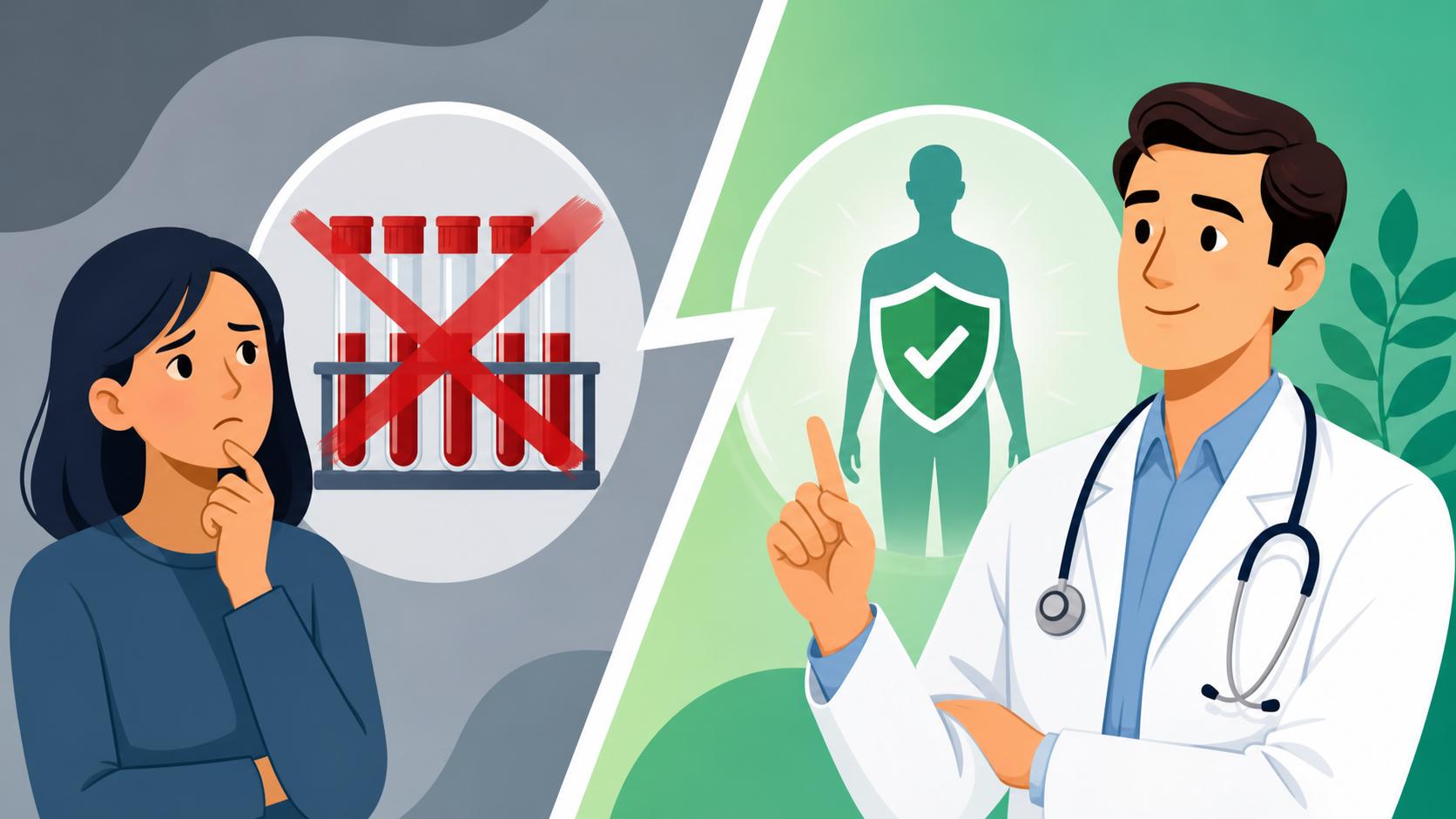
If you come from the United States, the Middle East, or parts of Asia, you are likely used to the "annual physical" that involves a 12-hour fast followed by a comprehensive metabolic panel. In Switzerland, the medical community adheres to a philosophy often called Smarter Medicine. This initiative aims to reduce over-medicalization and unnecessary testing. Swiss doctors are trained to believe that if a patient is asymptomatic, the statistical likelihood of a blood test finding a meaningful, life-saving anomaly is lower than the likelihood of finding a "false positive" that leads to invasive, stressful, and expensive follow-up procedures.
When I first arrived, I found this incredibly frustrating. I felt like I was being denied preventative care. However, after several years of Finding Medical Care in Switzerland: Doctors, Specialists, and Referrals, I began to understand that the Swiss approach is deeply rooted in evidence-based practice. They don't just want to see numbers; they want to treat symptoms. If you tell a Swiss doctor you are tired, they will test your ferritin and B12. If you say you have no complaints, they will likely just check your blood pressure and send you on your way.
For those who prefer a more proactive, international approach to their health management, having a policy with Cigna Global can sometimes provide the flexibility to seek additional screenings or second opinions that align more closely with the medical norms of your home country. They understand that for many expats, the peace of mind that comes with a "clean bill of health" on paper is worth the administrative effort.
The Role of the Hausarzt as the Gatekeeper
In the Swiss system, your family doctor or Hausarzt is the primary decision-maker for all diagnostic tests. Unlike some countries where you can walk into a private lab and order your own tests, in Switzerland, a laboratory usually requires a referral from a physician. This is particularly true if you are Comparing Health Insurance Models: Telmed, HMO, Family Doctor, and Standard because your insurance provider often mandates that your GP approves all costs to keep premiums low.
The doctor acts as a financial and medical steward. They are aware that every lab analysis carries a specific tariff code under the TARMED billing system. If they order a test that isn't medically indicated by your symptoms, they may have to justify it to the insurance company, or you might find the claim rejected. This is why Finding an English-Speaking Family Doctor (Hausarzt) in Major Cantons is so vital; you need someone who can explain these nuances to you in your native language so you don't feel like you are simply being dismissed.
Understanding the Financial Impact of Lab Work
One of the biggest reasons routine blood tests aren't "automatic" is the way the Swiss healthcare economy is structured. Every vial of blood sent to a lab like Viollier or Unilabs results in a separate bill, often distinct from the doctor’s consultation fee. If you have chosen a high deductible to save on monthly costs, you will be paying for these tests entirely out of your own pocket until you hit your limit.
| Test Type | Estimated Cost (CHF) | Is it Routine in Switzerland? |
|---|---|---|
| Full Blood Count (FBC) | 20 – 40 | Only if symptomatic |
| Lipid Profile (Cholesterol) | 30 – 60 | Every 5 years for those over 40 |
| HbA1c (Blood Sugar) | 40 – 70 | Only if BMI or risk factors are high |
| Vitamin D / B12 Panel | 60 – 120 | Commonly requested by expats |
| Liver/Kidney Function | 50 – 100 | Only for monitoring medication |
When you receive your How to Read a Swiss Medical Bill (Rückforderungsbeleg) and Claim Refunds, you might be shocked to see that a "simple" blood draw cost you CHF 250 once all the various markers were tallied up. This is a direct reflection of The Swiss Franchise System: How Deductibles and Copays Work. If you haven't reached your deductible, that blood test is essentially a private purchase.
If your tests do come back showing a slight deficiency, which is quite common with Vitamin D in the Swiss winter, you can often find high-quality supplements on iHerb to bridge the gap without needing a prescription-strength dose that requires further medical monitoring. Many expats find that managing minor deficiencies found in their "demanded" tests is easier through trusted international platforms like iHerb rather than navigating the local pharmacy's higher price points.
How to Successfully Advocate for Blood Work
If you truly feel that you need blood work done—perhaps because of a family history of thyroid issues or a previous struggle with anemia—you need to change your approach. Don't ask for a "routine" test. Instead, frame your request around specific concerns. Use "I" statements and mention specific symptoms, even if they seem minor.
- Be Specific: Instead of saying "I want a check-up," say "I've been feeling unusually sluggish lately and would like to check my iron and thyroid levels."
- Mention History: "In my home country, I was monitored for high cholesterol, and I'd like to ensure my levels are still stable under my new Swiss diet."
- Reference Insurance: If you have a premium international plan like Cigna Global, you can mention that your coverage encourages annual screenings, which might make the doctor more comfortable with the administrative side of the request.
- Understand the Model: Know that Understanding KVG/LAMal: Mandatory Basic Health Insurance Explained covers what is "medically necessary." Anything else is technically at the doctor's discretion.
It is also worth noting that if you are on a B or C permit and are Out-of-Pocket Maximums: Calculating Your True Annual Healthcare Costs, you might be more inclined to push for these tests toward the end of the year if you have already surpassed your franchise amount, as the insurance will then cover 90% of the cost.
The Cultural Divide: Prevention vs. Intervention
The Swiss medical system is world-class, but its definition of "prevention" focuses more on lifestyle and targeted screenings rather than broad-spectrum laboratory data. For example, Women’s Health: Gynecologists, Screenings, and Contraception Access follows a very strict schedule for Pap smears and mammograms that is considered preventative. Similarly, Maternity and Child Healthcare in Switzerland: From Pregnancy to Pediatrics involves very specific blood tests at set intervals, but even then, they are more conservative than what you might find in a private London or New York clinic.
The system assumes that if you are eating well, exercising in the Alps, and have a normal blood pressure, your internal chemistry is likely fine. This can be a hard pill to swallow for those of us who grew up in "data-driven" healthcare cultures. We want the spreadsheet of our biomarkers; the Swiss doctor wants to know if you can hike up Uetliberg without getting winded.
Private Labs and Self-Testing Options
If your Hausarzt remains firm in their refusal to order a test that you feel is necessary, you do have the option of "Self-Pay" at certain private clinics. Centers like the Permanence at Zurich Main Station or various "Check-in" clinics in Geneva allow for more patient-directed care, though you will be paying the full TARMED rate without the possibility of insurance reimbursement.
For those who manage chronic conditions, the billing can become complex. It is essential to understand How to Pay Medical Bills: Tiers Garant vs. Tiers Payant Billing Systems to know whether you will be paying the lab directly or if the lab will bill your insurer, who then bills you. Most private lab requests for "peace of mind" fall under the Tiers Garant system, where you pay upfront and try your luck with a claim later.
While you are waiting for results or if you are simply looking to optimize your health, sourcing your daily wellness needs from iHerb can be a cost-effective way to stay on top of your health without a doctor's visit for every minor supplement. It's about finding that balance between the high-intervention culture many of us come from and the "Nature-and-Rest" culture that Switzerland promotes.
Routine Testing for Specific Groups
There are exceptions to the "no-routine-test" rule. If you fall into certain categories, your doctor will be much more proactive:
- Vegetarians and Vegans: Doctors are usually very willing to check B12, Iron, and Ferritin annually for those on plant-based diets.
- Patients over 50: Screening for colorectal issues and prostate markers becomes more "routine" once you hit certain age milestones.
- Chronic Medication Users: If you are on blood pressure medication or antidepressants, regular blood work to monitor organ function is mandatory and will be ordered automatically.
- Pregnancy: As detailed in Pregnancy in Switzerland: Prenatal Care, Scans, and Midwife Support, blood work is frequent and comprehensive from the moment you register your pregnancy.
If you don't fit these categories, you may have to be the one to drive the conversation. Don't be afraid to be the "difficult" expat. It is your health and your franchise money. If you feel that something is wrong, or if you simply cannot rest without knowing your cholesterol levels, stay firm. A good doctor will eventually agree to the test, provided you acknowledge that you understand the costs involved.
Summary of the Swiss Lab Process
Navigating the Swiss medical system requires a shift in expectations. You aren't just a consumer of healthcare; you are a partner in a system that prides itself on efficiency and avoiding waste. While this can feel like a hurdle, it also means that when a Swiss doctor does order a blood test, they are doing it because they genuinely believe it is necessary for your clinical outcome.
By understanding the financial triggers and the cultural focus on "Smarter Medicine," you can better advocate for the care you want. Whether that means supplementing your lifestyle with products from iHerb, ensuring you have the right international coverage through Cigna Global, or simply learning the right German or French phrases to explain your family history to your Hausarzt, you have the power to bridge the gap between Swiss medical tradition and your personal health goals.
Important Medical Disclaimer
The information provided in this article is for educational and informational purposes only and is not intended as medical advice. Healthcare systems and regulations in Switzerland are subject to change, and individual medical needs vary. Always seek the advice of a qualified healthcare provider in Switzerland regarding any medical condition or treatment. Never disregard professional medical advice or delay in seeking it because of something you have read in this guide. Reliance on any information provided in this article is solely at your own risk.