European Health Insurance Card (EHIC) Equivalent for Swiss Residents
It's incredibly common for expats moving to Switzerland to wonder about familiar safety nets like the European Health Insurance Card (EHIC). You're used to its ease of use across Europe, and suddenly, you're in Switzerland, a country right in the middle of it all, yet not part of the EU. This guide will cut through the confusion and explain what serves as the EHIC equivalent for Swiss residents, ensuring you understand your healthcare coverage when you travel.
The Swiss Healthcare System and Its European Neighbors
Navigating healthcare in Switzerland as an expat is already a maze, and when you start thinking about travel, it adds another layer of complexity. The first thing to wrap your head around is Switzerland's unique position in Europe.
Why the EHIC Doesn't Directly Apply to Swiss Residents
Switzerland is famously not a member of the European Union, nor the European Economic Area (EEA). This is a crucial distinction that impacts everything from visas to, yes, healthcare. Because of this, the standard European Health Insurance Card (EHIC) that many EU/EFTA citizens are accustomed to using in member states doesn't directly apply to residents of Switzerland. You won't be issued an EHIC by a Swiss authority because Switzerland isn't part of the system that issues them. This can be a real head-scratcher, especially if you're planning a weekend trip to France or a holiday in Italy, countries where your EHIC used to be your golden ticket. You're left thinking, "So, what now? Am I just uncovered if I get sick in Munich?" This worry is completely valid, as figuring out these cross-border medical nuances can feel like translating a government document after a long day.
However, don't panic. While you don't get a literal EHIC, Switzerland has a network of bilateral agreements with EU and EFTA countries that achieve a very similar outcome. These agreements ensure that Swiss residents are not left completely in the lurch when traveling within these nations. It's a testament to Switzerland's interconnectedness with its European neighbors, even without full membership. Your mandatory basic health insurance (KVG/LAMal) is the key here; it forms the foundation of your coverage both at home and, with certain stipulations, abroad. For a broader look at how things work locally, you might want to check out our comprehensive guide on Healthcare in Switzerland for Expats: The Complete System Overview (2027).
Switzerland's Bilateral Agreements and International Healthcare
Thanks to those clever bilateral agreements, your Swiss basic health insurance actually functions in a very similar way to an EHIC when you're traveling in EU and EFTA countries. These agreements ensure that if you, as a resident of Switzerland, fall ill or have an accident while temporarily staying in an EU/EFTA country, you are entitled to medically necessary treatment. This means you’ll receive the same healthcare benefits as a resident of the country you're visiting, under their local system. It's a reciprocal arrangement, offering a degree of peace of mind.
For example, if you're enjoying a hike in the Austrian Alps and twist your ankle, your Swiss basic health insurance will cover the necessary medical treatment, just as it would for an Austrian citizen. This typically includes doctor's visits, hospital stays, and prescription medications that are deemed medically necessary during your stay. However, it's crucial to understand the term "medically necessary" – this typically means treatment that cannot wait until you return to Switzerland. It doesn't cover planned medical tourism or elective procedures abroad. This system is a lifesaver for unexpected situations, but it's not a carte blanche for all medical expenses you might incur while traveling. The specifics of Understanding KVG/LAMal: Mandatory Basic Health Insurance Explained will give you a better grasp of the base coverage.
Understanding Your Swiss Health Insurance Card Abroad
Your physical Swiss health insurance card is more important than you might realize when you step outside the Swiss borders, especially into the EU/EFTA zone. It holds the key to accessing care under those bilateral agreements.
How Your Basic Swiss Health Insurance Works in EU/EFTA Countries
When you're traveling within the EU or EFTA region, your basic Swiss health insurance provides coverage for medically necessary treatments in case of illness or accident. This is pretty much identical to what an EHIC card offers. The idea is that you should not have to cut your trip short or endure severe pain simply because you're away from home. Let's say you develop a sudden, severe ear infection while on holiday in Spain. You can visit a local doctor, present your Swiss health insurance card, and receive treatment. Your Swiss insurer will then reimburse the costs according to the rates of the public healthcare system in Spain, or up to the cost that the same treatment would have incurred in Switzerland, whichever is lower. This "medically necessary" clause is key: it means conditions that require immediate attention and cannot reasonably be postponed until your return to Switzerland.
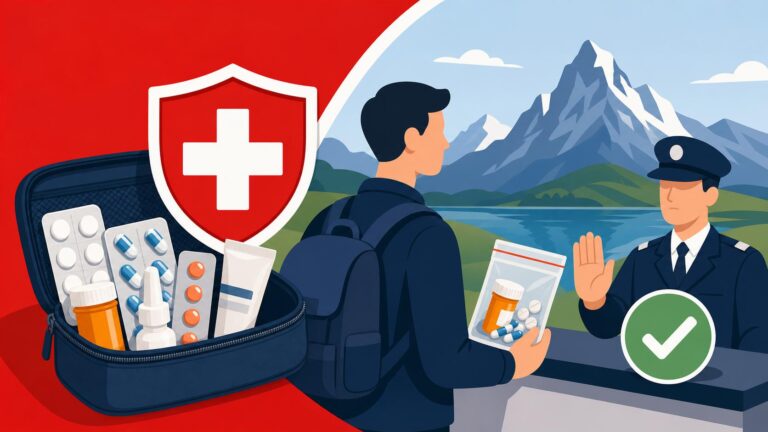
What's not covered is equally important to understand. Your basic Swiss insurance generally won't cover non-emergency treatment, such as a routine check-up or a planned visit to a specialist for a pre-existing condition that could have been handled at home. Elective procedures, cosmetic surgery, or any treatment where the primary purpose is to seek care abroad, are also typically excluded. And here's a big one that often catches expats off guard: repatriation. If you need to be medically transported back to Switzerland due to illness or injury, your basic KVG insurance usually does not cover these very significant costs. This is where the limitations become stark, and the need for additional coverage really hits home. Even within Switzerland, a basic policy only covers 50% of ambulance and rescue costs, so imagine the expense when crossing borders. For a deeper dive into these costs, our article on Emergency Medical Services: Ambulances, REGA, and Crisis Protocols is highly recommended.
The Swiss Insurance Card as Your "Equivalent"
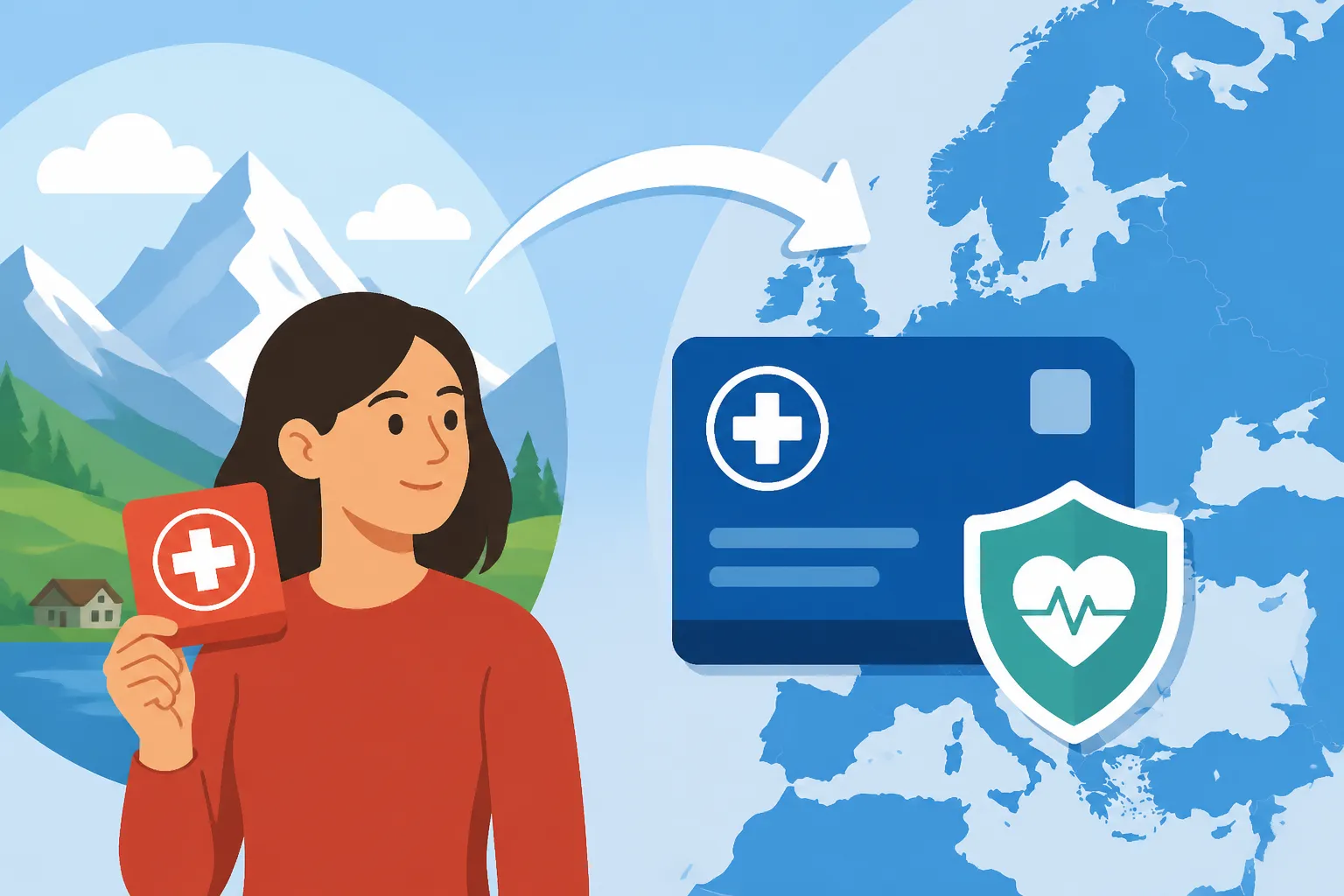
So, how does this work in practice? Your actual Swiss health insurance card is your de facto EHIC equivalent. Take a look at the back of your card. For most major Swiss health insurance providers like CSS, Helsana, Groupe Mutuel, or KPT, you'll find a European health insurance card printed on the reverse side. It will typically have the blue background and the characteristic star circle design, along with "EHIC" or "European Health Insurance Card" explicitly stated, alongside your personal details, insurer details, and the expiry date. This is the card you present to healthcare providers in EU/EFTA countries. It's a clear, internationally recognized symbol that you are covered under the bilateral agreements.
If, for some reason, your Swiss insurance card doesn't have this EHIC-equivalent printed on the back – and this can happen, especially with some older cards or certain supplementary insurances – don't panic. You can, and should, contact your Swiss health insurance provider before traveling. They are legally obligated to issue you a Provisional Replacement Certificate for the European Health Insurance Card. This document serves the exact same purpose as the card itself and ensures you have proof of coverage. It’s always best to have this sorted before you jet off, rather than trying to wrangle paperwork from a foreign hospital bed. It’s a common frustration for expats, dealing with the bureaucratic differences, so being proactive here will save you a world of stress.
Billing Abroad: Tiers Garant vs. Tiers Payant in a Foreign Context
Understanding how you'll pay your medical bills when abroad is absolutely crucial, as it often differs significantly from how things might work back in Switzerland, and certainly from a typical EHIC experience. In many EU/EFTA countries, even with your Swiss health card (the EHIC equivalent), you will likely encounter a "Tiers Garant" system. This means you'll pay for the medical service upfront, out of your own pocket, and then submit the detailed invoice to your Swiss health insurance provider for reimbursement once you return home.
Imagine you visit a doctor in Germany for an urgent issue. You'll likely pay the doctor directly after the consultation. It’s absolutely vital to get a detailed, itemized invoice that clearly states the services rendered, the date, the cost, and the diagnosis (if possible, in a language your Swiss insurer can understand, or be prepared to translate). Without this, your reimbursement claim could be delayed or even rejected. Once back in Switzerland, you'll send this invoice to your insurer, who will then process the claim, reimbursing you according to the rules of the country where you received treatment, or the Swiss rate, whichever is lower. This is different from a "Tiers Payant" system where the insurer pays the provider directly, which is less common when using your Swiss basic insurance abroad. Knowing this upfront can prevent financial shock and hassle. Our guide on How to Pay Medical Bills: Tiers Garant vs. Tiers Payant Billing Systems goes into more detail about these processes domestically, which helps understand the foreign context.
Beyond EU/EFTA: Travel Insurance and Global Coverage
While the bilateral agreements cover you fairly well within the EU/EFTA, the moment you step outside that zone, your basic Swiss health insurance becomes much more limited. This is where a strategic approach to travel insurance becomes indispensable.
When Basic Swiss Insurance Isn't Enough
The moment you plan a trip to, say, the United States, Canada, Australia, or even many parts of Asia or Africa, your basic Swiss KVG health insurance offers drastically reduced coverage. For these non-EU/EFTA destinations, your Swiss basic insurance typically only covers emergency medical treatment up to a maximum of double the cost that the same treatment would have incurred if performed in Switzerland. Now, if you know anything about healthcare costs in countries like the US, you'll immediately see how quickly "double the Swiss rate" can become utterly insufficient. A simple overnight hospital stay or an emergency surgery could easily rack up hundreds of thousands of Swiss francs, leaving you with a massive bill that your basic insurance won't touch.
Furthermore, as mentioned, basic KVG insurance almost never covers medical repatriation from any country, and certainly not from outside the EU/EFTA. Imagine breaking your leg in Thailand and needing a specialized medical flight home – this can cost tens of thousands of francs. This limitation alone is a huge reason why relying solely on your basic Swiss insurance for travel outside of Europe is a gamble you really don't want to take. Even within Switzerland, getting caught out by the 50% rule for rescue services can be painful, so consider what happens when you're far from home. This is also why many expats invest in a REGA Membership: Why Expats Need Air Rescue Insurance in the Alps even for domestic emergencies.
The Importance of Supplementary Travel Insurance
Given the significant gaps in basic Swiss health insurance coverage for international travel, particularly outside the EU/EFTA, investing in supplementary travel insurance is not just advisable; it's practically essential for many expats. A good travel insurance policy fills these gaps, offering comprehensive protection that your basic KVG plan simply can't.
These policies typically provide coverage for:
- Full Medical Expenses: Beyond the limited "double the Swiss rate," ensuring you're covered for the actual cost of treatment in expensive countries.
- Medical Repatriation: The crucial cost of bringing you home if you need specialized medical transport. This alone can save you a fortune and immense stress.
- Emergency Dental Treatment: Covering unexpected dental issues that arise during your trip.
- Trip Cancellation/Interruption: Reimbursing non-refundable expenses if your trip is cut short or canceled due to unforeseen circumstances.
- Lost Baggage and Personal Liability: Protecting you from other common travel mishaps.
When looking for travel insurance, consider options that cater specifically to the expat and digital nomad lifestyle. Brands like SafetyWing are quite popular among those who travel frequently or have non-traditional work setups. They offer flexible and affordable travel medical insurance that can be purchased for short trips or longer-term stays, making them a great choice for those who might spontaneously decide on an extended backpacking adventure or a temporary work assignment abroad. They understand the need for coverage that moves with you, rather than being tied to a single country's system. When considering whether to opt for supplementary insurance, remember to factor in your Out-of-Pocket Maximums: Calculating Your True Annual Healthcare Costs when relying solely on basic KVG, and how quickly those costs can escalate when traveling without adequate coverage.
Considering Long-Term International Health Insurance
For some expats, particularly those who are truly global citizens, spending significant time in multiple countries, or even considering long-term stays outside Switzerland, a regular travel insurance policy might not be enough. This is where dedicated international health insurance comes into play. These plans are designed for individuals who reside abroad for extended periods or who simply want the flexibility to choose medical care anywhere in the world.
These policies offer a higher level of coverage and often include routine care, not just emergencies, outside your home country. They can be invaluable for digital nomads, international business travelers, or families living in different countries throughout the year. For instance, if you're planning a sabbatical year traveling through South America, an international health insurance plan would provide more robust and consistent coverage than continually purchasing short-term travel insurance policies. Again, a provider like SafetyWing offers products that blur the lines between traditional travel insurance and more comprehensive international health insurance, making it a viable option for those needing flexible, broader coverage that can adapt to changing travel plans. It's truly a different beast than your basic Swiss plan or even a supplementary Swiss option, offering a global safety net. This is often an important consideration for anyone needing Travel Health Insurance for Trips Outside Switzerland: What KVG Covers Abroad.
Practical Tips and What to Do in an Emergency Abroad
Forewarned is forearmed, especially when it comes to medical emergencies in unfamiliar territory. A little preparation can make a huge difference in how smoothly things go if you face a health crisis while traveling.
Before You Travel: Checklist and Preparation
Before you even pack your first sock, take a few moments to prepare for potential medical eventualities. This simple checklist can save you a world of trouble:
- Verify Your Swiss Health Insurance Card: Double-check the back of your card. Does it have the EHIC equivalent printed on it? If not, contact your Swiss insurer immediately and request a Provisional Replacement Certificate. Don't leave Switzerland without this.
- Understand Your Policy: Briefly review what your basic KVG insurance covers abroad (medically necessary, EU/EFTA only) and, crucially, what it doesn't (repatriation, elective treatments, non-EU/EFTA comprehensive coverage).
- Note Emergency Contact Numbers: Have your Swiss health insurer's emergency contact number readily available, preferably stored in your phone and written down somewhere.
- Consider Supplementary Travel Insurance: If you're traveling outside the EU/EFTA, or if you want extra peace of mind for repatriation or higher coverage limits within Europe, purchase a dedicated travel insurance policy. Ensure you have their emergency contact number and policy details easily accessible. For example, if you choose SafetyWing, know how to reach their support team.
- Inform Your Insurer (Optional but Recommended for longer trips): For extended stays or complex travel plans, it might be worth giving your Swiss insurer a heads-up, especially if you have supplementary insurance with them that covers travel.
- Translate Key Medical Information: If you have any serious pre-existing conditions or allergies, consider having a brief summary translated into the language of your destination. This can be invaluable in an emergency.
During a Medical Emergency in EU/EFTA
Even with the best preparation, emergencies happen. If you find yourself needing medical attention in an EU/EFTA country:
- Present Your Swiss Health Card (EHIC Equivalent): This is your primary document. Show it to the doctor, clinic, or hospital staff.
- State Your Residency: Clearly state that you are a resident of Switzerland and covered under the bilateral agreements.
- If They Don't Accept It (Rare but Possible): If, for some reason, a provider doesn't recognize your card or insists on upfront payment even for an emergency, you might have to pay. It’s frustrating, but your priority is getting care. In this scenario, ensure you:
- Get a detailed, itemized invoice for all services, consultations, and medications.
- Keep all receipts.
- Get a medical report, if possible, outlining the diagnosis and treatment.
- Contact Your Swiss Insurer (If Feasible): If the situation allows, or if you're facing a significant treatment or hospital stay, try to contact your Swiss insurer's emergency line. They can advise on procedures and even contact the foreign provider directly.
Beyond EU/EFTA: Using Your Travel Insurance
When you're outside the EU/EFTA, your travel insurance becomes your first line of defense. The process will be slightly different:
- Contact Your Travel Insurer Immediately: This is paramount. Most travel insurance policies, including those from providers like SafetyWing, have a 24/7 emergency assistance hotline. Call them before seeking extensive treatment if it’s not a life-threatening emergency. They will guide you on approved hospitals or clinics, arrange direct billing where possible, and authorize treatments.
- Follow Their Instructions: Your travel insurer will tell you what information they need, what doctors to see, and how to handle payments. Adhering to their process is key to a smooth claim.
- Keep Records: Just like with basic KVG, collect all invoices, receipts, and medical reports. You'll need these for any reimbursement claims.
- Understand Policy Limits: Be aware of your policy's maximum coverage limits, deductibles, and any specific exclusions. This is especially important for extended or adventurous trips.
Remember, the goal is always to prioritize your health and safety. The administrative hurdles can be dealt with later, but being prepared means you can focus on getting better, knowing you have a plan in place.
Comparison Table: Healthcare Coverage Abroad for Swiss Residents
Here’s a quick overview to help clarify what kind of coverage you can expect in different scenarios:
| Scenario | Basic Swiss KVG Health Insurance (EHIC Equivalent) | Supplementary Swiss Health Insurance (VVG) – Travel Module (if purchased) | Dedicated Travel/International Health Insurance (e.g., SafetyWing) |
|---|---|---|---|
| Coverage Area | EU/EFTA countries only | Varies by policy, often worldwide | Worldwide (with potential exclusions for home country or specific high-risk zones) |
| Type of Coverage | Medically necessary emergencies (treatment cannot wait until return) | Enhanced emergency coverage, often includes repatriation, higher limits | Comprehensive medical, emergencies, repatriation, often non-emergency care, dental, trip cancellation |
| Reimbursement Basis (EU/EFTA) | Local public rates or double Swiss rates (whichever is lower); often "Tiers Garant" (pay first) | Often covers actual costs, repatriation, private hospital upgrades | Often covers actual costs, repatriation, private hospital access, direct billing |
| Reimbursement Basis (Non-EU/EFTA) | Up to double the Swiss cost for same treatment (often insufficient for costly countries like USA) | Varies, usually higher limits than basic, repatriation included | Full medical costs, repatriation, emergency dental; direct billing often possible |
| Medical Repatriation | NO (major gap) | YES (major benefit) | YES (major benefit) |
| Elective Treatment Abroad | NO | NO (typically) | NO (typically, unless specified for long-term plans) |
| Trip Cancellation/Interruption | NO | Often YES | Often YES |
| Lost Baggage/Liability | NO | Often YES | Often YES |
| When to Consider This | Essential for all Swiss residents traveling to EU/EFTA. | Recommended for all international travel to cover gaps in KVG, even within EU/EFTA. | Essential for non-EU/EFTA travel; highly recommended for frequent travelers, digital nomads, long-term stays abroad. |
Disclaimer
Please remember that I'm a veteran expat blogger, not a financial or legal advisor. The information provided in this guide is for general informational purposes only and is based on general understanding of Swiss healthcare laws as of 2026. Healthcare regulations, insurance policies, and bilateral agreements can change. It is always crucial to consult directly with your specific Swiss health insurance provider and, if applicable, your chosen travel insurance provider to understand the exact terms and conditions of your coverage before traveling.