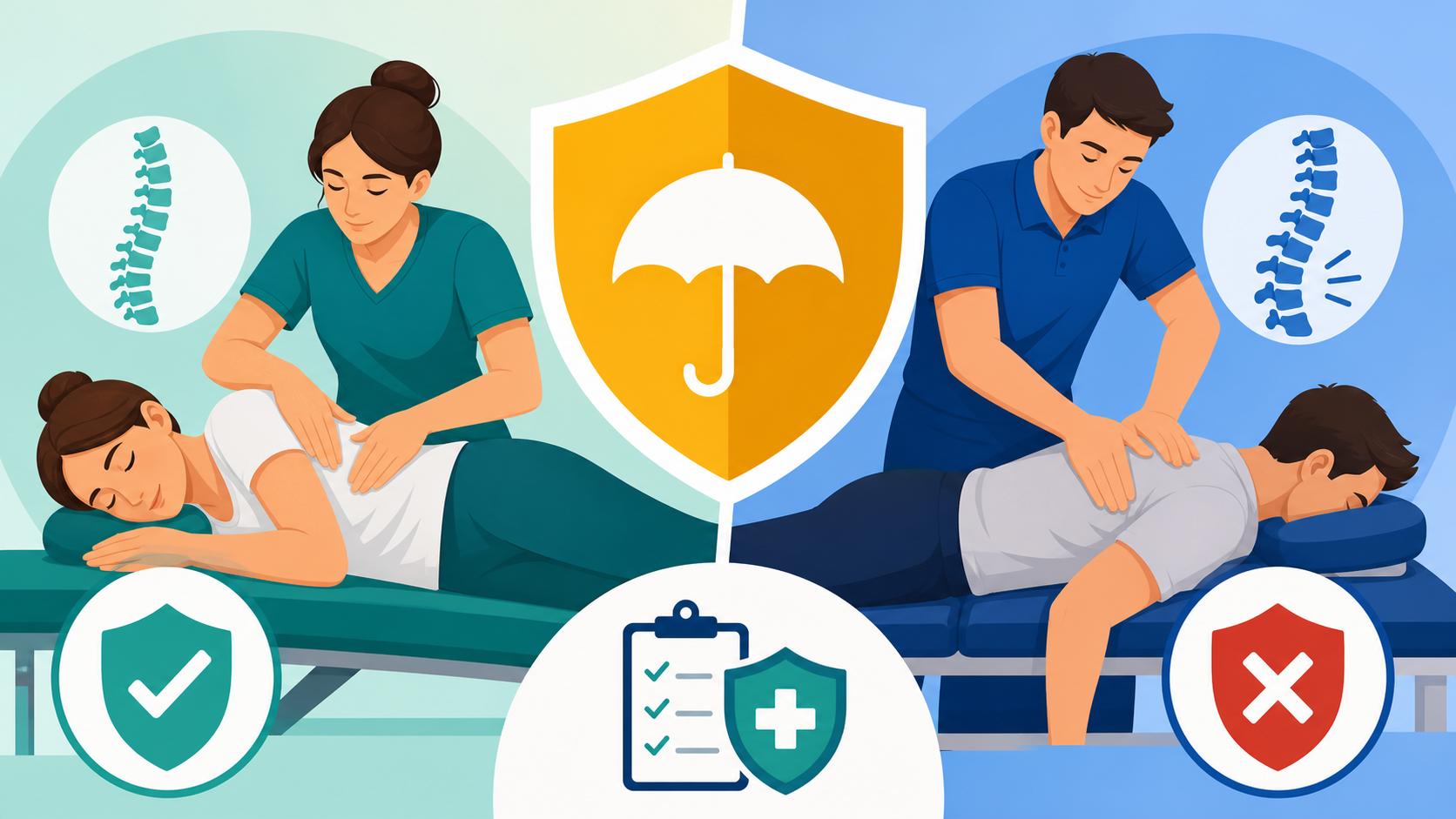
Osteopathy vs Chiropractic Care: Insurance Coverage Differences
Waking up with a locked neck after your first weekend hiking the steep trails of the Bernese Oberland is a classic expat rite of passage, but the real headache begins when you try to navigate the Swiss reimbursement system for manual therapy. I remember staring at my first invoice in Zurich, utterly confused why one specialist was covered by my base plan while another required a separate rider I hadn't signed up for yet. This guide settles the confusion between osteopathy and chiropractic care in Switzerland, ensuring you get the treatment you need without an unexpected financial sting.
The Fundamental Divide: Medical vs. Complementary Status
In Switzerland, the distinction between a chiropractor and an osteopath isn't just about their philosophy of movement; it is a legal and educational categorization that dictates exactly who pays for your session. To understand this, we have to look at how the Swiss federal government views these professions. Chiropractors are considered primary healthcare providers, much like your family doctor or a dentist. They undergo a rigorous six-year medical program at a Swiss university (typically the University of Zurich) and must pass a federal medical examination to practice. Because of this high-level medical recognition, they have the authority to take X-rays, issue prescriptions, and even sign off on sick notes (Arbeitsunfähigkeitszeugnis).
Osteopathy, while highly respected and widely used across all cantons, sits in a different legal bucket. It is categorized as a "complementary" or "alternative" medicine. While Swiss osteopaths are highly trained—holding a Master’s degree and a federal diploma from the Swiss Conference of Cantonal Health Directors (GDK)—they do not hold the same "primary medical provider" status as chiropractors. This nuance is the "north star" for your insurance claims. When you are Finding Medical Care in Switzerland: Doctors, Specialists, and Referrals, you must remember that your access to these two types of practitioners will follow two very different administrative paths.
If you are a newcomer, you might find it strange that one "back cracker" is treated as a doctor while the other is seen as a therapist. This stems from a 2009 national referendum where the Swiss public voted to include certain complementary medicines in the insurance system, but the implementation remains split. While Homeopathy on Basic Insurance: The Swiss Referendum Nuance Explained covers how some alternative methods made it into the base package, osteopathy largely remained in the realm of optional add-on coverage.
Chiropractic Care and the Mandatory Basic Insurance
If you are suffering from acute sciatica or a slipped disc, the good news is that chiropractic care is covered under your Understanding KVG/LAMal: Mandatory Basic Health Insurance Explained policy. This is the mandatory insurance that every resident must have. Because chiropractors are federally recognized medical professionals, their services are reimbursed by every single Swiss health insurance provider without the need for a special "complementary" rider.
However, "covered" does not mean "free." Your visits will still be subject to The Swiss Franchise System: How Deductibles and Copays Work. If you have chosen a high franchise, say CHF 2,500, you will be paying the full cost of those chiropractic sessions out of pocket until you hit that limit. Once your franchise is met, you still pay a 10% copay (Selbstbehalt). I learned this the hard way after a skiing accident in Graubünden; I assumed "covered" meant the insurance company would handle the bill from day one. In reality, I was paying the standard rate of about CHF 80 to CHF 120 per session until my deductible was exhausted.
Another critical factor is your specific insurance model. If you are on a "Telmed" or "Family Doctor" model, you might technically need a referral or a phone consultation before seeing a chiropractor to ensure the costs are reimbursed. However, many basic plans allow direct access to chiropractors because they are primary providers. Always double-check your policy or use an international provider like Cigna Global if you prefer a system that offers more flexibility for expatriates who move between countries and need consistent manual therapy coverage.
Osteopathy and the Supplementary Insurance Requirement
This is where many expats get caught out. If you prefer the holistic, soft-tissue focus of an osteopath, you will almost certainly need Supplementary Health Insurance (VVG): What It Covers and When to Buy It. Basic KVG insurance does not cover osteopathy. To get reimbursed, you need a "Complementary Medicine" (Ambulant) rider. Most Swiss insurers offer this for a relatively low monthly premium—often between CHF 10 and CHF 30—but the catch is that you must apply for it when you are healthy.
When you apply for VVG, you have to fill out a health questionnaire. If you already have a documented history of chronic back pain, the insurance company can (and likely will) place an "exclusion" on your policy, meaning they won't cover any osteopathy related to your back. This is why I always tell new arrivals to sign up for supplementary insurance the moment they get their B-permit, before they have a chance to visit a Swiss doctor for any aches or pains.
Even with the right supplementary insurance, reimbursement isn't always 100%. Most policies cover between 70% and 90% of the cost, often capped at a certain amount per hour (e.g., CHF 120 per hour) or a certain number of sessions per year. For example, if your osteopath in a high-rent district of Geneva charges CHF 160 per session, and your insurance caps at CHF 120, you’ll be paying that CHF 40 difference yourself. This is an important part of Out-of-Pocket Maximums: Calculating Your True Annual Healthcare Costs that many people overlook when budgeting for their first year in the country.
Comparing Costs and Coverage at a Glance
To help you decide which path to take, here is a breakdown of what you can expect when booking a session in a major Swiss hub like Zurich, Basel, or Geneva.
| Feature | Chiropractic Care | Osteopathy |
|---|---|---|
| Insurance Tier | Basic (KVG/LAMal) | Supplementary (VVG) |
| Referral Needed? | Rarely (depending on model) | Usually No (but check insurer list) |
| Average Cost | CHF 80 – CHF 130 | CHF 120 – CHF 180 |
| Standard Session | 15 – 30 Minutes | 45 – 60 Minutes |
| Reimbursement | Subject to Franchise & 10% Copay | Usually 70-90% (with cap) |
| Prescription Power | Can prescribe meds & X-rays | Cannot prescribe |
When you receive your bill, it will usually arrive in the mail a few weeks later. Understanding How to Read a Swiss Medical Bill (Rückforderungsbeleg) and Claim Refunds is vital here. For chiropractors, they use the TARMED billing system, which breaks the treatment down into minute-by-minute points. Osteopaths, on the other hand, often bill a flat rate or per 5-minute block under a different tariff (Tarif 590).
If your therapist recommends support for your recovery, such as high-quality magnesium or topical recovery creams, you might find that local pharmacies (Apotheken) are quite pricey. Many expats I know use iHerb to source their supplements at a more reasonable price point, especially for brands that aren't easily found in the Migros or Coop Vitality aisles. Just keep an eye on import limits to avoid extra customs fees.
Practical Realities of Seeking Care in Switzerland
Finding the right practitioner involves more than just checking your insurance. You want someone who speaks your language—not just literally, but someone who understands your lifestyle. If you are Finding an English-Speaking Family Doctor in Zug, you can often ask them for a recommendation for a manual therapist. The Swiss medical community is tight-knit, and your GP will know which chiropractors or osteopaths are favored by the expat community.
When you book your first appointment, the first question you should ask is: "Are you recognized by my insurance provider?" For osteopaths, they must be registered with the RME (ErfahrungsMedizinisches Register) or ASCA foundation to be eligible for reimbursement via supplementary insurance. If they aren't on these lists, your insurance will reject the claim, and you’ll be left holding the full bill. I once made the mistake of visiting a "sports therapist" who was brilliant but wasn't RME-certified; that was a CHF 150 lesson I don't want you to repeat.
Furthermore, consider the "billing philosophy" of your provider. Some clinics use the Tiers Payant system (where they bill the insurer directly), but most manual therapists in Switzerland use Tiers Garant. This means you pay the therapist first, then send the "Rückforderungsbeleg" (the claim voucher) to your insurance company to get your money back. If you are using a global policy like Cigna Global, the process might be slightly different, often involving an app-based claim system that can be much faster than the traditional Swiss paper mail route.
Which One Should You Choose?
The choice between osteopathy and chiropractic care often comes down to the nature of your injury. If you have a sudden, sharp "mechanical" issue—like your back "going out" while lifting a heavy box of IKEA furniture—a chiropractor is often the most efficient choice. They can quickly assess the bone and joint alignment and, if necessary, use their medical status to order an MRI or X-ray to rule out serious structural damage.
However, if your pain is more chronic, related to posture, or feels like a mix of muscle tension and joint stiffness, osteopathy is often the preferred route for expats in Switzerland. Osteopaths spend more time (usually 45 to 60 minutes) working on the soft tissues and looking at how different parts of your body—including your digestive system and breathing—might be contributing to your back pain. It is a more "slow medicine" approach that many find comforting in the high-stress environment of a new job in a new country.
Regardless of which you choose, don't forget to support your body's physical recovery. Beyond the adjustments and manipulations, staying hydrated and managing inflammation is key. I frequently order my post-treatment supplies like Arnica gel or Turmeric supplements from iHerb because the selection is vast compared to the local selection. Combining professional manual therapy with good at-home care and the right insurance coverage is the only way to ensure your Swiss adventure stays pain-free.
Disclaimer
This article is for informational purposes only and does not constitute professional medical or financial advice. Swiss insurance laws and reimbursement rates are subject to annual changes. Always verify your specific coverage details with your insurance provider before beginning any course of treatment. Prices and cantonal regulations may vary.