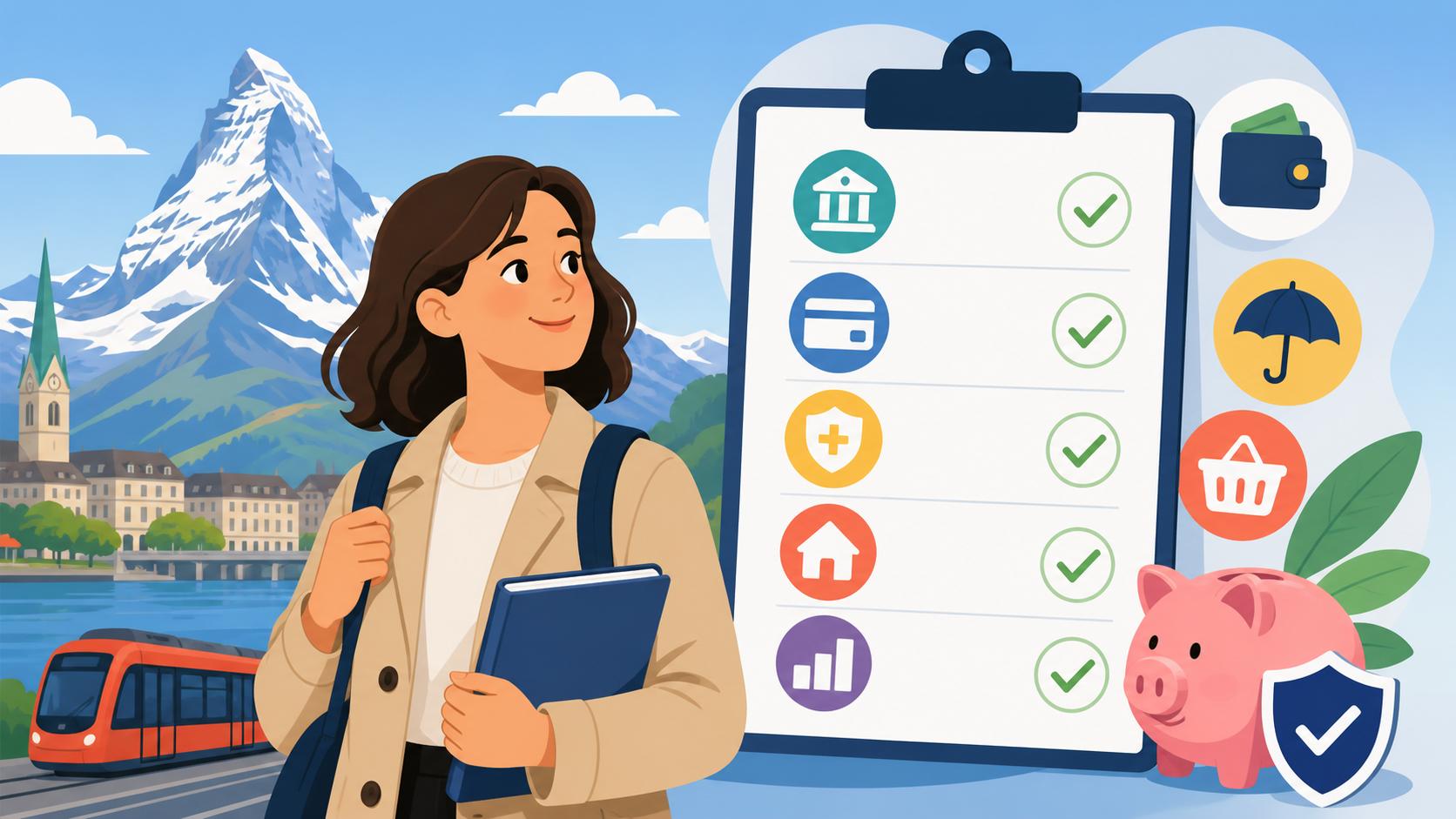
Financial Checklist for Your First 30 Days as an Expat in Switzerland
Moving to Switzerland often feels like being handed a complex mechanical watch with no instructions while someone charges you fifteen francs for a cup of tap water. I remember standing in a Zurich Kreisbüro during my first week, clutching a mountain of paperwork and feeling the "sticker shock" settle into my bones. This guide simplifies that initial chaos into a clear, actionable financial checklist for your first thirty days.
Phase One: The Administrative Foundation and Immediate Liquidity
Your first week in Switzerland is a race against the calendar and the legendary Swiss bureaucracy. Before you can even think about long-term investing or buying a car, you must establish your legal and financial presence. The Swiss system operates on the assumption that everything is registered, documented, and verified. If you miss these early steps, you will find yourself locked out of essential services like mobile contracts or apartment rentals.
The very first thing you must do—ideally within fourteen days of landing—is visit your local residents' registration office. In German-speaking cantons, this is the Einwohnerkontrolle or Kreisbüro; in French-speaking areas, it is the Office de la Population. This step is non-negotiable because your registration certificate is the "golden key" to opening a bank account. I learned the hard way that without that piece of paper, most traditional banks won't even let you past the lobby. For more on this, check out Registering Your Address at the Kreisbüro Within 14 Days of Moving.
Once registered, you will eventually receive your social security number. This thirteen-digit code is used for everything from your pension to your health insurance. Understanding the structure of this number early on will help you navigate payroll discussions with your HR department. You can find more details in the guide on How to Find Your 13-Digit Swiss AHV Social Security Number.
Moving Your Initial Capital
While you wait for your first Swiss salary, you will likely need to bring in funds from abroad to cover your rental deposit and initial living costs. Using a traditional bank for an international transfer is a mistake I made exactly once; the hidden exchange rate margins are eye-watering. Instead, use a service like Wise to move your initial savings into Switzerland. Wise provides the mid-market exchange rate and transparent fees, which is crucial when you are transferring several thousand francs for a rental deposit.
Phase Two: Banking, Payments, and the Cashless Ecosystem
By the end of your second week, you should have your local banking situation sorted. Switzerland is rapidly moving toward a cashless society, but it has its own unique quirks. You have three main paths: the massive national banks (UBS), the cantonal banks (like ZKB or BCV), and the neobanks.
Choosing Your Local Bank
If you are a US citizen, your options will be limited due to FATCA regulations, often leaving you with UBS or PostFinance as your only viable choices. For everyone else, cantonal banks offer a sense of local security, but neobanks like Neon or Yuh are becoming the go-to for expats due to their English interfaces and low fees. While you are setting up your day-to-day banking, you should also consider where to keep your emergency fund. Trade Republic has become a popular option for residents here to park cash, as they often offer competitive interest rates on uninvested capital that beat the 0.01% you might get at a traditional Swiss savings account.
The Power of TWINT
You cannot survive financially in Switzerland without TWINT. It is the national digital payment app that connects directly to your bank account. Whether you are paying for a coffee, splitting a dinner bill, or buying farm-fresh eggs from a self-service "Honesty Shop" in the Alps, TWINT is the standard. I’ve seen expats struggle for months trying to use Apple Pay everywhere, only to realize that the local parking meter or small boutique only accepts TWINT. For a step-by-step setup, see How to Set Up and Use the TWINT Payment App as an Expat.
Comparing Initial Financial Tools
The table below compares the typical tools an expat uses in their first month to manage liquidity and transfers.
| Tool | Primary Use | Best For | Expat Pro-Tip |
|---|---|---|---|
| Wise | International Transfers | Moving initial savings to CHF | Avoids high bank FX margins |
| Traditional Bank | Salary & Rent | Getting a "Lease Friendly" status | Required for many rental deposits |
| Trade Republic | Savings/Investing | Holding euro/CHF cash for interest | Great for uninvested "move-in" funds |
| TWINT | Local Payments | Daily spending and peer-to-peer | Connect it to your local bank ASAP |
| Binance | Cryptocurrency | Managing digital assets | Ensure you declare assets for wealth tax |
Phase Three: Insurance and Mandatory Protection
The third week is usually when the "bill fatigue" sets in. In Switzerland, insurance isn't just a suggestion; it’s a legal requirement that is strictly enforced. You have a ninety-day window to secure health insurance, and it is backdated to the day you arrived. This means if you wait three months to sign up, you will receive a massive bill for the previous ninety days of premiums.
Navigating the Health Insurance Maze
The basic insurance (KVG/LAMal) is identical across all providers, but the prices vary wildly by canton and by the "Franchise" (deductible) you choose. I remember being baffled by the choice between a CHF 300 or a CHF 2,500 deductible. As a rule of thumb, if you are healthy and don't expect to visit the doctor often, the high deductible is almost always the better financial move. For a deep dive into this, read Is Basic Health Insurance (KVG) Mandatory for Expats? A Plain-English Guide and How to Choose the Right Deductible (Franchise) for Your First Year.
Liability and Household Insurance
While not legally mandated by the federal government, private liability insurance (Privathaftpflicht) is effectively mandatory if you want to rent an apartment. Most landlords will not hand over the keys without proof of coverage. This insurance protects you if you accidentally damage the apartment or, more commonly, if you lose the high-security keys to your building, which can cost thousands to replace. You can learn why this is so critical in Why Almost Every Swiss Landlord Requires Privathaftpflicht Insurance.
Phase Four: Budgeting for the "Swiss Tax" and Lifestyle Costs
By the end of your first month, you will likely have received your first payslip. If you are on a B Permit, you will notice a significant chunk taken out for "Quellensteuer" or withholding tax. This is a pay-as-you-go system for foreigners, and while it feels painful, it prevents you from having a massive tax bill at the end of the year. To understand how this is calculated, see Why Quellensteuer is Deducted Monthly from B Permit Holders.
Transportation and Subscriptions
One of the smartest financial moves you can make in your first thirty days is buying an SBB Half-Fare travelcard. For about CHF 190 per year, every train, bus, and boat ticket you buy becomes 50% cheaper. It pays for itself in just two or three trips between major cities. I tell every new arrival that the "Halbtax" is the most important card in their wallet after their residence permit. Check out the details in The Half-Fare Travelcard (Halbtax): The Must-Have Pass for Swiss Residents.
The Hidden Fees
Don't forget to budget for the Serafe bill. This is the mandatory radio and TV license fee that every household must pay, regardless of whether you own a television. It’s one of those "welcome to Switzerland" costs that catches everyone off guard when the invoice arrives in the mail. You can find more about how to pay it and what it covers in The Serafe Fee 2026: Paying the Mandatory CHF 335 Media Tax.
Thinking About the Future
Once the dust settles on your move, you may want to look into more sophisticated financial setups. If you are interested in the digital asset space, Binance is accessible in Switzerland, though you must remember that Swiss authorities require you to declare all global assets—including crypto—for wealth tax purposes once you reach certain thresholds.
As you transition from "surviving" to "thriving," you'll also want to look into the Three-Pillar pension system. In your first month, you are already contributing to the first and second pillars through your salary. By the end of the year, you should look into opening a 3a account to save on taxes. For those who want to start investing their savings early, Trade Republic offers an easy-to-use platform for ETFs and stocks that is popular with the expat community here for its low-cost structure.
Summary of Your First 30 Days
The first month in Switzerland is undeniably expensive and administratively heavy. However, if you follow this checklist—registering immediately, using Wise for your initial transfers, setting up TWINT, and choosing the right insurance deductible—you will find that the system begins to work for you rather than against you. Switzerland is a country that rewards those who follow the rules and stay organized. Once you have these foundations in place, you can finally stop worrying about paperwork and start enjoying the incredible quality of life this country offers.
Financial Checklist for Your First 30 Days as an Expat in Switzerland Disclaimer
This guide is intended for informational purposes only and does not constitute professional financial, legal, or tax advice. Switzerland's laws and regulations, particularly regarding taxes (Quellensteuer), insurance (KVG), and immigration, can change frequently and vary significantly between cantons. While every effort has been made to ensure the accuracy of the information provided, you should always consult with official government sources or a certified financial advisor before making significant financial decisions. The mention of specific brands such as Wise, Trade Republic, or Binance does not constitute an endorsement; users should perform their own due diligence regarding fees, terms of service, and regulatory compliance.