Permit Consequences of Long Absences From Switzerland
It's a common expat fear, isn't it? You've built a life here in Switzerland, navigated the endless paperwork, and finally feel settled, but then life happens. Maybe a family emergency calls you back home for an extended period, or your job offers an exciting international secondment. The question that immediately pops up is: "What about my Swiss permit?" It's a valid and deeply worrying thought, as the rules around long absences from Switzerland and their impact on your residency status can be incredibly opaque and, frankly, terrifying. This guide is here to shed some light on those rules, explain the permit consequences, and give you realistic, actionable advice on how to protect your hard-earned right to live in this beautiful country.
Understanding the "Loss of Right" Rule for Swiss Residence Permits
Navigating the Swiss permit system can feel like deciphering an ancient scroll written in three different languages, especially when it comes to the less common scenarios like extended absences. The federal law on foreigners and integration (FNIA), specifically Article 61, lays down the basic principle: your residence permit (L or B) can, under certain conditions, expire if you spend too much time outside of Switzerland. This isn't just a casual guideline; it's a critical rule that can lead to the revocation of your permit if not handled correctly. It’s important to remember that Swiss authorities track your physical presence quite meticulously.
The 6-Month General Rule for B and L Permits
For most B and L permit holders, the golden rule of thumb, or perhaps the 'six-month sword hanging over your head,' is this: if you leave Switzerland for more than six consecutive months, your permit is generally considered expired, and your right to reside here is effectively extinguished. This isn't necessarily about proving you have a new permanent residence elsewhere; it's about the lack of continuous physical presence here in Switzerland.
Let's imagine a scenario: You're an expat in Zurich with a B permit, and your elderly parent falls seriously ill back in your home country. You immediately pack your bags, intending to be away for maybe three or four months to help with their recovery. However, complications arise, and you end up staying for eight months. When you attempt to return to Switzerland, you could face a very nasty surprise at the border or when trying to re-register at your local Gemeinde (municipality). The Cantonal Migration Office might inform you that your B permit is no longer valid because you exceeded the six-month limit. Your employer, who perhaps assumed everything was fine, would then have to go through the arduous process of applying for a new permit for you, and there's no guarantee it would be granted, especially if you're a non-EU/EFTA national subject to quotas. This situation can be incredibly stressful and is entirely avoidable with proper planning.
It’s crucial to understand that this rule applies to consecutive months. Short trips back to Switzerland during your absence don't necessarily reset the clock if the primary center of your life isn't considered to be Switzerland. The authorities aren't just looking at individual trips; they're looking at the overall pattern of your stay. If you're consistently spending more time abroad than in Switzerland, even with short visits back, you could be risking your permit status.
Special Cases: Extending the Absence Period
Now, before you panic, there are exceptions and avenues to explore if you know you'll be gone for longer than six months. Switzerland isn't completely rigid, but it demands proactivity. The key here is to apply for an extension before you leave. You cannot simply disappear and hope for the best; that's a surefire way to lose your permit.
To apply for an extension, you need to contact your Cantonal Migration Office (e.g., Migrationsamt Zürich, Office Cantonal de la Population et des Migrations Genève) well in advance of your planned departure. They are the gatekeepers, and their discretion is paramount. You'll need to provide compelling reasons for your extended absence, and these typically fall into a few categories:
- Job Secondment: If your Swiss employer is sending you abroad for a temporary project or assignment, this is usually a strong justification. You'll need an official letter from your company outlining the duration and purpose of the secondment, confirming your continued employment in Switzerland and your intent to return.
- Long-term Illness or Care: If you or a close family member requires long-term medical treatment abroad, or if you need to care for a seriously ill relative, this can be accepted. Medical certificates and clear explanations will be necessary.
- Education or Study Abroad: If you're pursuing a degree or specific training program outside Switzerland that is relevant to your career or personal development, and you intend to return, this might also be a valid reason. You'll need enrollment confirmations and details of the program.
The application process involves submitting a written request, often accompanied by supporting documents and a fee. The Cantonal Migration Office will then assess your case. They want to be convinced that your absence is temporary and that Switzerland remains the center of your life. They need to believe you genuinely intend to return and resume your life here. It's not a guaranteed process, and each canton may have slight variations in their interpretation and required documentation. Remember, you might also need to consider your Health Insurance for International Students: KVG Exemptions and Private Options if you're leaving for studies.
The Nuances of the C Permit Permanent Residency and Absences
Ah, the coveted C permit, the "Niederlassungsbewilligung." This permit signifies permanent residency, offering significantly more freedom than the L or B permits. With greater freedom comes different, but still important, rules regarding absences. While you're no longer bound by the strict six-month rule, you still can't just vanish indefinitely.
"Freezing" Your C Permit Aufrechterhaltung des Niederlassungsrechts
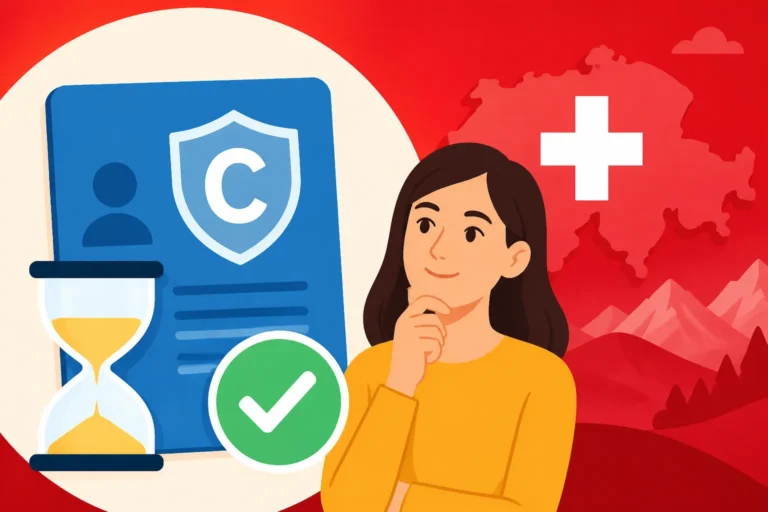
One of the most significant advantages of holding a C permit is the ability to "freeze" your permit, formally known as Aufrechterhaltung des Niederlassungsrechts. This is a unique privilege that allows you to retain your permanent residency status even if you intend to leave Switzerland for an extended period, up to a maximum of four years. This is a game-changer for many expats who might need to work abroad temporarily, care for family, or undertake a long sabbatical without the fear of losing their hard-earned C permit.
To freeze your C permit, you must apply before your departure to your Cantonal Migration Office. The application will require you to demonstrate a clear intention to return to Switzerland and explain the reasons for your absence. Common acceptable reasons include:
- Temporary Work Assignment Abroad: Many multinational companies based in Switzerland send their employees on international assignments. This is a perfectly valid reason.
- Long-Term Education/Training: Similar to B permit holders, if you're pursuing studies abroad with a clear plan to return, this can be accepted.
- Family Reasons: Caring for ill parents or other close relatives in your home country can also be a justifiable cause.
- Sabbatical: Taking a break from work to travel or pursue personal projects, as long as you can show the intention to return to Switzerland afterward.
When you apply, you'll need to fill out forms, provide supporting documents (like employment contracts for assignments, medical certificates, or university enrollment letters), and pay a fee. This fee can vary by canton, but generally, expect it to be a few hundred francs. The authorities will review your case, and if approved, your C permit will be officially "frozen" for the specified duration, typically up to four years.
It’s crucial to understand that while your C permit is frozen, you cannot claim social welfare benefits in Switzerland, nor are you generally subject to Swiss taxation (unless you retain significant economic ties or property). It’s essentially a pause button on your Swiss residency. When the period ends, you simply return and reactivate your residency by re-registering with your Gemeinde. This entire process is covered in more detail in our dedicated guide on Freezing Your C Permit (Aufrechterhaltung).
When a C Permit Can Be Revoked Due to Absence
Even with the flexibility of freezing, a C permit is not entirely immune to revocation due to absence. If you exceed the four-year limit without having applied for and received a further extension (which is rare and granted only in truly exceptional circumstances), or if you simply leave without applying to freeze your permit, your C permit will be automatically revoked.
Beyond simply overstaying your permitted absence, a C permit can also be revoked if you:
- Abandon Your Ties to Switzerland: If it becomes clear that you have established the center of your life elsewhere, even if you pop back every now and then, the authorities might deem your C permit abandoned. This could involve, for example, registering your primary residence, employment, and children's schooling in another country for an extended period without a formal freeze.
- Claim Social Welfare While Absent: While highly unlikely for someone with a frozen permit, if you were to, for example, somehow claim Swiss social welfare benefits while residing abroad, this could lead to immediate revocation, as it indicates a lack of integration and a burden on the system.
- Commit Serious Crimes Abroad: Although less directly related to absence, serious criminal offenses committed outside Switzerland could also lead to revocation upon detection, regardless of your permit status.
The process of revocation is not taken lightly, but it does happen. If your C permit is revoked, regaining it is incredibly difficult and often requires starting from scratch, typically by securing a new job offer and going through the B permit application process again, subject to quotas and cantonal approval. This can be a devastating blow, undoing years of effort to establish yourself in Switzerland.
Practical Steps Before and During Long Absences
Dealing with an extended absence from Switzerland requires a meticulously organized approach, both administratively and logistically. You can't just wing it; the Swiss system demands adherence to rules, and proactive communication is key.
Pre-Departure Checklist for Expats
Before you even think about boarding that plane for a prolonged period, you need a solid plan. Here's a checklist of things you absolutely must consider:
- Contact the Cantonal Migration Office: This is the most crucial step. Whether you have an L, B, or C permit, inform them of your intentions. For L/B permits, request an extension if you anticipate being away for more than six months. For C permits, apply for the Aufrechterhaltung. Get everything in writing and keep copies. Don't rely on verbal assurances.
- Inform Your Employer/Educational Institution: Your employer needs to know your plans, especially if your absence is work-related or if they need to manage your position. If you're a student, inform your university.
- Manage Your Housing:
- Subletting: If you're retaining your apartment, understand the rules around Subletting Your Apartment (Untermiete): Navigating Swiss Legal Requirements in Switzerland. Your landlord must agree, and there are strict conditions.
- Breaking Lease: If you're giving up your apartment, you'll need to follow the proper Swiss Lease Contracts: Notice Periods and Termination Dates Explained and possibly find a replacement tenant (Nachmieter).
- Abmeldung: If you are leaving Switzerland entirely and not freezing your C permit, you must officially deregister (Abmeldung) from your municipality. This is critical for tax purposes and to avoid being liable for things like the Serafe fee. Our guide on the Abmeldung Process at City Hall is invaluable here.
- Health Insurance: Your mandatory Swiss health insurance (KVG) is typically tied to your Swiss residency. If you are leaving for an extended period, especially outside the EU/EFTA, your KVG might not cover you adequately, or you might even be able to suspend it if you officially deregister. You will need international health insurance. Brands like Cigna Global specialize in comprehensive international coverage for expats, which is essential if you're going to be abroad for an extended period. Don't risk being uninsured!
- Finances and Mail:
- Bank Account: Decide if you're keeping your Swiss bank account open. Many expats do, but be aware of any fees for non-resident accounts.
- Mail Forwarding: Set up mail forwarding with Die Post to ensure you don't miss important documents.
- Moving Logistics: If you're taking a lot of belongings, particularly furniture, for your temporary move, consider a reputable international moving company. Services like Sirelo can help you compare quotes from various movers, ensuring your possessions are handled efficiently and reach your temporary destination safely. Planning this well in advance can save you a lot of headaches.
- Other Insurances: Review your Mandatory and Optional Insurance: Liability, Legal, and Household. Some might be unnecessary if you're not physically present, while others (like private liability if you're subletting) remain crucial.
The more thoroughly you prepare, the smoother your absence and return will be. Cutting corners now will almost certainly lead to bigger problems later.
Maintaining Ties to Switzerland
Even if you've done all the paperwork to extend your absence or freeze your C permit, demonstrating a continuous "intent to return" and maintaining ties to Switzerland is important. The authorities don't want to feel like you've simply taken advantage of the system; they want to see that your connection to Switzerland is genuine.
Here's how you can maintain those ties:
- Keep a Swiss Bank Account: This is a simple, tangible link. Even if it's just for minor transactions or receiving certain payments, it shows continuity.
- Maintain a Registered Address (if possible): If you're not officially deregistering, keeping a registered address in Switzerland (even if it's with a trusted friend or family member for mail) can be helpful, although you must be careful about the legal implications of this.
- Property Ownership: If you own property in Switzerland, that's a very strong tie.
- Local Memberships: Retaining memberships in Swiss clubs, associations, or even a gym can subtly show your continued connection and intention to return to your local life.
- Visits to Switzerland: Even during an approved extended absence, making occasional visits back to Switzerland reinforces your intention to return permanently.
- Taxation and Social Security: While abroad, understand how your absence impacts your Swiss tax residency and social security contributions. If you continue to work for a Swiss employer while temporarily abroad, you might still be subject to certain Swiss social security contributions (AHV/IV/ALV), which demonstrates continued ties. Consult with a tax advisor to understand the implications for Swiss Taxes Explained: Federal, Cantonal, and Municipal Rates.
The bottom line is to avoid any actions that could suggest you've definitively abandoned Switzerland as your home. The more evidence you have that you consider Switzerland your base and intend to return, the stronger your position will be when your extended absence comes to an end and you officially re-establish yourself.
Specific Scenarios and What to Watch Out For
While the general rules provide a framework, individual permit types and life circumstances can add layers of complexity. It's vital to consider your specific situation to avoid unintended consequences.
Cross-Border Commuters G Permit and Absences
If you hold a G permit, your situation is quite different from L, B, or C permit holders. The G permit is specifically for The G Permit (Cross-Border Commuter): Complete Guide for Frontier Workers, meaning you reside in a neighboring country (France, Germany, Italy, Austria, Liechtenstein) and commute to work in Switzerland. The very definition of this permit requires you to return to your place of residence abroad at least once a week.
Therefore, for G permit holders, a "long absence from Switzerland" isn't about leaving Switzerland for months on end. Instead, the risk lies in not regularly returning to your foreign residence. If Swiss authorities find that you are actually spending significant time living in Switzerland (e.g., staying in a flat here during the week and only going home once a month, or less), your G permit could be revoked, and you might be required to apply for a full Swiss residence permit, which comes with different eligibility criteria and quotas.
Conversely, if you are absent from your Swiss workplace for an extended period (e.g., sick leave, sabbatical, secondment) but still maintain your residence in the neighboring country and your employment contract in Switzerland, your G permit status should be stable, as long as you can demonstrate the intention to resume your regular commute. Always check with your Cantonal Migration Office if your work absence will also affect your actual presence in Switzerland.
Students and Researchers on L/B Permits
For international students and researchers, the rules around absences can be particularly tricky. Many academic programs involve exchange semesters, field research abroad, or internships outside Switzerland.
If you are a student with an L or B permit and plan an exchange semester or research trip that will take you away for more than six months, you must apply for an extension of your absence from the Cantonal Migration Office, just like any other L/B permit holder. Your university or research institution will typically be able to provide supporting letters detailing your program's requirements.
A crucial point for students is that the time spent on an L or B permit for study purposes may not always count towards the residency period required for a C permit or naturalization. Frequent or long absences, even if approved, can further complicate your eligibility for higher-level permits down the line. It's worth remembering that your Residence Permits in Switzerland: L, B, C, and G Permits Explained have distinct rules, and students often have specific considerations.
The Risk of Unintended Permit Loss
The most heartbreaking stories I've heard from expats often involve losing their permit due to simply not understanding or misinterpreting the rules. Life happens, and sometimes a planned short trip turns into a longer one without warning.
Imagine this: You go home for a three-month summer break, but then a family crisis extends your stay by another two months, and before you know it, you've been gone for 7-8 months. You genuinely intended to come back, but you didn't proactively inform the authorities or apply for an extension. At this point, your permit might already be considered revoked, and the burden of proof is on you to explain why. Re-entering Switzerland might be denied, and your hopes of continuing your life here shattered.
The risk of unintended permit loss is highest for B permit holders. Unlike C permit holders who can freeze their status, B permit holders have very little flexibility once the six-month clock starts ticking. The best advice is always to:
- Be Proactive: If there's even a slight chance your absence will exceed six months, contact your Cantonal Migration Office before you leave.
- Document Everything: Keep copies of all correspondence, applications, and approvals regarding your permit and absences.
- Seek Clarification: If you're unsure, ask the Cantonal Migration Office. They are the ultimate authority. Don't rely on anecdotes from expat forums or friends (even well-meaning ones), as rules can change and individual cases vary greatly.
- Understand Your Permit: Re-read the conditions of your The Swiss B Permit: Eligibility, Renewal, and Restrictions or The Swiss C Permit (Permanent Residency): Fast-Track and Standard Routes and what it means for long absences.
- Be Aware of Renewal Dates: Keep an eye on your Renewing Your Swiss Residence Permit: The Verfallanzeige Form Explained even if you're away.
If you find yourself in a situation where you've unintentionally overstayed and are worried about your permit, seek legal advice from an immigration specialist immediately. While it might be an uphill battle, there could be specific circumstances that allow for an appeal or a reapplication with a stronger case.
Here’s a quick overview of how long absences generally impact different permit types:
| Permit Type | General Absence Limit (without application) | How to Extend/Protect Status | Maximum Extension (typically) | Key Consequence of Exceeding Limit |
|---|---|---|---|---|
| L Permit (Short-term) | 6 months | Apply for extension with Cantonal Migration Office before leaving | Case-by-case, usually linked to reason | Permit expiry/revocation, must reapply |
| B Permit (Residence) | 6 months | Apply for extension with Cantonal Migration Office before leaving | Case-by-case, usually linked to reason | Permit expiry/revocation, must reapply |
| C Permit (Permanent) | No automatic expiry, but 'loss of right' after 6 years if no contact or official absence | Apply for "Aufrechterhaltung des Niederlassungsrechts" before leaving | 4 years (can be extended in exceptional cases) | Permit revocation, difficult to regain status |
| G Permit (Commuter) | Must return to foreign residence weekly/daily | Not applicable; focus is on not residing in Switzerland | N/A | Permit revocation, deemed Swiss resident |
Disclaimer
This article is for general informational purposes only and does not constitute professional advice. Laws, prices and regulations vary by location and change over time. Consult a qualified professional for guidance on your specific situation.