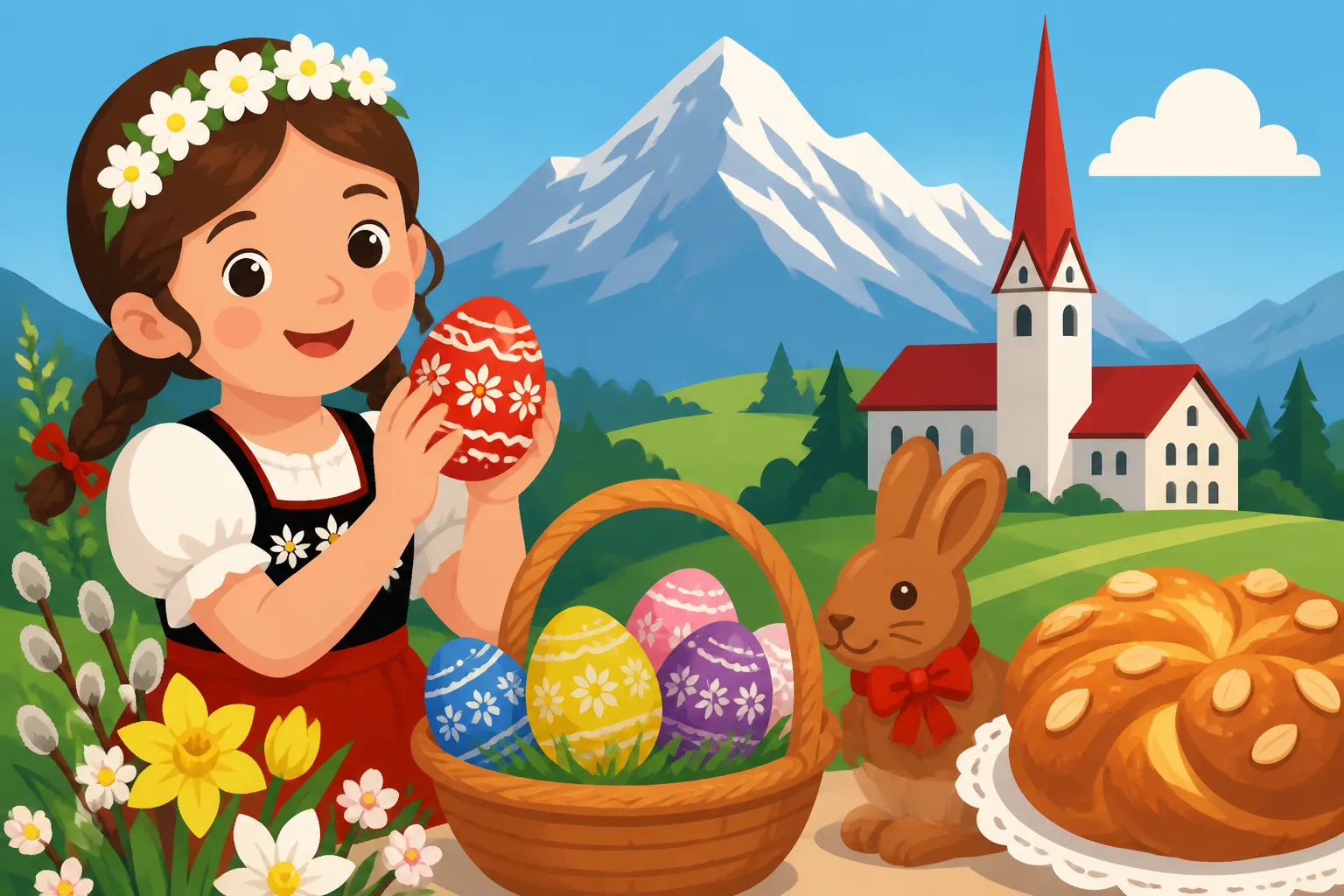
How the Swiss Celebrate Easter: Traditions and Treats
When you first arrive in Switzerland, holidays often bring a mix of anticipation and confusion. Easter is no exception – it's a time for quiet reflection, family gatherings, and of course, plenty of delicious food, but it might not look exactly like the Easters you've experienced before. This guide will walk you through the charming, sometimes quirky, ways the Swiss celebrate Easter, offering practical tips and a peek into their unique traditions and irresistible treats.
The Unique Flavor of Swiss Easter: More Than Just Chocolate Bunnies
For many expats, Easter might conjure images of elaborate parades, specific religious services, or widespread commercial fanfare. In Switzerland, while the sentiment of renewal and family remains strong, the expression is often more subtle, deeply rooted in local customs and a calendar heavily influenced by cantonal preferences. It’s a time when spring truly begins to assert itself, shaking off the last vestiges of winter, and life slows down, especially for those precious few days around the holiday.
Understanding the Cantonal Holiday Kaleidoscope
One of the first things you'll quickly learn about Swiss holidays is that what applies in one canton might not apply in another. Easter is a prime example of this delightful, yet sometimes frustrating, cantonal autonomy. While Easter Sunday and Easter Monday are generally federal public holidays, Good Friday, or Karfreitag, isn't universally observed. In the German-speaking cantons and Ticino, Good Friday is a public holiday, meaning most shops and offices will be closed. However, head over to the French-speaking parts of Romandie, and it's largely a regular working day, though many businesses might choose to close or offer reduced hours. This patchwork means that planning your shopping or travel around this period requires a bit of local knowledge. For a broader overview of how these days off work, you might want to read our guide on Public Holidays in Switzerland: National and Cantonal Days Off.
This varied approach can lead to some logistical headaches if you're not prepared. Imagine trying to pick up last-minute groceries only to find everything shuttered because you crossed a cantonal border into a "Good Friday" zone. It's not uncommon to see families making cross-canton day trips to simply find an open supermarket! Most major retailers like Coop and Migros will clearly post their holiday hours, but it’s always wise to check their websites a few days in advance.
The Gentle Shift from Winter to Spring Festivities
Easter in Switzerland also marks a significant cultural shift from the crisp, often snow-laden winter months to the vibrant awakening of spring. You'll see windows adorned with delicate paper cut-outs of bunnies (Osterhasen), chicks (Küken), and colorful eggs (Ostereier). Local bakeries will start showcasing their Osterfladen and shelves will be piled high with chocolate creations. The air, especially in the valleys, begins to lose its winter bite, making it a perfect time for family strolls and enjoying the budding nature.
The lead-up to Easter isn't usually marked by overt public celebrations, but rather a quiet, familial anticipation. The week before, known as Karwoche (Holy Week), is when many families start their preparations: dyeing eggs, baking, and getting the house ready for visitors. It's less about grand spectacles and more about intimate traditions passed down through generations.
Culinary Delights: Savory and Sweet Easter Treats
No Swiss holiday is complete without an abundance of delightful food, and Easter is certainly no exception. From traditional breads and pastries to rich chocolate, the Swiss know how to make the occasion truly mouth-watering. You'll find a beautiful blend of classic European Easter fare alongside uniquely Swiss interpretations.
The Irresistible World of Swiss Easter Bakes and Confections
Let’s start with the star of many Swiss Easter tables: the Osterfladen. This is a sweet, round cake, often made with a rich yeast dough and filled with a creamy mixture of ground almonds, semolina, and raisins, sometimes topped with a delicate cross. It’s light, subtly sweet, and absolutely addictive with a morning coffee. You'll find these in every bakery, from your local Beck to larger chains like Migros and Coop. Many expats find them to be a comforting, homely treat that quickly becomes a personal Easter staple. If you’re a fan of Swiss baked goods, you’ll definitely want to explore the wider world of Swiss Bakery Culture: Gipfeli, Zopf, and Regional Breads.
Then, of course, there’s chocolate. Swiss chocolate isn't just a national pride; it's an art form, and at Easter, it truly shines. Beyond the mass-produced bunnies, head to local Confiserien for artisanal chocolate eggs, hollow bunnies filled with pralines, and intricately decorated creations that are almost too beautiful to eat. Each region and even each town might have its own specialty. Don't be surprised to see chocolate hens, lambs, or even more whimsical figures. Visiting a chocolate factory, such as the Lindt Home of Chocolate, can be a fantastic, immersive experience and a great way to understand the craft, and you can learn more about this in our article on Swiss Chocolate: Factory Tours, Tastings, and the Best Brands.
And let's not forget the humble, yet essential, colored eggs. Dying eggs is a deeply ingrained tradition, often done with natural dyes or simple kits. These brightly colored eggs are not just for display; they’re central to many Easter games.
Here’s a quick overview of some essential Swiss Easter treats:
| Treat Category | Description | Typical Serving Time |
|---|---|---|
| Osterfladen | Sweet, round yeast cake with an almond/semolina filling, often with a cross motif. | Easter Sunday breakfast/brunch |
| Chocolate Bunnies | Various sizes and qualities, from mass-produced to artisanal, often hollow or filled. | Throughout Easter weekend |
| Colored Eggs | Hard-boiled eggs, dyed in vibrant colors, used for decoration and traditional games. | Easter Sunday/Monday |
| Carrot Cake | While not exclusive to Easter, Rüeblikuchen is a very popular spring bake, often shaped like a carrot. | Easter Sunday dessert |
| Easter Lamb | A roast lamb is a common main course for the festive Easter meal. | Easter Sunday lunch/dinner |
| Birnenbrot | A sweet bread with dried fruit, more common around Christmas but sometimes found at Easter. | Any time, as a snack |
Savory Feasts and Family Gatherings
Beyond the sweets, Easter Sunday is typically when families gather for a festive meal. Roast lamb is a very common main course, symbolizing purity and new beginnings. Sides often include seasonal vegetables like asparagus, which begins to appear in Swiss markets around this time, and hearty potato dishes. The meal is usually long and leisurely, accompanied by good Swiss wine and plenty of conversation.
For many Swiss families, especially those with children, the actual egg hunting usually takes place on Easter Sunday morning. Parents or the "Easter Bunny" (yes, he's a thing here too!) hide chocolate eggs and small treats around the house or garden, leading to much excitement. These are not always huge, extravagant affairs; often, it’s a simple, joyful moment for the kids. If you're planning your grocery run, keep in mind that supermarkets will be closed on Easter Sunday and Monday, so plan ahead! Our guide to Grocery Shopping: Coop, Migros, Aldi, Lidl, and Denner Compared might be helpful for navigating where to stock up.
Engaging with Swiss Easter Traditions: From Egg Hunts to Local Games
Beyond the food and the quiet family gatherings, Switzerland has a charming array of unique Easter traditions, many of which are regional. As an expat, participating in or simply observing these can be a wonderful way to connect with the local culture and create some truly memorable experiences.
The Joy of Eiertütschen and Zwänzgerle
The most widely observed and beloved Easter game is undoubtedly Eiertütschen, or "egg tapping." This is a simple, yet competitive, game played typically on Easter Sunday. Each person picks a hard-boiled, colored egg. Two players tap the pointy ends of their eggs together, then switch to the blunt ends. The goal? To crack your opponent's egg while keeping yours intact. The person whose egg remains unbroken wins the opponent’s cracked egg. It's a surprisingly intense and fun activity that often draws laughter and friendly rivalry around the breakfast table.
In some parts of Switzerland, particularly Zurich, you might encounter Zwänzgerle on Easter Monday. This unique game involves adults trying to flip a 20-centime coin (Zwanziger) onto a hard-boiled egg held by a child. If the coin stays lodged in the eggshell, the adult keeps the coin and the egg. If the coin falls off, the child keeps both the egg and the coin. The trick for the children is to hold the egg firmly enough that the coin bounces off. It's a delightful spectacle, often played outdoors in public squares, and it's a fantastic example of a hyper-local Swiss tradition.
The Symbolism of the Easter Hare (Osterhase)
Just like in many other Western cultures, the Easter Bunny (or rather, Easter Hare, Osterhase) is the bringer of eggs and treats for children. This mythological figure is deeply embedded in Swiss Easter folklore. Children are told that the Osterhase hides the eggs, and their excitement on Easter morning as they search for these treasures is palpable. This tradition emphasizes the themes of fertility and new life associated with spring.
While large, organized public egg hunts aren't as prevalent as in some other countries, many local communities, churches, or even private schools might organize smaller versions. Sites like GetYourGuide might occasionally list family-friendly Easter activities or workshops in various Swiss cities, which could be a fun way to experience this with your kids if you don't have a private garden.
Cantonal and Regional Easter Customs
Beyond the universal egg games, some regions have distinct customs. For instance, in the Valais, the tradition of Semaine Sainte (Holy Week) can include processions and specific religious services. In certain rural areas, old pagan spring rituals might still subtly influence local customs, blending seamlessly with Christian observations.
Understanding these localized traditions is part of the charm of living in Switzerland. Embrace the slow pace, the emphasis on family, and the joy of simple pleasures. It’s a great opportunity to explore the local area, perhaps taking a Day Trips by Train: The Best Swiss Destinations Within Two Hours to a different canton to see how their Easter traditions vary. If you're traveling, remember that public transport, while efficient, will run on a reduced holiday schedule, so check your SBB app in advance.
Planning Your Easter Weekend: Practicalities and Activities
Easter in Switzerland, with its mix of official holidays and quieter local customs, requires a bit of planning to fully enjoy. Whether you're staying home or venturing out, being prepared for closures and transportation changes will make your holiday much smoother.
Navigating Shop Closures and Public Transport
This is probably the most crucial piece of advice for any expat in Switzerland around a public holiday: shops will be closed. On Good Friday (in most German-speaking cantons and Ticino), Easter Sunday, and Easter Monday, almost all supermarkets, retail stores, and many restaurants will be shut down. This isn't like other countries where some places might still be open; in Switzerland, when it's a holiday, it's a holiday. Make sure to do your main grocery shopping on Thursday or Saturday before Easter Sunday. For specific details, our article on What Shops Are Open on Sundays in Switzerland? will give you a good indication of what to expect on these days too.
Public transportation, while still running, will operate on a Sunday/holiday schedule. This usually means fewer trains and buses, so factor in longer wait times if you're planning to travel. If you're looking to explore a bit further afield over the long weekend, perhaps visiting family or enjoying the nascent spring, checking Omio for train and bus schedules is highly recommended, as it consolidates options and helps you plan around these reduced frequencies. And for those who have invested in The Half-Fare Travelcard (Halbtax): The Must-Have Pass for Swiss Residents, you’ll still enjoy your discounts, but just on the holiday schedule.
Family Activities and Embracing the Outdoors
Easter, with its promise of spring, is a fantastic time to get outdoors. The mountains might still have snow, especially at higher altitudes, but the valleys are often greening up. Consider a leisurely walk around one of Switzerland's stunning lakes, such as Lake Zurich or Lake Geneva, or explore some of the easier hiking trails that are usually clear of snow by late March/early April. This is also a wonderful time for Family Travel in Switzerland: Kid-Friendly Destinations and Tips, as many attractions might start to open for the spring season.
Many cities will have lovely spring decorations, and strolling through an Altstadt (old town) can be a delightful way to spend an afternoon. Check local tourism websites for any special Easter markets (Ostermärkte) or events that might be happening, as these often offer artisanal goods, seasonal foods, and a festive atmosphere. If you’re planning a little getaway within Switzerland, perhaps visiting a different canton for a change of scenery, remember to check Booking.com in advance, as popular destinations can get booked up, especially with the weather turning nicer.
Embracing the Quietude
Ultimately, Easter in Switzerland is a time for slowing down. The Swiss value their quiet hours (Ruhezeiten) immensely, and this extends to public holidays. Don't plan any loud DIY projects or laundry sessions on Easter Sunday or Monday, as these are considered days of rest. Embrace the peaceful atmosphere, enjoy time with loved ones, and savor the transition from winter to spring. It's a reminder to appreciate the small moments, the freshly baked Osterfladen, and the simple joy of a shared meal. For more on these unwritten rules, our guide on Swiss Everyday Rules: Recycling, Quiet Hours, and Neighborhood Etiquette is an essential read.
Whether you choose to celebrate with traditional egg tapping, a quiet family feast, or a refreshing hike in the blossoming landscape, Swiss Easter offers a unique and gentle charm. It’s an invitation to pause, breathe, and welcome spring in true Helvetic style.
Disclaimer
The information provided in this guide is for general informational purposes only and does not constitute legal, financial, or professional advice. While we strive to ensure accuracy, regulations and customs in Switzerland can vary significantly by canton and may change. Always consult official sources or relevant professionals for the most current and specific advice tailored to your situation.