Digital Nomad Realities: Why Switzerland Restricts Remote Work on Tourist Visas
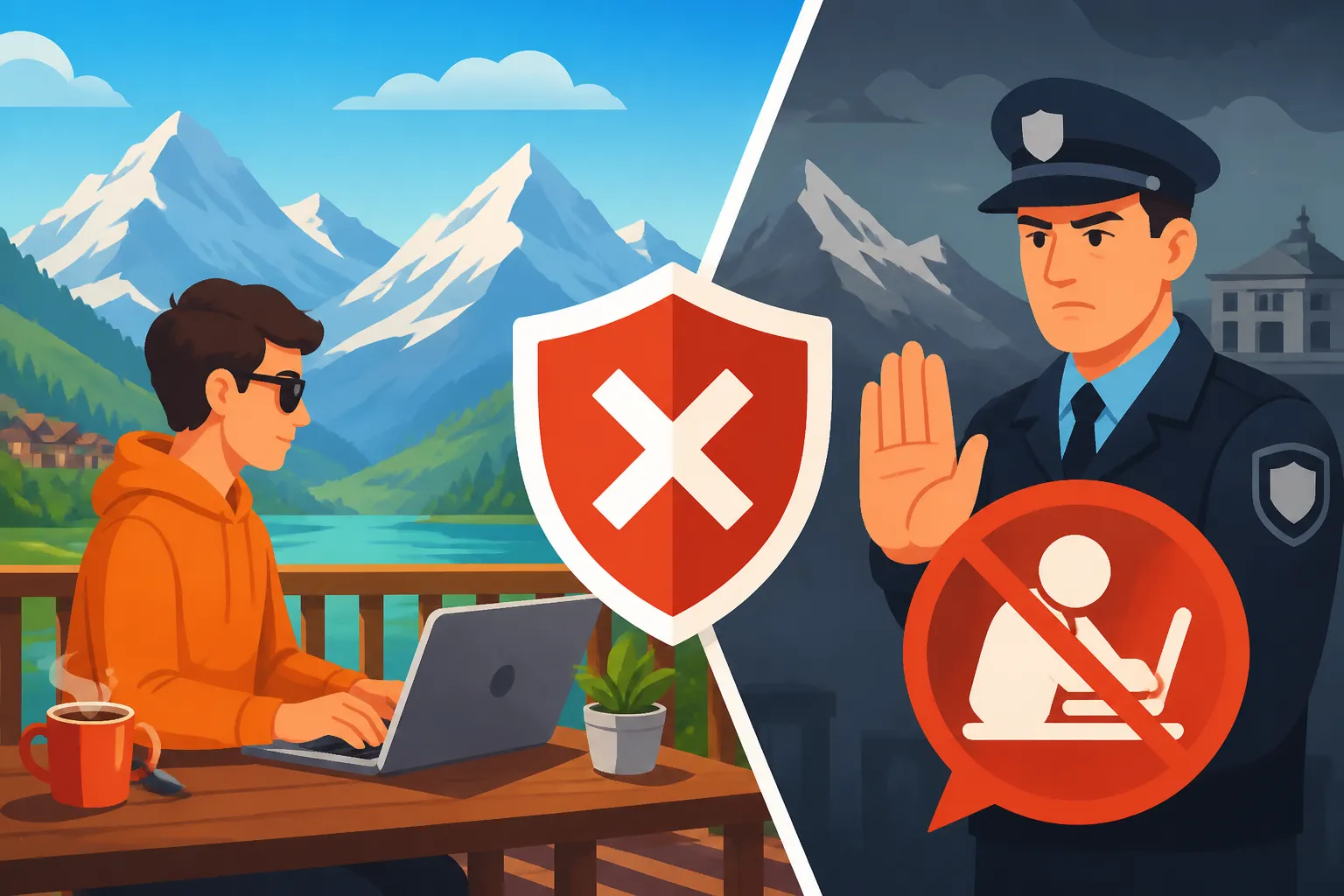
You’ve probably seen the photos: a sleek laptop perched on a weathered wooden table in a Zermatt cafe, a steaming hot chocolate to the left and the Matterhorn framed perfectly in the background. When I first landed in Geneva with a suitcase and a remote contract, I assumed "work" was something I did, not a status I needed permission for. This guide solves the confusion by detailing exactly why Switzerland’s strict stance on remote work on a tourist visa exists and how you can navigate the legal alternatives.
The Legal Friction Between Tourism and Telecommuting
The most common mistake new arrivals make is assuming that because their employer is based in New York, London, or Sydney, the Swiss authorities won't care if they are tapping away at a keyboard in a Swiss Airbnb. From a legal standpoint, the Swiss State Secretariat for Migration (SEM) views "work" as any activity that generates economic value, regardless of where the server is located or where the bank account sits. If you are physically present on Swiss soil and performing labor, you are technically participating in the Swiss labor market.
The 90 Day Rule and the Type C Myth
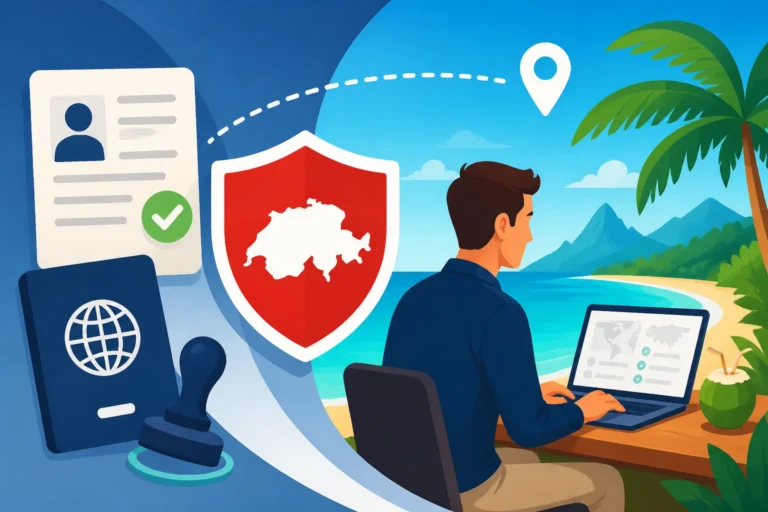
Most tourists enter under the Schengen agreement, which allows for a stay of up to 90 days within a 180-day period. While this is perfect for hiking in the Bernese Oberland, it is explicitly not a work authorization. Many travelers believe that as long as they don't have a local Swiss contract, they fall into a "gray area." I can tell you from experience, the Swiss legal system does not believe in gray areas. When you enter on a Schengen Visa (Type C): Tourist and Short-Business Rules for TCNs, your permission is granted for "leisure, transit, or business visits"—the latter meaning attending a meeting or a conference, not performing your full-time daily job for months on end.
The distinction matters because of the concept of residency. Once you begin working, even remotely, you cross the line from a "visitor" to a "de facto resident." The moment you are considered a resident, you trigger a cascade of requirements, including health insurance, social security contributions, and income tax. Ignoring this doesn't just put your current stay at risk; it can flag your name in the SIS (Schengen Information System), making future entries into any European country a nightmare.
Why Switzerland Restricts Remote Work So Heavily
You might ask why a country would turn away high-earning individuals who spend money on local cheese and mountain railways. The answer lies in the protection of the social system. The Swiss economy is built on a delicate balance of high wages and high social contributions. If the authorities allowed thousands of "nomads" to live in Zurich or Zug while paying taxes and social security in a lower-cost country, it would undermine the local infrastructure that those nomads are enjoying.
Furthermore, there is the issue of "Inländervorrang," or the principle of local preference. The Swiss government is mandated to ensure that the local labor market isn't disrupted. Even though a digital nomad isn't "taking" a local job, their presence affects the housing market and the cost of living. Because of this, the question Does Switzerland Have a Digital Nomad Visa Available in 2026? remains a resounding "no." The government prefers individuals who are fully integrated into the tax and social security systems.
The Three Pillars of Swiss Resistance: Tax Social Security and Labor Markets
To understand the hurdles, you have to look at how Switzerland views an individual’s presence. It’s not just about the visa sticker in your passport; it’s about the financial footprint you leave behind. The Swiss administrative machine is incredibly efficient at connecting the dots between where you live, where you work, and how you are insured.
The Social Security Contribution Gap
Every person working in Switzerland must contribute to the "First Pillar" of the pension system, known as AHV (Old-Age and Survivors' Insurance). When you work remotely on a tourist visa, you aren't paying into this system. To the Swiss authorities, this is a form of social security fraud. Even if you are paying into the system in your home country, Switzerland generally requires contributions if you are physically resident here, unless there is a specific bilateral social security agreement in place that covers your exact situation.
For those trying to bridge the gap between arriving and getting a formal permit, insurance is a major pain point. You cannot access the mandatory Swiss KVG insurance without a residence permit. In these transition periods, many expats rely on international providers like Cigna Global to ensure they have the high level of coverage required to avoid being a burden on the public health system. However, even the best private insurance doesn't satisfy the legal requirement to pay into the state pension funds once you are deemed a resident.
Taxation and the Domicile Dilemma
Switzerland determines tax liability based on your "center of vital interests." If you spend more than 90 days here (or 30 days if you are working), you are likely to be considered a tax resident. This means the Swiss government wants to tax your global income. This is where things get messy for the digital nomad. If you haven't declared your residency and the tax office finds out you've been working from an apartment in Lugano for four months, they can pursue back taxes with significant penalties.
The administrative burden of proving you don't owe tax is often heavier than the tax itself. The authorities will look at your Understanding the Legal Concept of 'Domicile' in Swiss Immigration to decide if you have established a "permanent" presence. Using a temporary address like a hotel or a long-term Airbnb doesn't exempt you if your lifestyle suggests you are living here. They track everything from bank card usage to the registration of your mobile phone.
Protecting the Local Labor Market Quotas
Switzerland operates on a quota system for non-EU/EFTA nationals. Every year, a specific number of B and L permits are allocated. If digital nomads were allowed to work on tourist visas, it would bypass this entire regulatory framework. The government uses these quotas to manage infrastructure growth and ensure that the people living here are contributing directly to the Swiss economy.
When you look at Third-Country National Quotas: How the Swiss Permit Limits Work, you realize how competitive the environment is. The Swiss authorities would rather give a permit to a specialized engineer working for a Swiss firm than a remote marketer working for a firm in California. This protectionism is a core part of why the Swiss Franc remains so stable and why the quality of life remains so high, but it is the primary "wall" that digital nomads hit.
Navigating the EU/EFTA vs Third-Country National Divide
Your experience trying to work remotely in Switzerland will be drastically different depending on the passport you hold. The Swiss system is tiered, and the ease of movement for some is the source of great frustration for others.
The Bilateral Agreement Advantage for EU Citizens
If you hold a passport from an EU or EFTA country, you have a significant advantage due to the Agreement on the Free Movement of Persons. While you still cannot work on a "tourist" status indefinitely, the process to convert your status is much simpler. You have the right to move to Switzerland and look for work, or to live here as a "person without gainful employment" if you can prove you have sufficient financial means and comprehensive health insurance.
EU citizens who want to work remotely for a foreign company often apply for a specific type of residency where they are essentially "self-employed" in Switzerland, invoicing their foreign client. This requires Registering Your Address at the Kreisbüro Within 14 Days of Moving and then applying for a residency permit at the migration office. It is a path of transparency that avoids the risks of working "under the radar."
The Hard Road for Third-Country Nationals (US, UK, Canada, etc.)
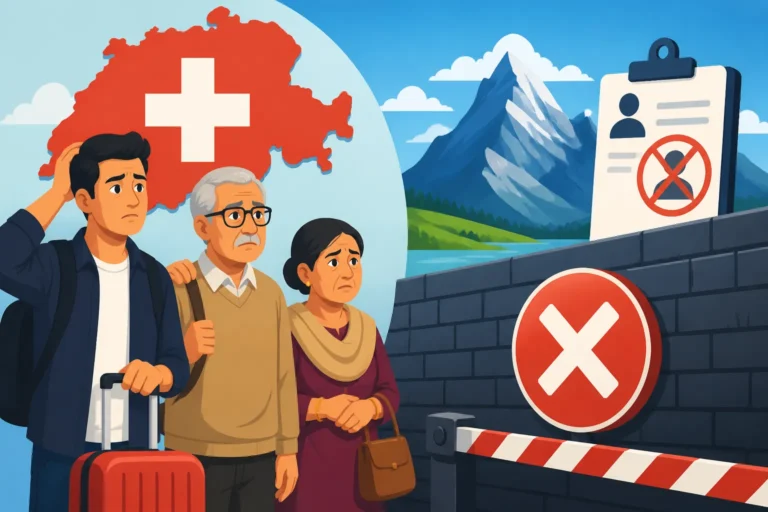
For those from outside the EU/EFTA, the situation is much more restrictive. There is no "freelance visa" or "self-employment permit" that is easily accessible for non-EU citizens unless your business is deemed to be in the "higher economic interest" of Switzerland. This usually means you need to be creating jobs for Swiss locals or bringing in significant capital.
Many non-EU citizens try to stay for the full 90 days of their tourist allowance while working remotely, but this is a gamble. If you are caught, or if you apply for a permit later, the fact that you worked illegally on a tourist visa can lead to a Revocation of Residency: Crimes and Offenses That Trigger Deportation or a long-term ban. The Swiss migration offices are thorough; they will often ask for bank statements or "proof of activity" for the months you spent in the country as a tourist.
| Feature | EU/EFTA Citizens | Third-Country Nationals (Non-EU) |
|---|---|---|
| Right to Reside | High (Free Movement) | Low (Quota-based) |
| Remote Work on Tourist Status | Strictly not allowed | Strictly not allowed |
| Pathway to Remote Permit | Simple (Financial means) | Difficult (Economic interest) |
| Mandatory Insurance | KVG after 3 months | KVG from day 1 of permit |
| Ease of Self-Employment | High | Very Low |
Legal Paths to Remote Residency
If you are serious about living the Swiss life while working for a company abroad, you have to stop thinking like a tourist and start thinking like an immigrant. There are ways to make it work, but they require significant paperwork, financial transparency, and often a bit of "Swiss-proofing" your business structure.
Becoming a Sole Proprietor (ANobAG)
One of the most legitimate ways to work remotely for a foreign employer is through the ANobAG (Arbeitnehmer ohne beitragspflichtigen Arbeitgeber) status. This is essentially "employee without a contributing employer." In this setup, you live in Switzerland and work for your foreign company, but you take on the responsibility of paying both the employee and the employer portions of the Swiss social security (AHV/IV/EO/ALV).
This is a popular route for expats who have a The Swiss B Permit: Eligibility, Renewal, and Restrictions through a spouse or other means, but want to keep their foreign job. It requires a formal contract that meets Swiss labor laws, including minimum vacation days and notice periods. When setting this up, you'll need to have all your foreign documents translated into an official Swiss language (German, French, or Italian). I always recommend using a certified service like RushTranslate because the cantonal authorities are notoriously picky about the stamps and certifications on your employment contracts.
The Entrepreneur Visa: A High Bar to Entry
If you are a high-net-worth freelancer or own a remote business, you might consider the Entrepreneur Visa: Setting up a Business to Gain Swiss Residency. This is not a simple "sign up and pay" process. You must present a detailed business plan to the cantonal authorities showing how your presence will benefit the local economy.
For Third-Country Nationals, this often involves proving that your company will have a turnover of several hundred thousand francs and will eventually hire local staff. It is a mountain of bureaucracy, but it is the only "official" way to be your own boss in Switzerland if you aren't an EU citizen. The scrutiny is intense, and the authorities will check your Healthcare in Switzerland for Expats: The Complete System Overview (2027) to ensure you aren't a potential liability to the state.
Using an Employer of Record (EOR)
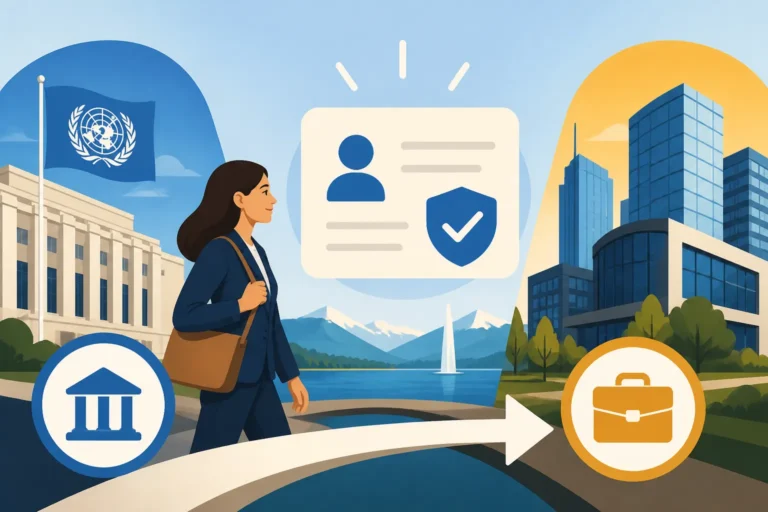
Another growing trend for remote workers is using an Employer of Record. In this scenario, a Swiss-based company officially "hires" you and then leases your services back to your foreign employer. The Swiss EOR handles all the payroll, taxes, and social security according to Swiss law. This turns you into a standard "local" employee in the eyes of the migration office, making it much easier to secure a B Permit.
The downside to this is the cost. EORs typically charge a percentage of your salary, and you must still find a way to fit within the quota system if you are a non-EU citizen. However, for many, the peace of mind of being 100% compliant is worth the fee. It removes the risk of being flagged for illegal work and provides a clear, documented path to residency.
Managing Compliance and Practicalities
Once you decide to pursue a legal path, the "Swiss Way" of doing things becomes your new reality. Everything in Switzerland is documented, stamped, and filed. If you are coming from a culture where things are "flexible," you are in for a shock.
Documentation and Professional Translations
When you apply for any kind of residency permit to work remotely, the migration office will ask for a mountain of evidence. This includes your birth certificate, marriage license, employment contracts, and proof of professional qualifications. The Swiss authorities generally do not accept documents in English; they must be in the official language of the canton where you are applying.
This is where RushTranslate becomes a life-saver. I remember trying to use a local translator in a small village in Valais, and the wait time was three weeks. Using a professional service that understands the specific requirements of the SEM ensures that your "Bewerbungsmappe" (application dossier) isn't rejected on a technicality. Every "u" that isn't dotted or every seal that isn't clearly visible can result in a months-long delay in a system that already moves at a glacial pace.
The Health Insurance Hurdle
You cannot escape the Swiss health insurance system. Within 90 days of registering your residency, you must sign up for a local KVG plan. However, the migration office often requires proof of "adequate insurance" the moment you submit your application. This creates a catch-22: you can't get Swiss insurance without a permit, and you can't get a permit without proof of insurance.
To solve this, many expats maintain an international policy like Cigna Global that explicitly states it provides coverage in Switzerland and meets the "minimum requirements" of the cantonal health office. This acts as a bridge. Once your permit is approved, you will likely be forced to switch to a local provider, but having that high-level international coverage initially is often what allows your application to move forward.
The Reality of "Quiet" Remote Work
There is a temptation to just "keep your head down" and work from your apartment without telling anyone. In some countries, this works. In Switzerland, your neighbors are your greatest auditors. The Swiss culture of "social control" means people notice when you are at home every day during work hours but don't seem to have a local job.
If a neighbor reports you—perhaps because they're annoyed by your loud Zoom calls or because you're using the shared laundry room at the "wrong" time—the authorities can and will investigate. If they find you are living here without a permit and working, you won't just get a fine. You could be facing immediate deportation and a multi-year ban from the entire Schengen zone. It simply isn't worth the risk when there are legal, albeit difficult, pathways available.
The Consequences of Compliance Failure
Switzerland is a country of rules, and the penalties for breaking them are designed to be deterrents. The migration authorities and the tax offices share data more effectively than almost any other country I’ve lived in.
The Impact on Your Credit and Future Permits
One thing many expats don't realize is how a single black mark can follow you. Every resident in Switzerland has a "Betreibungsauszug" (Debt Register Extract). If you are caught working illegally and fined, or if you fail to pay your mandated social security because you were "working remotely," this shows up on your record.
When you eventually want to move to a bigger apartment, get a car loan, or apply for The Swiss C Permit (Permanent Residency): Fast-Track and Standard Routes, a clean record is mandatory. Landlords will not rent to you if you have any entries in the debt register, and the migration office will use any history of non-compliance as a reason to deny a permit renewal. The Swiss system is built on trust, but it's a trust that is verified at every single turn.
Losing Your Right to Return
The most heartbreaking stories I’ve heard are from people who fell in love with Switzerland, spent two years working "under the radar" on a series of tourist visas, and then were caught. When you are deported for visa violations, you are often given an entry ban. This means you can't even come back as a tourist for three to five years.
If you have built a life here—made friends, joined a local "Verein" (club), or perhaps started a relationship—losing the right to return is a high price to pay for avoiding a bit of tax and paperwork. It is far better to be honest with the authorities from day one. They may tell you "no" initially, but they will respect you for asking the right way, and they will often point you toward the specific Becoming a Sole Proprietor (Einzelfirma): Risks and Registration Steps that can make your dream a legal reality.
Summary of Remote Work Compliance
To wrap this up, if you are planning to work remotely in Switzerland, throw away the "digital nomad" playbook you used in Bali or Portugal. Switzerland requires a high degree of formality and a commitment to its social systems.
- Tourist Visas are for Tourism: Do not attempt to stay 90 days and work 40 hours a week. It is legally "gainful employment" and requires a permit.
- EU vs. Non-EU: Know your rights. EU citizens have a path; non-EU citizens have a mountain to climb.
- Get Professional Help: Use services like RushTranslate for your documents and Cigna Global for your initial insurance needs to ensure you meet the high Swiss standards.
- Transparency is Key: If you want to stay long-term, look into ANobAG status or an Employer of Record.
- Respect the System: The rules are there to protect the quality of life you are moving here to enjoy. Contributing to the AHV and the tax system is the "entry fee" for living in paradise.
Disclaimer
This guide is for informational purposes only and does not constitute legal or tax advice. Swiss immigration laws and quotas change frequently. Always consult with a qualified Swiss immigration lawyer or the Swiss State Secretariat for Migration (SEM) before making any residency or employment decisions. Additional cantonal regulations may apply depending on your specific location in Switzerland.