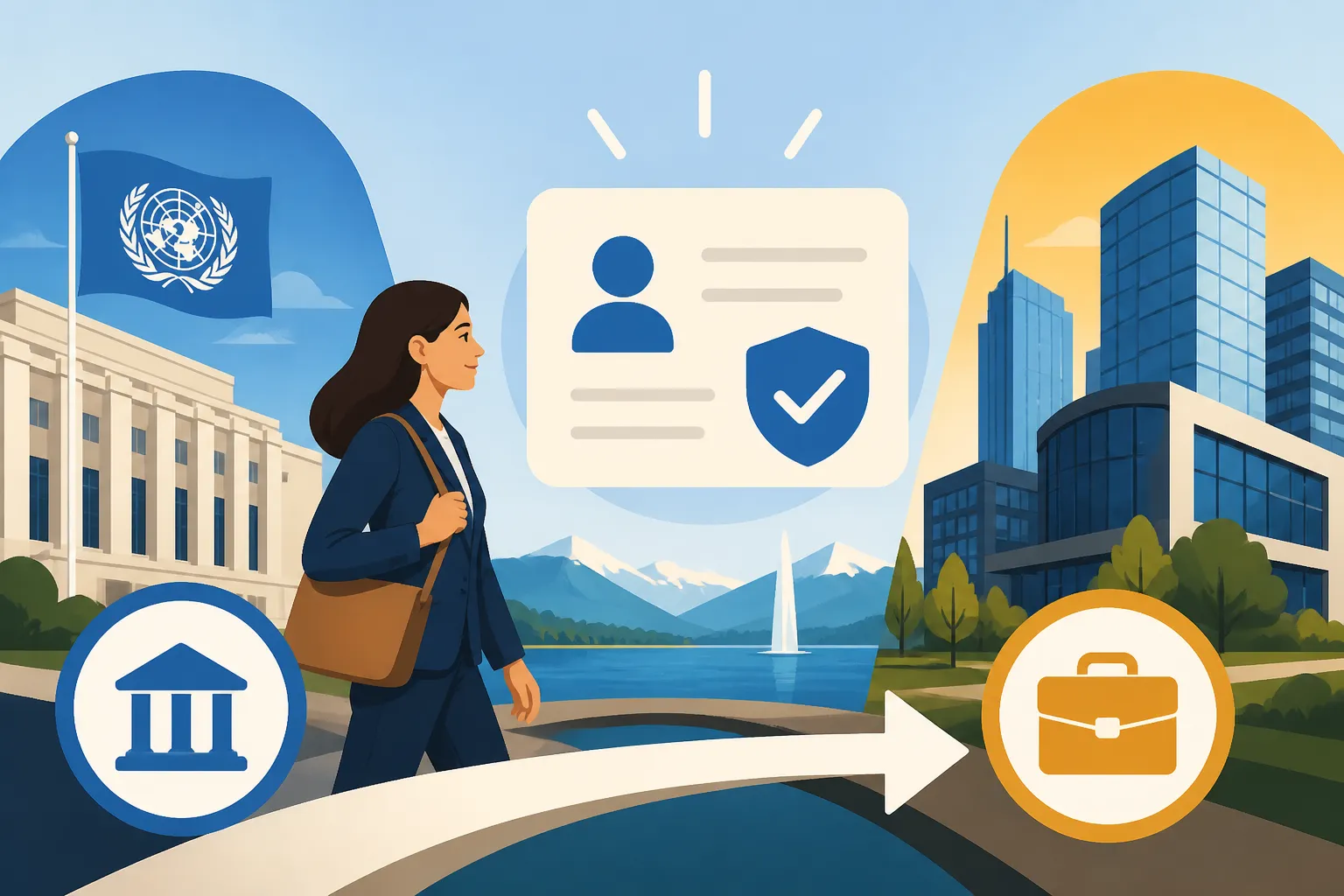
The Geneva Ci Permit: Transitioning to the Private Sector
Living in the "Geneva Bubble" feels like a safe haven until your spouse’s diplomatic mission starts winding down and you realize your professional life is tied to a Ci permit. I remember the panic of wondering if my career would vanish the moment we handed back those diplomatic plates. This guide solves the mystery of transitioning from Ci status to the Swiss private sector.
Understanding the Ci Permit Advantage in Geneva
The Geneva Ci permit is a bit of a "unicorn" in the world of Swiss immigration. While most foreigners are fighting tooth and nail for quotas and labor market tests, the family members of international officials, diplomats, and employees of intergovernmental organizations (IGOs) in Geneva have a secret weapon. The Ci permit is specifically designed for spouses and children (up to age 25) of individuals who hold a "Carte de Légitimation" (CdL) issued by the Federal Department of Foreign Affairs (FDFA).
One of the most important things to realize is that the Ci permit is not something you are simply handed upon arrival. You first receive a CdL. The transition to a Ci permit only happens once you have secured a job or decided to become self-employed in the private sector. I spent months thinking I was already "on" a Ci permit, only to find out it was a separate administrative step triggered by my first Swiss employment contract. This permit effectively "neutralizes" your diplomatic status for the duration of your employment, allowing you to enter the Swiss social security system and pay taxes like a local resident.
The beauty of the Ci permit is that it exempts you from the "national preference" rule. Usually, a Swiss employer must prove they couldn't find a Swiss or EU citizen to fill a role before hiring a non-EU expat. However, with a Ci permit, you are treated as if you are already part of the local labor market. This makes you an incredibly attractive candidate for private firms in Geneva, from the big private banks on the Rive Gauche to the tech startups in Plan-les-Ouates.
The Scope of Gainful Employment
When you hold a Ci permit, you are entitled to full access to the labor market across the entire canton of Geneva, and in some cases, you can even request to work in other cantons. This is a massive leap from the restricted status many spouses face in other countries. You can work for a multinational corporation, a local boutique, or even start your own consultancy.
If you decide to go the freelance route, the process is slightly different. You will need to prove to the Office Cantonal de la Population et des Migrations (OCPM) that your business is viable. During this transition, ensuring you have the right medical coverage is paramount. If you are moving away from the mission's internal health plan, companies like Cigna Global offer the kind of comprehensive international coverage that bridges the gap between diplomatic status and local Swiss requirements.
Family Members and Age Restrictions
It is worth noting that the Ci permit isn't just for spouses. Children of diplomatic or IGO staff can also access it, provided they entered Switzerland before the age of 21 and are part of the household. However, the clock is ticking; once a child turns 25, the Ci permit can no longer be renewed under the parent's status. At that point, the individual must transition to an independent Residence Permits in Switzerland: L, B, C, and G Permits Explained or leave the country.
The Logistics of Moving into the Private Sector
Actually landing the job is only half the battle; the administrative transition is where the real "Swiss experience" begins. Once you have a signed employment contract, your employer doesn't actually apply for your permit. Instead, you—the employee—must go to the OCPM with your contract and your "Carte de Légitimation" to request the Ci permit.
You will need to provide several documents, and if your marriage certificate or professional diplomas are not in French, German, or Italian, you will need certified translations. I found that using a service like RushTranslate can save a significant amount of time and stress when dealing with the picky requirements of Geneva’s administrative offices. They understand the nuance of Translation and Apostille Requirements for Marriage Certificates which is a frequent sticking point for the OCPM.
Tax and Social Security Integration
The moment your Ci permit is issued, you are no longer tax-exempt under the diplomatic conventions. You will be subject to "Quellensteuer" (taxed at source) just like any other holder of a The Swiss B Permit: Eligibility, Renewal, and Restrictions. Your employer will deduct your income tax, AHV (pension), and ALV (unemployment insurance) directly from your salary.
This shift can be a bit of a shock to the system if you have been living on a tax-free diplomatic household budget. However, paying into these systems is actually your ticket to staying in Switzerland long-term. By contributing to the Swiss pension and unemployment schemes, you are building a paper trail of integration that is essential if you ever decide to transition to a permanent resident status.
The Employer’s Perspective
It is helpful to explain to potential employers that you have a Ci permit. Many local HR managers, while familiar with B and C permits, might be slightly confused by the diplomatic connection. You should emphasize that you do not require a quota and that the administrative burden on them is minimal. In fact, hiring a Ci holder is almost as easy for them as hiring a Swiss national. You are essentially a "plug-and-play" employee for the Geneva private sector.
| Feature | Carte de Légitimation (CdL) | Geneva Ci Permit |
|---|---|---|
| Primary Purpose | Diplomatic/Official Status | Gainful Private Employment |
| Tax Status | Often Exempt | Taxed at Source (Local) |
| Labor Market Access | Restricted to Organizations | Full Access (No Quotas) |
| Social Security | Mission/Internal System | Swiss National System (AHV/ALV) |
| Issuing Authority | Federal (FDFA) | Cantonal (OCPM) |
Transitioning from Ci to a B or C Residence Permit
The most stressful time for a Ci holder is when the primary holder’s mission in Geneva ends. Whether it is a retirement or a transfer back to the home country, the "Carte de Légitimation" is usually cancelled, and with it, the legal basis for the Ci permit disappears. If you have built a career in Geneva, the last thing you want to do is pack up your life because of a spouse’s contract ending.
There is a 90-day grace period in most cases, but you need to act fast. To stay, you must apply to convert your status to a standard The Swiss B Permit: Eligibility, Renewal, and Restrictions. This is not a guaranteed right; it is a request based on your "integration" and "financial independence."
Proving Financial Independence
The OCPM will look at your salary and your employment history. If you have been working on a Ci permit for several years, you have a very strong case. They want to see that you can support yourself without relying on social welfare. This is also the time when you might need to show that you have proper local health insurance. If you haven't already transitioned to a local provider, you will need to prove you have a plan that meets Swiss standards. Many expats choose to keep a private international layer with Cigna Global to ensure they have coverage that travels with them, even if their residency status is in flux.
The Role of Language and Integration
Geneva is increasingly strict about language requirements. If you are moving from a Ci permit to a standard B permit, and eventually to The Swiss C Permit (Permanent Residency): Fast-Track and Standard Routes, you will likely need to prove your proficiency in French. The requirements have changed recently, and you now need an official certificate (like the fide test or DELF) for most permit upgrades. Check the Language Requirements for Swiss Permits: A1 to B2 Standards Explained to see exactly where you stand.
Don't wait until your spouse’s mission ends to start your French classes. I’ve seen too many talented professionals forced to leave Geneva simply because they couldn't pass a basic language exam in time to meet the OCPM’s deadlines.
Practical Tips for a Successful Career Pivot
Moving from the "International Organization world" to the "Swiss private sector" is more than just a permit change; it is a cultural shift. The private sector in Geneva values different things than the UN or the WTO. Punctuality, local networking, and a deep understanding of Swiss business etiquette are paramount.
One of the first things you should do is ensure your residency registration is impeccable. Even as a diplomatic family member, you should be familiar with The 14-Day Registration Rule: Signing Up at the Gemeinde/Commune. Any gaps in your registration history can come back to haunt you when you apply for a permanent permit later.
Networking Beyond the Bubble
To thrive in the private sector, you need to break out of the expat circles in Paquis and Nations. Join local professional associations or the "Cercle des Dirigeants d’Entreprise." When applying for jobs, ensure your CV follows Swiss norms. This includes being very transparent about your permit status. Use a service like RushTranslate to ensure your non-Swiss work references and diplomas are professionally translated into French. Employers in Geneva appreciate seeing a dossier that is ready for the OCPM's eyes.
Managing Healthcare Transitions
During the transition from a diplomatic mission to the private sector, there is often a "grey zone" where you are no longer covered by the mission’s insurance but haven't yet settled into a local Swiss KVG plan. This is a dangerous time to be without coverage. I highly recommend looking into Cigna Global as a flexible solution that can provide high-level private care while you navigate the paperwork for Finding Medical Care in Switzerland: Doctors, Specialists, and Referrals.
Document Preparation for the OCPM
When you finally go to the OCPM to convert your Ci permit to a B permit, be prepared for a mountain of paperwork. You will need:
- A copy of your current employment contract.
- The last three months of salary slips.
- A "Betreibungsauszug" (debt register extract) proving you have no unpaid debts.
- A criminal record check from your home country (if you haven't lived in Switzerland long).
- Certified translations of your marriage certificate, which you can quickly obtain via RushTranslate.
Make sure you know Registering at the Kreisbüro: What Documents Do Expats Need to Bring? as the requirements can vary slightly if you are moving between communes or cantons during this transition.
The Geneva Ci permit is an incredible opportunity to build a local life while maintaining a connection to the international community. It is the bridge that allows many "trailing spouses" to become "leading professionals." By understanding the administrative nuances and preparing for the eventual transition to local status, you can turn a temporary diplomatic posting into a long-term Swiss career.
Disclaimer
The information provided in this guide is for informational purposes only and does not constitute legal or professional advice. Swiss immigration laws and cantonal practices in Geneva are subject to change. Always verify current requirements with the official Office Cantonal de la Population et des Migrations (OCPM) or a qualified immigration lawyer before making significant career or residency decisions.