Does Switzerland Have an Inheritance Tax? Cantonal Differences Explained
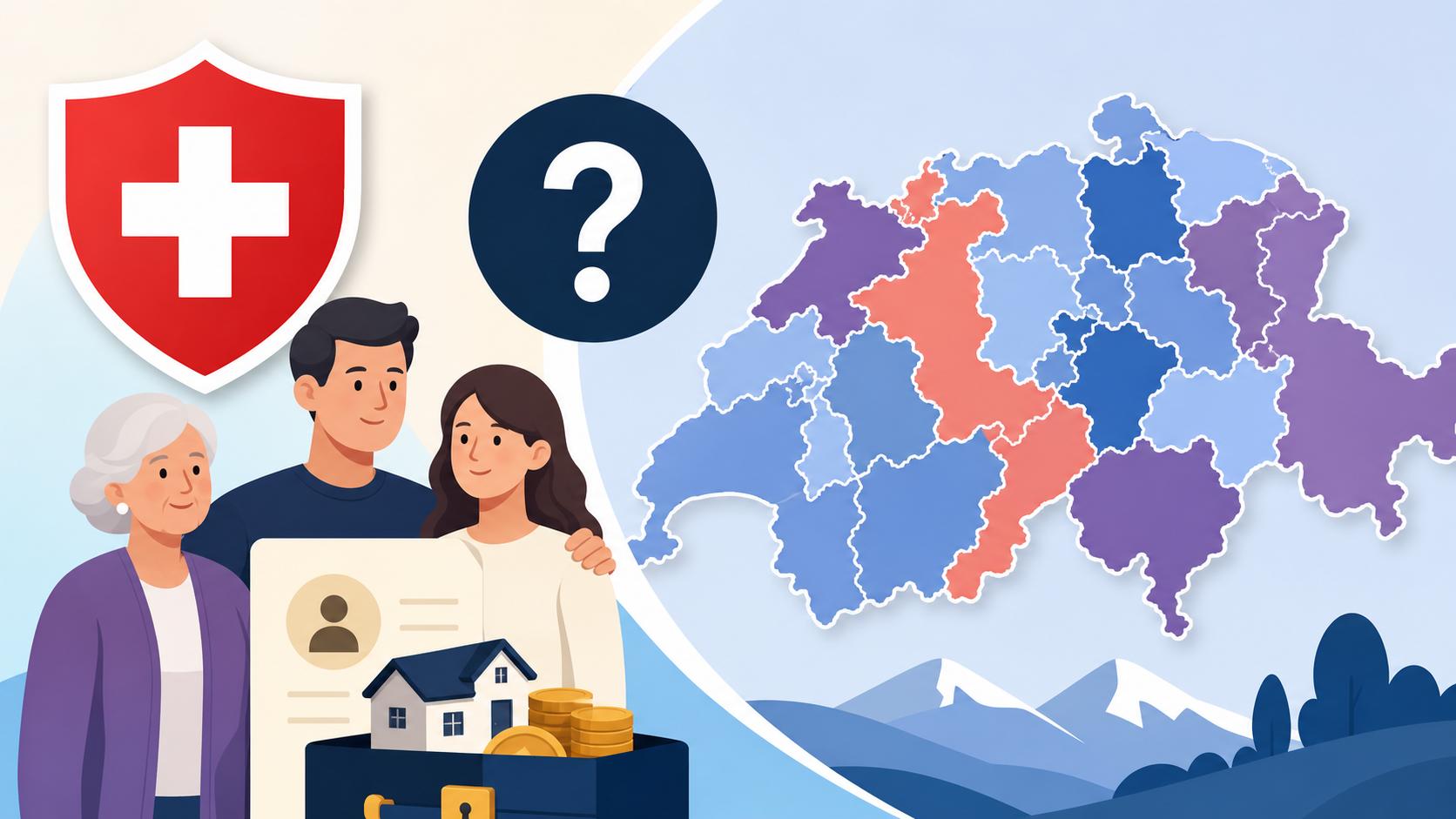
Navigating estate planning and wealth transfers in Switzerland often feels like entering an administrative labyrinth. If you are asking yourself whether Switzerland has an inheritance tax, the short answer is both yes and no. While there is no overarching federal inheritance tax, 26 individual cantons decide their own tax laws, creating a complex patchwork of regulations that can catch unwary expats completely off guard. This guide breaks down how cantonal rules work, who actually pays, and what happens when foreign assets enter the picture.
How Swiss Inheritance Tax Works (And Why Foreigners Get Confused)
When most expats first arrive in Switzerland, they assume that a single national tax authority governs major financial life events. In reality, Swiss fiscal sovereignty is heavily decentralized down to the cantonal and even municipal levels. At the federal level, Switzerland does not levy any tax on inheritance or gifts. However, virtually every canton reserves the right to tax the transfer of wealth upon a person’s death, with the key determining factor usually being the official domicile of the deceased at the time of passing or the location of real estate included in the estate.
The reason inheritance tax causes so much confusion among international residents is that the tax rate depends almost entirely on the legal relationship between the deceased and the beneficiary. Direct family structures are treated very generously across most of the country, whereas non-traditional family units, unmarried partners, and distant relatives face steep tax liabilities that can quickly eat into an inheritance.
The Direct Line Exemption
If you are passing wealth down to your spouse, registered partner, or direct biological or adopted children, Switzerland is one of the most tax-friendly places in the world. In almost every canton, surviving spouses and registered partners are 100% exempt from inheritance tax. Direct descendants (children and grandchildren) are also completely exempt in the vast majority of cantons.
However, if you are Filing a Swiss Tax Return (C Permit or High Earners on B Permit), you still have to report any inherited wealth. Even if the inheritance itself incurs zero tax upon receipt, the assets instantly become part of your global wealth footprint, which impacts your ongoing annual cantonal wealth tax calculations. For a deeper look at how those ongoing levies work, see our guide on Wealth Tax in Switzerland: How Global Assets Are Assessed.
The Unmarried Partner Trap
Where expats frequently run into emotional and financial turmoil is with cohabiting, unmarried partners. Swiss civil law and cantonal tax codes place a heavy emphasis on formal marriage or legally registered civil partnerships. If you have lived with a partner for twenty years without marrying and leave them your estate, most cantons will classify them as an “unrelated individual.”
In cantons like Zurich, Geneva, or Vaud, tax rates for unrelated beneficiaries can escalate rapidly into top-tier brackets, sometimes exceeding 30% or 40% of the total assets inherited once progressive tax scales and cantonal surcharges are applied. A few progressive cantons have introduced reduced rates or exemptions for cohabiting partners who can prove they lived in the same household for a continuous period (often five years), but this is the exception rather than the rule.
Foreign Assets and Cross-Border Considerations
Many expats living in Switzerland retain assets abroad, such as family homes in the UK, investment portfolios in Germany, or digital assets held on global platforms. When you pass away as a Swiss resident, Swiss cantonal tax authorities generally claim jurisdiction over your entire worldwide estate, with one massive exception: foreign real estate.
Real estate is almost universally taxed where the property is physically located. If you inherit a house in France or the US, the local tax authorities in those countries will dictate the estate tax, though Switzerland will still consider the property’s value when determining the overall tax rate bracket applied to your other Swiss assets (the “progression rule”).
For movable assets—such as cash balances, brokerage accounts holding shares purchased on investment platforms like Trade Republic, or cryptocurrency held on foreign exchanges like Binance—the tax jurisdiction lies with your Swiss canton of residence. Liquidating or moving these inherited international assets into Switzerland often involves foreign currency exchange risks. Using multi-currency service providers like Wise can help reduce foreign exchange markups when transferring cash balances across borders compared to traditional retail bank transfers.
Cantonal Differences: Breakdown of Inheritance Tax Rates
Because each canton writes its own tax code, a financial decision made in Zurich might yield a completely different outcome in Zug or Lucerne. When considering tax planning, it helps to review how different regions approach direct heirs versus non-related beneficiaries.
If you are thinking about choosing your location based on fiscal considerations, exploring Lowest Tax Cantons: Moving to Zug, Schwyz, or Nidwalden for Tax Benefits provides a great overview of general taxation trends. Below is a comparative snapshot of how major cantons treat inheritance tax across different beneficiary categories.
| Canton | Spouses & Registered Partners | Children & Direct Descendants | Unmarried Partners & Unrelated Persons | Key Cantonal Features |
|---|---|---|---|---|
| Zug | Exempt | Exempt | Taxable (Progressive rates up to ~20%) | Extremely low overall tax burden; high exemptions for cohabitants under strict conditions. |
| Schwyz | Exempt | Exempt | Exempt | One of the only cantons with no inheritance tax at all, regardless of relation. |
| Zurich | Exempt | Exempt | Taxable (Progressive, can exceed 30%+ with surcharges) | Significant surcharges apply to large sums given to unrelated beneficiaries. |
| Geneva | Exempt | Exempt (except small allowances) | Taxable (Can reach 50%+ for high values) | High progressive scale for non-relatives; steep multipliers for non-direct line heirs. |
| Vaud | Exempt | Taxable above generous allowance (~1-3.5%) | Taxable (Can reach 40% or more) | Rare canton that levies a minor tax on direct descendants above tax-free allowances. |
| Bern | Exempt | Exempt | Taxable (Progressive up to ~40%) | Allowances available for long-term cohabitants living together for over 5 years. |
| Basel-Stadt | Exempt | Exempt | Taxable (Progressive up to ~30%) | High concessions for charitable gifts; standard high rates for non-relatives. |
The Unique Case of Schwyz and Lucerne
Canton Schwyz stands out as an anomaly in Switzerland because it does not levy any cantonal inheritance or gift tax whatsoever, even for completely unrelated beneficiaries. Canton Obwalden has similarly abolished inheritance taxes for all heirs. In contrast, cantons like Lucerne tax non-relatives heavily while keeping direct descendants fully exempt.
Why Vaud and Neuchâtel Differ on Direct Line Heirs
While over 80% of Swiss cantons grant a complete, 100% tax exemption to children and grandchildren, a handful of cantons—most notably Vaud, Neuchâtel, and Appenzell Innerrhoden—retain a modest tax on direct descendants.
In Canton Vaud, for example, direct descendants do pay a small, progressive tax on inherited sums above a set threshold. Although the rates are modest compared to what non-relatives pay, it remains a critical detail for expat parents living in Lausanne or Montreux who assume their children will receive every Swiss franc completely tax-free.
Navigating Cross-Border Inheritances and Global Assets
For international residents, inheriting money or passing wealth to heirs abroad is rarely a single-country transaction. Double taxation issues routinely surface when an expat dies in Switzerland holding assets in their home country, or when a Swiss resident inherits an estate from parents back home.
International Double Taxation Agreements
Switzerland has signed bilateral estate tax treaties with a select group of nations, including the United States, the United Kingdom, Germany, France, and Austria. These treaties specify which country has the primary right to tax specific asset types (usually allocating real estate to the country where it sits, and personal property/cash to the country where the deceased resided).
If you inherit assets from a country that does not have a formal estate tax treaty with Switzerland, you run the risk of facing double taxation—once in the country where the asset originates and once in your canton of residence. In these cases, you must request a tax credit or exemption from your local cantonal tax office based on unilateral relief provisions in Swiss domestic law.
Handling Inherited Investment Portfolios and Digital Assets
When an expat inherits an investment portfolio managed abroad, Swiss authorities expect full transparency. If you inherit stocks held through international platforms like Trade Republic or crypto assets stored on exchanges like Binance, you must report these holdings on your annual Swiss tax declaration as soon as you assume legal ownership.
- Document the valuation: Obtains an official statement showing the fair market value of the assets on the exact date of the donor’s death.
- Translate official probate documents: Swiss cantonal tax offices usually require certified German, French, or Italian translations of foreign probate certificates or letters of administration.
- Declare for ongoing Wealth Tax: Even if no inheritance tax is owed cantonally, the declared value adds to your asset base for annual wealth taxation.
- Repatriate or rebalance funds efficiently: If liquidating foreign stock positions or crypto accounts into Swiss Francs, evaluate transfer costs. Traditional foreign bank wire transfers often extract hidden conversion fees. Using platforms like Wise for bank-to-bank currency conversions can significantly cut execution costs when bringing cash inheritances into your Swiss bank account. For advice on moving money, check our guide on Cheapest Ways to Transfer CHF Abroad: Wise vs Revolut vs Swiss Banks.
Before making sudden structural changes to your holdings, it is vital to understand how Swiss legal protocols handle your estate upon death. Reviewing What Happens to Your Swiss Assets When You Die: Estate Basics for Expats will clarify how local financial institutions freeze accounts until probate is formally cleared.
Step-by-Step Estate Planning Strategy for Swiss Residents
Given the interplay between cantonal tax rates, foreign legal systems, and Swiss forced heirship rules, leaving your financial estate to chance can cause severe headaches for your heirs. To ensure your assets pass smoothly to your intended beneficiaries with minimal tax friction, follow this practical checklist.
-
Establish Legal Jurisdiction and Choice of Law
Under the Swiss Private International Law Act (PILA), foreign nationals residing in Switzerland can explicitly choose the law of their nationality to govern their estate by inserting a “Choice of Law” clause in their will. This is critical if you want to avoid strict Swiss forced heirship rules that mandate minimum statutory shares for children, which can interfere with leaving assets to a surviving partner. To explore your options, read Writing a Will in Switzerland: Forced Heirship Rules for Foreigners. -
Map Out Your Beneficiaries and Their Cantonal Status
Identify who will receive your assets and check how your specific canton taxes their relationship to you. If you are unmarried and intend to leave substantial assets to your partner, consider whether registered civil agreements, cohabitation contracts, or moving to a more favorable canton (or formalizing your marriage) makes financial sense. -
Separate Real Estate from Movable Capital
List all real estate properties owned worldwide and confirm local estate tax rules in those foreign jurisdictions. For movable capital (cash, stocks, crypto accounts like Binance, or index funds on Trade Republic), compile an up-to-date registry including account locations and ownership structures. -
Review Tax Deductions and Lifetime Gift Allowances
Many Swiss cantons allow tax-free lifetime gifts (Schenkungen) up to certain annual limits, or grant lower tax rates on gifts compared to post-death inheritances. However, beware of “clawback” rules: cantonal authorities often aggregate gifts given within a few years of death back into the taxable estate calculation. Learn more about proactive strategies in our detailed article on Inheritance and Gift Tax Planning for Expats in Switzerland. -
Formalize a Clear Will and Store It Safely
A handwritten (holographic) will is legally valid in Switzerland provided it is entirely written, dated, and signed by your hand. Alternatively, you can have a public notary draft an official non-holographic will. Always deposit a copy with your local municipal office (Gemeinde/Commune) or a trusted legal representative so it can be located immediately upon your passing. -
Inform Your Heirs About Administrative Reporting Obligations
Make sure your heirs know that all foreign income and assets received through inheritance must be declared accurately to Swiss tax authorities. For a broader overview of compliance, see Declaring Foreign Income as a Resident of Switzerland. -
Consult a Cantonal Tax Specialist
Because tax laws vary dramatically from canton to canton and change over time, cross-border estate planning should never be done using generic advice. Partnering with a qualified local expert can save your heirs tens of thousands of francs. Check our guide on Hiring a Swiss Tax Advisor: Costs and When It’s Worth It to find the right professional for your situation.
Disclaimer
This article is for general informational purposes only and does not constitute professional advice. Laws, prices and regulations vary by location and change over time. Consult a qualified professional for guidance on your specific situation.