The Best Mobile Payment Apps in Switzerland If You Don’t Have TWINT
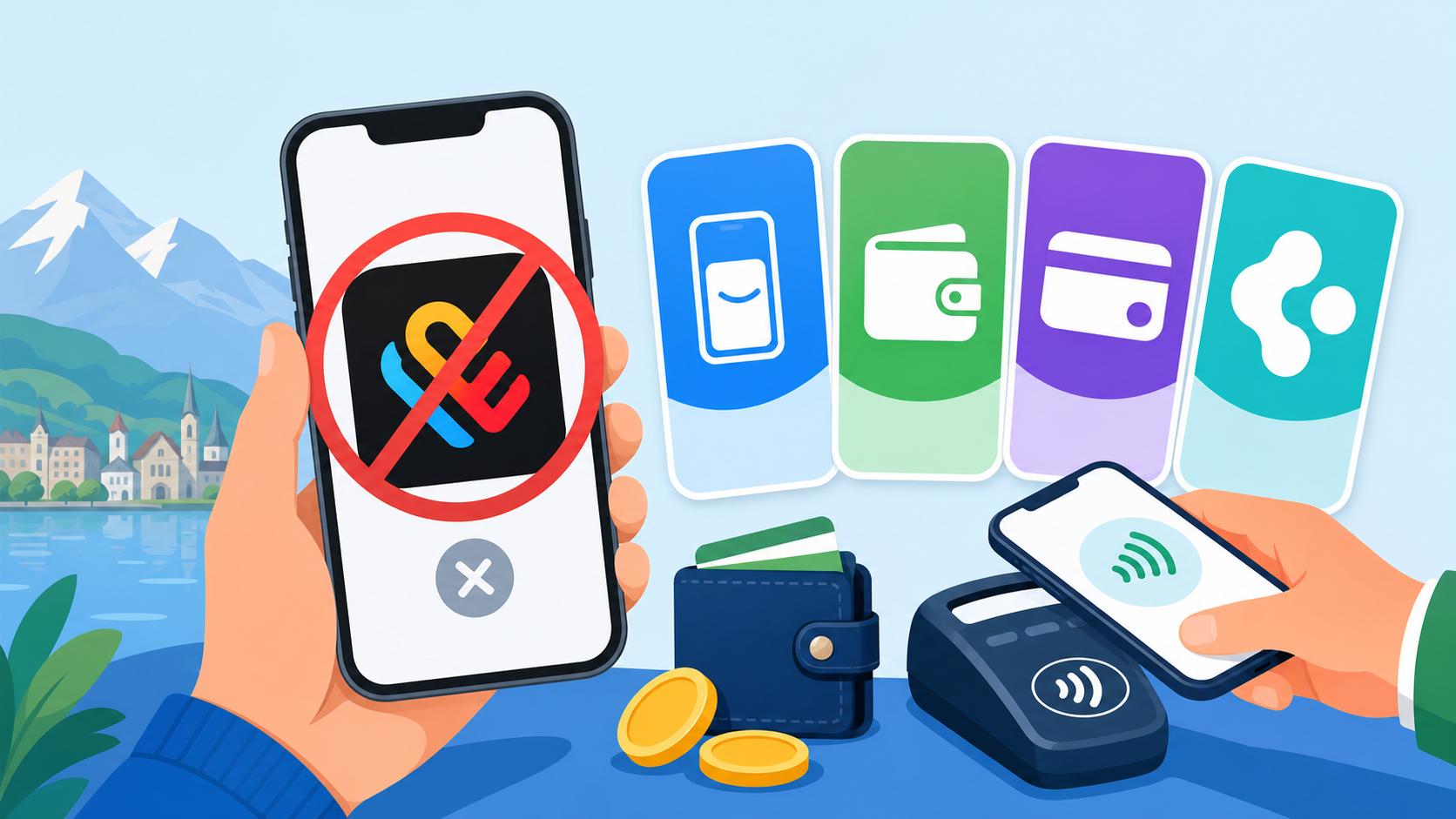
Standing in front of a rustic, self-service farm stall in the rolling hills of Emmental, only to realize the "Kasse" is just a QR code for an app you haven't been able to set up yet, is a uniquely Swiss frustration. I remember my first week in Zurich, fruitlessly trying to link my foreign phone number to a local payment system while a line of impatient locals sighed behind me. This guide provides the most reliable mobile payment alternatives in Switzerland for those who find themselves locked out of the TWINT ecosystem.
The Reality of the Swiss Cashless Landscape
Switzerland has undergone a massive digital transformation over the last few years. While cash was once king, the country has leapfrogged many of its European neighbors in mobile payment adoption. However, for a newcomer, the system can feel like a "walled garden." The primary player is TWINT, which is deeply integrated with local banks. If you are still in the process of Opening a Swiss Bank Account: UBS, ZKB, PostFinance, and Neobanks, you might find that the "Prepaid" or "Credit Card" versions of local apps are finicky with non-Swiss credentials.
The frustration for expats often stems from the fact that TWINT isn't just for buying groceries; it’s the primary way friends split dinner bills, how you pay for parking in remote mountain trailheads, and often the only way to pay at "Honesty Shops" in the countryside. If you cannot get it to work, you need a backup plan that doesn't involve carrying a pocketful of heavy five-franc coins. Fortunately, the infrastructure for NFC (Near Field Communication) is world-class here, meaning almost any terminal that takes a card will take your phone, provided you have the right app configured.
Apple Pay and Google Pay as the Primary Alternatives
For the vast majority of expats, Apple Pay and Google Pay are the most seamless alternatives. Unlike the local options, these do not care about your residency status or whether your phone number starts with +41. They work at nearly every major retailer, including Coop, Migros, Manor, and Valora kiosks.
One major advantage of using these global giants in Switzerland is the speed of transactions. In my experience, the NFC chip in an iPhone or Android device is significantly faster at a grocery checkout than fumbling to open an app and scan a QR code. However, there is a catch: while these apps work perfectly for merchant payments, they do not offer the Peer-to-Peer (P2P) functionality that makes the local system so popular. You can't easily "Apple Pay" a colleague for your share of a coffee unless they also have a card from the same region and a compatible setup.
When you are navigating Credit Cards vs Debit Cards: Navigating TWINT and Cashless Payments, you will find that most Swiss issued cards now support Apple and Google Pay by default. If you are still using your home country's cards, be very mindful of the "hidden" currency conversion fees. This is where a specialized multi-currency tool becomes essential for your daily Cost of Living in Switzerland 2026: Budgeting for Singles and Families.
Leveraging Wise for Multi-Currency Flexibility
If you are a frequent traveler or someone who still receives a salary in a foreign currency, Wise is arguably the most powerful tool in your digital wallet. When I first moved, I used my Wise card via Apple Pay for everything from SBB train tickets to my morning Gipfeli. The main draw is the real-time exchange rate.
The Wise app allows you to hold a balance in Swiss Francs (CHF) alongside dozens of other currencies. When you tap your phone at a terminal in Basel or Geneva, the app automatically pulls from your CHF balance. If your CHF balance is empty, it converts from your Euro or Dollar balance at the mid-market rate with a transparent, minimal fee. This is often much cheaper than using a traditional "Big Bank" card from your home country, which might slap a 3% "foreign transaction fee" on every single latte you buy.
Using Wise also solves the problem of Cheapest Ways to Transfer CHF Abroad: Wise vs Revolut vs Swiss Banks by allowing you to move money into the Swiss system without the predatory fees often associated with international wire transfers. While it won't let you scan a Swiss QR code at a farm stand, it is the gold standard for every other retail interaction in the country.
Trade Republic and the Rise of High-Yield Payments
A newer entrant into the Swiss expat scene is Trade Republic. While primarily known as an investment platform, their recent move into banking services has made them a favorite for those of us trying to make our money work harder. Their virtual and physical cards can be added to your mobile wallet, offering a unique "Saveback" feature.
Every time you tap your phone to pay for groceries using the Trade Republic card, you can earn a small percentage back that is automatically invested into a stock or ETF of your choice. In a country where the cost of living is as high as it is here, every fraction of a percent helps. Furthermore, Trade Republic currently offers competitive interest rates on uninvested cash balances. For an expat who might be waiting to decide on a long-term investment strategy, keeping your "spending money" in an account that earns 3% or 4% interest while remaining accessible via your phone is a very smart move.
I often suggest this to people as part of their Financial Checklist for Your First 30 Days as an Expat in Switzerland. It bridges the gap between a simple payment app and a sophisticated savings tool, though like Wise, it remains restricted to NFC terminals and cannot handle the specific local QR code payment requests often found on Swiss utility bills. For those, you will still eventually need to look into Setting Up eBill in Your Swiss E-Banking App for Utility Payments.
Using Binance for Crypto-Integrated Payments
Switzerland, particularly the "Crypto Valley" region of Zug, is incredibly friendly toward digital assets. If you are someone who holds a portion of your wealth in cryptocurrency, Binance offers solutions that are surprisingly functional in the Swiss landscape. Binance Pay allows for fee-free crypto payments between users, which can be a workaround for the P2P problem if your circle of friends is also tech-savvy.
While the Binance Visa card has seen various changes in availability depending on specific residency permits, the ability to use the app to convert crypto to fiat for immediate use is a powerful backup. In cities like Lugano, you may even find merchants that specifically accept Bitcoin or Tether via specialized POS systems.
If you decide to go down this route, you must stay informed about Crypto Taxation in Switzerland: Declaring Bitcoin and Staking Rewards. The Swiss tax authorities are quite advanced; they won't stop you from spending your Bitcoin on a new pair of skis, but they will expect you to declare your holdings and any capital gains (if you are classified as a professional trader) or wealth tax on the value of those assets.
Comparative Overview of Mobile Payment Options
To help you decide which app to prioritize while you wait for your local bank account to be fully functional, I’ve put together this comparison based on the most common expat use cases.
| Feature | Apple / Google Pay | Wise | Trade Republic | Binance Pay |
|---|---|---|---|---|
| Setup Speed | Instant | 1-2 Days | 2-3 Days | 1-2 Days |
| NFC Support | Excellent | Excellent | Excellent | Limited |
| Currency Rates | Varies by Card | Mid-Market | Competitive | N/A (Crypto) |
| P2P Transfers | No (in CH) | Yes (Global) | No | Yes (Crypto) |
| Best For | Supermarkets | New Arrivals | Savers / Investors | Tech Enthusiasts |
| Swiss QR Bills | No | No | No | No |
The "Split the Bill" Problem Without TWINT
The most common "social" hurdle for expats without the dominant local app is the dinner bill. In Switzerland, it is culturally common for one person to pay the whole bill and everyone else to send their share instantly. If you are the only one in the group without the local app, you can quickly become the "difficult" friend who has to carry cash or ask for IBAN numbers.
My veteran tip? Use Wise or Revolut for these moments. Most expats in Switzerland have one of these accounts. You can send money to a phone number or via a "Revtag" instantly. If your Swiss friends don't have these, your best bet is to offer to pay the bill yourself with your Trade Republic or Wise card to get the rewards/exchange benefits, and have your friends pay you back via their local apps once you finally have your Swiss bank account set up. Alternatively, refer to Best Neobanks in Switzerland: Neon, Yuh, and Zak Compared to see which local digital banks have the fastest onboarding process to get you into the local payment loop within 48 hours.
Practical Limitations and Where Cash is Still Necessary
Even with the best mobile apps, Switzerland has a few "dead zones" where digital payments fail. Smaller mountain huts (Hütten) often have poor internet connectivity, making mobile apps unreliable. Additionally, some very small bakeries or local "Kiosks" may have a minimum purchase amount (usually CHF 10 or 20) for card and mobile payments to avoid high transaction fees.
Always keep a 20-franc note tucked behind your phone case. If you find yourself in a situation where only a local QR code is accepted—such as a neighborhood garage sale or a small farm stall—and you don't have the local app, don't be afraid to ask for an IBAN. Most Swiss people are patient and will allow you to make a bank transfer on the spot using your banking app, though it isn't as "instant" as the mobile-optimized versions.
Summary of Recommendations for New Arrivals
If you are just landing at Kloten airport, your immediate strategy should be:
- Add your home country's best travel card to Apple or Google Pay for immediate transport and food needs.
- Open a Wise account to handle currency transfers and get a CHF-friendly digital card.
- Consider Trade Republic if you want to earn interest and rewards on your daily Swiss spending.
- Keep a small amount of cash for the "Honesty Shops" and rural mountain areas until you can complete your Financial Checklist for Your First 30 Days as an Expat in Switzerland.
By diversifying your mobile wallet, you ensure that you are never left stranded, whether you're shopping at a high-end boutique in Geneva or buying a bag of apples from a wooden crate in the middle of a Thurgau orchard.
Disclaimer
This article is for informational purposes only and does not constitute financial, legal, or tax advice. Payment app availability, features, and fee structures in Switzerland are subject to change by the respective providers. Always verify current terms and conditions with the official service providers before opening an account. For specific advice regarding Swiss taxes or complex financial planning, please consult with a qualified professional.