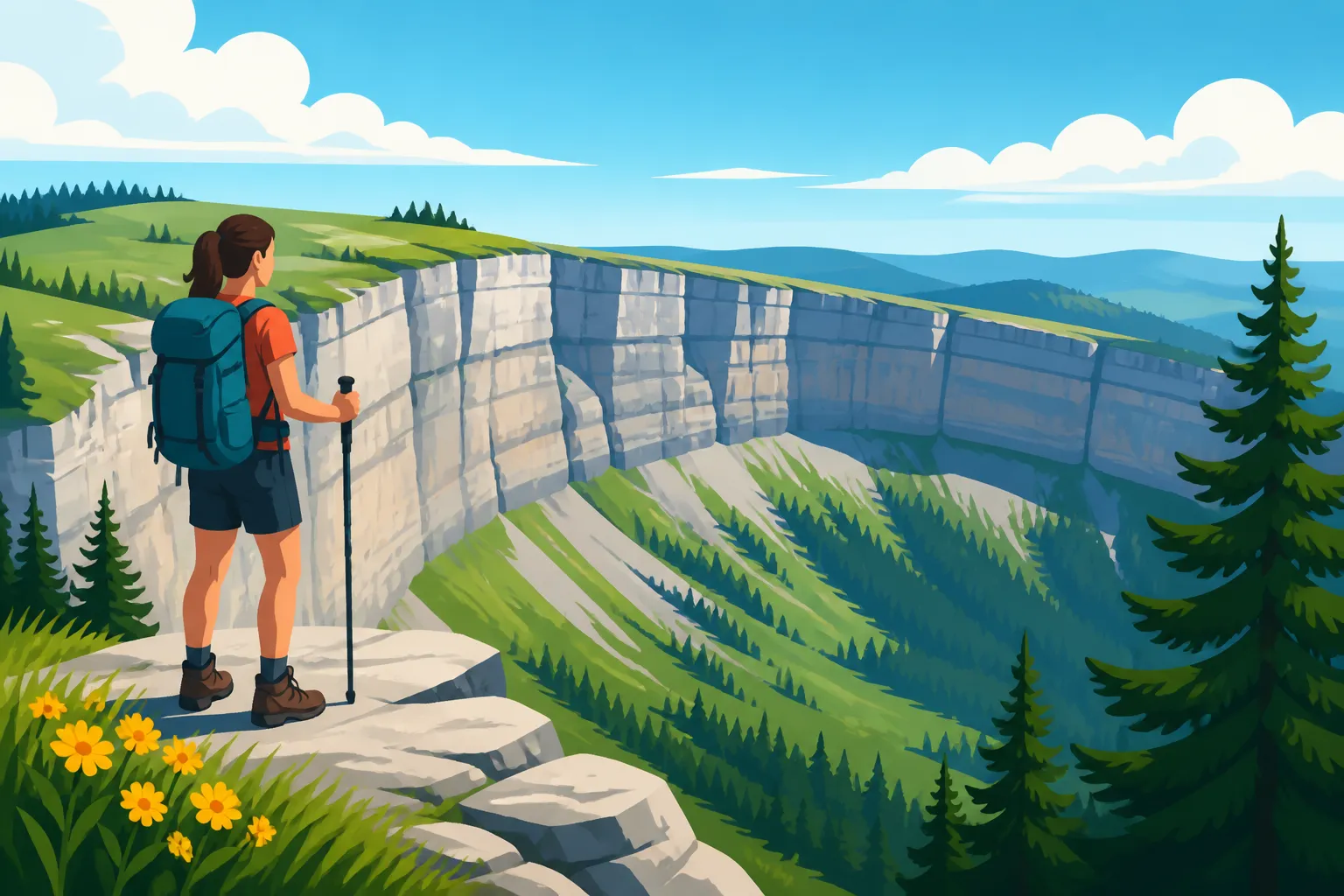
Creux du Van: Switzerland’s Grand Canyon Day Hike
You’ve settled into Swiss life, perhaps you’ve seen the iconic peaks and picturesque lakes, but now you’re yearning for something truly unique, a hike that feels like it’s straight out of an epic movie. Let's be honest, sometimes you just want to escape the perfectly manicured tourist trails and discover a natural wonder that makes your jaw drop. This guide is going to walk you through planning an unforgettable day trip to Creux du Van, Switzerland’s very own "Grand Canyon," offering all the realistic, expat-focused advice you need.
What Makes Creux du Van So Special?
Believe me, when I first heard "Switzerland's Grand Canyon," I was skeptical. Switzerland has mountains, sure, but a canyon? It sounded like a marketing gimmick. But then I went, and let me tell you, the sheer scale and raw beauty of Creux du Van blew me away. It’s not a canyon in the American sense with a river at the bottom, but rather a colossal natural rock amphitheater, carved over millions of years by ice and water, reaching depths of up to 160 meters and stretching an impressive 4 kilometers across.
The Geological Marvel of the Jura Mountains
Imagine standing on a precipice, gazing out at a colossal U-shaped rock formation, where vertical limestone cliffs plunge dramatically into a forested basin. That's Creux du Van. Located in the Jura Mountains, a stark contrast to the jagged peaks of the Alps, this natural wonder feels ancient and powerful. The rock walls are a testament to geological forces, revealing layers of time in their stratified faces. It's truly a place where you feel small in the best possible way.
What makes it even more captivating is the resident wildlife. Keep your eyes peeled for ibex and chamois. These agile creatures navigate the steep cliffs with remarkable ease, often spotted grazing peacefully near the rim, completely unfazed by the humans gawking at them. It’s an incredible sight to witness them in their natural habitat, adding another layer of wild beauty to an already stunning landscape. The protected nature reserve around Creux du Van ensures that this unique ecosystem thrives, offering a glimpse into Switzerland's more untamed side.
A Unique Alpine Experience Without the Crowds
Unlike some of Switzerland's more famous mountain destinations that can feel like Disneyland on a sunny Saturday, Creux du Van offers a more rugged and contemplative experience. While it certainly attracts visitors, it’s rarely as congested, especially if you venture a little further along the rim or choose a less common access point. It’s the kind of place you discover and then secretly cherish, sharing it only with your closest friends.
The views are, quite simply, breathtaking. From the top, you get an uninterrupted panorama stretching across the Val de Travers, Lake Neuchâtel, and even all the way to the distant Alps on a clear day. It’s a perfect spot for photography, contemplation, or just enjoying a picnic with one of the most incredible backdrops imaginable. It feels like a genuine escape, a place where you can truly connect with nature without battling hordes of tourists. This raw beauty, combined with easier access than many high-altitude Alpine hikes, makes it a perfect day trip for those of us living here.
Planning Your Hike to Creux du Van
Planning any Swiss excursion requires a little homework, and Creux du Van is no different. The good news is that there are several ways to experience it, catering to different fitness levels and time commitments. The key is to choose the route that best suits you and to be prepared for the conditions.
Choosing Your Route
The most popular starting point for hikers is Noiraigue, a charming village with its own train station, making it easily accessible by public transport. From Noiraigue, you have a couple of main options:
- The Ascent Through the Gorge (Sentier des Quatorze Contours): This is probably the most iconic and rewarding route. It's a steady, uphill climb of about 1.5 to 2 hours through a beautiful forest and then a series of 14 switchbacks (contours) that lead you directly to the top of the canyon. The path is well-maintained but can be steep in places, offering a good workout. The total distance from Noiraigue station to the top is roughly 5.5 km with an elevation gain of around 550 meters.
- Via Ferme Robert: Another route from Noiraigue takes you past the historic Ferme Robert, a restaurant nestled in the valley floor. This path is slightly longer but arguably less strenuous in its initial stages before ascending more steeply towards the rim. It's a lovely option if you want to combine your hike with a meal stop at the farm.
If you prefer a shorter, less strenuous walk to the rim, especially if you're driving, consider heading directly to Le Soliat. There's parking available there, and it’s a mere 10-15 minute flat walk to the best viewpoints along the rim. This is fantastic if you have small children or mobility issues, ensuring everyone can experience the grandeur.
Here’s a quick overview of typical routes:
| Starting Point | Distance (one-way) | Elevation Gain | Est. Time (one-way) | Difficulty | Highlights |
|---|---|---|---|---|---|
| Noiraigue Station | 5.5 km | 550 m | 1.5 – 2 hours | Moderate | Sentier des Quatorze Contours, forest |
| Ferme Robert | 4.5 km | 450 m | 1.5 hours | Moderate | Valley views, restaurant stop |
| Le Soliat (Parking) | 0.5 km | Flat | 10-15 minutes | Easy | Direct rim access, stunning immediate views |
Remember, these times are estimates for an average hiker. Always factor in extra time for photos, breaks, and just soaking it all in. You can also explore circuits, connecting different points to make a longer, more varied hike. For detailed trail information and real-time conditions, checking the local hiking websites or even an app like SwitzerlandMobility is always a good idea, as mentioned in our guide on Swiss Hiking for Beginners: Trail Grades and the SAC System.
Best Time to Visit and Essential Gear
Creux du Van is truly beautiful in spring, summer, and autumn.
- Spring (April-May) offers lush greenery and wildflowers, though some higher parts might still have lingering snow.
- Summer (June-August) is perfect for long days and clear views, but can get hot, especially on the ascent. Start early to beat the heat.
- Autumn (September-October) provides a spectacular display of fall foliage, making the surrounding forests glow with color. This is arguably the most picturesque time to visit.
Winter hiking is possible, but it requires appropriate gear (microspikes, trekking poles) and experience, as paths can be icy and treacherous. Always check the weather forecast carefully, especially for the Jura region, which can be prone to strong winds and sudden changes, a common theme in Weather and Geography: Föhn Winds, Winter Readiness, and Alpine Living.
For any hike to Creux du Van, regardless of the season, these are your essentials:
- Sturdy hiking shoes: Proper grip is crucial, especially on the descent or if paths are wet.
- Layers of clothing: The weather can change quickly, particularly at elevation.
- Plenty of water: Especially in summer, there are limited refilling points.
- Snacks or a picnic: While there are farms/restaurants, having your own provisions is always smart, and it's delightful to enjoy a meal overlooking the canyon. You can pick up some delicious local treats at a Swiss farmers market beforehand, as suggested in our post about Picnicking in Switzerland: Where to Buy Supplies and Sit.
- Sunscreen and a hat: The rim is exposed.
- Camera: You'll want to capture these views!
- Map or GPS app: Even on well-marked trails, it's good practice.
Safety First on the Edge
This might sound dramatic, but I cannot stress this enough: Creux du Van has unfenced, sheer drops. There are no guardrails preventing you from getting right to the edge, which means you have to be acutely aware of your surroundings and your footing at all times.
- Children and Pets: Keep a very close eye on children and dogs. A leash is non-negotiable for pets.
- Footing: Don't get too close to the edge, especially when taking photos. The ground can be unstable, and a slip could have severe consequences.
- Weather: Mist or fog can roll in quickly, reducing visibility to zero. Strong winds can also be dangerous near the exposed rim. If the weather turns, prioritize safety over views.
- Emergency Numbers: Know the Swiss emergency numbers (144 for ambulance). For more serious incidents in remote areas, air rescue services like REGA might be necessary, and knowing about their operations can be helpful, as detailed in our guide on Emergency Medical Services: Ambulances, REGA, and Crisis Protocols.
This isn't to scare you, but to empower you with realistic expectations. Enjoy the incredible views, but always with a healthy dose of respect for nature's power.
Getting There: Public Transport and Driving
One of the great joys of living in Switzerland is the unparalleled public transport system. Getting to Creux du Van is perfectly doable without a car, but having your own vehicle offers flexibility, especially if you want to explore beyond the main hiking routes.
Navigating by Train and Bus
The most convenient way to reach Creux du Van via public transport is to take the train to Noiraigue station. Noiraigue is located in the Canton of Neuchâtel, and it's well-connected from major cities like Zurich, Bern, or Geneva, usually involving one or two changes (often in Neuchâtel itself).
To plan your journey, I always recommend the SBB website or their fantastic app. It's incredibly user-friendly and will give you the most up-to-date connections and timings. If you're comparing ticket options or routes that might involve different operators (though SBB covers most here), I've found Omio to be a useful platform for streamlining the booking process, especially if you're new to the Swiss system or prefer a multi-language interface. Just input your starting point and Noiraigue as your destination, and it will pull up all the relevant train connections.
Remember to consider a Half-Fare Travelcard (Halbtax): The Must-Have Pass for Swiss Residents if you plan on doing more train travel, as it can significantly cut down costs. If you're a heavy user of public transport, perhaps a SBB Travelcards: Is the Generalabonnement (GA) Worth the CHF 4000+ Cost? could even be an option to consider for extensive travel across the country, though for a single day trip, a Half-Fare card is usually the best value.
Once you arrive at Noiraigue station, the hiking trails are clearly signposted. Simply follow the yellow hiking signs towards "Creux du Van" or "Sentier des Quatorze Contours."
Driving and Parking Options
If you prefer the flexibility of a car, driving to Creux du Van is also a straightforward option. The main advantage is that you can drive directly to the rim, significantly shortening the walking time if desired, or access different starting points more easily.
- Parking at Le Soliat: This is the most common option if you want direct access to the rim with minimal walking. There's a designated parking area near the Ferme du Soliat restaurant, just a short, flat walk to the viewpoints. Be aware that during peak season or sunny weekends, this car park can fill up quickly. Arrive early to secure a spot. There is usually a fee for parking, so bring some small coins or be prepared to pay by app if available.
- Parking at Ferme Robert: If you plan to hike up through the valley but prefer to drive closer than Noiraigue station, Ferme Robert offers some parking. This allows you to start your ascent from the valley floor, which is a lovely approach.
- Navigating: Use your GPS to guide you to "Le Soliat" or "Ferme Robert" in the canton of Neuchâtel. The roads are generally well-maintained, though the final stretches to Le Soliat involve narrower, winding mountain roads. Drive carefully and be mindful of cyclists and other hikers.
Having a car certainly allows for more exploration of the broader Val de Travers region, which brings us to our next point!
Beyond the Edge: What Else to See and Do Nearby
A visit to Creux du Van is spectacular on its own, but the surrounding Val de Travers region and Canton of Neuchâtel offer plenty of other attractions if you have extra time or want to make it a longer stay. Sometimes, after a strenuous hike, it's nice to unwind with a local specialty or explore some lesser-known cultural gems.
Local Flavors and Accommodations
The farms located right on the rim and in the valley near Creux du Van aren't just landmarks; they're vital parts of the local experience. Ferme du Soliat (at the top, near the main viewpoint) and Ferme Robert (in the valley) are working farms that double as traditional Swiss restaurants, often serving hearty local fare. Think fondue, raclette, platters of local cheeses and cured meats (planches), and simple, delicious dishes. It’s the perfect reward after a long hike. Expect a rustic, cozy atmosphere and friendly service. Do check their opening hours, especially outside of peak season, as they can vary.
If you’re so enchanted by the area that you want to stay overnight, there are various options in the charming towns nearby. Neuchâtel itself is a beautiful city on the lake, offering hotels ranging from boutique to more modern chains. Smaller villages in the Val de Travers, like Couvet or Môtiers, might have guesthouses or B&Bs that offer a more intimate, local experience. For finding a suitable place to rest your head, I always check Booking.com. Their platform makes it easy to compare prices and read reviews for everything from hotels to apartments in the region, helping you find exactly what you’re looking for to extend your trip.
It’s worth noting that Swiss Food and Drink Culture: Regional Specialties and Dining Etiquette plays a big part in these rural farm-restaurants, so embrace the authentic experience!
Exploring the Val de Travers Region
The Val de Travers is famous for a few things, one of them being its clandestine history with absinthe. Yes, the "green fairy" was born here, and for many years, its production was outlawed. Today, it’s legal again, and you can explore this fascinating heritage.
- The Absinthe Trail (Route de l'Absinthe): If you're interested, you can follow this trail, which connects various distilleries, museums, and historical sites related to absinthe production in the region. Some distilleries offer tastings and tours, giving you a unique insight into this potent spirit.
- Boudry Gorge: If you hiked up the 14 Contours, you've seen a part of the dramatic landscape. The Boudry Gorge, especially near the Poëta Raisse, offers more stunning natural beauty with waterfalls and deep ravines, perfect for further exploration if you have the energy.
- Lake Neuchâtel: Just a short drive or train ride away, Lake Neuchâtel offers pleasant lakeside towns, opportunities for boat trips, and beautiful promenades. It’s a great way to unwind after a mountain adventure.
- Asphalt Mines of La Presta: A truly unusual and fascinating attraction! These old mines produced asphalt for roads across Europe, and you can take guided tours deep underground to see the tunnels and learn about their history. They even have a restaurant that cooks ham in the asphalt. Yes, really.
For those who love to have a structured exploration or prefer guided experiences, sometimes looking at platforms like GetYourGuide can reveal unique local tours or activities in the Neuchâtel region that you might not stumble upon otherwise. From absinthe workshops to specific historical walks, it’s worth a peek if you’re trying to build a multi-faceted itinerary or simply want to discover something a bit off the beaten path.
This region is rich with stories and natural beauty, making Creux du Van not just a hike, but a gateway to discovering more of Switzerland's hidden gems. So, pack your bags, lace up your boots, and get ready for an adventure that will remind you why you chose this stunning country to call home. Don't forget to check out our other guides like Long Weekends in Switzerland: Maximizing Public Holidays for inspiration on when to plan your next epic outing.
Disclaimer
The information provided in this guide is for general informational purposes only and is subject to change. While we strive to provide accurate and up-to-date information, local regulations, opening hours, prices, and conditions can vary. Always check official sources and current weather forecasts before planning your trip. Hiking carries inherent risks, and personal safety is your responsibility.