Regional Folk Festivals and Traditions in the Swiss Cantons
When you first move to Switzerland, it's easy to fall into the trap of thinking it's all about precision trains, impeccable organisation, and a certain reserved quietness. But beneath that polished surface lies a vibrant tapestry of regional folk festivals and deeply cherished traditions that truly showcase the soul of each canton. This guide is here to pull back the curtain and show you how to discover, understand, and even participate in these unique celebrations that define Swiss identity beyond the stereotypes.
The Heart of Switzerland: Understanding Folk Traditions
For many expats, Swiss culture can feel a bit impenetrable at first. You might see the calm, efficient exterior and wonder where the "fun" or the "passion" truly lies. The truth is, it's often found in the deep-rooted folk traditions, which are less about outward show and more about community, shared history, and celebrating the rhythm of life in a very local way. These aren't just tourist spectacles; they are living, breathing elements of Swiss identity that have been passed down through generations.
Why Traditions Matter So Much in Switzerland
Switzerland is famously a country of diverse cantons, each with its own quirks, dialects, and even laws. This strong sense of local identity means that traditions are often fiercely protected and celebrated with immense pride. These festivals connect people to their land, their history, and their neighbours. They are a way to preserve dialect, craftsmanship, music, and social bonds in an increasingly globalized world. For newcomers, understanding this local pride is key to unlocking a deeper appreciation for your new home. It’s not just about what happens at the festival, but the collective memory and continuity it represents.
Imagine living in a small village in Appenzell, where the annual "Alpabzug" isn't just a parade but the culmination of months of hard work on the alpine pastures. It's a thanksgiving, a homecoming, and a social event wrapped into one. These events are integral to the social fabric; they bind communities together. They are where stories are told, where generations mix, and where the sense of belonging is strongest. You'll often find that the local Vereine (clubs or associations) play a huge role in organizing these events, from the local Trachtenverein (traditional costume club) to the Musikgesellschaft (music society), highlighting the community-driven nature of these celebrations.
The Regional Diversity of Swiss Festivals
One of the most fascinating aspects of Swiss traditions is how much they differ from one canton to another, and even from one valley to the next. What's a major celebration in the German-speaking cantons might be completely unknown or celebrated differently in the French or Italian-speaking parts. This regional flavour is a direct reflection of Switzerland's linguistic, geographic, and historical tapestry. It’s what makes exploring these traditions so rewarding; you’re not just seeing one “Swiss culture” but many distinct ones.
For instance, the boisterous, often anarchic Fasnacht celebrations in Basel or Lucerne are worlds apart from the solemn, agricultural blessings you might find in a remote Valais village. The timing, the specific rituals, the costumes, and even the local culinary delights associated with each festival are unique. This diversity is why a general guide is only the beginning – you really need to delve into what’s happening in your specific region or a region you plan to visit. It’s a bit like trying to understand all of Europe by visiting just one country; it simply doesn't tell the whole story.
Iconic Folk Festivals Across Switzerland's Regions
From the rhythmic beats of drums accompanying a spring ritual to the joyful return of cows from alpine pastures, Switzerland's calendar is peppered with unique regional celebrations. These events offer a fantastic window into the soul of the country.
German-Speaking Switzerland: Alpine and Urban Traditions
In the German-speaking cantons, you’ll find a mix of ancient agricultural customs and more urban, organised celebrations. These often involve vibrant costumes, traditional music, and sometimes a good dose of raucous humour.
Perhaps the most famous are the Fasnacht Carnivals, particularly in Fasnacht Carnival: Basel and Lucerne's Wild Pre-Lent Festivals. Basel's Fasnacht, a UNESCO-recognized event, is unlike any other carnival. It kicks off at 4 AM on the Monday after Ash Wednesday with the "Morgestraich," where all the city lights are switched off, and drummers and pipers march through the dark streets. It's an intense, almost spiritual experience, followed by three days of parades, Schnitzelbängg (satirical verses), and throwing sweets. Lucerne's Fasnacht, while equally colourful, has a slightly different vibe, focusing on grotesque masks and brass bands called Guggenmusiken. If you're looking for an unforgettable cultural immersion, these are certainly it, but be prepared for crowds and a late night (or early morning!).
Then there's Zurich's Sechseläuten, a spring festival typically held on the third Monday of April, which you can read more about in Sechseläuten: Zurich's Spring Festival and the Burning Böögg. This event sees guilds parade through the city in historic costumes before culminating in the burning of the "Böögg," a snowman figure atop a pyre. The faster its head explodes, the better the summer will be, or so the legend goes! It’s a truly unique blend of history, civic pride, and a touch of pagan ritual, celebrated right in the heart of Switzerland's largest city.
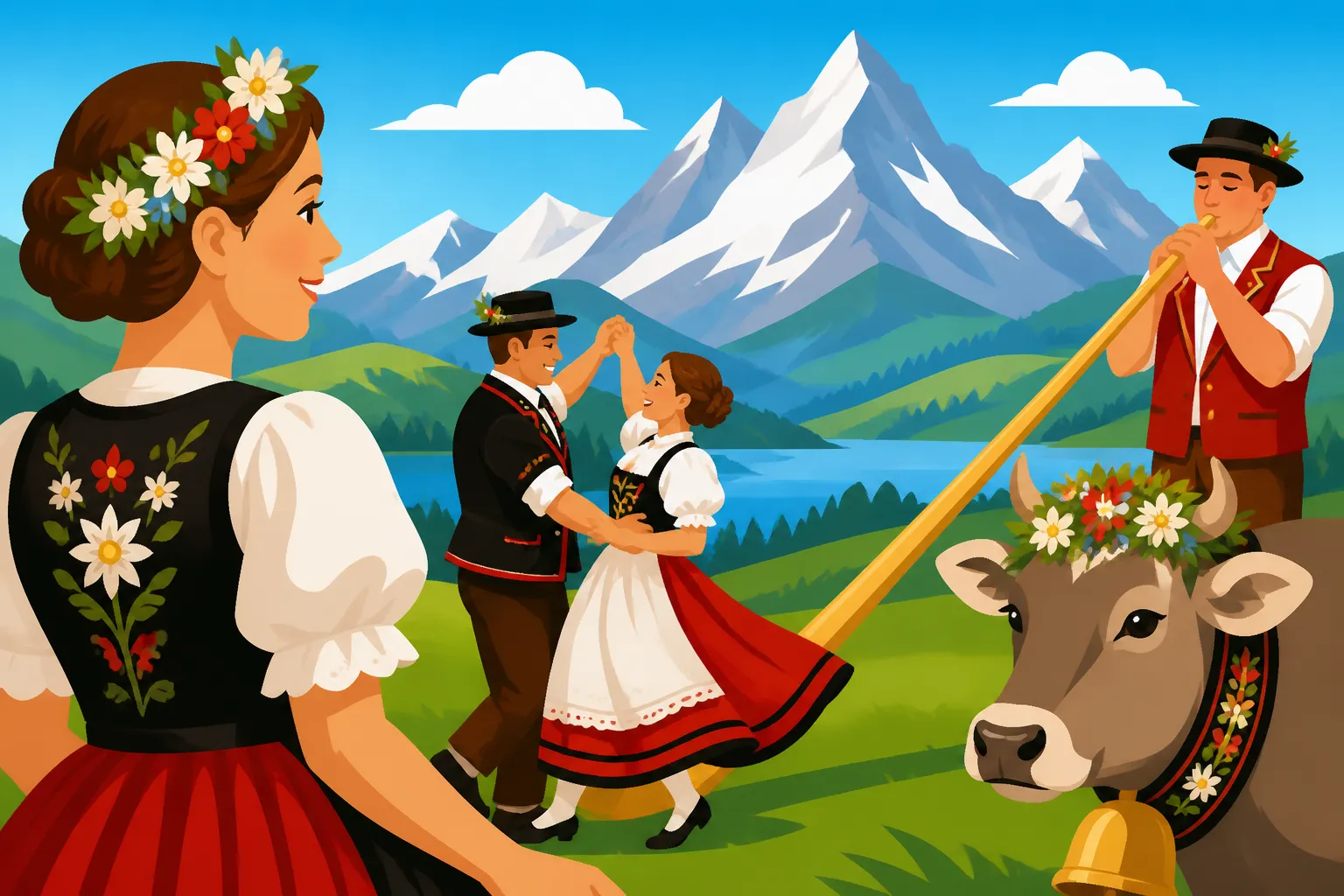
Further afield, particularly in the alpine regions like Appenzell, Bernese Oberland, and Valais, you'll encounter the beautiful Alpabzug (Cattle Descent). In autumn, when the cows return from their summer grazing in the high Alps, they are adorned with elaborate floral arrangements, huge cowbells, and intricate headpieces. The farmers, dressed in traditional attire, lead them through the villages in a festive procession. These events are deeply moving and authentic, celebrating the close relationship between people, animals, and nature. Many villages host small markets and offer local food, making it a perfect family outing. You can even find tours or special train routes to these smaller villages during this time. Checking local tourist information or platforms like GetYourGuide might offer specific experiences around these events.
French-Speaking Switzerland: Wine, Cows, and Heritage
In Romandie, the traditions often revolve around the vineyards, the strong agricultural ties, and a slightly different historical cadence.
A prominent and truly Swiss tradition here is the Combat de Reines (Queen's Fight) in Valais. This isn't a fight to the death but a series of natural wrestling matches between Hérens cows to determine the "Queen" of the herd. These powerful, intelligent animals lock horns in a surprisingly gentle but determined manner, pushing each other until one concedes. The winning cow is then naturally crowned the leader, a position she'll hold in the herd for the coming year. These events happen throughout the spring and autumn in Valais and are a fascinating insight into local farming culture and animal husbandry. They are incredibly popular with locals, offering a real taste of authentic regional life.
While the massive Fête des Vignerons in Vevey only happens every 20-25 years, local wine festivals in regions like Lavaux (a UNESCO World Heritage site) and Valais are annual affairs. These vibrant celebrations showcase the harvest, local winemakers, and regional specialties. You can sample excellent Swiss wines, often paired with Fondue and Raclette Culture: How and When the Swiss Eat Them, and enjoy the lively atmosphere. For an in-depth look, check out guides like Swiss Wine Regions: Valais, Vaud, Geneva, and Ticino Explained. Getting to these charming wine villages is often easy by train or bus, and you can use Omio to plan your journey and secure tickets well in advance, especially if you're traveling from further away.
Italian-Speaking Switzerland: Mediterranean Flair and Carnival Fun
Ticino, with its Mediterranean flair, also has its own distinct set of traditions, often infused with an Italian spirit.
The most famous is Rabadan, the carnival in Bellinzona, the capital of Ticino. "Rabadan" means "great noise" or "chaos" in the local dialect, and it lives up to its name. For five days, the city comes alive with masked parades, music, food stalls, and general revelry, all led by King Rabadan. It's a fantastic, vibrant party that mirrors the carnivals of Italy, but with a unique Swiss-Italian twist. The historic castels of Bellinzona provide a stunning backdrop to the festivities.
Throughout the year, you’ll also find numerous Sagre (food festivals) in Ticino, celebrating everything from chestnuts (Castagnata) to local cheeses and wines. These smaller, more intimate gatherings are wonderful opportunities to experience local culinary delights and mingle with residents. They're often advertised locally, so keeping an eye on town notice boards or local tourism websites (often available in English) is your best bet for finding them. These events are perfect for slowing down, enjoying good food, and soaking in the relaxed atmosphere that characterises this sun-kissed region.
Here’s a quick overview of some popular festivals:
| Festival Name | Canton/Region | General Time of Year | Key Feature |
|---|---|---|---|
| Fasnacht Basel | Basel-Stadt | Feb/March (Post-Lent) | "Morgestraich" (4 AM), drummers, pipers, satirical "Schnitzelbängg" |
| Sechseläuten | Zurich | April | Guild parades, burning of the "Böögg" snowman on a pyre |
| Alpabzug | Various Alpine | September/October | Decorated cows, farmers in traditional dress, homecoming from pastures |
| Combat de Reines | Valais | Spring/Autumn | Natural cow fights to determine herd queen, local farming culture |
| Rabadan Bellinzona | Ticino | Feb/March (Pre-Lent) | Five days of masked parades, music, and Italian-style carnival revelry |
| Fête de l'Escalade | Geneva | December | Historic re-enactment, chocolate cauldrons, Old Town festivities |
| Unspunnenfest | Interlaken (Bern) | Every 12 years (next 2029) | Traditional Swiss wrestling (Schwingen), stone throwing (Steinstossen), folk music |
Navigating and Embracing Swiss Folk Festivals as an Expat
Attending these festivals is an enriching experience, but as an expat, you might feel a little out of your depth at first. Don’t worry! With a little preparation and an open mind, you can fully embrace these unique moments and even use them as a fantastic way to integrate.
Finding and Planning Your Festival Visits
The trickiest part about many regional festivals is that they're often not heavily advertised in English, and sometimes not even far in advance. They're for locals, by locals! So, how do you find them?
Your first port of call should always be the local tourism office or the official website of the Gemeinde (municipality) or canton you’re interested in. Search for terms like "Veranstaltungen" (events), "Feste" (festivals), or "Traditionen" (traditions) in the local language. Expat social media groups (e.g., "Expats in Zurich," "Geneva Together") are also goldmines, as seasoned expats often share upcoming local events. Platforms like GetYourGuide might occasionally list unique experiences or tours related to major festivals, which can be a good entry point.
Once you know where and when, plan your logistics. Public transport in Switzerland is exemplary, and the SBB network can get you almost anywhere. For smaller villages, you might need to combine a train ride with a local bus. Check the SBB website or use apps like Omio to find the best connections. If you're planning to stay overnight, especially for popular festivals like Fasnacht, book your accommodation far in advance through sites like Booking.com, as places fill up quickly and prices can soar. Remember that some smaller events might have limited parking if you're driving, so public transport is often the less stressful option.
Etiquette and Integration: Becoming Part of the Festivities
Swiss festivals, while often lively, can still have an underlying layer of etiquette that might not be immediately obvious to newcomers. Generally, a respectful, curious attitude is all you need.
- Dress Code: Unless specified (e.g., for very formal traditional events, which are rare for public attendance), casual and comfortable is usually fine. For outdoor events in the mountains, always dress in layers and be prepared for changing weather.
- Participation: Don't be afraid to try local foods, raise a glass, or even attempt a few words in the local dialect. Even a simple "Grüezi" or "Bonjour" goes a long way. The Swiss value genuine interest in their culture. While you might not be expected to join a Schwingen match, cheering along with the crowd or enjoying the Swiss Folk Traditions: Yodeling, Alphorns, and Schwingen will be appreciated.
- Photography: Be mindful and ask for permission, especially if you're taking close-ups of people in traditional costumes or during more solemn moments. These are often personal or community events, not just photo opportunities.
- Respecting Quiet Hours: If a festival is in a residential area, remember that the famous Swiss quiet hours still apply to noise from participants after a certain time, especially on Sundays. However, during the height of a festival, a bit more leeway is often given, but it’s still good to be aware.
- Community Engagement: If you truly want to dive deep, consider joining a local Verein. Whether it's a hiking club, a choir, or a specific traditional association, it's one of the best ways to meet Swiss people, practice your language skills, and get involved behind the scenes of these wonderful traditions. This kind of active participation is truly the gold standard for Community and Integration: Making Friends and Adapting to Swiss Life.
These regional folk festivals are a fantastic way to experience the real Switzerland, far beyond the postcard images. They are an invitation to connect, to learn, and to truly feel like a part of your new home. So, next time you see a local announcement, embrace the opportunity, plan your trip, and get ready for an authentic Swiss adventure! You'll find that these events, whether it's a small village fair or a grand cantonal celebration, are truly the heartbeats of Swiss cultural life, and exploring them is essential for any expat looking to truly understand and integrate into this fascinating country.
Disclaimer
The information provided in this guide is for general informational purposes only and does not constitute professional advice. While we strive to keep the content accurate and up-to-date, details regarding festival dates, regulations, and access can change. We recommend checking official cantonal or municipal websites and local tourism boards for the most current information before making any plans. Neither the author nor the publisher can be held liable for any errors or omissions, or for any actions taken based on the information provided herein.