Swiss Folk Traditions: Yodeling, Alphorns, and Schwingen
When you first move to Switzerland, it's easy to get caught up in the polished, efficient image of the country: stunning landscapes, punctual trains, pristine cities. But beneath that well-organized surface lies a rich tapestry of deep-rooted traditions that can feel a bit… enigmatic, to say the least. You see images of men in lederhosen blowing ridiculously long wooden horns or hear strange, undulating calls echoing from the mountains, and you might think, "What on earth is going on?" It's a natural reaction, trust me!
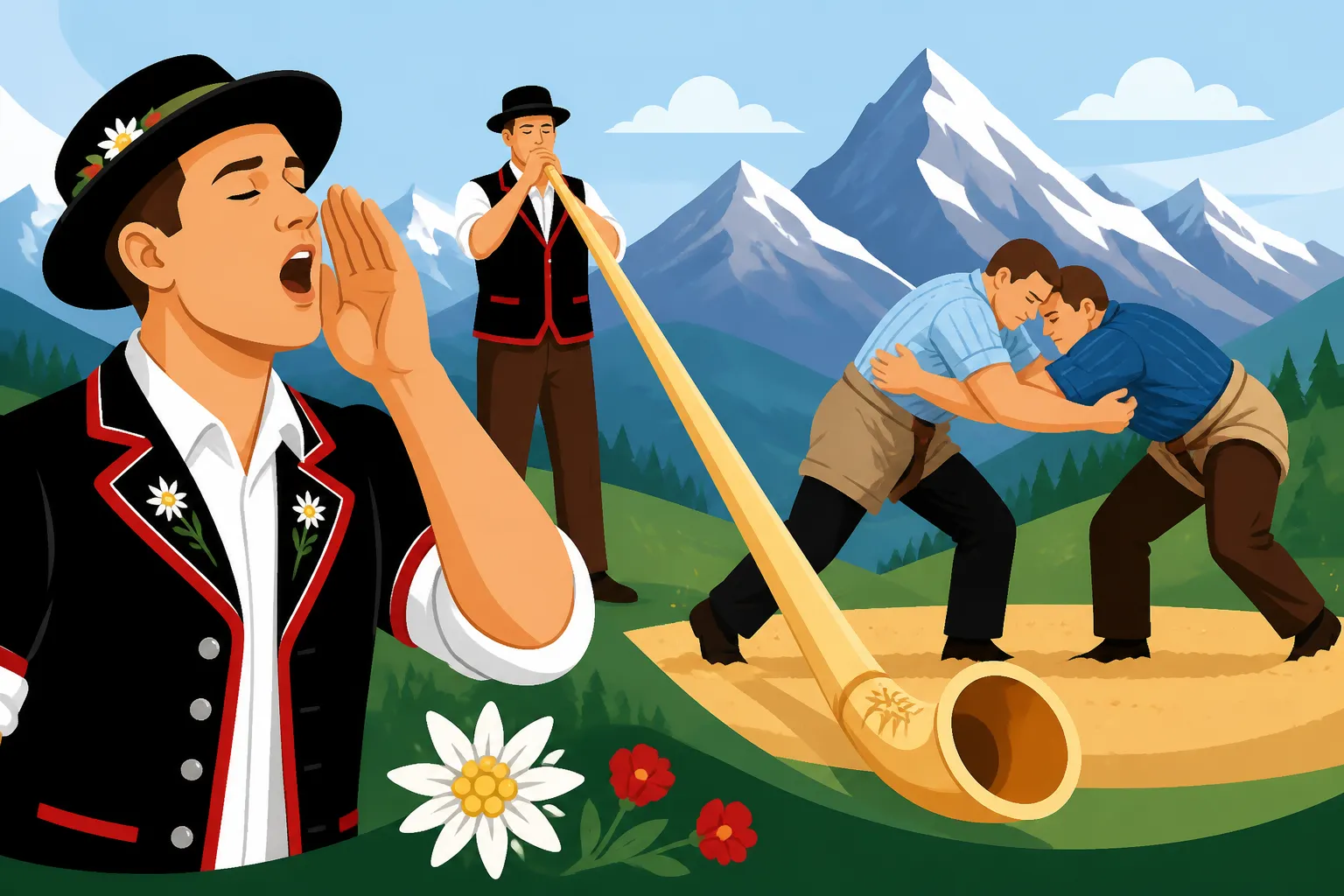
As someone who's lived here long enough to stop flinching at the first sound of a cowbell, I'm here to tell you that these aren't just quaint tourist shows. Swiss folk traditions like yodeling, alphorns, and Schwingen (Swiss wrestling) are living, breathing parts of the culture, embodying centuries of history, community spirit, and a deep connection to the land. They might seem a bit old-fashioned or even a little baffling at first, but understanding them is a fantastic way to truly connect with the heart of Switzerland beyond the clichés. This guide is your friendly, no-nonsense introduction to these wonderfully unique practices, helping you appreciate the authentic Swiss soul.
The Heartbeat of the Alps: Yodeling in Switzerland
Ah, yodeling! For many newcomers, this is probably the most recognizable, yet often misunderstood, Swiss sound. You might associate it with cheesy tourist advertisements or perhaps a cartoon character. But let me tell you, real Swiss yodeling is far from a joke. It's a powerful, deeply emotional, and technically complex art form that has resonated through these valleys for centuries.
More Than Just Singing: A Rich History
The origins of yodeling are rooted in necessity, born from a time when communication across vast, rugged mountain terrain was a challenge. Imagine a farmer needing to call his cows from a distant pasture, or shepherds wanting to signal to each other across valleys. They developed a unique vocal technique, characterized by rapid changes in pitch between the chest voice (low tones) and head voice (high falsetto), to carry their messages over long distances. This wasn't about melodic beauty; it was about sheer sonic reach. The German word "Jodeln" itself implies this calling out.
Over time, this functional form of communication evolved into a beloved musical expression. As communities grew and settled, yodeling became an integral part of social gatherings, celebrations, and even religious ceremonies. It transitioned from simple calls to intricate songs, often performed a cappella by choirs or small groups, sometimes accompanied by instruments like the accordion or dulcimer. What you hear today is a sophisticated blend of these historical roots and modern interpretations, but the raw, unadulterated power of the human voice remains at its core. It’s a sound that truly connects you to the history of the alpine people, their struggles, and their enduring spirit.
Different Styles and Regional Variations
Just like Switzerland has four national languages and countless local dialects, yodeling isn't a monolithic art form. Different regions have developed their own distinctive styles, influenced by local geography, musical traditions, and even the natural acoustics of their valleys. In German-speaking Switzerland, which is where yodeling is most prevalent, you'll find variations like "Naturjodel" (natural yodel) or "Jodelgesang" (yodel singing).
Naturjodel is perhaps the purest form, often performed without words, focusing solely on the vocal improvisation and the distinct chest-to-head voice shifts. It’s a raw, almost primal sound that genuinely feels like a call from the wilderness. When you hear a skilled Naturjodler, you'll notice how they weave complex harmonies and rhythms using only their voice, creating an incredibly moving experience. Jodelgesang, on the other hand, incorporates actual lyrics, usually in Swiss German dialect, telling stories of mountain life, love, or the beauty of the landscape. These songs are often performed by choirs or ensembles, with intricate vocal arrangements. The melodies are typically folk-inspired, and the yodel technique is seamlessly integrated into the song structure. If you’re ever at a local festival, listen closely; you’ll start to pick up on these subtle differences, especially if you catch a performance of one of the many local Jodlerklubs (yodeling clubs) which are mainstays of community life.
Where to Experience Authentic Yodeling Today
If you're looking to experience authentic Swiss yodeling, don't just wait for a tourist show in the main cities. While you might find performances there, the real magic happens in the more rural areas, especially during local festivals. One of the best ways to catch a genuine performance is to look for "Jodlerfeste" (yodeling festivals) or local "Schwing- und Älplerfeste" (wrestling and alpine festivals) which often feature yodeling competitions and concerts. These events are usually advertised locally, but you can also check regional tourism boards.
For a year-round taste, consider visiting a traditional mountain restaurant (Berggasthaus) in cantons like Bern, Obwalden, Nidwalden, or Appenzell. Sometimes, impromptu performances break out, or they might have scheduled "Stobete" evenings with live folk music. You could also seek out recordings by well-known Swiss yodel groups like the Jodlerklub Wiesenberg or the Oesch's die Dritten, who have brought Swiss folk music to wider audiences. Seeing these traditions live is a truly immersive experience and a fantastic way to understand the Swiss cultural fabric, often alongside other events mentioned in our guide on Swiss Festivals and Traditions: A Year-Round Cultural Calendar. Don't be afraid to ask locals where to find the "echte" (real) yodeling – they'll be thrilled to guide you! If you're planning a trip to a specific region for a festival, checking Booking.com for local guesthouses well in advance is always a good idea, as accommodations can fill up quickly.
The Sound of Switzerland: The Majestic Alphorn
Standing tall, often over three meters long, the alphorn is undeniably one of Switzerland's most iconic symbols. Its deep, resonant sound evokes images of majestic mountains and serene pastures, and seeing one played live is an experience you won't soon forget. It’s a truly magnificent instrument that holds a special place in the hearts of many Swiss people.
From Communication Tool to Cultural Icon
Much like yodeling, the alphorn's origins are deeply practical. For centuries, shepherds in the Swiss Alps used these long, conical wooden horns to communicate across mountain valleys. It wasn't just for calling their herds; it was a way to warn distant villagers of approaching storms, signal the beginning and end of the day, or even relay news. The unique, deep tones carry remarkably far, making it an ideal instrument for the vast, open spaces of the Alps. Historically, each valley might have had its own unique calls, a sort of melodic Morse code echoing through the peaks.
Over time, with the advent of modern communication methods, the alphorn’s practical utility waned. However, instead of disappearing, it underwent a transformation, evolving from a functional tool into a cherished cultural icon. By the 19th century, Swiss romantic nationalism embraced the alphorn as a symbol of alpine identity and tradition. It became a staple at folk festivals, parades, and tourist events, celebrated for its unique sound and visual grandeur. Today, it’s a powerful reminder of Switzerland's pastoral heritage, a direct link to the hardy mountain dwellers who shaped the nation's early character. When you hear it, it's not just music; it’s the sound of history resonating through the mountains.
How an Alphorn is Made and Played
The craftsmanship involved in creating an alphorn is truly remarkable. Traditionally, these instruments are carved from a single, young pine or spruce tree that has a naturally curved base, usually found growing on steep slopes. This natural curve is essential for the characteristic bell shape at the end. The wood is carefully split lengthwise, hollowed out, and then glued back together, often reinforced with bands of bark or wicker. The process is meticulous and time-consuming, requiring significant skill and patience. A typical alphorn can measure anywhere from 2.5 to 4 meters (8 to 13 feet) in length, and its construction often takes hundreds of hours.
Playing the alphorn is equally specialized. Unlike most brass instruments, the alphorn has no keys, valves, or finger holes to change notes. Players rely solely on their embouchure – the manipulation of their lips and breath – to produce the "natural tones" or harmonics of the instrument. This means that only a limited number of notes can be played, all within the natural harmonic series. These notes are often referred to as "alphorn notes" and are precisely what give the instrument its distinctive, somewhat haunting sound. Mastering the embouchure to produce clear, consistent tones across the instrument's range requires immense practice and lung power. It’s an incredibly demanding skill, and watching a musician effortlessly produce those rich, deep sounds is quite mesmerizing. You might find a performance that also involves other traditional instruments, creating a truly unique soundscape, much like you'd find at various Swiss Folk Traditions: Yodeling, Alphorns, and Schwingen events.
Finding Alphorn Performances and Workshops
Experiencing the alphorn live is a must for any expat or tourist looking to delve into Swiss culture. You'll most commonly encounter alphorn players at major folk festivals, especially around Swiss National Day (August 1). Many tourist-heavy mountain regions like Interlaken, Grindelwald, Zermatt, or Lucerne will often have alphorn players performing in public squares or near popular cable car stations during peak season. It’s a great photo opportunity, but more importantly, it’s a chance to truly hear the instrument in its natural setting.
If you’re keen on a more hands-on experience, some cultural centers or private instructors offer introductory alphorn workshops. These can be a fantastic, albeit challenging, way to learn the basics of embouchure and perhaps even produce your first few "natural tones." These unique workshops are often listed on local tourism websites, or you might find them on experience platforms like GetYourGuide, which sometimes offers cultural immersion activities. Keep an eye out for performances at the "Eidgenössisches Jodlerfest," a massive national yodeling festival held every three years, where alphorns feature prominently. It's truly a spectacle of sound and tradition that’s worth planning a trip around. Transportation to these events can often be easily arranged via Omio, especially if you're traveling from one of the major Swiss cities.
Switzerland's National Sport: Schwingen (Swiss Wrestling)
When you hear "wrestling," you might think of brightly colored singlets and elaborate theatrical moves. In Switzerland, "Schwingen" is something entirely different. It's a deeply traditional, honorable sport, often described as a blend of wrestling and sumo, steeped in respect and rural pride. Forget the glitz; this is about strength, technique, and a fair fight in a sawdust ring.
Understanding the Rules and Rituals of the 'Bösen'
Schwingen, often translated as "Swiss wrestling," is performed by two competitors, known as Schwinger, in a circular ring covered with sawdust. The objective is to throw your opponent onto their back and hold them there for a split second, with both shoulders touching the ground. The most distinctive aspect of Schwingen is the way the wrestlers grip each other: each wears a pair of special short trousers made of jute or canvas over their regular clothes, and the combatants grasp the back of their opponent's trousers and belt. This grip, known as the Hoselupf, is fundamental to the sport, allowing for powerful throws and leverage.
The fight ends when one Schwinger is thrown and pinned, and traditionally, the winner helps the loser to their feet and brushes the sawdust off their back – a beautiful gesture of sportsmanship and respect. There are specific throws and techniques, or Schwünge, that are taught and practiced, many with picturesque names evoking farm life. Unlike other forms of wrestling, there's a strong emphasis on fair play and ethical conduct, even during intense competition. These aren't just rules; they're deeply ingrained values of the Bösen (the "Evil Ones" or "Tough Guys" – a respectful term for the top wrestlers). The winner isn't just the strongest; they're also the most honorable, reflecting core Swiss values. This respect for opponents and tradition is something you’ll encounter in many aspects of Swiss Customs and Etiquette: Social Norms Every Newcomer Should Know.
The Significance of 'Hoselupf' and Prize Cattle
The Hoselupf isn't just a technical term for the grip; it represents the very essence of Schwingen. The sport is often referred to as "Hosenlupf" because of this crucial hold. It highlights the close, almost intimate, nature of the grappling, where both wrestlers are tethered to each other through their clothing. The significance extends beyond the ring, symbolizing the deeply rooted, down-to-earth character of the sport.
Perhaps even more fascinating than the Hoselupf itself is the prize awarded to the victor of a major Schwingfest. Forget cash prizes or shiny trophies; the ultimate award, especially for the winner of the Eidgenössisches Schwing- und Älplerfest (the Federal Wrestling and Alpine Games, held every three years), is usually a living bull. Yes, a bull! This tradition harks back to the agricultural roots of the sport, where owning a strong, healthy bull was a sign of prosperity and status. The prize bull, often adorned with flowers and ribbons, is paraded around the arena, symbolizing strength, virility, and the connection between the Schwinger and the land. Lesser prizes might include other animals like calves or heifers, or practical farm equipment, reinforcing the rural character. This practice truly sets Schwingen apart and highlights its cultural depth, far removed from modern commercialized sports. These events are often held in conjunction with other traditional gatherings, sometimes even celebrating the Alpabzug (Cattle Descent): Autumn Festivals in the Mountains when cattle return from alpine pastures.
Attending a Schwingfest: What to Expect
Attending a Schwingfest is an incredible way to immerse yourself in authentic Swiss culture. These events are typically held in summer and are more than just sporting competitions; they're community gatherings, often combined with yodeling, alphorn performances, and plenty of traditional food and drink. The atmosphere is boisterous and friendly, filled with families and friends cheering on their favorite Schwinger. You'll find a genuine, convivial spirit that's quite infectious.
Smaller, local Schwingfeste are held throughout the year, especially in rural cantons. However, the undisputed highlight is the aforementioned Eidgenössisches Schwing- und Älplerfest (ESAF), which draws hundreds of thousands of spectators and is considered the pinnacle of the sport. Tickets for ESAF are highly coveted and sell out almost instantly. If you manage to get one, or even if you just experience a local Schwingfest, you'll see men (and increasingly, women, though women's Schwingen is separate) in traditional attire, gripping each other and executing powerful throws in the sawdust ring. Don't be surprised to see people picnicking, enjoying local specialties, and soaking in the relaxed, family-friendly vibe. It’s a fantastic opportunity to see Swiss people truly let loose and celebrate their heritage. It’s a very different experience from attending a corporate event in, say, Zurich Expat Healthcare Guide: Hospitals, Clinics, and Emergency Contacts but equally defining of Swiss identity.
| Tradition | Origin | Typical Purpose | Key Elements | Where to Experience |
|---|---|---|---|---|
| Yodeling | Mountain communication | Musical expression, cultural identity | Voice modulation, a cappella/choirs | Jodlerfeste, Berggasthäuser |
| Alphorn | Shepherd communication | Musical performance, symbolic | Long wooden horn, natural tones | Festivals, mountain tourist spots |
| Schwingen | Rural wrestling/sport | Competition, community pride | Hoselupf grip, sawdust ring, prize bull | Schwingfeste, Eidgenössisches Feste |
Beyond the Big Three: Other Enduring Swiss Traditions
While yodeling, alphorns, and Schwingen might be the most globally recognized Swiss folk traditions, they are by no means the only ones. Switzerland is a treasure trove of unique customs, some dating back centuries, all contributing to its rich cultural mosaic. These other traditions often tie into regional identities, seasonal changes, or local folklore, offering even more layers to explore.
Flag Throwing (Fahnenschwingen) and Hornussen
Beyond the main trio, two other distinctive Swiss folk sports that frequently accompany Schwingfeste are Fahnenschwingen (flag throwing) and Hornussen. Fahnenschwingen is a captivating display of agility, strength, and artistry, where participants skillfully toss and twirl large, heavy Swiss flags in intricate patterns. It's a mesmerizing performance, often accompanied by alphorns or yodeling, requiring immense precision and rhythm. Each Fahnenschwinger develops their own unique routine, making it both a sport and a performance art. You'll often see these dazzling displays at opening ceremonies for major events or during folk parades, adding a vibrant visual element to the traditional soundscape.
Hornussen, on the other hand, is sometimes called "farmer's golf" or "farmer's baseball" and is truly unique to Switzerland. It's a team sport played outdoors, usually in fields, where one team hits a small, hard puck (the Nouss) with a long, flexible stick (the Hornuss) into the opposing team's territory. The aim is to hit the Nouss as far as possible, while the opposing team tries to "catch" or stop it in the air using large, shovel-like boards (Schindeln) before it hits the ground. It requires incredible hand-eye coordination and teamwork. The distinct whizzing sound of the Nouss as it flies through the air is unmistakable. While less common than Schwingen or yodeling events, Hornussen is an equally important part of Swiss rural culture, particularly in the Emmental region, and seeing a match is a true local experience.
Folk Costumes and Regional Dress
You might occasionally see people in traditional Swiss folk costumes, especially at festivals or on special occasions like Swiss National Day (August 1). These aren't just quaint outfits; they are deeply symbolic representations of regional identity and history. Unlike a single national costume, Switzerland boasts hundreds of different traditional dresses, each canton and often each valley having its own distinct variations. For instance, you might see the elaborate, often silver-buttoned costumes of Appenzell, the intricately embroidered blouses of Bern, or the simpler, darker dresses of some mountain regions.
These costumes, often passed down through generations, are typically worn for specific folk dances, religious processions, or significant cultural events. They reflect local traditions, available materials, and historical fashion. For women, this usually includes a long dress, an apron, a blouse, and a distinctive headpiece. Men's costumes often feature lederhosen (though not as universally as in Bavaria) or specific jacket and hat styles. If you see someone in a Tracht (traditional costume), it's a sign of pride in their heritage, and it's a wonderful visual link to the historical tapestry of the area. It’s also interesting to note how these costumes sometimes incorporate elements that reflect the particular region's Regional Swiss Cheeses: Gruyère, Emmental, Appenzeller, and More or other local products through embroidery or symbolic colors.
Culinary Traditions and Local Festivities
Swiss folk culture isn't just about sounds and sports; it's also about taste and community gatherings. Every region boasts its own rich culinary traditions that are deeply intertwined with local customs and festivals. Think about the hearty mountain fare: robust cheeses like Gruyère, Emmental, and Appenzeller, often the stars of alpine festivals; or the creamy, bubbling goodness of Fondue and Raclette Culture: How and When the Swiss Eat Them, which are more than just meals—they're social rituals. Seasonal specialties also play a huge role, from cherry festivals in Zug to chestnut festivals in Ticino, celebrating the bounty of the land.
Beyond specific dishes, Swiss folk culture thrives at local Dorffeste (village festivals) and markets, which pop up throughout the year. These are where you truly experience the communal spirit. You'll find stalls selling regional crafts, local produce, and, of course, delicious food and drink. These festivals are a riot of sounds, smells, and sights, often featuring impromptu performances, parades, and a general air of celebration. They’re fantastic opportunities for expats to engage with local communities, try authentic cuisine, and witness traditions firsthand. When planning your visits, you can often find information about these events on local tourism websites. For travel to these charming villages, Omio can help you find the most convenient train and bus connections.
How Expats Can Engage with Swiss Folk Culture
As an expat, it's easy to stick to the well-trodden paths, but truly integrating into Swiss life means embracing its unique customs. Don't be intimidated by the seemingly reserved nature of the Swiss; many are genuinely proud of their heritage and delighted when foreigners show an authentic interest. Engaging with folk culture is one of the most rewarding ways to bridge the gap.
Attending Festivals and Local Events
This is perhaps the easiest and most enjoyable way to start. Switzerland has a packed calendar of local festivals and events throughout the year, celebrating everything from cheese and wine to specific harvests and, of course, its various folk traditions. Many of these, like a local Schwingfest or a Jodlerfest, are fantastic opportunities to see yodeling, alphorns, and Schwingen in their natural habitat.
Beyond the major national events, keep an eye out for smaller Dorffeste (village festivals) or Chilbi (fairs) in your local area. These are often less touristy and offer a more intimate glimpse into community life. Look for events like the Alpabzug (cattle descent) in autumn, where decorated cows are led down from the alpine pastures, often accompanied by alphorns and traditional music – a truly picturesque spectacle mentioned in our guide on Alpabzug (Cattle Descent): Autumn Festivals in the Mountains. Don’t just observe; try the local food, listen to the music, and soak in the atmosphere. Remember, these are often family-friendly affairs, so it’s a great way to meet other parents if you have children, or simply make new connections. Booking.com is a great resource if you plan to stay overnight for a multi-day festival, especially in smaller towns where options can be limited.
Learning a Tradition: From Spectator to Participant
If you're feeling adventurous and truly want to dive deep, consider actually learning one of these traditions! While it might sound daunting, there are opportunities out there. Many cantons have Jodlerklubs (yodeling clubs) or alphorn associations that welcome new members, even foreigners. You might not become a master overnight, but the process of learning, practicing, and performing alongside locals is an unparalleled way to gain insight into the culture and build lasting friendships. It requires commitment and often some language skills (primarily German or Swiss German for most), but the rewards are immense.
Similarly, while Schwingen might be a bit physically demanding for casual participation, understanding the techniques and perhaps trying some basic moves in a controlled environment can be a fun experience. Many regions also offer workshops for other folk arts like Fahnenschwingen (flag throwing) or traditional woodcarving. Don't be afraid to ask at local tourism offices or cultural centers about potential classes or clubs. It's a fantastic way to move beyond being just an observer and truly become part of the local fabric. Joining a club is also one of the best ways to start Volunteering and Local Clubs (Vereine): The Best Way to Meet Swiss People.
Bridging the Cultural Gap Through Shared Experiences
Ultimately, engaging with Swiss folk traditions is about shared experiences. It's about recognizing that these customs are not just for the Swiss; they are part of the vibrant cultural exchange that makes living abroad so enriching. When you show genuine interest in an alphorn performance or cheer at a Schwingfest, you're not just a tourist; you're participating in a communal moment that connects you to the people around you.
Take the opportunity to chat with locals at these events (even a few words in German or French go a long way!). Ask about the history of the traditions, the meaning behind the songs, or the rules of the game. Most Swiss people are incredibly proud of their heritage and eager to share it with curious newcomers. These moments of connection over a plate of local food or a shared cheer for a Schwinger are invaluable in building bridges and truly feeling at home in Switzerland. Platforms like GetYourGuide sometimes offer guided tours specifically focused on cultural immersion, which can be a great starting point for those who prefer a structured introduction before venturing out independently.
Disclaimer
Please remember that while this guide provides extensive information, cultural practices and regulations can change. It is always advisable to verify specific event dates, locations, and any participation requirements with official local tourism boards or event organizers. This information is intended for general guidance and personal experience.