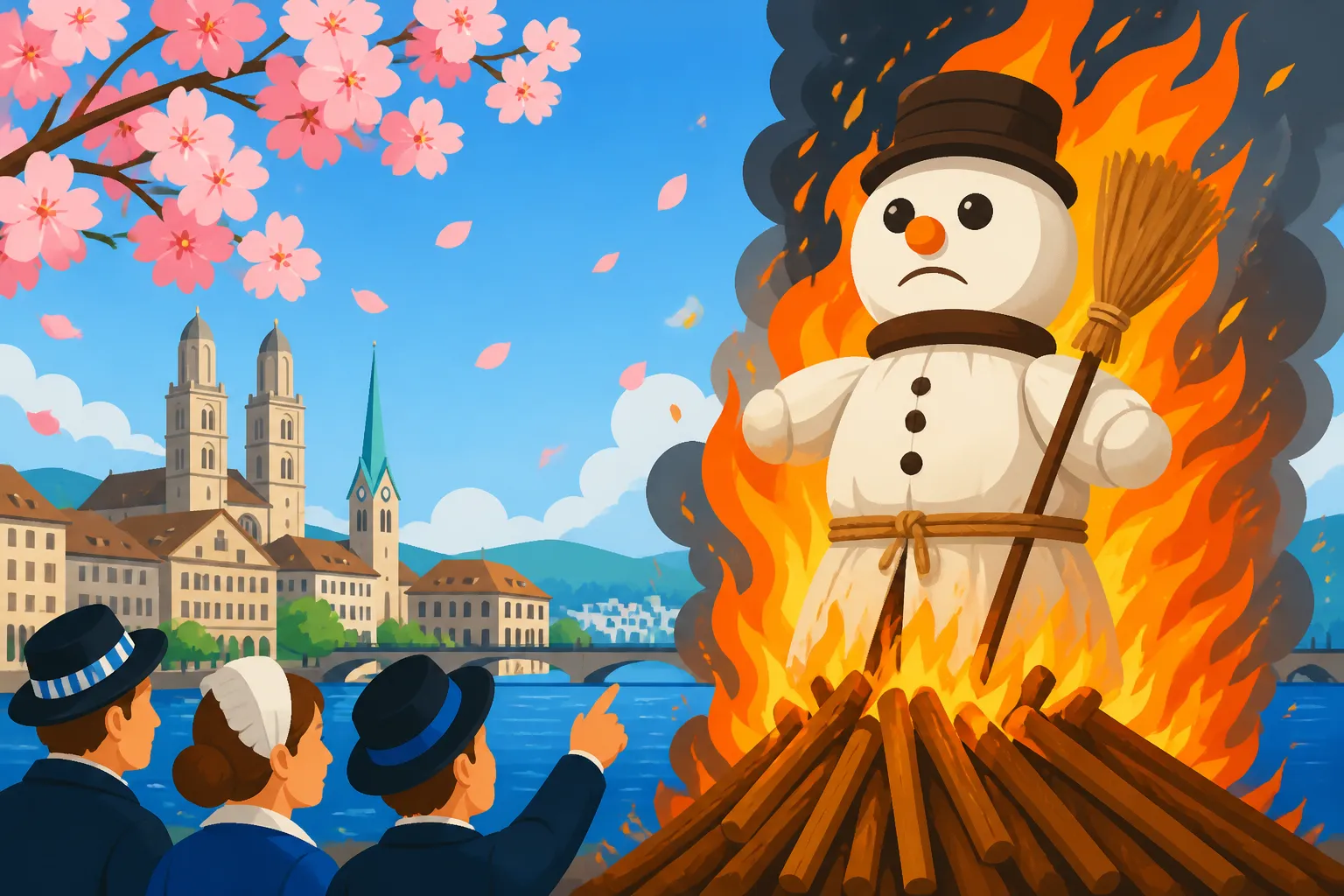
Sechseläuten: Zurich’s Spring Festival and the Burning Böögg
Ah, Sechseläuten in Zurich! If you’re a newcomer, you’ve probably heard whispers of a giant snowman, men in funny hats on horses, and a massive bonfire. You might even be wondering if it’s some kind of medieval reenactment or a local fever dream. Believe me, you’re not alone in feeling a tad bewildered! This guide is here to unravel the delightful, slightly bonkers mystery of Zurich's beloved spring festival, helping you understand its quirks and truly soak in the unique atmosphere.
What Exactly Is Sechseläuten? A Dive into Zurich's Quirky Spring Tradition
Sechseläuten, often lovingly abbreviated to "Sächsilüüte" in Swiss German, is more than just a big party; it’s a deeply rooted historical and cultural event that marks the arrival of spring in Zurich. For centuries, it has been the city's way of bidding farewell to the long, often grey, Swiss winter and welcoming the longer, warmer days ahead. The name itself, "Sechseläuten," literally translates to "the six o'clock ringing," referring to the traditional ringing of the church bells at 6:00 PM, signaling the end of the workday in bygone eras. This seemingly simple act was once a significant moment, as it meant workers could finally toil past sunset, marking the shift from winter hours to summer hours.
The Historical Roots and Guild System
To truly grasp Sechseläuten, you need to understand Zurich’s ancient guild system, which isn’t just a dusty relic but a vibrant, living part of the city's identity. Imagine a city where different trades – the bakers, the butchers, the carpenters, the silk weavers – formed powerful guilds that governed much of urban life for centuries. These weren't just professional associations; they were political, social, and even military entities that shaped Zurich's development from the Middle Ages onwards. Each guild had its own hall, its own customs, and its own proud history.
Today, while their political power is largely ceremonial, the guilds remain fiercely proud of their heritage and traditions. Sechseläuten is their moment to shine, to parade through the streets in elaborate historical costumes, often accompanied by horses, marching bands, and sometimes even their traditional floats depicting their craft. It's a fantastic display of continuity, where centuries-old traditions are paraded through a modern financial hub. You'll see members of the Zunft zur Meisen, the Zunft zur Waag, or the Zunft zum Kämbel, each with their distinct colors and symbols, showing off their connection to the city's past. If you’re interested in diving deeper into how these historical elements shape professional interactions in Switzerland, you might find our guide on The Swiss Corporate Culture: Meetings, Hierarchy, and Professional Etiquette fascinating, as echoes of these traditions can still be felt in subtle ways.
Why Spring? The Symbolism of Winter's End
The core essence of Sechseläuten, beyond the historical pageantry, is the deep-seated human desire to shed the gloom of winter and embrace the promise of spring. For an expat who's experienced a full Swiss winter – the short days, the Nebelmeer (sea of fog) that can sometimes blanket the lowlands for weeks, and the constant need for warm layers – the longing for spring is a visceral, understandable feeling. Sechseläuten provides that cathartic release.
The festival is essentially a symbolic burning away of winter. Historically, this was a critical moment for an agricultural society, marking the time when nature awoke, planting could begin, and the days grew long enough for extensive outdoor work. It’s a collective sigh of relief, a moment of communal optimism. The entire city, regardless of its technological advancements, pauses to participate in this ancient ritual, acknowledging the turning of the seasons and the hopeful return of vitality and warmth. It truly is one of the quintessential Swiss Festivals and Traditions: A Year-Round Cultural Calendar that defines the rhythm of life here.
The Star of the Show: The Böögg and Its Fiery Fate
Let's be honest, for many, the main event of Sechseläuten isn’t the historical parade, as beautiful as it is, but the dramatic immolation of the Böögg. This is where tradition takes a decidedly explosive turn, and the city collectively holds its breath, not just for the spectacle, but for a quirky weather prediction.
Who is the Böögg? A Snowman with a Prediction
So, who exactly is this 'Böögg'? Picture a massive snowman, about 3.4 meters (around 11 feet) tall, perched atop a towering pyre of wood. This isn't just any snowman; it's the personification of winter itself. The Böögg is stuffed with fireworks and explosives, particularly in its head. The legend goes that the faster the Böögg's head explodes after the bonfire is lit, the better (meaning warmer and sunnier) the summer will be. If it takes a long time, well, prepare for a rather miserable, chilly summer.
The Böögg has a long, fascinating history, originally a figure from popular folklore used in various spring and winter expulsion rituals across Switzerland. Zurich adopted this particular iteration, making it the central figure of its Sechseläuten celebrations. It's a whimsical, yet deeply serious (to the locals, at least!), tradition that captivates everyone. You'll hear people discussing the time of the Böögg's explosion for weeks afterwards, comparing it to previous years and predicting the upcoming weather. It's a conversation starter, a source of local pride, and occasionally, a point of contention if the prediction doesn't quite pan out.
The Parade of the Guilds: A Spectacle of Tradition and Pageantry
Before the Böögg meets its fiery end, the city comes alive with the grand parade of the guilds, known as the "Zug der Zünfte." This procession is a feast for the senses and a journey back in time. On Monday afternoon, the 26 Zurich guilds, along with five guest guilds, parade from their respective guild houses to the Sechseläutenwiese, the large meadow by Lake Zurich where the Böögg awaits.
Each guild is represented by its members, often dressed in meticulously recreated historical costumes reflecting their original trade. You'll see riders on horseback, representing the mounted units that once guarded the city, and floats depicting historical scenes or modern interpretations of their craft. There are marching bands, often playing traditional Swiss tunes, and the sheer volume of participants – thousands of guild members – creates an electric atmosphere. The parade typically starts around 3:00 PM, winding its way through the old town and along the Limmatquai before reaching the main square. Expect crowds, noise, and an infectious sense of celebration. Locals often stake out their spots early along the route, sometimes with portable chairs and picnic baskets, to get the best views of the passing spectacle. It's truly a unique blend of formal tradition and boisterous public festivity.
Experiencing Sechseläuten as an Expat: Tips and Tricks
As an expat, navigating a local festival can feel like being dropped into a foreign film without subtitles. But fear not, Sechseläuten is an incredibly welcoming event, and with a few pointers, you can experience it like a seasoned local.
Best Viewing Spots for the Böögg and Parade
Getting a good view of the Böögg burning can be a bit of a strategic mission. The main burning takes place on the Sechseläutenwiese, a large open area next to Bellevue and the Opera House. This area, often referred to as the "Bööggenplatz," gets absolutely packed. If you want to be close to the action when the pyre is lit around 6:00 PM, you need to arrive early – and I mean early. People start gathering in the late afternoon, often immediately after the guild parade concludes. Expect shoulder-to-shoulder crowds, so if you're not a fan of being squished, or if you have small children, this might not be your primary viewing spot.
Alternatively, you can try to find a spot along the Limmatquai for the parade, which offers a slightly less intense but still vibrant experience. The bridges over the Limmat also offer good elevated views, but these too fill up quickly. For a more relaxed view of the Böögg burning, consider finding a spot further back on the Sechseläutenwiese or even across the lake, where you can still see the smoke and fire, albeit from a distance. Public transport, particularly trams, will be heavily affected around the city center, so plan to walk or arrive early. Consider checking options through services like Omio for real-time public transport information or alternative routes if you're coming from further afield.
Food, Drink, and the After-Party at the Bööggenplatz
One of the most charming aspects of Sechseläuten, and a fantastic way to truly immerse yourself, is the informal after-party that spontaneously erupts on the Bööggenplatz once the main fire has died down. This is where the Swiss truly let their hair down – well, as much as they do anyway! As soon as the Böögg has been consumed, people flood onto the still-smouldering ashes of the bonfire. What follows is a gigantic, impromptu public barbecue.
Locals bring their own sausages (cervelats are a classic!), bread, and sticks, and they roast them directly over the residual embers. The air fills with the smell of wood smoke and grilled meat, and a festive, communal atmosphere takes over. This is not some organized, ticketed event; it's genuinely spontaneous and deeply Zurich. If you want to partake, simply bring your own sausages and a stick, join the throng, and don't be shy. It's an incredible experience of Swiss conviviality. Many of the local guild houses and restaurants around the city center will also have special menus or outdoor stalls selling traditional food and drink, so you won't go hungry or thirsty, even if you don't fancy roasting your own cervelat. You can also explore local eateries that embrace the Swiss Food and Drink Culture: Regional Specialties and Dining Etiquette if you prefer a sit-down meal.
Navigating the Logistics: Getting There and Around
Zurich during Sechseläuten is a bustling, vibrant, and sometimes overwhelming place. Planning your transportation and accommodation ahead of time is absolutely key to enjoying the festival without unnecessary stress.
Public Transport Disruptions and Alternatives
The city center, especially around Bellevue, Bürkliplatz, and the Limmatquai, experiences significant road closures and public transport diversions throughout the day, particularly during the main parade and the Böögg burning. Trams and buses will have altered routes or may stop running in certain areas entirely. This is perfectly normal and well-communicated by the ZVV (Zurich Transport Network) in advance. My best advice for locals and visitors alike is to embrace walking. Zurich is a wonderfully walkable city, and navigating the closed-off streets on foot allows you to soak in the atmosphere more fully.
If you're coming from outside the immediate city center, or even from another canton, rely heavily on the SBB train network. Zurich Hauptbahnhof (main station) will be a major hub, and from there, it’s a manageable walk to the festival areas. Checking the SBB.ch website or using the SBB Mobile app is crucial for up-to-date schedules and disruption information. If you’re traveling from further away, like Basel or Bern, consider looking at train tickets and routes on platforms like Omio in advance, as certain connections might be busier than usual. Remember, driving into the city center on Sechseläuten Monday is generally ill-advised due to road closures and non-existent parking.
Accommodation and Planning Ahead
Sechseläuten is a major event, drawing visitors from across Switzerland and beyond. This means that accommodation in Zurich, especially hotels in the city center, gets booked up quickly and prices can climb. If you're planning to visit Zurich specifically for the festival and need a place to stay, my advice is to book your room as far in advance as possible. Don't wait until the last minute, or you'll be left with limited (and expensive) options further out from the action.
Platforms like Booking.com are excellent resources for finding hotels, but even there, you’ll see availability dwindle weeks before the event. If you can't find anything in the immediate city, consider looking at places in well-connected suburbs or even towns a short train ride away, like Winterthur or Baden. Just make sure to double-check evening train schedules, as services might be reduced after the late-night celebrations. While Zurich is known for its high cost of living, planning your visit carefully can help manage your Budgeting in Zurich and Geneva: Managing Expat Expenses in High-Cost Cities.
More Than Just Fire: The Cultural Significance and Fun
Beyond the literal fire and parade, Sechseläuten offers deeper layers of cultural insight and opportunities for fun, especially for families.
The Children's Parade (Kinderumzug): A Gentle Warm-Up
One of the most delightful precursors to the main event is the Children's Parade, or "Kinderumzug," which takes place on the Sunday before the main Sechseläuten Monday. This is a much smaller, gentler, and incredibly charming version of the guild parade, perfect for families with young children. Kids from Zurich's schools and various associations dress up in historical costumes, often representing guilds or traditional Swiss figures, and parade through the city.
It’s less crowded, less intense, and has a wonderfully innocent charm. You’ll see proud parents and grandparents lining the streets, cheering on their little ones. It's a fantastic way to introduce children to the traditions of Sechseläuten without the overwhelming crowds and noise of the main event. It also serves as a poignant reminder that these traditions are continually passed down through generations, ensuring their longevity and connection to the city's future. For those living in Zurich with kids, participating in the Kinderumzug is a rite of passage.
Joining In: Embracing the Local Spirit
Sechseläuten is one of those rare times when the famously reserved Swiss really let loose and celebrate with gusto. As an expat, this is your golden opportunity to shed any inhibitions and truly embrace the local spirit. Don't just observe; participate! Buy a cervelat from a street vendor and join the barbecue. Find a cozy spot in a pub or a café to enjoy the atmosphere. Strike up a conversation with locals – many will be happy to share anecdotes about the festival or explain specific traditions.
Consider exploring parts of Zurich you might not have seen before, especially the historic Old Town (Niederdorf) which is buzzing with activity during the festival. If you're looking for broader insights into Zurich, our guide on Exploring Lucerne: Old Town, Lake Cruises, and Mount Excursions (which also touches on general Swiss city exploration) might inspire some further adventures in the area beyond the festival. Even though you might not understand every historical nuance, the sheer joy and communal celebration are infectious. It's a fantastic opportunity to feel more connected to your adopted home and understand a unique facet of Swiss identity. If you're looking for other ways to experience local culture, sites like GetYourGuide offer various walking tours and experiences in Zurich that can deepen your understanding of the city's history and traditions, perhaps even focusing on the significance of the guilds outside of festival season.
Understanding the Nuances: What to Expect and Not to Expect
Like any major public event, Sechseläuten comes with its own set of unwritten rules and practical considerations. Being prepared can make all the difference to your experience.
Safety and Crowds: Keeping Your Head (and Valuables)
As mentioned, Sechseläuten draws massive crowds, particularly on the Monday afternoon and evening. While Switzerland is incredibly safe, large gatherings always present common challenges. Be prepared for very dense crowds around the Bööggenplatz and along the main parade routes. If you're claustrophobic or uncomfortable in tight spaces, consider finding a less central viewing spot or experiencing the festival from one of the many pubs or restaurants lining the streets.
Keep a close eye on your belongings, as pickpockets can sometimes operate in crowded areas, just like anywhere else. Dress appropriately for the weather, which can be unpredictable in late April; layers are always a good idea. Wear comfortable shoes, as you’ll be doing a lot of walking and standing. If you're with children, ensure they have a contact number on them or a clear meeting point arranged, just in case you get separated in the throng. While emergencies are rare, it's always good to know the local emergency numbers (144 for ambulance, 117 for police). For general health concerns, remember guides like Emergency Rooms in Switzerland: Triage, Waiting Times, and Billing if the need arises, although we hope it won't!
Respecting Traditions (Even If They Seem Strange)
For those of us coming from outside Switzerland, some Swiss traditions can seem a bit… idiosyncratic. Sechseläuten, with its burning snowman and costumed guilds, is certainly one of them. However, it’s a deeply cherished and respected event for the people of Zurich. While it's fine to marvel and perhaps even chuckle at the absurdity of a giant snowman predicting summer, it's important to do so with respect for the tradition and its participants.
Avoid littering; the Swiss are meticulous about cleanliness, and the city is quickly cleaned up after the festival. Follow any instructions from event organizers or police. Most importantly, simply embrace the uniqueness. It's a chance to witness living history and a celebration of community that few other cities can offer. It’s a powerful reminder that even in a highly modern, efficient country, age-old customs continue to thrive, providing a sense of continuity and identity that is truly special. So, grab your camera, bring your curiosity, and prepare to be charmed by Zurich's fiery welcome to spring.
| Sechseläuten Key Facts | Details |
|---|---|
| What is it? | Zurich's traditional spring festival, burning winter in effigy. |
| When? | Always on the third Monday of April. Children's parade on the Sunday prior. |
| Main Events | Grand Guild Parade (approx. 3:00 PM), Böögg Burning (approx. 6:00 PM), informal public BBQ on the ashes (after 7 PM). |
| Location | City Center, especially Limmatquai (parade) and Sechseläutenwiese (Böögg burning) near Bellevue/Opera House. |
| The Böögg Prediction | The faster the Böögg's head explodes, the better (sunnier, warmer) the summer will be. |
| Typical Duration of Burning | Varies from under 6 minutes (very good summer!) to over 40 minutes (prepare for rain!). |
| Transport | Heavy public transport disruptions in the city center; use SBB to get to Zurich HB, then walk. |
| Cost | Free to attend; costs for food, drinks, and any public transport tickets. |
| Local Tip | Bring your own cervelat sausage and a stick for the post-Böögg bonfire BBQ. |
Disclaimer
Please note that while I strive to provide accurate and up-to-date information, details regarding public events, transport schedules, and local regulations can change. Always consult official Zurich city and transport websites for the most current information before making plans. This guide is for informational purposes only and does not constitute official advice.