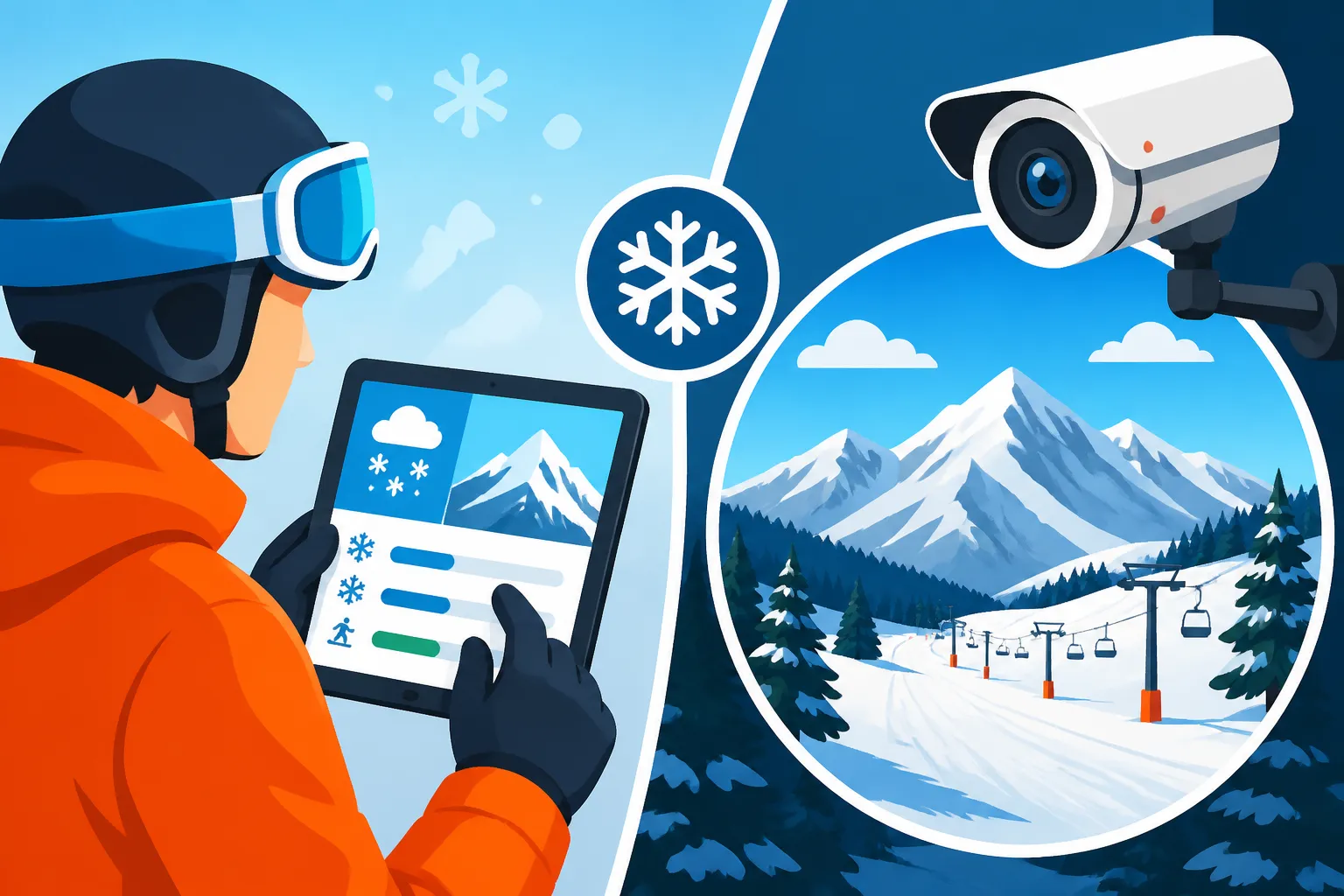
Snow Conditions and Webcams: Checking Before You Go
Oh, the Swiss mountains in winter! They are absolutely breathtaking, truly postcard-perfect. But let me tell you, there's nothing quite like spending a small fortune on train tickets, bundling up the kids, and trekking all the way up only to find yourself enveloped in a miserable, cloudy white-out with slush for snow. It’s a classic expat woe, and it's why understanding snow conditions and how to check them before you go is an absolute game-changer. This guide will walk you through all the essential tools and tips to ensure your next alpine adventure is exactly what you dreamed of.
Why Snow Conditions Matter More Than You Think (Beyond Just Skiing)
It's easy to assume "winter in Switzerland" means guaranteed snow and sunshine, but boy, that's not always the case! The Alps are majestic, but they're also unpredictable. You invest significant time, effort, and money into a mountain excursion, whether it's for skiing, a cozy fondue, or just a scenic view. Knowing the actual conditions on the ground can save you from a huge disappointment, or worse, put you in harm's way.
The Disappointment of Bad Weather
Imagine this: you've planned a romantic weekend getaway to Zermatt, picturing crisp air, blue skies, and the Matterhorn perfectly framed. You wake up, excited, ready to hit the slopes or simply enjoy a stroll through the village, only to pull back the curtains and see a thick, grey fog that reduces visibility to mere meters. The Matterhorn? Vanished. The pristine snow? Suddenly a grey, wet mess from overnight rain. It's soul-crushing, and it happens more often than you'd think. What seemed like a clear forecast in the valley can be an entirely different beast at 2,000 meters. Checking those conditions right up until the last minute, even on the morning of, can prevent this kind of heartbreak. Sometimes, a simple shift in elevation can mean the difference between glorious sunshine and a complete washout, or conversely, a rainstorm in the lowlands turning into a beautiful snowfall up high.
Safety First: Understanding Avalanche Risks and Trail Closures
This isn't just about comfort; it's about genuine safety. Switzerland is a mountainous country, and with mountains come inherent risks, especially during winter. Heavy snowfall, strong winds, or sudden temperature changes can dramatically increase the risk of avalanches. Mountain resorts are very diligent about publishing avalanche warning levels and closing dangerous slopes or hiking trails, but it’s your responsibility to check and heed these warnings. Don't ever underestimate the power of nature here. Venture off-piste without local knowledge or proper safety gear, or ignore a closed sign, and you're not just risking your fun; you're risking your life and potentially the lives of rescue workers. This applies even if you're not skiing; a simple winter walk can become treacherous if the path is iced over or if the trail leads into an area with a high avalanche risk. Always consult resources like the White Risk app from the Institute for Snow and Avalanche Research (SLF) for up-to-the-minute avalanche bulletins. For more on staying safe, especially when planning excursions, you might want to review our guide on Mountain Safety in Switzerland: Weather, Gear, and Emergency Numbers.
Planning for All Winter Activities (Not Just Downhill)
While many expats come to Switzerland eager to dive into Skiing in Switzerland: Resorts, Passes, and Costs for Residents, the winter wonderland offers so much more. Maybe you're looking for a peaceful Snowshoeing and Winter Hiking in Switzerland for Non-Skiers, or perhaps some family fun on a Sledding (Schlitteln) Runs in Switzerland: Family Winter Fun. The ideal snow conditions for each activity can vary wildly. Downhill skiers want fresh powder, but too much can mean closed lifts. Hikers need packed trails, but fresh snow can make them impassable. Cross-country skiers need a groomed track, which requires specific snow depths and preparation. I've been there, thinking a "snowy day" meant perfect conditions for everything, only to arrive and find the sledding run was closed due to too little snow in some parts, or too icy in others. The specific snow type, depth, and recent weather events dictate what activities are truly viable and enjoyable.
Your Go-To Sources for Reliable Snow Information
Navigating the various sources for snow conditions can feel a bit like sifting through a snowdrift itself. But trust me, there are a few key players and strategies that will give you the most accurate and up-to-date picture, directly from the source or through reliable aggregators.
Official Mountain Resort Websites and Apps
This is absolutely your first stop, every single time. Every major Swiss ski resort, from Zermatt to Verbier, Grindelwald, or Davos, has a comprehensive, usually multilingual, website and often a dedicated mobile app. These platforms are goldmines of information, updated multiple times a day. You'll find:
- Real-time Snow Reports: Current snow depths at various altitudes (valley, mid-mountain, summit), fresh snowfall amounts from the last 24 hours, and base conditions (powder, packed, icy, wet).
- Lift and Piste Status: Which lifts are open or closed, and which ski runs are groomed, open, or closed. This is crucial for planning your day.
- Weather Forecasts: Specific mountain forecasts, including temperature, wind speed, and precipitation likelihood for different elevations.
- Avalanche Risk Level: Directly linked to the SLF, providing the current danger level for the specific region.
- Live Webcams: Often dozens of them, showing panoramic views, specific slopes, lift queues, and even valley conditions. These are invaluable for a visual check.
Take the Jungfrau Region, for instance. If you're heading up to Grindelwald-Wengen or Mürren, their official Jungfrau Ski Region website or app will give you granular details. Same for destinations like Engelberg Titlis, where their site offers detailed reports directly from the glacier. This local knowledge is superior to any general weather app. When you're considering a stay, perhaps through a site like Booking.com, always double-check the resort's official pages before finalizing your plans – a fantastic hotel won't make up for terrible snow.
Aggregator Platforms and Specialized Snow Sites
Beyond the individual resort sites, there are excellent platforms that pull data from multiple sources, making comparison easier.
- White Risk (SLF.ch): This cannot be stressed enough – for avalanche information, White Risk is the definitive authority. Provided by the Institute for Snow and Avalanche Research (SLF), their daily bulletins are meticulously updated, detailing avalanche danger levels across all regions of the Swiss Alps, complete with clear explanations and recommendations. If you're planning any off-piste activity, or even just hiking in higher elevations, this app and website are non-negotiable.
- Snow-Forecast.com: A global favorite, this site provides detailed forecasts specifically tailored for ski resorts, including snow depths, new snow predictions, and weather for multiple altitudes. It's fantastic for looking a few days ahead.
- MeteoSwiss (MeteoSuisse.ch or app): While not exclusively for snow, the national weather service provides highly accurate forecasts, including specific mountain weather. It's great for understanding the broader weather pattern and temperature trends that will affect snow quality.
- Local News Outlets: For more localized insights, sometimes canton-specific news portals or regional weather sites offer valuable additions. For instance, if you're exploring the Valais region, local Valaisan media might provide nuanced details about specific microclimates that general sites miss.
When you're trying to figure out how to get to these places, whether by car or by train, using a platform like Omio can help you compare routes and tickets, but always pair your travel planning with these weather checks.
The Power of Live Webcams: Seeing is Believing
Let's be real: numbers and forecasts are helpful, but a picture is worth a thousand words, especially when it comes to snow. Live webcams are your best friend. Most resort websites, as mentioned, integrate dozens of them. Before committing to your journey, pull up a few webcams from different parts of the mountain.
- Check Different Altitudes: A webcam at the valley station might show green grass, while one at the mid-station or summit reveals a winter wonderland. This helps you gauge the snowline.
- Look for Activity: Are the slopes busy? Are people smiling? Is the visibility good? Sometimes, even with snow, dense fog can make skiing or even just enjoying the view impossible.
- Recent Snowfall Visuals: Can you see fresh powder? Or does it look like icy, wind-scoured terrain? The webcams don't lie.
- Visibility and Cloud Cover: A "sunny" forecast can still mean clouds clinging to the mountain peaks. Webcams give you a real-time visual of how clear the skies truly are at various elevations.
I've learned to always cross-reference the written snow report with multiple webcams. There have been times when the report said "fresh snow," but the webcam showed it had already turned to slush in the sun, or that a beautiful bluebird day in the valley was actually a stormy, low-visibility mess at the top. This visual confirmation is particularly useful if you've booked something like a panoramic gondola ride through a service like GetYourGuide; you want to make sure the "panoramic" part will actually deliver.
Interpreting the Data: What to Look For
So, you've found your sources, you're looking at all these numbers and images – now what? Interpreting the data correctly is a skill honed over many Swiss winters. It's not just about "snow or no snow"; it's about the quality and safety of that snow.
Understanding Snow Depth, Quality, and Fresh Snow Reports
Don't just glance at the "snow depth." It's a key metric, but far from the only one.
- Base Snow Depth (Tal/Berg): This is the total accumulated snow. Look at both the valley (Tal) and mountain (Berg) depths. If the valley has barely any snow, but the mountain has a lot, you know where the action is. A good base is crucial for consistent conditions, especially in spring.
- Fresh Snow (Neuschnee): This is the magic number for powder hounds! It tells you how much snow has fallen in the last 24, 48, or 72 hours. While exciting, too much fresh snow can mean high avalanche risk and delayed lift openings for avalanche control. It's also heavy to ski in, which can be tiring.
- Snow Quality (Schneequalität): This is often described with terms like "powder," "packed powder," "firn," "slush," "ice," or "wet snow."
- Powder: Light, fresh, fantastic for skiing, but can be dangerous if very deep.
- Packed Powder: Snow that's been groomed or compressed, offering excellent grip.
- Firn: Spring snow that thaws during the day and refreezes at night, common in late season.
- Slush/Wet Snow: Heavy, slow, and can make skiing difficult and tiring, often found at lower altitudes or on warmer days.
- Ice: Dangerous! Can lead to falls and injuries. Always be wary of icy conditions.
- Temperature: Critically impacts snow quality. If temperatures are above freezing for extended periods, even at higher altitudes, snow will quickly become heavy and wet. Below freezing, it stays crisp.
A common scenario: a report might show "10cm fresh snow," which sounds great, but if the temperature is +5°C at mid-mountain, that fresh powder won't last long, quickly turning into heavy, wet snow or slush. Conversely, a small amount of new snow on a cold base can transform conditions from icy to perfect.
Decoding Weather Forecasts (Altitude Matters!)
Swiss weather forecasts are often quite accurate, but you need to understand how altitude plays a role. It's not enough to check the weather for "Interlaken" if you're planning to go to the top of the Jungfraujoch. Always look for the specific mountain forecast provided by the resorts or MeteoSwiss, which breaks down conditions by elevation.
- Temperature Gradient: Temperatures typically drop by about 0.6°C for every 100 meters you ascend. So, if it's 5°C in the valley (say, 500m), it could be -7°C at 2,500m, meaning rain in the valley, but heavy snow up high.
- Wind: High winds can cause whiteouts, drift snow, create icy patches, and lead to lift closures. Always check wind speeds, especially at exposed peaks.
- Cloud Cover and Visibility: Mountain weather changes rapidly. A sunny morning can turn into a cloudy, low-visibility afternoon. Look for forecasts that specify visibility (e.g., "good visibility," "intermittent fog"). Fog, or Nebel in German, can completely obscure your view and make skiing dangerous or hiking disorienting.
- Precipitation Type: Pay close attention to whether precipitation is forecast as rain, snow, or mixed. This, combined with altitude temperatures, will tell you where the snowline is expected to be.
Remember, forecasts are just predictions. The beauty and challenge of the Alps are their dynamic nature. A beautiful day can turn foul quickly, so always be prepared, even for the unexpected, and carry appropriate gear as outlined in guides like What to Wear Skiing in Switzerland: Layering for the Alps.
Reading Between the Lines: When to Postpone or Change Plans
This is where your inner expat wisdom kicks in. Sometimes, all the data points to a less-than-ideal day. Here's when to reconsider:
- High Avalanche Risk (Level 4 or 5): Unless you are a highly experienced professional with local guides and specialized equipment, this is a firm NO for off-piste. Even on-piste, it means heightened caution and potential widespread closures.
- Persistent Low Visibility/Fog: While some can ski in fog, it significantly reduces the joy and safety of a mountain trip. If webcams show a perpetual white curtain, you won't see those glorious vistas or the slopes clearly.
- Warm Temperatures + Heavy Wet Snow: This makes for slow, heavy, tiring skiing and slushy, unsafe hiking. It's often not worth the effort or cost, especially if you're traveling a long distance with a SBB Travelcards: Is the Generalabonnement (GA) Worth the CHF 4000+ Cost? or The Half-Fare Travelcard (Halbtax): The Must-Have Pass for Swiss Residents.
- Strong Winds + Cold Temperatures: This combination is brutally cold, can cause frostbite, and usually leads to lift closures, especially gondolas and exposed chairlifts.
It's okay to pivot! If your dream ski day isn't happening, maybe it's a perfect day for a museum visit in a city like Lucerne, or a relaxing spa day. Switzerland has endless options, and flexibility is key to enjoying it without frustration. Perhaps a Best Budget Ski Weekends in Switzerland by Train means you can easily switch plans without too much financial hit. Or, if you were planning to go to the Getting to Jungfrau Region: Interlaken to Grindelwald and Wengen for skiing, and the weather is bad, maybe you opt for an indoor activity in Interlaken itself.
Here’s a quick overview of where to find what:
| Information Type | Best Primary Source | Secondary/Complementary Sources |
|---|---|---|
| Current Snow Depth | Official Resort Websites/Apps | Snow-Forecast.com, specialized ski apps |
| Fresh Snowfall | Official Resort Websites/Apps | Snow-Forecast.com, MeteoSwiss (for recent snow events) |
| Snow Quality/Conditions | Official Resort Websites/Apps (detailed reports) | Webcams (visual confirmation), experienced locals |
| Lift/Piste Status | Official Resort Websites/Apps (real-time updates) | Local resort signage, info boards |
| Weather Forecast (Mountain Specific) | Official Resort Websites/Apps, MeteoSwiss | Snow-Forecast.com, general weather apps (less precise) |
| Avalanche Risk | White Risk (SLF.ch/app), Official Resort Websites | Local mountain guides, warning signs |
| Live Webcams | Official Resort Websites/Apps | Dedicated webcam portals (e.g., bergfex.ch) |
| Travel Info (Trains/Buses) | SBB.ch/app | Omio, Google Maps |
| Accommodation | Booking.com, Airbnb, Hotel websites | Local tourist offices |
| Activity Booking | GetYourGuide, Official Resort Activity Centers | Local tour operators |
Ultimately, being well-informed transforms a potentially frustrating trip into a successful one. By diligently checking these resources, you'll be able to make smart decisions, pivot when necessary, and truly savor the magic of the Swiss winter, whether that's carving fresh powder, enjoying a snowy hike, or simply sipping a hot chocolate with a clear view. Don't let a poorly planned trip turn you off the mountains; embrace the information, and you'll love every minute!
Disclaimer
Please remember that while we strive to provide the most accurate and up-to-date information, local conditions can change rapidly. Always cross-reference information with official sources and local authorities before making any travel or activity decisions. The author and publisher are not liable for any issues arising from reliance on this information.