UNESCO World Heritage Sites in Switzerland Worth Visiting
When you first arrive in Switzerland, it’s easy to get swept up in the administrative whirlwind – permits, insurance, finding an apartment. But once you start to settle, the true magic of this country reveals itself: a landscape so stunning and a history so rich that parts of it have been recognized by UNESCO as sites of universal value. This guide is for all of you who, like me, want to scratch beneath the pristine surface and truly explore the breathtaking natural and cultural treasures that are right on our doorstep, offering practical tips and honest reflections on visiting them as an expat.
The Awe-Inspiring Natural Wonders
Switzerland isn't just mountains; it's a testament to geological forces that have shaped our planet. When you visit these natural UNESCO sites, you’re not just seeing pretty landscapes; you’re standing in places that tell billions of years of Earth’s story. It's truly humbling.
Swiss Alps Jungfrau-Aletsch: Europe's Largest Glacier
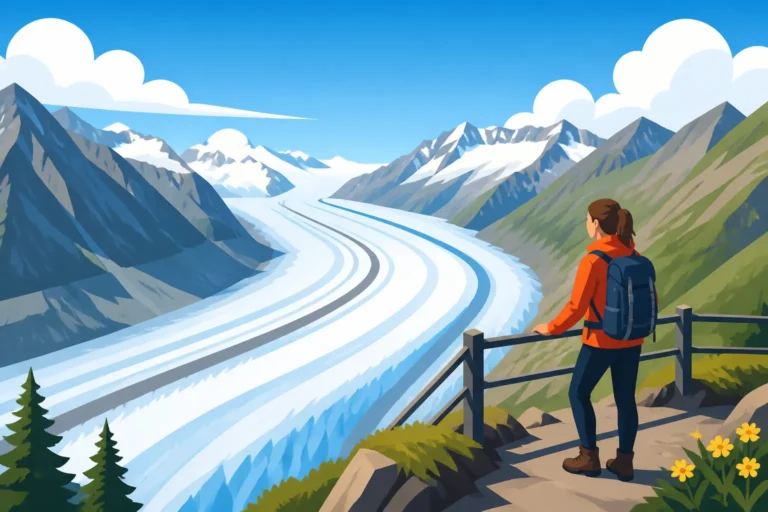
Okay, let's be real, you moved to Switzerland, the Alps are probably why you moved here. But the Jungfrau-Aletsch region isn't just any part of the Alps. This is home to the mighty Aletsch Glacier, the longest and deepest glacier in the Alps, stretching for a mind-boggling 23 kilometers. It's not just a big chunk of ice; it's a living, breathing natural monument to the last Ice Age, showcasing the ongoing processes of climate change right before your eyes. The sheer scale is something a photo can never quite capture.
To truly appreciate this, you need to get up close. The Jungfraujoch, often dubbed the "Top of Europe," is probably the most famous access point, bringing you to an incredible vantage point at 3,454 meters. But be warned, it's popular, and boy, is it pricey! I remember my first trip up there, staring out at the vastness of the glacier. It’s an experience, but also a logistical challenge, particularly if you’re trying to manage it with family or during peak season. You'll want to combine your train journey with a The Half-Fare Travelcard (Halbtax): The Must-Have Pass for Swiss Residents or even a SBB Travelcards: Is the Generalabonnement (GA) Worth the CHF 4000+ Cost? to make it remotely affordable. If you’re willing to hike, there are numerous trails around the Aletsch Arena that offer equally spectacular, and often less crowded, views. The Fiescheralp, Bettmeralp, and Riederalp areas provide fantastic starting points for walks along the glacier's edge, allowing you to immerse yourself in the landscape without feeling like you're part of a human conveyor belt.
Swiss Tectonic Arena Sardona: Where Continents Collided
This site is a geological marvel, pure and simple. It's not about glaciers or charming towns; it's about rocks and how the Earth folded and faulted right here, creating what's known as the "Glarus Overthrust." Imagine seeing an older layer of rock lying on top of a younger layer. It defies logic, right? That’s what Sardona is all about – a visible testament to continental collision and mountain formation on an epic scale, something usually only seen in textbooks.
Visiting the Swiss Tectonic Arena Sardona often involves some serious hiking, especially to reach the key viewpoints that showcase the geological phenomenon. The area itself spans several cantons – St. Gallen, Glarus, and Grisons – so planning your approach is crucial. You could start from Elm in Glarus, for example, which offers cable car access to higher trails. The Tschinglenalm cable car is another great option, providing stunning views and access to the "Martinsloch," a natural hole in the mountain that the sun shines through twice a year. If you're passionate about geology, this is a must-see, but don't expect easily accessible tourist traps. It requires a bit more effort, but the reward is a truly unique understanding of our planet. For those planning an overnight trip, Booking.com often lists charming mountain guesthouses in the surrounding valleys, which make for a cozy base after a day of exploration.
Cultural Landscapes: Where Human History Meets Nature
Switzerland's cultural landscapes are where centuries of human interaction with the environment have shaped places of extraordinary beauty and significance. They tell stories of hard work, adaptation, and enduring traditions.
Lavaux Vineyard Terraces: A Living Testament to Winemaking
Ah, Lavaux. Even if you're not a wine connoisseur, you'll be hard-pressed not to fall in love with these terraces. Stretching for about 30 kilometers along the shores of Lake Geneva, from Montreux to Lausanne, these precisely engineered vineyards have been cultivated since the 11th century. It’s a remarkable example of how people have adapted to and shaped a challenging landscape to produce wine, and the result is just stunning. Imagine steep hillsides, painstakingly terraced, with every stone wall placed by hand, creating microclimates perfect for growing grapes. It's breathtaking, and frankly, makes my back ache just thinking about the labor involved.
Walking through the Lavaux vineyards is an absolute delight, especially in late summer or early autumn when the grapes are heavy on the vines and the air is crisp. There are designated walking trails, like the one from St-Saphorin to Lutry, that wind through charming villages, offering panoramic views of the lake and the French Alps across the water. You can stop at small family-run wineries, or "caves," to sample local Chasselas wine – often right from the barrel. It’s a completely different experience than what you might find at larger, more commercial vineyards. Don't rush; take your time. You can easily get there by train, jumping off at stations like Cully or Rivaz. For more structured exploration, especially if you're keen on tasting specific wines without driving, checking out options on GetYourGuide for guided tours can save you a lot of hassle. And if you’re coming from Geneva, consider a Day Trips from Geneva: Montreux, Gruyères, and the Lavaux Vineyards to maximize your cultural immersion.
Rhaetian Railway in the Albula / Bernina Landscapes
This isn't just a railway; it's a masterpiece of civil engineering that blends seamlessly into the dramatic alpine landscape of Graubünden. The Rhaetian Railway, particularly the Albula and Bernina lines, wasn't built just to get from A to B; it was built to defy gravity and connect remote communities across treacherous terrain. Think spiral tunnels, towering viaducts, and incredible panoramic views – all designed over a century ago. It’s a journey, not just a mode of transport, and it feels like stepping back in time to an era of grandeur.
Taking a ride on the Bernina Express, a panoramic train that traverses this route, is an absolute must. It connects Chur or St. Moritz in Switzerland with Tirano in Italy, crossing the Bernina Pass at 2,253 meters without the aid of cogwheels. You’ll pass through the Brusio spiral viaduct, a helical single-track stone viaduct that’s an icon of the line. The journey itself is an experience, offering incredible views, especially if you snag a seat in the panoramic carriages. My advice? Book your tickets well in advance, especially for the scenic trains. Regular regional trains also cover the same route, often for less money, and you can still open the windows for photos – a huge plus! If you're a train enthusiast, you might want to look into booking your tickets through a platform like Omio, which can help you compare options and ensure you get the best connection. It's a fantastic cross-border experience, and a great way to combine Switzerland with a taste of Italy, perhaps even a Cross-Border Trips: Visiting Milan and Lake Como from Switzerland.
Historic Urban Centers and Archaeological Treasures
Beyond the mountains and vineyards, Switzerland boasts cities and archaeological sites that offer a fascinating glimpse into its past, from prehistoric settlements to medieval urban planning.
Old City of Bern: A Medieval Masterpiece
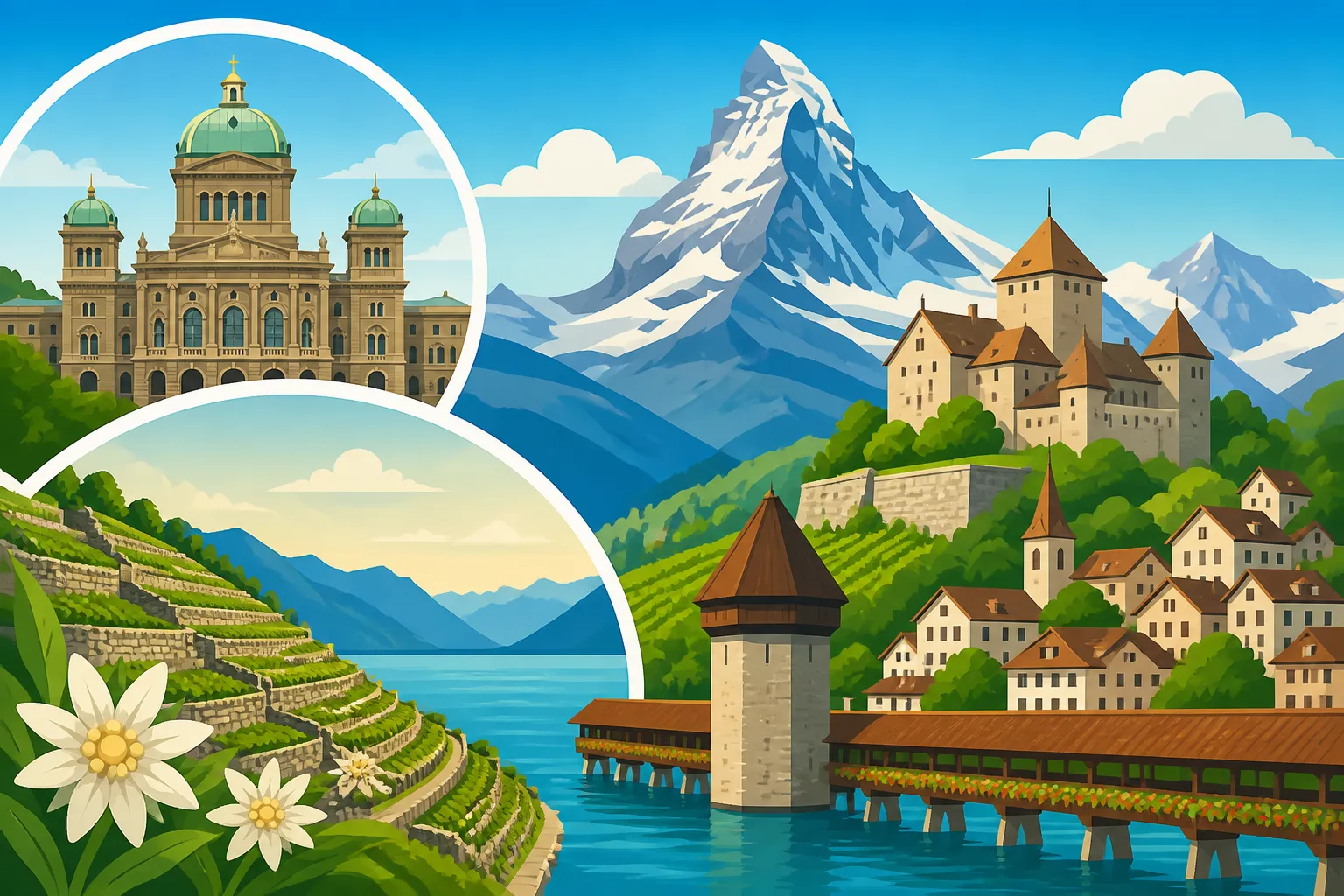
Bern is such a gem. It often gets overlooked in favor of flashier cities like Zurich or Geneva, but its Old City is a true marvel and a UNESCO World Heritage site for good reason. Built on a narrow peninsula enclosed by the Aare River, Bern’s medieval center has retained its authentic character over centuries. Think cobbled streets, arcaded walkways (Lauben), ornate fountains, and the iconic Zytglogge clock tower. It feels incredibly cohesive, like a living museum, yet it's a vibrant, functional capital city.
Wandering through Bern's Old City is like stepping into a storybook. Take your time to explore the arcades, which offer shelter from sun and rain, and discover the hidden cellars that now house quirky shops, cafes, and bars. Don't miss the Zytglogge (clock tower) with its elaborate hourly show – it's a charming spectacle. The Bear Park (BärenPark) right on the Aare is also a lovely spot, though perhaps a bit touristy. I love finding a quiet café, sitting under the arcades, and just watching the world go by. It’s a much more relaxed vibe than other Swiss cities, making it a perfect Day Trips from Bern: Thun, Interlaken, and the Emmental. If you’re staying overnight, Booking.com has some fantastic options right in the heart of the Old City, putting you right in the middle of this historical charm.
Prehistoric Pile Dwellings Around the Alps
This might not be what you picture when you think "UNESCO site" in Switzerland, but these roughly 111 prehistoric pile-dwelling sites, scattered around lakes and wetlands in Switzerland, Austria, France, Germany, Italy, and Slovenia, offer a remarkable window into early agricultural societies from around 5000 to 500 BC. They're basically remnants of houses built on stilts over water or marshland, perfectly preserved in the anaerobic conditions of the mud and water. It’s incredible to think about people living in such organized settlements thousands of years ago, long before any of the modern history we learn about.
While you can't walk directly into an actual prehistoric pile dwelling (they're largely submerged or excavated), several excellent museums and interpretive centers bring this history to life. The Laténium in Neuchâtel, for example, features reconstructed pile dwellings and impressive archaeological finds. Another great spot is the Pfahlbaumuseum Unteruhldingen on Lake Constance (just across the German border, but part of the larger site), which has a village of reconstructed houses you can walk through. It's a fantastic educational experience, especially if you have kids, as it allows them to visualize how people lived in such a distant past. This is less about scenic beauty and more about deep historical immersion, a true testament to early human ingenuity.
Industrial Heritage and Modern Architecture
Switzerland's UNESCO sites aren't all ancient history. Some celebrate its industrial prowess and its contributions to modern design.
La Chaux-de-Fonds / Le Locle: Watchmaking Town Planning
These twin towns in the Jura mountains are a unique entry on the UNESCO list. They're recognized not for grand historical buildings, but for their entire urban fabric – a rational, grid-based layout developed specifically for the watchmaking industry. After devastating fires in the late 18th and early 19th centuries, the towns were rebuilt with a functional design that integrated workshops and living quarters. It’s a living factory town, where every street and building speaks to the highly specialized craft of watchmaking. It's truly fascinating to see how a specific industry shaped the very layout of a city.
Visiting La Chaux-de-Fonds and Le Locle offers a deep dive into the world of Swiss watchmaking. You can explore the International Watchmaking Museum in La Chaux-de-Fonds, which is absolutely superb and houses an incredible collection, from antique timepieces to modern marvels. Many famous watch brands, like Rolex and Breitling, have roots here, and you can sense the precision and dedication in the air. The towns aren't exactly "picturesque" in the traditional Swiss sense, but their unique urban planning and industrial history make them a compelling visit for anyone interested in design, engineering, or the history of crafts. It's a reminder that Swiss precision extends far beyond just what's inside a watch; it's embedded in the very foundations of these communities.
The Architectural Work of Le Corbusier, an Outstanding Contribution to the Modern Movement
Le Corbusier, a Swiss-French architect, was a titan of modern architecture, and Switzerland is home to two of his contributions to this transnational UNESCO site. The most notable in Switzerland is the "Maison Blanche" (Villa Jeanneret-Perret) in La Chaux-de-Fonds, his very first independent architectural work. Another, the "Petite cabanon" (Villa Le Lac) on the shores of Lake Geneva in Corseaux, near Vevey, offers a more intimate look at his innovative spirit. These buildings are not just structures; they are manifestos of a new way of thinking about living spaces, incorporating elements like open-plan layouts, roof gardens, and ribbon windows that were revolutionary for their time.
Visiting Villa Le Lac in Corseaux is a particularly delightful experience. This small, compact house, built for his parents, showcases Le Corbusier's early ideas on minimal living and efficiency, perfectly integrated with the stunning lakeside environment. It's a surprisingly accessible and charming site, offering guided tours that explain the architectural significance and the personal stories behind its design. For architecture enthusiasts, it’s a pilgrimage. Even if you're not an expert, it’s a beautiful spot by the lake and a fascinating glimpse into the mind of a visionary. You can easily combine this with a visit to the nearby Lavaux vineyards. If you're looking for organized tours that might cover these architectural gems and nearby attractions, checking GetYourGuide is always a good idea, especially if you want to avoid driving or navigating public transport details yourself.
Planning Your UNESCO Adventures
Navigating these sites can sometimes feel like another administrative task in Switzerland, given the transport costs and language differences. But trust me, the reward is well worth the effort.
Transport and Accessibility: Getting There
The beauty of Switzerland is its incredible public transport network. Almost all these UNESCO sites are accessible by train, bus, or a combination thereof. This is where your Half-Fare card or GA really shines. For example, to get to the Jungfraujoch, you’ll take a series of mountain trains. To reach the Lavaux vineyards, the regional trains along Lake Geneva drop you right in the heart of the terraces. The Rhaetian Railway is the experience itself!
However, some of the more remote parts of the Swiss Tectonic Arena Sardona will require more extensive hiking, and sometimes, even a PostBus connection from a train station might be infrequent. Always check the SBB website or app for exact connections and timings. I've been caught out by less frequent services on Sundays or public holidays, so double-checking is crucial, especially if you're planning a trip around one of the many Public Holidays in Switzerland: National and Cantonal Days Off. If you’re traveling with family or carrying gear, planning ahead is key. Using platforms like Omio to map out your train and bus routes in advance can be a lifesaver, especially when trying to link up less common connections.
Accommodation and Nearby Attractions
Many of these UNESCO sites are located in regions rich with other attractions, making them perfect for longer stays. For instance, if you're exploring the Jungfrau-Aletsch region, towns like Interlaken, Grindelwald, or Wengen offer a huge range of activities, from hiking and paragliding to charming village strolls. The Lavaux vineyards are nestled between Lausanne and Montreux, both vibrant cities with cultural offerings and lake activities. The Old City of Bern is, well, Bern – a whole city to explore!
When planning an overnight or multi-day trip, consider using sites like Booking.com to find accommodation that fits your style and budget. I always recommend looking for options slightly outside the main tourist hubs if you want a more authentic experience and potentially better value. For example, rather than staying right at the Jungfraujoch (which isn't even possible), a village like Lauterbrunnen or Mürren offers stunning views and a more local feel. If you’re looking to explore specific areas in more depth, a Exploring Lucerne: Old Town, Lake Cruises, and Mount Excursions or even a Basel Expat Healthcare Guide: Medical Networks and Cross-Border Options (if you're near the Pile Dwellings) could provide a good base for cultural exploration.
Table: Quick Overview of Swiss UNESCO World Heritage Sites
Here's a quick table to give you an idea of some of the key sites and what they offer:
| UNESCO Site | Canton(s) Involved | Type | Main Highlight | Best Way to Experience |
|---|---|---|---|---|
| Swiss Alps Jungfrau-Aletsch | Bern, Valais | Natural | Largest glacier in the Alps | Jungfraujoch train, Aletsch Arena hikes |
| Lavaux Vineyard Terraces | Vaud | Cultural | Centuries-old terraced vineyards with lake views | Walking tours, wine tasting, train travel |
| Rhaetian Railway in the Albula/Bernina | Graubünden | Cultural/Tech | Iconic mountain railway engineering and scenery | Bernina Express or regional trains |
| Old City of Bern | Bern | Cultural | Well-preserved medieval city center with arcades | Walking, exploring fountains and clock tower |
| Swiss Tectonic Arena Sardona | Glarus, St. Gallen, Grisons | Natural | Visible geological overthrust of ancient rocks | Extensive hiking (e.g., from Elm) |
| Prehistoric Pile Dwellings | Various (e.g., Neuchâtel) | Cultural | Remains of early alpine settlements | Laténium Museum, other interpretive centers |
| La Chaux-de-Fonds / Le Locle | Neuchâtel | Cultural | Unique watchmaking town planning and industry history | International Watchmaking Museum, urban strolls |
| Le Corbusier's Architectural Work | Neuchâtel, Vaud | Cultural | Modernist villa designs (Maison Blanche, Villa Le Lac) | Guided tours of individual villas |
Enhancing Your UNESCO Journey with Guided Experiences
Sometimes, the sheer amount of planning required to visit these sites can be a deterrent. From figuring out the best train connections to understanding the historical context in a foreign language, it can all feel a bit much.
Benefits of Guided Tours
For some of these sites, especially the more complex ones or those that benefit from expert commentary, a guided tour can make all the difference. Imagine exploring the geological wonders of Sardona with a geologist explaining the rock formations, or wandering through Lavaux with a local winemaker sharing stories of the harvest. These experiences elevate a visit from simple sightseeing to genuine understanding.
While I personally love the adventure of figuring things out on my own, I also recognize that sometimes, the peace of mind that comes with a well-organized tour is priceless. Platforms like GetYourGuide offer a range of options, from half-day excursions to multi-day trips, often including transport and entry fees. This can be particularly helpful if you're short on time, don't have a car, or prefer to have all the logistics handled. It means you can focus on soaking in the history and beauty, rather than stressing about missing a connection or translating signboards.
Digital Tools for Independent Explorers
If you’re like me and prefer to be your own guide, don't worry, there are plenty of digital tools to help. The SBB Mobile App is your absolute best friend for public transport – it's indispensable for planning routes, checking live departure times, and even buying tickets. For hiking, the SwitzerlandMobility app (or website) is fantastic for finding detailed trail maps and information, including difficulty levels for the trails in the Jungfrau-Aletsch or Sardona regions.
For booking trains, especially if you’re trying to link up different regions or even cross-border journeys for sites like the Rhaetian Railway, Omio can sometimes offer a more streamlined booking experience across multiple carriers. I've found it helpful for comparing options and ensuring I'm getting the best deal when planning complex itineraries. And of course, for accommodation, Booking.com is my go-to for finding everything from hostels to luxury hotels near these sites. Don't forget to download offline maps, especially if you're venturing into areas with spotty mobile service, to keep your adventures smooth and stress-free.
The Bigger Picture: Switzerland's Commitment to Heritage
Visiting these UNESCO sites isn't just about ticking off a list; it's about understanding Switzerland's deep commitment to preserving its natural environment and cultural heritage. From protecting the delicate ecosystems of the Alps to maintaining the architectural integrity of its historic towns, there's a concerted effort to ensure these treasures remain for future generations.
It's an important part of integrating into Swiss life too, truly appreciating the country you now call home. These sites connect you to the history and the land in a way that daily life sometimes doesn't. So, pack your hiking boots, charge your phone, and get out there and explore! You'll be glad you did.
Disclaimer
The information provided in this guide is for general informational purposes only and is subject to change. While every effort has been made to ensure accuracy, readers should verify details with official sources, especially regarding travel, opening hours, and pricing, as these can vary seasonally and due to unforeseen circumstances. We are not responsible for any actions taken based on the information provided.