Swiss Festivals and Traditions: A Year-Round Cultural Calendar
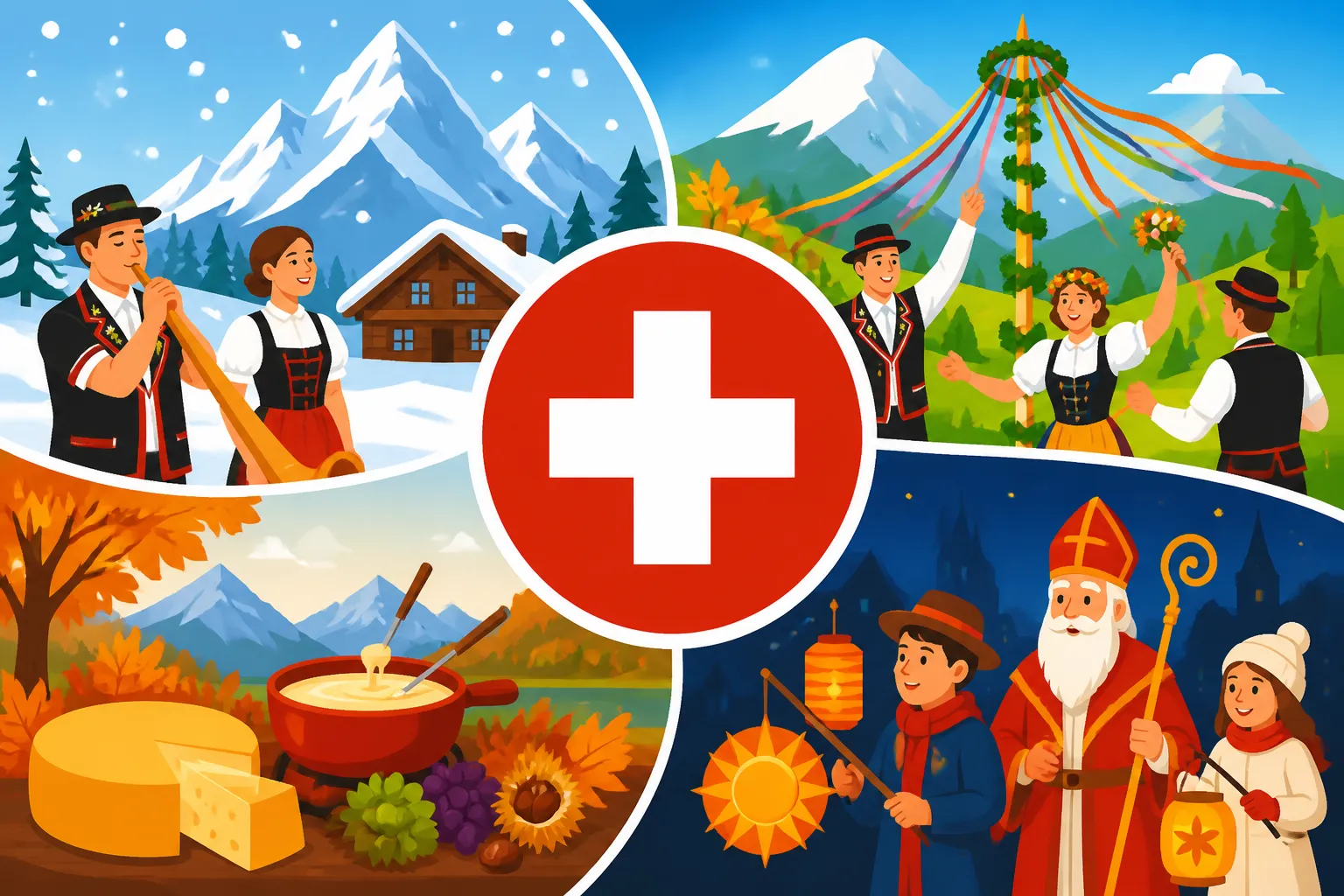
When you first land in Switzerland, you quickly realize it's not just mountains and chocolate (though there's plenty of that too!). This country is a vibrant tapestry of cantonal and municipal traditions, each steeped in history and local pride, and trying to get your head around them can feel like learning a new language. You might hear whispers of "Böögg" or "Fasnacht" and feel completely out of the loop. This guide is here to demystify Switzerland's rich cultural calendar, offering a comprehensive, year-round look at the festivals and traditions that define Swiss life, helping you not just observe, but truly participate.
Understanding the Swiss Festival Landscape: More Than Meets the Eye
One of the first things you'll notice about Switzerland is its fierce regionalism. What's celebrated with great fanfare in one canton might be completely unheard of just a few valleys over. This isn't just a quirk; it's a fundamental part of the Swiss identity, a mosaic of diverse cultures within a small geographical area. Expats often assume "Swiss culture" is monolithic, but it’s far from it. You’ll find German, French, Italian, and Romansh influences, all contributing to unique local customs, which can initially be a little disorienting if you’re expecting a uniform national experience.
The Power of Cantonal and Regional Identity in Celebrations
Imagine trying to explain Thanksgiving to someone who's never seen a turkey or heard of pilgrims, and you get a sense of what it's like for newcomers facing Swiss traditions. The Swiss Confederation is built on the principle of subsidiarity, meaning power often rests at the local, cantonal, and communal levels. This translates directly into their festivals. Each canton, often each municipality, has its own cherished dates, rituals, and even specific costumes that mark its unique heritage. It’s why a celebration like Geneva's Escalade, commemorating a 1602 victory, means little to someone in Appenzell, where the Alpabzug holds far greater significance. You might feel a bit of FOMO (fear of missing out) as you see locals gearing up for something you've never heard of, but that's just part of the charm!
The Role of Associations and Vereine in Upholding Traditions
Many of these local traditions aren't just spontaneous gatherings; they are meticulously organized and perpetuated by local associations, known as Vereine in German-speaking Switzerland, or sociétés in Romandie. These clubs are the backbone of Swiss community life, from shooting clubs and yodeling societies to historical re-enactment groups and carnival committees. Joining one of these clubs is often cited as one of the best ways for expats to integrate into Swiss society. They're not just hobby groups; they are the guardians of cultural heritage, ensuring that ancient customs, sometimes dating back centuries, are passed down through generations. If you want to truly understand a local festival, find out which Verein organizes it and consider getting involved. It's a fantastic way to break through the polite Swiss reserve and make genuine connections.
Spring Awakens: From Alpine Winters to Vibrant Celebrations
As the snow reluctantly melts and the first crocuses peek through, Switzerland bursts into life with festivals designed to shake off winter's chill and welcome the warmer months. These celebrations are often deeply rooted in pagan rites, agricultural cycles, or historical events, and they offer a fascinating glimpse into the collective Swiss psyche. For expats, it’s a moment to finally shed those heavy winter coats and see the cities and villages come alive with color and noise.
The Fiery Böögg of Sechseläuten in Zurich
One of the most iconic and dramatic spring festivals is Zurich's Sechseläuten: Zurich’s Spring Festival and the Burning Böögg. Held on the third Monday of April, this event marks the end of winter with a bang – literally. The highlight is the burning of the "Böögg," a giant snowman figure stuffed with firecrackers, perched atop a massive bonfire. Legend has it that the faster the Böögg's head explodes, the better the summer will be. Imagine standing in a massive crowd on Sechseläutenplatz, the smell of woodsmoke in the air, the anticipation building, and then the roar of the crowd as the flames engulf the snowman. It’s an unforgettable sensory experience, often preceded by parades featuring Zurich’s traditional guilds in their historical costumes, marching through the city center with their horses and floats. Trying to navigate the crowds can be a bit overwhelming, but the atmosphere is electric. It's a tradition that truly captivates the entire city, blurring the lines between the old and the new.
Fasnacht: A Cacophony of Color and Critique
If you're looking for a completely different kind of spring awakening, look no further than Fasnacht Carnival: Basel and Lucerne's Wild Pre-Lent Festivals. This pre-Lenten carnival, typically held in February or March, transforms cities like Basel, Lucerne, and Solothurn into a riot of masked figures, loud music, and satirical floats. Basel's Fasnacht, a UNESCO-recognized event, is particularly unique, kicking off at 4 AM on a Monday with the Morgestraich, where the city lights go out, and thousands of drummers and pipers march through the darkened streets. It’s an otherworldly experience, a powerful blend of tradition and communal revelry. For newcomers, it can be a bit daunting – the Cliques (carnival groups) wear elaborate, often unsettling masks, and the Guggenmusiken (brass bands) play intentionally "off-key" music. Don't be surprised if you get showered with confetti or oranges – it's all part of the fun! These festivals aren't just about party; they're also a chance for a bit of social commentary, with satirical floats lampooning politicians and current events.
Local Spring Markets and Processions
Beyond the grand spectacles, countless smaller spring markets, known as Frühlingsmärkte, pop up across towns and villages. These are wonderful opportunities to sample local produce, artisanal crafts, and traditional treats as the weather gets warmer. Think of them as a gentle easing into the outdoor season, far less intense than the major carnivals. Many villages also hold traditional processions, often with religious undertones, celebrating patron saints or agricultural blessings. You might stumble upon a small village parade with intricate floral decorations and traditional costumes – these are the moments where you truly feel the heartbeat of local Swiss life. They may not be flashy, but they offer an authentic connection to the community and its history.
Summer's Embrace: National Pride and Lakeside Joy
Summer in Switzerland is a glorious time, with long daylight hours, warm temperatures, and a palpable sense of joy. The country empties into the mountains and lakes, but not before a slew of festivals, from national celebrations to regional sporting events, take center stage. This is when the Swiss truly celebrate their identity and enjoy the great outdoors.
Swiss National Day: A Nation in Celebration
August 1st is Swiss National Day (August 1): How Switzerland Celebrates, a federal public holiday marking the founding of the Swiss Confederation in 1291. Unlike many other national days, which might feature grand military parades, Switzerland's celebration is wonderfully decentralized and intimate. Across the country, you'll see bonfires lit on mountain peaks, children carrying paper lanterns through twilight streets, and impressive fireworks displays over lakes and cities. Many communities host barbecues, picnics, and communal meals, often accompanied by speeches, alphorn performances, and flag-waving. It’s a day for feeling truly Swiss, regardless of your passport.
In rural areas, farmers light huge bonfires on hillsides, creating a stunning visual spectacle as dusk falls. In towns and cities, people gather in parks or along lake shores. In Zurich, for example, the main fireworks display over Lake Zurich draws massive crowds, while smaller, more local festivities can be found in every Gemeinde. It’s a day to feel the pulse of the nation, often with friends and neighbors, sharing in the collective pride. Remember, public transport schedules might be reduced on this day, so plan accordingly if you're traveling.
Traditional Wrestling and Alpine Festivals
Summer also brings a series of deeply rooted alpine traditions, perhaps none more quintessentially Swiss than Schwingen (Swiss wrestling). This unique form of wrestling involves two men in special canvas shorts grappling in a ring of sawdust, aiming to throw each other on their back. It's not just a sport; it's a cultural event, often held at Schwingfeste (wrestling festivals) in picturesque alpine settings, accompanied by alphorn music, yodeling, and traditional food.
The Eidgenössisches Schwing- und Älplerfest (Federal Wrestling and Alpine Games Festival), held every three years, is the largest sporting event in Switzerland, drawing hundreds of thousands of spectators. Even if you don't catch the federal event, smaller cantonal and regional Schwingfeste offer an authentic slice of Swiss rural life. You’ll also find Älplerfeste (Alpine festivals) that combine wrestling with other traditional alpine games, live folk music, and plenty of local specialties. These events are a fantastic way to witness cultural heritage firsthand and experience the more rustic side of Switzerland. Think strong men, loud yodeling, and a lot of cheese!
Lakeside Events and Open-Air Concerts
With so many beautiful lakes, it's no surprise that summer is ripe for lakeside celebrations. Cities like Geneva, Lucerne, and Zurich host fantastic open-air festivals and concerts throughout the warmer months. The Montreux Jazz Festival: A Resident's Guide to Attending on the shores of Lake Geneva is world-renowned, drawing top international artists and creating a vibrant, unforgettable atmosphere. Even if you don't have tickets to the main shows, the free stages and street performances offer a fantastic experience.
Beyond the big names, many smaller towns host their own "Fête du Lac" or "Seenachtsfest," featuring music, food stalls, and often spectacular fireworks displays over the water. These are perfect opportunities to enjoy the warm evenings, mingle with locals, and take in the stunning natural scenery. Look up local tourism office websites for dates, as these are staple summer events that often culminate in a magnificent spectacle. If you’re planning to attend a larger festival, booking accommodation via platforms like Booking.com well in advance is highly advisable, as hotels can fill up quickly.
Autumn Harvest: Rustic Feasts and Ancient Customs
As the leaves turn golden and the air grows crisp, Swiss traditions shift to celebrate the bounty of the harvest and prepare for the colder months. These autumn festivals are often characterized by hearty food, warm drinks, and a sense of communal gratitude for the year's produce.
Alpabzug / Désalpe: The Cattle Procession
One of the most charming and visually striking autumn traditions is the Alpabzug (German) or Désalpe (French) – the ceremonial descent of the cows from their high mountain pastures to the valley farms for winter. This isn't just a practical agricultural necessity; it's a joyous celebration. The cows are adorned with elaborate floral arrangements, huge bells, and ribbons, their beautiful decorations reflecting the pride of the farmers. The farmers themselves often wear traditional costumes as they lead their herds through the villages, accompanied by local musicians.
It’s truly a sight to behold, a colorful parade that winds its way through stunning alpine scenery. Each region has its own specific dates, usually between mid-September and early October. Popular ones include those in Gruyères, Charmey, and various villages in Appenzell or Entlebuch. Finding parking can be a nightmare in these small villages on Désalpe day, so consider using public transport or booking a guided tour through platforms like GetYourGuide, which often includes transportation and local insights. The air is filled with the scent of hay, cowbells, and delicious regional food, creating an incredibly authentic experience.
Wine Festivals and Grape Harvest Celebrations
Switzerland may not be as famous for its wine as France or Italy, but it boasts excellent wines, particularly from the Valais, Vaud (Lavaux), and Geneva regions. Autumn is grape harvest season, and with it come vibrant Winzerfeste (wine festivals) or fêtes des vendanges. These celebrations involve parades, wine tastings, traditional music, and plenty of opportunities to sample the new vintage and local specialties.
The Fête des Vendanges in Neuchâtel is particularly well-known, with a three-day celebration of the grape harvest, featuring a flower parade and lively street entertainment. The UNESCO-listed Lavaux vineyards, with their stunning terraced hillsides overlooking Lake Geneva, also host numerous smaller, intimate wine festivals. This is a perfect opportunity to explore Swiss Wine Regions: Valais, Vaud, Geneva, and Ticino Explained and learn more about Switzerland's viticultural heritage. You'll find many cellars open for tastings, and the atmosphere is always convivial and relaxed.
Onion Market (Zibelemärit) in Bern
A truly unique autumn festival is Bern's Zibelemärit, or Onion Market, held on the fourth Monday of November. This isn't just any market; it's an age-old folk festival that fills the federal capital with the pungent aroma of onions and garlic. Farmers from the surrounding region bring thousands of elaborately braided onion plaits, from tiny ornamental ones to massive edible works of art. The market opens at 4 AM, with crowds already gathering in the chilly pre-dawn hours to be among the first.
Besides onions, you'll find stands selling traditional Zibelekuchen (onion tart), Magenbrot (a spiced cookie), and warm Glühwein (mulled wine). Children join in the fun, gently pelting market-goers with confetti. It's a truly sensory experience – the sights, sounds, and smells are unlike anything else. It's a lively, bustling event that offers a glimpse into Swiss agricultural history and communal joy. Given the early start and crowded nature, taking the train to Bern via Omio or SBB is the most stress-free option.
Winter's Magic: Festive Lights and Mountain Traditions
When winter descends, Switzerland transforms into a wonderland, blanketed in snow and twinkling lights. The colder months bring a host of festive traditions, from enchanting Christmas markets to ancient pagan rituals that defy the chill. This is when the Swiss truly embrace coziness and community.
Christmas Markets and Advent Traditions
As soon as late November rolls around, Swiss towns and cities light up with enchanting Swiss Christmas Markets: The Best in Zurich, Basel, and Montreux. These markets are a staple of the Advent season, offering a magical experience with wooden chalets, festive decorations, and the irresistible scent of Glühwein, roasted chestnuts (Maroni), and gingerbread. Each city puts its own spin on the tradition:
- Zurich's Christkindlimarkt: Held inside the main train station, featuring a magnificent Swarovski crystal Christmas tree.
- Basel's Weihnachtsmarkt: Consistently voted one of Europe's best, it spreads across Münsterplatz and Barfüsserplatz, creating a truly festive atmosphere.
- Montreux Noël: Unique for its lakeside setting, illuminated by the "flying Santa" who crosses the sky on his sleigh.
These markets are not just for shopping; they are social hubs where friends and families gather to soak in the festive cheer. You'll find unique handcrafted gifts, delicious seasonal food, and a pervasive sense of warmth despite the cold. It’s a wonderful way to experience the communal spirit of the Swiss during the darkest time of the year.
Sylvester (New Year's Eve) and the "Trychle"
New Year's Eve, known as Sylvester, is celebrated across Switzerland with fireworks, parties, and communal countdowns. However, some regions have particularly unique traditions. In parts of the Emmental and Haslital valleys, you might encounter the "Trychle" – groups of men dressed in traditional white shirts, carrying enormous cowbells (Trycheln) and shaking them rhythmically to ward off evil spirits and welcome the new year. The deep, resonant sound of hundreds of bells reverberating through the valleys is an unforgettable, almost primal experience.
In Zurich, the "Silvesterzauber" (New Year's Magic) features one of the largest fireworks displays in Europe over Lake Zurich, attracting tens of thousands of revelers. Many towns and villages also organize smaller firework displays and communal gatherings. Unlike other cities where you just watch a central display, in Switzerland, you'll often see individual fireworks being let off by families, adding to the festive chaos. If you're planning to celebrate in a major city, making dinner reservations and considering your transport home in advance is crucial, as public transport can get very crowded.
Ancient Winter Customs: Harderpotschete and Klausjagen
Beyond the Christmas season, January often sees the continuation of ancient winter customs aimed at chasing away evil spirits and the cold. In Interlaken, the Harderpotschete is a truly bizarre and captivating event. On the second day of January, grotesque masked figures with terrifying wooden masks and fur costumes roam the streets, clanking cowbells and making loud noises to scare away the spirits of the old year. It’s a bit scary, definitely loud, and totally unforgettable.
Another unique pre-Christmas tradition (often overshadowed by the Christmas markets for expats) is Klausjagen in Küssnacht am Rigi. On December 5th, a spectacular procession of Samichläuse (St. Nicholases) with enormous, illuminated bishop's mitres, accompanied by whip-cracking and cowbell-ringing, marches through the village. The atmosphere is intense and utterly Swiss, far removed from the commercial Santa Claus imagery. These traditions offer a deeper, more historical understanding of Swiss winter culture.
Beyond the Spectacle: Participating and Planning
Attending a Swiss festival isn't just about showing up; it's about immersing yourself in the local culture. It requires a bit of planning, a willingness to be open-minded, and a dash of curiosity. You'll find that locals truly appreciate it when foreigners show genuine interest and respect for their traditions.
Dress Code and Etiquette for Festivals
While there isn't a strict dress code for most festivals, comfortable shoes are always a must, especially if you'll be walking or standing for long periods. For outdoor events in spring or autumn, layers are your friend, as the weather can change quickly. If you're attending a traditional event like an Alpabzug, observe how locals are dressed – often casually, but with a respectful air. For Fasnacht, many people wear simple costumes or paint their faces, but you don’t have to, especially if it’s your first time.
Etiquette largely follows general Swiss customs: be punctual if you're meeting someone, respect personal space (though this can be challenging in crowded festival environments), and don't be afraid to try local foods and drinks. Engaging with locals, even if it's just a "Grüezi" or "Bonjour," goes a long way. And remember, the Swiss value cleanliness, so dispose of your rubbish properly – you'll find plenty of bins, even at large events.
Embracing Local Delicacies and Beverages
No Swiss festival is complete without an abundance of delicious food and drink. This is your chance to dive deep into Swiss Food and Drink Culture: Regional Specialties and Dining Etiquette. Forget the fancy restaurants for a day; these festivals are all about street food and hearty, traditional fare.
You’ll find:
- Bratwurst & Cervelat: The quintessential Swiss sausages, often served with a roll and mustard.
- Raclette & Fondue: Though often associated with winter, you can find these cheesy delights at various festivals.
- Maroni: Roasted chestnuts, a sweet and warming treat, especially in autumn and winter.
- Zibelekuchen & Chäschüechli: Onion tarts and small cheese quiches, often found at autumn markets.
- Tirggel: Honey biscuits (especially around Christmas in Zurich).
- Glühwein: Mulled wine, a must-have at any winter market.
- Local Beers & Wines: Many festivals showcase regional breweries and wineries.
Don't be afraid to join the queues and try something new. The food stalls are a great way to experience local flavors and soak in the festive atmosphere. Often, eating and drinking at communal tables is part of the experience, offering spontaneous opportunities for conversation.
Navigating Logistics and Cultural Nuances
Planning your festival experience effectively can make all the difference, especially in a country known for its efficiency but also its sometimes-stark regional differences. A bit of foresight can save you from frustration and allow you to fully enjoy the events.
Getting There: Public Transport is Your Best Friend
Switzerland boasts one of the world's most efficient public transport networks, and it's almost always the best way to get to any festival or event, especially in larger cities. The Switzerland by Train: The SBB Network, Scenic Routes, and Day Trips system is incredibly reliable. Roads around popular festival locations often close to traffic, and parking can be scarce and expensive.
For instance, if you're headed to the Sechseläuten in Zurich or Fasnacht in Basel, you'll want to take the train. The SBB (Swiss Federal Railways) often runs special services or extends operating hours during major festivals. Check the SBB website or the Omio app for schedules and to purchase tickets in advance. If you have a The Half-Fare Travelcard (Halbtax): The Must-Have Pass for Swiss Residents or a GA Travelcard, your journey will be even smoother and more affordable. Don't forget, especially for New Year's Eve, that even with extended hours, trains and trams will be packed, so allow extra time.
Accommodation: Book Early, Especially for Big Events
If you're planning to attend a popular festival in a different city or a smaller village that attracts many visitors (like Zermatt for its Matterhorn festivities, or a major Schwingfest), booking accommodation well in advance is absolutely critical. Hotels and even smaller B&Bs can sell out months ahead of time, and prices will inevitably skyrocket closer to the event.
Platforms like Booking.com are invaluable here. Look for options that offer free cancellation just in case your plans change. Consider staying in a nearby town and commuting by train if the festival location itself is fully booked or too expensive. For example, if you're visiting Basel Expat Healthcare Guide: Medical Networks and Cross-Border Options for Fasnacht, you might find more affordable options in a smaller German town just across the border or in a neighboring Swiss town like Rheinfelden. This often requires a bit more travel but can significantly impact your budget.
Language Barrier Realities and How to Overcome Them
Switzerland's four national languages (German, French, Italian, and Romansh) mean that even within the country, you might encounter different languages at different festivals. While many Swiss people speak excellent English, especially younger generations and in tourist hotspots, venturing into a small village for an Alpabzug might mean you're in an exclusively Swiss German or French-speaking environment.
Don't let this deter you! Learning a few basic phrases in the local language ("Grüezi" or "Bonjour," "Danke" or "Merci," "Prost" or "Santé") will go a long way. Most locals appreciate the effort, even if your pronunciation isn't perfect. Don't feel embarrassed if you don't grasp every nuance of a local joke or explanation; that's part of the expat experience. Body language, a smile, and a willingness to try are universal translators. Many festivals will have information in German, French, and sometimes English, but for the true local flavor, embrace the linguistic diversity.
A Note on Respect and Integration
As an expat or tourist in Switzerland, experiencing these festivals and traditions is a privilege, offering a profound insight into the country's soul. Approaching them with an open mind, respect, and a sense of wonder will not only enrich your personal experience but also foster positive interactions with the local community.
Supporting Local Artisans and Communities
Many festivals are crucial economic drivers for the local communities, providing opportunities for small businesses, artisans, and farmers to showcase their products. When you attend a festival, consider making purchases from the local vendors, whether it's a handcrafted souvenir, a regional cheese, or a bottle of local wine. This directly supports the people who work tirelessly to preserve these traditions and keep the community vibrant.
Beyond economic support, consider engaging with the artisans. Ask about their craft, their traditions, or the history behind their products. These interactions can lead to memorable conversations and a deeper appreciation for the effort that goes into these celebrations. It’s also a way to contribute to the unique cultural fabric of Switzerland, rather than simply consuming it as a spectator.
Cultural Sensitivity and Observation
Swiss traditions can sometimes seem peculiar or even a little baffling to outsiders. Some, like the Harderpotschete, can even feel a bit intimidating. It's important to approach these moments with cultural sensitivity. Observe how locals behave, follow their lead, and if you're unsure, it's always better to politely ask than to inadvertently cause offense. For example, during some religious processions, it might be appropriate to remove your hat. During Fasnacht, while playful chaos reigns, knowing when to simply observe versus when to join in can be subtle.
Remember that these are living traditions, not just performances for tourists. They hold deep meaning for the communities that celebrate them. Your presence as a respectful observer is appreciated, and your genuine interest is often rewarded with warmth and willingness to share. Embracing the diverse tapestry of Switzerland's Four Language Regions: Culture, Customs, and Travel through its festivals is one of the most rewarding parts of living here.
| Season | Notable Festival/Tradition | Typical Month(s) | Canton/Region (Example) | Brief Description |
|---|---|---|---|---|
| Spring | Fasnacht (Carnival) | Feb/Mar | Basel, Lucerne | Pre-Lenten masked parades, satirical floats, loud music. UNESCO heritage in Basel. |
| Sechseläuten | Mid-April | Zurich | Burning of the Böögg (snowman) to predict summer weather, guild parades. | |
| Escalde | December (historically) | Geneva | Historical commemoration of a 1602 victory, with parades and costume. | |
| Summer | Swiss National Day (Aug 1) | August | Nationwide | Bonfires, fireworks, communal meals, flag-waving. |
| Schwingfeste (Wrestling Fests) | Various, May-Sep | Rural, Alpine regions | Traditional Swiss wrestling, alphorns, yodeling, and folk music. | |
| Montreux Jazz Festival | July | Montreux | World-renowned music festival on Lake Geneva. | |
| Autumn | Alpabzug / Désalpe | Mid-Sep to Early Oct | Appenzell, Gruyère | Ceremonial descent of decorated cows from alpine pastures. |
| Winzerfeste (Wine Festivals) | Sep/Oct | Valais, Lavaux, Neuchâtel | Celebrations of the grape harvest, wine tastings, parades. | |
| Zibelemärit (Onion Market) | 4th Monday of November | Bern | Early morning market selling onion plaits, tarts, and mulled wine. | |
| Winter | Christmas Markets | Late Nov to Dec 24th | Zurich, Basel, Montreux | Festive markets with Glühwein, crafts, and seasonal treats. |
| Klausjagen | Dec 5th | Küssnacht am Rigi | Procession of St. Nicholases with giant mitres, whip-cracking, and cowbells. | |
| Sylvester (New Year's Eve) | Dec 31st | Nationwide | Fireworks, parties, and regional traditions like the "Trychle" in mountain valleys. |
Disclaimer
The information provided in this guide is intended for general informational purposes only and is subject to change. While we strive to provide accurate and up-to-date information, local regulations, event dates, and specific customs can vary. Always check official event websites and local tourism boards for the most current details before making plans. The author and publisher are not liable for any decisions made based on this information.