Wild Swimming and Lake Swimming Etiquette in Switzerland
One of the absolute joys, and sometimes bewildering experiences, of living in Switzerland as an expat is discovering the sheer abundance of crystal-clear lakes and rivers that crisscross this incredible country. When you first arrive, the administrative hurdles and the focus on mountains can make you overlook the pristine waters just waiting for you. But trust me, there's nothing quite like cooling off in a refreshing See or a fast-flowing Fluss on a sweltering summer day. This guide is going to walk you through everything you need to know about wild swimming and lake swimming etiquette in Switzerland, ensuring you enjoy these natural wonders safely and respectfully.
The Irresistible Lure of Switzerland's Blue Waters
You might have come to Switzerland for the mountains, the cheese, or that fantastic job, but I bet you didn't anticipate falling in love with its water. For many of us, the idea of swimming in a city river or a mountain lake seemed alien, even a bit dangerous, back in our home countries. But here, it’s a way of life, an intrinsic part of the Swiss summer, and a truly invigorating experience that connects you with nature in a profound way.
More Than Just Mountains: A Swimmer's Paradise
Switzerland, despite being landlocked, boasts some of the cleanest and most accessible fresh water in Europe. We're talking about vast, sapphire lakes like Lake Geneva, Lake Zurich, and Lake Lucerne, fed by glacier melt and pristine alpine streams. Then there are the rivers – the mighty Aare that snakes through Bern, the Limmat cutting through Zurich, and countless smaller, vibrant streams flowing through valleys. These aren't just pretty backdrops; they are living, breathing ecosystems that are meticulously cared for and offer incredible opportunities for swimming.
What makes it so special is the sheer quality of the water. Unlike many urban rivers or lakes elsewhere, the water here is often so clear you can see straight to the bottom, sometimes even several meters deep. It feels fresh, untainted, and truly revitalizing. There's a particular magic to swimming in a lake with snow-capped peaks in the distance, or drifting down a cool river while historic cityscapes drift by. It feels a million miles away from the chlorinated pools we're often used to, and it becomes a vital part of your summer rhythm here. It's a privilege, really, and one you'll quickly learn to cherish.
The Expat's Discovery: From Culture Shock to Crystal Clear Dips
When I first moved here, I was still reeling from the shock of learning how to properly sort my recycling and deciphering the public transport system. The thought of just jumping into a river seemed, well, a bit daring. You see the locals doing it with such nonchalance – kids splashing, elderly couples taking a gentle dip, office workers heading straight from their desks to the river on a hot day – and you wonder if you're missing something. You are.
It’s one of those things that, as an expat, you slowly ease into. First, you might dip your toes at a popular Badi (a public lido or bathing area), then maybe brave a small section of a lake. Before you know it, you're planning your weekends around which lake or river to explore next. It's an important part of integrating, a silent nod to the Swiss way of life that values nature, public access, and good, clean fun. Don't be surprised if your friends back home are bewildered when you tell them you "went for a swim in the river" – they just don't understand the Swiss magic!
Diving Deep into Swiss Swimming Safety
While the allure of wild swimming in Switzerland is strong, it's absolutely crucial to approach it with a healthy dose of respect and caution. These are natural environments, not controlled swimming pools, and they come with their own unique challenges. Many expats, myself included, have had moments where we underestimated the conditions. Don't make that mistake; a little knowledge goes a long way in keeping you safe.
Understanding the Cold: Water Temperatures and Hypothermia Risks
First off, even on the hottest summer days, Swiss lake and river waters can be surprisingly chilly, especially when they're fed by glaciers. We’re talking about temperatures that might hover around 18-22°C (64-72°F) in lakes, and often even colder in rivers like the Aare or Limmat, which flow faster and don't warm up as much. While this is incredibly refreshing, it's also a shock to the system, especially if you dive in without acclimatizing.
Hypothermia is a real risk, not just in winter. Jumping into cold water too quickly can trigger a "cold shock response," leading to involuntary gasping, hyperventilation, and increased heart rate. For some, this can be dangerous. Always enter cold water gradually. Walk in slowly, splash some water on your face and chest, and let your body adjust. If you're planning a longer swim, consider a wetsuit, especially earlier in the season or in higher-altitude lakes. And never, ever swim alone if you're venturing into unfamiliar or very cold waters. The mountains may be beautiful, but their glacial runoff means the water stays cold!
Currents, Boats, and Rapids: Navigating Natural Hazards
Swiss rivers, particularly, are known for their strong currents. The Aare in Bern, for example, is famous for river floats, but it's not a lazy river. The current is powerful, and if you're not a strong swimmer or unfamiliar with the river, you can quickly find yourself in trouble. Always check local signs and warnings. Many popular swimming sections have designated entry and exit points precisely because the currents can become dangerous further downstream. If there's a sign saying "Badewasser Lebensgefahr" (Danger to life in swimming water), take it seriously. It's there for a reason.
Beyond currents, you need to be aware of boat traffic. Lakes are often shared with ferries, paddleboards, kayaks, and even private motorboats. Stick to designated swimming zones, which are typically marked by buoys. If you venture beyond these, you become invisible to boaters, especially on large, busy lakes like Lake Zurich or Lake Geneva. Always be aware of your surroundings. Rapid sections of rivers should be avoided entirely for swimming, as they can conceal underwater obstacles or create powerful undertows. Local sources, like the River Swimming in the Aare and Limmat: Safety and Etiquette guide, can provide vital safety details specific to those popular spots.
Health and Hygiene: What the Water Holds
Generally, Swiss lakes and rivers boast excellent water quality, thanks to strict environmental regulations and advanced wastewater treatment plants. It's one of the cleanest places to swim in the world, which is a huge comfort. However, natural bodies of water are, well, natural. This means they are home to aquatic life and can sometimes be affected by heavy rainfall, which might temporarily impact water quality due to agricultural runoff.
Local authorities monitor water quality regularly, especially in popular swimming areas. Websites for cantonal environmental offices or the Badi itself will usually provide up-to-date information. While rare, keep an eye out for blue-green algae blooms, which can occur in warmer, stagnant parts of lakes and can be harmful. If the water looks murky, smells off, or has a strange film on the surface, it's always best to err on the side of caution and find another spot. Additionally, be mindful of Weil's disease (leptospirosis), a bacterial infection that can be spread through animal urine in fresh water, though it's quite rare in Switzerland. Covering open wounds and showering after your swim are good general practices.
Unwritten Rules: Mastering Swiss Swimming Etiquette
Ah, Swiss etiquette. It’s like a complex ballet where everyone knows the steps, but no one ever explicitly tells you them. Wild swimming is no exception. While there aren’t always big, bold signs detailing everything, there are unspoken rules that, if ignored, can mark you as an "ignorant foreigner" faster than mis-sorting your recycling. As a veteran expat, I've seen it all, and trust me, adhering to these norms makes everyone's experience better. These rules often stem from a deep respect for shared public spaces and a desire for harmony. They're part of the broader Swiss Everyday Rules: Recycling, Quiet Hours, and Neighborhood Etiquette that govern daily life here.
Quietude and Personal Space: Respecting the Ruhezeiten
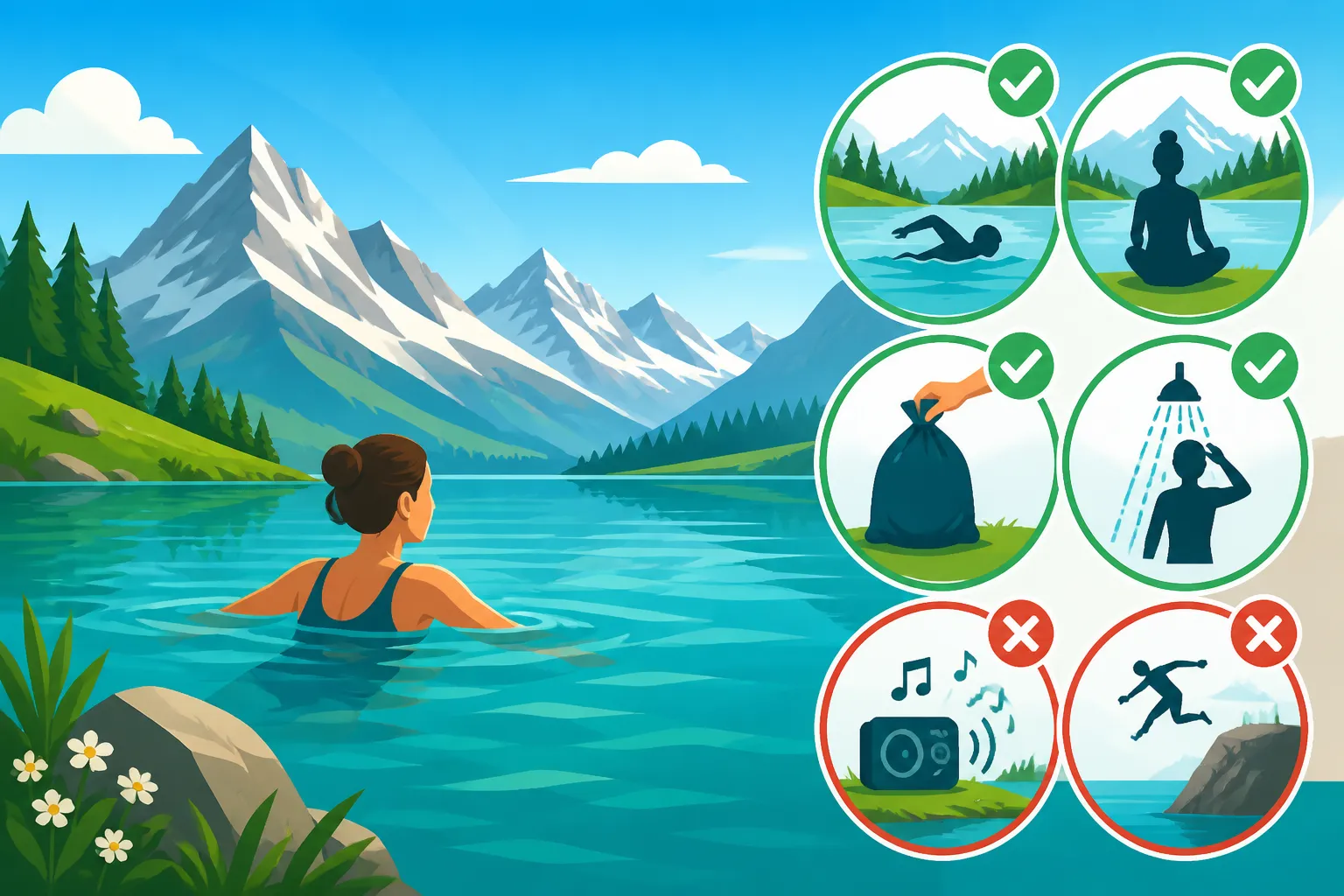
The Swiss value peace and quiet, especially in public spaces and residential areas. This extends to swimming areas, even bustling Badis. While splashing and happy chatter are fine, boisterous shouting, loud music (especially without headphones), or disruptive games are generally frowned upon. If you bring a speaker, keep the volume incredibly low, or better yet, use headphones. Remember that sound travels far over water.
Personal space is also a big deal. Even when a Badi is packed, people will try to maintain a respectful distance. Don't set up your towel right next to someone if there's ample space further along. When entering or exiting the water, do so efficiently without lingering or blocking paths. If you're swimming laps, be mindful of others in the water. The general rule of thumb is: would you want someone doing this next to you? If the answer is no, then don't do it. It’s about being considerate of the collective experience.
Cleanliness is King: Leave No Trace, Take Only Memories
This one should be obvious, but it bears repeating: leave absolutely no trace behind. Swiss public spaces are immaculately clean, and maintaining this standard is a collective responsibility. This means all your trash, no matter how small, goes with you. Pack out everything you pack in. If bins are full, take your rubbish home. Don't leave plastic bottles, food wrappers, or especially cigarette butts (and definitely don't smoke near others, even outdoors).
This extends to natural waste too. While you might be tempted to relieve yourself discreetly in the lake or river, remember that these waters are shared by everyone and often used for drinking water by communities downstream. Use public restrooms whenever available, even if it means a bit of a walk. The Swiss take their water quality incredibly seriously, and disrespectful behavior won't be tolerated, even if it's just a stern look from an elder, which feels worse than a fine sometimes.
Changing, Nudity, and Public Decorum: What's Okay (and What's Not)
This is where things can get a little nuanced and sometimes confusing for expats. In designated Badis, there are changing rooms and showers. Use them. Stripping down to change on the grass in a crowded public area is generally not acceptable, although a quick towel change is usually fine if you're discreet.
However, in more remote "wild" swimming spots, or along riverbanks where people are just hopping in, discretion is key. Some very specific, often secluded, spots might tolerate casual topless sunbathing or even nude swimming (FKK), but these are rare and almost always known only to locals who specifically seek them out. Unless you are absolutely certain it's an FKK spot, assume that swimwear is mandatory for everyone (men and women) in all public or semi-public swimming areas. Children running around naked is generally fine at a family-friendly Badi, but adults should maintain appropriate modesty.
When it comes to swimwear itself, anything goes, from bikinis and swimming trunks to full-body modesty suits. The Swiss are generally quite pragmatic and tolerant, as long as you're not causing a fuss or overtly challenging the general sense of order and decency.
Where to Dip Your Toes: Finding Your Perfect Swiss Spot
Okay, now that we've covered the do's and don'ts, let's talk about the fun part: where to go! Switzerland offers such a diverse range of swimming experiences, from bustling urban lidos to tranquil mountain lake coves. Knowing where to look and how to get there is half the battle, especially when you're still getting your bearings.
The Beloved "Badis": Your Gateway to Supervised Fun
For new arrivals, or those who prefer a bit more structure and amenities, the Badi is your best friend. A Badi (or Bains in French, Bagni in Italian) is a public lido or bathing facility, typically located on a lake, river, or sometimes as a standalone outdoor pool. These are fantastic because they offer:
- Safety: Usually lifeguard-supervised, with designated swimming zones.
- Facilities: Changing rooms, showers, toilets, often kiosks or restaurants, sometimes even playgrounds and diving boards.
- Accessibility: Easy to reach by public transport, often with parking nearby.
Virtually every Swiss town and city with access to water will have at least one popular Badi. In Zurich, you have iconic spots like the Strandbad Mythenquai on Lake Zurich, or the Flussbad Oberer Letten on the Limmat river – a true institution where you can float downstream. In Geneva, the Bains des Pâquis is a beloved year-round spot, offering swimming, sauna in winter, and a fantastic place to eat. Even smaller towns will have charming local Badis. These are often paid entry, but the fees are usually very reasonable, and it gives you peace of mind. Check out guides like Best Lakes for Swimming Near Zurich in Summer or Best Lakes for Swimming Near Geneva and Lausanne for specific recommendations.
Embracing the Wild: Lakes, Rivers, and Hidden Gems
If you're feeling a bit more adventurous and want to experience nature unfiltered, then truly "wild" swimming spots are calling your name. This usually means finding a quiet stretch of lake shoreline, a secluded river bend, or a charming smaller lake in the mountains.
- Lakes: Most lakes in Switzerland have publicly accessible shores, often with small gravel beaches, grassy areas, or jetties. Lake Brienz, Lake Thun, Lake Caumasee (a stunning turquoise gem in Graubünden), and Lake Blausee (a small, impossibly clear lake in Bernese Oberland) are just a few examples beyond the major city lakes. Many of these offer free access, though you might need to pay for parking or transport to reach them. The beauty of these spots is the peace and quiet and the stunning natural surroundings.
- Rivers: River swimming is most popular in the German-speaking parts of Switzerland. The Aare through Bern is legendary, with many locals simply jumping in with a waterproof bag for their clothes and floating downstream. The Limmat in Zurich also has popular sections. Always be extremely careful with currents and respect "no swimming" signs. If you're a strong swimmer and respectful, river swimming is an unforgettable Swiss experience.
- Hidden Gems: Sometimes the best spots are the ones you discover yourself by cycling along a lake path or hiking to a smaller, less-known tarn. These truly wild spots often have no facilities, so come prepared with everything you need, and remember the "leave no trace" rule more strictly than ever.
Getting There: Public Transport to Switzerland's Aquatic Havens
One of the great advantages of Switzerland is its unparalleled public transport system. You can reach almost any swimming spot, from city Badis to remote mountain lakes, without needing a car. This is where your SBB Travelcards: Is the Generalabonnement (GA) Worth the CHF 4000+ Cost? or your The Half-Fare Travelcard (Halbtax): The Must-Have Pass for Swiss Residents really pay off.
- Trains (SBB): The Swiss Federal Railways (SBB) network connects cities and towns along all major lakes and rivers. For example, to get to most spots on Lake Geneva, you'll take a train to Montreux, Vevey, or Lausanne. For Lake Zurich, trains regularly run along both shores.
- Buses (PostAuto and local networks): From train stations, local buses (often PostAuto, the yellow buses) can take you to smaller villages or specific Badis further off the main routes. Major cities have excellent local transport, so a guide like Public Transport in Zurich: ZVV Zones, Tickets, and Night Service will be invaluable for inner-city swimming spots.
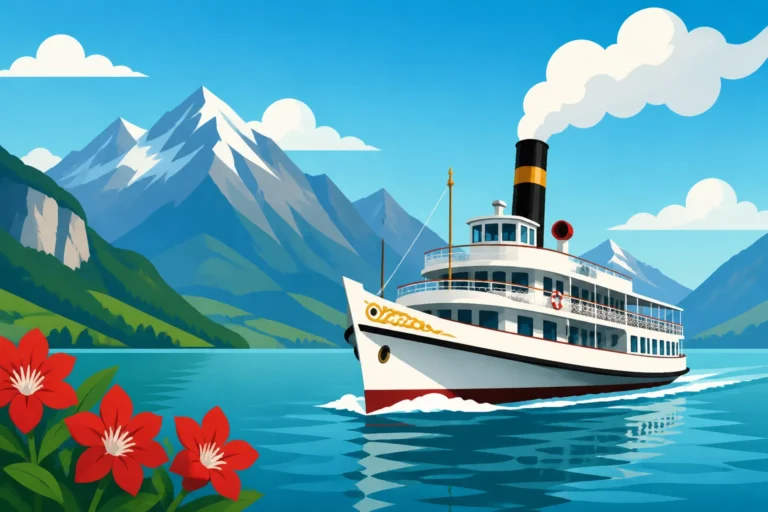
- Boats: On many large lakes, such as Lake Lucerne or Lake Geneva, regular boat services ferry passengers between towns. Sometimes, these boats stop directly at secluded Badis or scenic points where you can jump straight into the water. This is an absolutely idyllic way to experience lake swimming.
- Planning Your Journey: Use the SBB Mobile app or website to plan your route. It integrates all forms of public transport, including boats. You can also use other travel planning apps to navigate. If you're planning a full day out, check if services like Omio can help you compare routes or find connections to towns near popular spots, especially if you're coming from further afield.
Enhancing Your Wild Swimming Experience: Tips and Gear
Wild swimming in Switzerland isn’t just about the dip; it's about the entire experience. From packing the right essentials to making it a full-day adventure, a few tips can transform a simple swim into an unforgettable memory.
Essential Gear: From Towels to Thermoses
Beyond your swimwear, a few key items will significantly improve your wild swimming experience:
- Quick-dry towel: Essential for warmth and convenience. A microfibre towel is a game-changer.
- Waterproof dry bag: If you're river floating (like on the Aare), this is non-negotiable for your clothes, phone, and wallet.
- Water shoes/sandals: Many lake and river entry points are pebbly or rocky. Protect your feet from sharp stones or unseen objects.
- Sun protection: Even on cloudy days, the alpine sun is strong, especially with water reflection. Sunscreen, a hat, and sunglasses are vital.
- Warm clothes: After a refreshing (read: cold) swim, you'll feel the chill quickly. A warm sweater, light jacket, and even a hat can make a huge difference in your post-swim comfort.
- Thermos with a warm drink: This might sound strange in summer, but a cup of hot tea or coffee after a cold plunge is heavenly and helps regulate your body temperature.
- Snacks and water: Stay hydrated and refuel. Many Badis have kiosks, but for wild spots, bring your own.
- Floatation device: If you're doing a long river float, a simple inflatable ring or a Schwimmsack (swimming bag, often used as a float) is common and safer.
- First-aid kit: Basic plasters, antiseptic wipes, and pain relievers are always a good idea, especially for remote spots.
Post-Swim Perks: Warm-Ups and Local Delights
The post-swim feeling is almost as good as the swim itself. After you've dried off and warmed up, consider extending the pleasure.
- Picnic Time: Many lakeside and riverside spots have public barbecue areas (Grillstellen) or picnic tables. Pack some local Swiss cheese, bread, and maybe a bottle of local wine (if permitted) for a perfect post-swim meal.
- Local Cafes and Restaurants: Near many Badis and popular spots, you'll find charming cafes or even fine dining establishments where you can grab a warm meal, a hot drink, or a refreshing ice cream. There's nothing quite like a piping hot Pommes Frites (fries) after a chilly dip.
- Explore the Town: Combine your swim with exploring a nearby town or village. Many Swiss lakeside towns are incredibly picturesque, with historic centers, charming shops, and beautiful promenades. After a swim in Lake Lucerne, you could easily explore the beautiful Old Town of Lucerne. Use platforms like GetYourGuide to find local walking tours or attractions to round out your day.
Combining Adventures: Make a Day (or Weekend) of It
Wild swimming doesn't have to be a standalone activity. It's often best combined with other Swiss adventures, turning it into a full day trip or even a weekend getaway.
- Hiking and Swimming: Many stunning lakes are nestled in the mountains, making them perfect destinations after a scenic hike. Imagine reaching a pristine alpine lake, cooling off with a swim, and then hiking back down. Guides like Swiss Hiking for Beginners: Trail Grades and the SAC System can help you find suitable trails.
- Cycling and Swimming: Switzerland has an excellent network of cycling paths. Cycle along a lake, take a refreshing dip, and then continue your ride.
- Camping and Swimming: For a truly immersive experience, consider combining wild swimming with camping. Many campsites are located directly on lake shores or riverbanks, offering easy access to the water. Check out Camping in Switzerland: Best Sites and Wild Camping Rules for guidelines on legal and ethical camping.
- Boat Trips and Island Hopping: On larger lakes, consider taking a boat trip. Many offer stops at various towns or even small islands, perfect for jumping in the water. Platforms like Booking.com can help you find accommodation if you decide to extend your stay in one of these beautiful lakeside locations, turning a day trip into a memorable overnight escape.
Switzerland’s wild waters are a gift. Embrace them, respect them, and they will offer you some of the most memorable and invigorating experiences you'll have as an expat.
Disclaimer
The information provided in this guide is for general informational purposes only and is subject to change. While we strive to provide accurate and up-to-date content, circumstances can vary. Always check local signs, official warnings, and current weather and water conditions before engaging in wild swimming. Swimming in natural waters carries inherent risks, and personal safety should always be your top priority. Neither the author nor the publisher can be held responsible for any incidents or accidents resulting from reliance on the information contained herein.