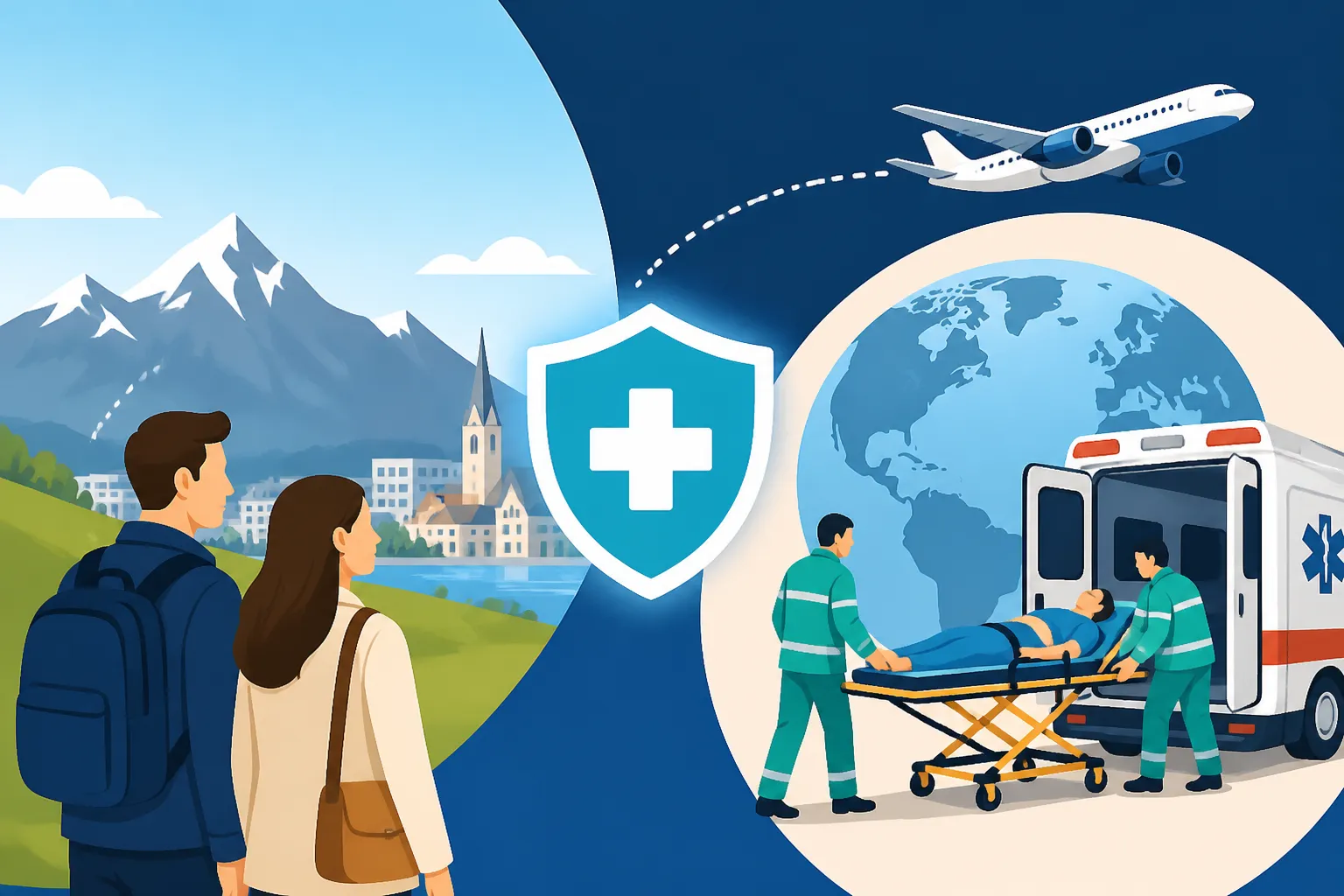
Repatriation Coverage: Why Expats Add International Health Insurance in Switzerland
Moving to Switzerland is an incredible adventure, full of stunning landscapes and new opportunities. But let's be real, even in this picturesque country, life throws curveballs, especially when it comes to health. One of the most significant, yet often overlooked, worries for us expats is the idea of a severe medical emergency that requires being transported back to our home country, or even just a specialized facility abroad. This guide is here to shed light on what repatriation coverage actually entails, why your standard Swiss health insurance likely won't cover it, and how you can get the peace of mind you deserve.
The Unspoken Reality: Why Repatriation Coverage is Crucial for Expats in Switzerland
When you first land in Switzerland, your mind is probably racing with exciting plans, not gruesome scenarios. You're thinking about Job Hunting in Switzerland: Market Strategies for English Speakers or maybe finding the perfect apartment, not how to get your body back across an ocean if something terrible happens. But for us who've been here a while, or have heard the horror stories, the thought of a major medical crisis, particularly one while traveling or one that necessitates care back home, can be truly unsettling. It's not just about getting medical treatment; it's about the logistics, the costs, and the emotional toll on your loved ones.
Beyond Basic Swiss Health Insurance (KVG) Realities
Let’s talk about your mandatory basic Swiss health insurance, or KVG/LAMal. It's a fantastic system for many things within Switzerland, covering essential medical care like doctor visits, hospital stays, and prescription medications right here. You’re legally obligated to have it, and it generally works well for day-to-day health needs. However, its scope is predominantly national.
While KVG does offer some limited coverage for emergencies abroad – usually up to double the cost of the same treatment in Switzerland – this often falls drastically short when faced with truly international emergencies. What about the cost of flying you home on a specialized air ambulance, potentially with medical staff? That’s where KVG almost always draws the line. Many expats mistakenly believe their basic plan is sufficient, but when you look into the fine print for something as specific and costly as medical transport across continents, you’ll quickly realize there’s a massive gap. It simply wasn't designed for that.
The True Cost of a Medical Emergency Abroad
Imagine this: you're on a hiking trip in Nepal, or visiting family in your home country, and you suffer a serious accident. Now, you need highly specialized care that's either unavailable locally, or you simply prefer to receive it back home, surrounded by your support network. The cost of a standard commercial flight with extra medical assistance can run into tens of thousands of Swiss Francs. An air ambulance, specifically equipped for critical care patients, can easily skyrocket into the hundreds of thousands, depending on the distance and medical needs.
These aren't just hypotheticals; these are real situations that expats face. Without proper repatriation coverage, your family could be left facing an unimaginable financial burden at an already traumatic time. And let's not forget, it's not just the medical transport itself. It can include the costs of a medical escort, ground ambulance transfers at both ends, and sometimes even a family member's travel to accompany you. These are expenses that can financially cripple even well-off individuals or families, turning a medical crisis into a catastrophic financial one.
Peace of Mind for You and Your Family
Living as an expat means you’re often far from your primary support system. In the event of a severe illness, injury, or even worse, death, the logistical and emotional burden on your family can be immense. Repatriation coverage isn't just a financial safety net; it's a profound source of peace of mind. It means that if the unthinkable happens, the complex and costly arrangements for your medical transport or the return of your remains will be handled by professionals, without your loved ones having to navigate bureaucratic nightmares or massive bills during their most vulnerable moments.
This coverage ensures that you or your remains can be brought back to where you belong, whether that's your home country for continued treatment, or for final arrangements. It removes the stress of having to coordinate international medical transfers, deal with embassy paperwork, or scramble to find funds for urgent, specialized transport. It's about protecting those you leave behind from an additional layer of trauma and expense, allowing them to focus on what truly matters.
Demystifying Repatriation: What It Is and How It Differs From Evacuation
These terms often get thrown around interchangeably, but they have distinct meanings, and understanding them is key to choosing the right insurance for your expat life in Switzerland. It's not just semantics; it impacts what kind of coverage you're truly getting.
Defining Medical Repatriation
Medical repatriation specifically refers to the organized process of transporting an individual who has suffered a serious illness or injury in a foreign country back to their country of origin or permanent residence for continued medical care, recovery, or, in the most tragic circumstances, for funeral arrangements. The primary goal is to return the patient to their home environment, where they might have better access to long-term care, follow-up treatments, or simply be closer to family and their familiar healthcare system.
This isn't just a regular flight; it often involves medically equipped aircraft, a team of doctors and nurses, and specialized ground transport on both ends. The decision for repatriation is typically made by a medical team, in consultation with the patient's family and the insurance provider, when it's determined that the patient's condition is stable enough for travel and that they would benefit from being treated in their home country. Think of it as bringing you home to familiar surroundings when a prolonged medical stay is anticipated.
Repatriation of Remains
While a grim topic, repatriation of remains is a crucial component of comprehensive expat coverage. Should an expat unfortunately pass away abroad, this coverage ensures that their body can be transported back to their home country for burial or cremation, as per their family's wishes and cultural practices. The costs involved here are considerable, covering everything from legal certification of death, embalming, cremation, specific packaging, air freight, and customs clearance.
Without this specific coverage, families are often faced with an unexpected and significant financial burden, in addition to their grief. The logistics of international repatriation of remains are complex, involving multiple government agencies, international shipping companies, and strict regulations. Having this aspect covered by an insurer means the family can focus on mourning and remembrance, rather than navigating a bureaucratic and expensive international process.
Emergency Medical Evacuation vs. Repatriation: A Key Distinction
Here's where it often gets confusing. Emergency medical evacuation is about moving you from where you are to the nearest suitable medical facility capable of treating your condition. This facility might be in a different city, a neighboring country, or even within Switzerland, but it’s driven by immediate medical need, not necessarily a desire to get you back home. For example, if you're seriously injured hiking in a remote part of the Swiss Alps for Expats: Hiking, Skiing, and Mountain Access and the local village clinic can't handle it, an evacuation would take you to the best-equipped hospital in Zurich, Geneva, or perhaps even Innsbruck, Austria, if that's the closest specialist trauma center.
Repatriation, on the other hand, specifically focuses on returning you to your country of origin or chosen permanent residence once your condition is stable enough for travel, and it's deemed medically appropriate. It's less about the immediate crisis and more about long-term care, recovery, or end-of-life wishes. Many basic travel insurances or supplementary health plans might cover evacuation but not repatriation, leaving a significant gap if your goal is to be treated back home. Always double-check which of these crucial services your policy truly provides.
Why Your Swiss Basic Health Insurance (KVG) Isn't Enough for International Emergencies
It's easy to assume that because you pay hefty premiums for your Swiss health insurance, you're covered for everything. But as seasoned expats quickly learn, the Swiss system, while excellent, has specific boundaries. These boundaries become painfully clear when you venture beyond Switzerland's borders or face a repatriation scenario.
Geographic Limitations of KVG
The core principle of KVG is to provide coverage within Switzerland. While it does extend to some emergencies within the EU/EFTA through the European Health Insurance Card (EHIC), its primary focus remains local. If you fall seriously ill or have a major accident while visiting family in Canada, working remotely from Thailand, or even on a holiday in the USA, your KVG coverage will be minimal at best. You'll likely be responsible for the vast majority of medical bills and certainly for any complex medical transport back to Switzerland or your home country.
Think of it this way: KVG is designed to serve the Swiss resident within the Swiss healthcare system. It's optimized for Healthcare in Switzerland for Expats: The Complete System Overview (2027), not for coordinating an air ambulance from South America. While it's vital for your daily life here, it's not a global safety net. The moment you step off Swiss soil, its limitations become glaringly obvious, particularly for high-cost services like international medical transport or the repatriation of remains.
The EHIC and Its Gaps
For those of us from EU/EFTA countries, or with a Swiss residence permit, the European Health Insurance Card (EHIC) Equivalent for Swiss Residents is a useful tool. It allows you to access medically necessary state-provided healthcare during a temporary stay in any of the 27 EU countries, Iceland, Liechtenstein, Norway, and the UK, under the same conditions and at the same cost (free in some countries) as people insured in that country. This sounds great, right?
However, the EHIC has crucial limitations:
- It's not an alternative to travel insurance. It does not cover private healthcare, the cost of a flight back to your home country, lost or stolen property, or costs if you need to be evacuated to a specialized facility outside the public system of the country you're in.
- "Medically necessary" is key. This refers to healthcare that cannot reasonably wait until you return home. It doesn't mean you get free elective procedures or continuous treatment.
- It explicitly does not cover repatriation. If you have a serious incident in France and need to be flown back to Switzerland (or your home country), the EHIC will not cover those transport costs. It only covers the treatment you receive in the public system of the country you're visiting. This is a critical distinction that many expats overlook.
Accident Insurance (UVG) and Travel
Many employees in Switzerland benefit from Accident Insurance (UVG): Occupational vs. Non-Occupational Coverage, which is typically paid for by your employer. This covers medical treatment costs arising from both occupational and non-occupational accidents. If you have an accident, this insurance kicks in regardless of who was at fault.
But what about when you're abroad? UVG typically provides coverage for accidents worldwide, which is a definite plus. However, similar to KVG, this coverage is often limited to a certain multiple of what the treatment would cost in Switzerland. And crucially, like KVG and the EHIC, UVG is generally not designed to cover the full costs of medical repatriation to your home country. While it might cover the initial emergency medical treatment abroad, the highly specialized and expensive process of flying you across continents is usually outside its scope. Always check the specific terms of your UVG policy, as some employers might have enhanced plans, but for the most part, a dedicated repatriation plan is a separate and necessary consideration for true global peace of mind.
Navigating Your Options: Finding the Right Repatriation Coverage
Given the significant gaps in standard Swiss insurance, it’s clear that expats need to proactively seek out additional coverage for medical repatriation. Thankfully, there are several avenues you can explore, each with its own advantages and disadvantages.
Supplementary Health Insurance (VVG) Add-ons
In Switzerland, beyond the mandatory KVG, you have the option to purchase Supplementary Health Insurance (VVG): What It Covers and When to Buy It. These VVG policies can cover a wide range of benefits not included in basic insurance, such as private ward hospital stays, alternative medicine, improved dental benefits, and yes, sometimes, enhanced travel and emergency abroad coverage. Some VVG plans may include specific clauses for medical evacuation and, more rarely, medical repatriation.
When considering VVG for this purpose, you need to scrutinize the policy details very carefully. Look for terms like "medical transport abroad," "repatriation of sick or injured persons," or "repatriation of remains." Pay close attention to the coverage limits – is it a fixed amount, or does it cover the "actual costs"? Are there restrictions on the destination country (e.g., only within Europe, or worldwide)? Does it differentiate between evacuation and repatriation? Often, while VVG add-ons might boost your coverage for emergency treatment in other countries, full-scale, intercontinental repatriation often remains a weak point, or comes with stringent conditions and lower limits than a dedicated international policy.
Dedicated International Health Insurance
For many expats, especially those who travel frequently outside Switzerland, or those who want the absolute certainty of being able to return home for medical care, a dedicated international health insurance plan is often the most robust solution. These plans are specifically designed for individuals living and working abroad, offering global coverage that goes far beyond the territorial limits of Swiss KVG and supplementary plans.
International health insurance providers understand the unique needs of expats, which includes comprehensive coverage for emergency medical evacuation and repatriation. Brands like SafetyWing offer travel medical insurance that can be particularly appealing for digital nomads and globe-trotting expats, often including emergency medical evacuation and repatriation as part of their core offerings. Other major international providers like Cigna Global, Aetna International, or Bupa Global also offer comprehensive plans that include this critical component. These policies are usually explicitly designed for such scenarios, covering the full cost of medical transport to your home country if medically necessary. They often come with 24/7 emergency assistance services, which can be invaluable in coordinating complex international logistics. While generally more expensive than VVG add-ons, they offer unparalleled breadth of coverage and peace of mind for an expat lifestyle.
Travel Insurance with Medical Evacuation/Repatriation
For shorter trips outside Switzerland, a standalone travel insurance policy is indispensable. Most comprehensive travel insurance plans will include emergency medical coverage, which typically means they cover acute medical treatment overseas. Crucially, many also include emergency medical evacuation and, in some cases, repatriation.
However, there are important caveats. Travel insurance is designed for temporary stays abroad. If you're frequently leaving Switzerland for extended periods, or if you need continuous coverage beyond the typical 30, 60, or 90-day trip limits, travel insurance won't suffice. Furthermore, while it's great for an acute emergency during a holiday, if your ongoing condition necessitates a return to your home country for months of recovery, the repatriation clause might still have limits that fall short of dedicated international health insurance. Always check the duration limits and the specific wording for repatriation – does it cover the full costs or just a portion? Is it a one-time benefit per trip or per policy year? For long-term peace of mind as a resident in Switzerland, relying solely on single-trip travel insurance for repatriation is not advisable. It's excellent for its intended purpose, but it's not a substitute for continuous, comprehensive international coverage.
Practical Considerations for Choosing and Using Your Repatriation Plan
Selecting the right repatriation coverage isn't just about finding any plan; it's about finding the right plan for your specific needs, health status, and travel habits. There are several critical factors you'll want to dig into before committing.
Coverage Limits and Scope
This is where the devil is in the details. Don't just look for "repatriation included." Read the fine print to understand what exactly is covered.
- Monetary limits: Is there a cap on the maximum payout for medical repatriation or repatriation of remains? A low cap (e.g., CHF 20,000) might seem like a lot, but it could be easily swallowed by an air ambulance flight from Asia or the Americas.
- Included expenses: Does the policy cover the cost of a medical escort (doctor or nurse), ground transfers (ambulance to/from airports), communication costs, or even accommodation for a family member to travel with you? These add-ons can make a huge difference in an emergency.
- Choice of destination: Can you choose to be repatriated to your home country, or only to the nearest country where adequate medical care is available? Some policies might give you less flexibility here.
- Pre-authorization: Does the insurer require pre-authorization for any medical evacuation or repatriation? Most do, and it's essential to understand the process to avoid delays or denial of claims.
Medical Conditions and Exclusions
This is particularly important if you have any pre-existing medical conditions. Many policies have strict rules or exclusions regarding these.
- Pre-existing conditions: Will the policy cover medical emergencies related to a pre-existing condition while you're abroad, or will it only cover new, unforeseen illnesses/injuries? If you have, say, a chronic heart condition, an international policy needs to explicitly cover exacerbations of that condition.
- High-risk activities: If you're an avid skier (perhaps enjoying a trip outside Switzerland's borders) or engage in other adventure sports, check if these activities are excluded or require additional riders.
- Geographic exclusions: While most international policies are worldwide, some may exclude certain high-risk countries or regions due to political instability or ongoing conflicts. Always verify.
Emergency Assistance Services
A good repatriation policy is more than just financial coverage; it's about the support network behind it. Look for providers that offer robust 24/7 emergency assistance.
- Multilingual support: When you're in a stressful medical situation in a foreign country, being able to speak to someone in your native language can be incredibly reassuring.
- Coordination services: The best policies will have a dedicated team that coordinates all aspects of your medical evacuation or repatriation, from finding appropriate medical facilities to arranging transport and managing communication with your family. This takes a huge burden off you and your loved ones.
- Direct billing: Can the assistance service arrange for direct billing with medical providers abroad, so you don't have to pay out-of-pocket and wait for reimbursement? This is a massive advantage when dealing with potentially huge bills.
Reputation and Reliability of the Provider
In times of crisis, you want to be sure your insurance provider will deliver on its promises.
- Financial stability: Choose an insurer with a strong financial rating, indicating their ability to pay out large claims.
- Customer reviews: Look for reviews specifically from expats or travelers who have used their emergency assistance or repatriation services. Real-world experiences speak volumes.
- Clarity of communication: Does the provider offer clear policy documents and easy-to-understand terms? Avoid providers with overly complex language or hidden clauses.
When comparing options, consider a table like this to help you weigh the pros and cons:
| Feature/Policy Type | Swiss Basic Health (KVG) | Swiss Supplementary (VVG Add-on) | Dedicated International Health Insurance | Standalone Travel Insurance |
|---|---|---|---|---|
| Primary Scope | Within Switzerland | Enhanced Swiss + some abroad | Worldwide, long-term | Worldwide, short-term trips |
| Emergency Medical Treatment Abroad | Limited (2x Swiss cost) | Often enhanced | Comprehensive | Comprehensive |
| Medical Evacuation | Extremely Limited/None | Possible, but with limits | Comprehensive | Often comprehensive |
| Medical Repatriation to Home Country | No | Very limited, high cost/restrictions | Comprehensive | Possible, trip-specific limits |
| Repatriation of Remains | No | Very limited/Not covered | Comprehensive | Often included |
| 24/7 Emergency Assistance | No | Varies by plan | Yes, standard | Yes |
| Pre-existing Conditions | Covered (within CH) | Varies, often excluded abroad | Can be covered with rider | Often excluded |
| Best Use Case | Daily Swiss healthcare | Enhanced local care | Expat global coverage, frequent travel | Short holidays, business trips |
Remember, your health is not something to gamble with. While the Cost of Living in Switzerland 2026: Budgeting for Singles and Families is already high, skimping on critical international health and repatriation coverage can lead to far greater financial and emotional distress down the line. Many expats consider it an essential part of their financial planning, especially for those who want to know they can always return home if something goes seriously wrong. When you look at the options, companies like SafetyWing are specifically structured for the global nomad lifestyle, and their offerings often include these crucial repatriation aspects, making them a popular choice for expats who are frequently on the move.
Real-Life Scenarios: When Repatriation Coverage Kicks In
Sometimes, the best way to understand the value of something is through real-world examples. Repatriation coverage isn't just an abstract concept; it's a vital service that can make all the difference in a crisis.
Unexpected Illness Abroad
Imagine you’re on a holiday exploring the vibrant markets of Marrakech, or perhaps visiting family back home in the United States. Suddenly, you experience a severe medical emergency – a sudden stroke, a critical respiratory infection, or an acute appendicitis. You receive initial emergency treatment in the local hospital, but the medical team determines that for your long-term recovery, or due to complex follow-up care required, it would be significantly better for you to be transferred back to a specialized facility in your home country, or even back to Switzerland where your ongoing medical records and chosen doctors are.
This is precisely when medical repatriation coverage becomes indispensable. Your international health insurer would step in, coordinating with the medical teams in both countries. They would arrange for a medically equipped flight, possibly with a medical escort, manage all the necessary paperwork, and ensure a seamless transfer. Without this coverage, you or your family would be left to navigate this incredibly complex and expensive process alone, likely under immense emotional stress and a looming six-figure bill. This is particularly relevant if you envision yourself recovering best with your long-term Finding Medical Care in Switzerland: Doctors, Specialists, and Referrals or within your familial support system.
Serious Accident While Skiing
Let's say you're an avid skier, and while enjoying the slopes in the French Alps or even the Italian Dolomites (a common cross-border getaway for Swiss residents), you have a serious accident – perhaps a complex fracture or a head injury. After initial stabilization in a local clinic, it becomes clear that you'll require extensive rehabilitation and possibly multiple surgeries. While your The Swiss Franchise System: How Deductibles and Copays Work might cover some initial medical costs within the EU/EFTA, it will not cover the specialized transport to bring you home.
With repatriation coverage, your insurer would arrange for your transfer back to Switzerland, or even directly to a rehabilitation clinic in your home country if that's where your family prefers you receive long-term care. This could involve an air ambulance or a specially equipped ground ambulance, all coordinated to ensure your safety and continuous medical attention during transit. This service is crucial, as even a seemingly short distance from a neighboring country can incur tens of thousands of francs in specialized medical transport costs. And don't forget the related aspects of Emergency Medical Services: Ambulances, REGA, and Crisis Protocols – while REGA is phenomenal, its primary role is within Switzerland, and even then, basic insurance only covers 50% of the cost. International repatriation is a different beast entirely.
Critical Medical Need for Home Country Care
Sometimes, it's not just about a preference, but a genuine medical need. Perhaps you've been diagnosed with a rare condition in Switzerland, and the world's leading specialists or a clinical trial for that condition are located in your home country or another specific international hub. Or, an elderly expat might experience a severe decline in health, and their family decides it is best for them to receive palliative or long-term care surrounded by family in their country of origin.
In these situations, where a medical board determines that returning to your home country is in your best medical interest or aligned with your end-of-life wishes, repatriation coverage is invaluable. It transforms what would be an insurmountable logistical and financial challenge into a manageable process. The insurance provider steps in to manage all the arrangements, ensuring the patient's safe and comfortable transfer, relieving the immense burden from the family during an already difficult time. This kind of nuanced, compassionate support is precisely why many expats prioritize comprehensive international health and repatriation insurance.
Disclaimer
Please note that the information provided in this guide is for general informational purposes only and does not constitute financial, legal, or medical advice. The Swiss healthcare system and insurance policies are complex and subject to change. It is crucial to consult with a qualified insurance broker or financial advisor in Switzerland to assess your individual needs and to obtain personalized advice regarding your health insurance and repatriation coverage options. Always read your policy documents carefully to understand the exact terms, conditions, exclusions, and coverage limits.