What Happens to Your Spousal Visa if You Divorce a Swiss Citizen?
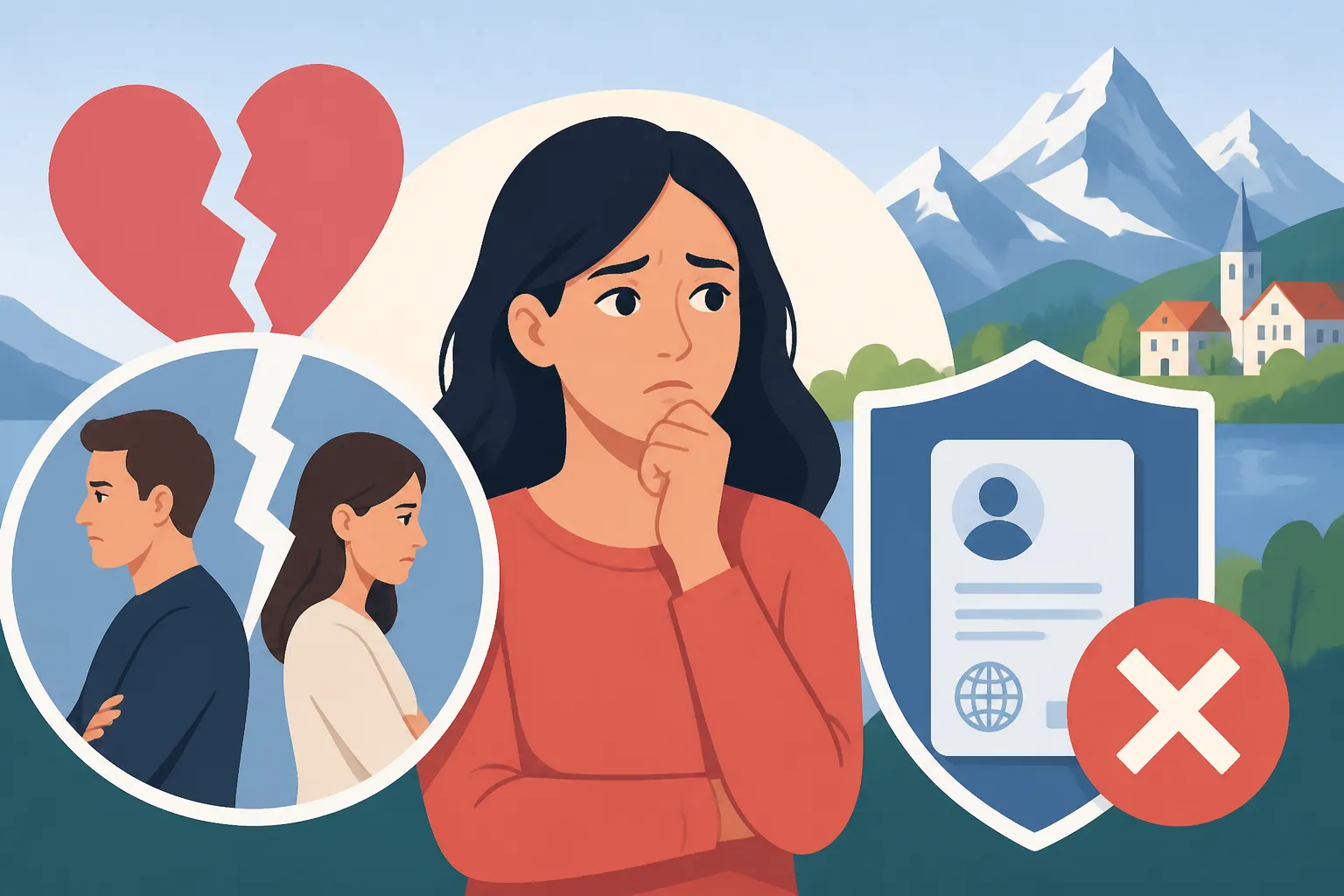
Facing a marriage breakdown in a foreign country is a gut-wrenching experience that leaves you questioning your safety and your right to stay. I remember the cold sweat I felt when a friend went through this, realizing how tied her life was to her husband's passport. This guide clarifies exactly what happens to your spousal visa if you divorce a Swiss citizen and how to protect your residency.
The Foundation of Spousal Residency in Switzerland
When you move to Switzerland to join a Swiss spouse, your residency is typically granted under the umbrella of family reunification. This means your right to live in Zurich, Geneva, or any other canton is legally tethered to your marital union. For most, this arrives in the form of an annually renewable B Permit. While this permit grants you the right to work and move freely within the country, its validity is inherently conditional on the continuation of the household.
The Swiss authorities, specifically the Cantonal Migration Offices, view marriage as a "purpose of stay." If that purpose evaporates through divorce or even a formal separation (separation of the household), the legal basis for your permit technically disappears. This is where the anxiety begins for many expats. You’ve built a life here, perhaps learned the local language, and found a job in a competitive market like Basel or Zug. The thought of losing it all because a relationship didn't work out feels like a double punishment.
However, the law is not entirely heartless. The Swiss Foreign Nationals and Integration Act (FNIA), specifically Article 50, provides several "lifeboats" for those whose marriages end. Whether you get to stay depends heavily on the duration of your marriage, your level of integration, and the specific circumstances surrounding the split. Understanding The Swiss B Permit: Eligibility, Renewal, and Restrictions is the first step in recognizing how these conditions apply to your current status.
The Three Year Rule and Successful Integration
The most common way to secure your right to stay after a divorce is by meeting the criteria of Article 50, Paragraph 1, Letter a of the FNIA. This is often referred to as the "three-year rule." To qualify, your marital union must have lasted at least three years in Switzerland, and you must demonstrate that you have successfully integrated into Swiss society.
What does "successful integration" actually mean in the eyes of a migration officer in Lausanne or Bern? It isn't just about paying your taxes on time. They look at your language proficiency, your participation in the workforce, and your respect for public order. You will likely be asked to provide proof of your language skills. If you are aiming for a long-term solution, knowing the C Permit Language Requirements: Do I Need A2 Written and B1 Oral? is essential, as the expectations for staying after a divorce often mirror these standards.
Financial independence is a non-negotiable pillar of this rule. If you are relying on social assistance (Sozialhilfe) at the time of your divorce, the authorities are far less likely to extend your permit. They want to see that you can support yourself without becoming a burden on the state. This is why maintaining steady employment is your strongest shield. If you find yourself needing to move or change roles during this transition, remember the importance of Reporting Changes of Employer to the Cantonal Migration Office to ensure your dossier remains accurate and transparent.
The Definition of Marital Union
It is vital to understand that the "three years" refers to the time spent living together as a married couple in Switzerland. If you were married for ten years abroad but only lived in Switzerland for two before the split, you do not automatically meet this requirement. The clock starts when you register at the local Gemeinde.
If you have already transitioned to a permanent residency permit before the divorce, your situation is significantly more stable. You can read more about the differences in The Swiss C Permit (Permanent Residency): Fast-Track and Standard Routes to see if you might already be eligible for a status that isn't dependent on your spouse.
The Role of Language and Social Ties
Integration also involves social connections. Are you a member of a local Verein (club)? Do you have Swiss friends who can vouch for your integration? The migration office may look at your entire "life center." If your only tie to Switzerland was your spouse and you speak no local language, they may argue that your "re-integration" into your home country would be easy and expected.
To prove your case, you might need to gather various documents, including character references and employment contracts. For any documents originally in your native language, using a service like RushTranslate can ensure your evidence is professionally prepared for the cantonal authorities.
Hardship Cases and Protected Grounds for Staying
What happens if you haven't been married for three years, or your integration is still a work in progress? The law provides exceptions for "important personal reasons" that make a return to your home country a significant hardship. This is covered under Article 50, Paragraph 1, Letter b.
One of the most critical protected grounds is the presence of domestic violence. If the marriage ended because of physical, psychological, or sexual abuse, the three-year rule is waived. The Swiss government recognizes that no one should be forced to stay in an abusive relationship just to keep their visa. However, the burden of proof is high. You will need police reports, medical records, or testimony from a specialized support center (like the Opferhilfe).
In these sensitive cases, documentation is everything. Ensuring that sensitive reports from your home country or international medical records are accurately translated via RushTranslate is a necessary step in building your legal case. The migration office must be convinced that the violence was of a certain intensity and that your stay in Switzerland is necessary for your protection or recovery.
The Best Interests of the Child
If you have children with your Swiss spouse, your right to stay is often protected regardless of the three-year rule. Swiss law places a high value on the relationship between a parent and a child. If the child is Swiss or has a permanent right to stay, and you have a close relationship and share custody (or have visitation rights), the authorities will generally extend your permit.
This is rooted in the "right to family life" protected by the European Convention on Human Rights. The goal is to ensure the child can maintain a meaningful relationship with both parents. If you are navigating this, reviewing the guidelines on Family Reunification: Bringing Your Spouse and Children to Switzerland can help you understand how the authorities view the family unit, even when it is being restructured through divorce.
Social Re-integration Difficulties
Another hardship factor is whether you would face extreme difficulty re-integrating into your home country. For example, if you have lived in Switzerland for many years, have no remaining family in your country of origin, or if your home country is currently in a state of war or severe political unrest, you may be allowed to stay.
This is also applicable if you have a medical condition that cannot be treated in your home country but is well-managed under the Swiss healthcare system. During such transitions, ensuring your health coverage remains uninterrupted is vital. While you navigate the local KVG system, having a plan from Cigna Global can provide peace of mind and continuous coverage if your local insurance status becomes temporarily complicated by the change in your residency basis.
The Administrative Process of Separation and Divorce
The moment you or your spouse move out of the shared apartment, the clock starts on your legal status change. In Switzerland, you are required to report a change of address within 14 days. This is done at the local residents' registration office (Kreisbüro or Contrôle des Habitants). Failing to do this can lead to fines and complications with your permit.
You can find more details on this process in the guide on 14-Day Registration Rule: Signing Up at the Gemeinde/Commune. Once the migration office is notified of the "separation of the household," they will typically send you a letter (often called a "right to be heard") asking for your position on why your permit should be extended despite the marriage ending.
| Action Item | Responsible Authority | Deadline |
|---|---|---|
| Report Change of Address | Local Gemeinde/Kreisbüro | Within 14 days |
| Notify Migration Office of Separation | Cantonal Migration Office | As soon as possible |
| Submit Integration Evidence | Cantonal Migration Office | Upon request (usually 30 days) |
| Health Insurance Update | Your KVG Provider | Within 30 days of moving |
| Document Translation | Private Service (e.g., RushTranslate) | Prior to submission |
It is during this phase that you must be proactive. Don't wait for them to tell you to leave. Provide your employment contract, your language certificates, and evidence of your social ties immediately. If you are worried about the status of your physical card during this time, refer to What Happens if You Lose Your Swiss Residence Card (Ausländerausweis) for advice on maintaining your ID documents.
Navigating the "Right to be Heard"
When the Migration Office sends the "right to be heard" (Anhörung), this is your golden opportunity. You should treat this like a job application for your life. Be detailed, be honest, and be humble. Explain your career path, your volunteer work, and your commitment to Switzerland.
If you are a freelancer or business owner, provide your tax returns and profit/loss statements. If you are an employee, a letter from your boss stating that you are a valued member of the team can go a long way. The migration officers are human beings; they want to see that you are an asset to the community.
Financial Independence and Health Insurance Realities
As mentioned, being financially self-sufficient is the cornerstone of staying in Switzerland after a divorce. The authorities will check if you have any outstanding debts or "Betreibungen." A clean debt register extract is essential. If you have been living on a joint budget, you need to quickly establish your own financial footprint.
This includes taking over your own health insurance policy. In many spousal cases, the couple is on a joint family plan. After the split, you will need your own individual policy. Understanding KVG/LAMal: Mandatory Basic Health Insurance Explained is crucial during this phase to ensure you aren't overpaying or under-covered.
For many expats, the transition period can be rocky. If you are worried about the 50% rule for emergency transport, as detailed in Does Basic Swiss Insurance Cover Ambulance Rides? The 50% Rule Explained, you might consider supplementary coverage. Companies like Cigna Global offer international plans that can bridge the gap if you are traveling or if you prefer a higher tier of service than the basic Swiss KVG provides during your residency transition.
Checklist for Protecting Your Residency
If you see a divorce on the horizon, or if you are already in the midst of one, take these steps to solidify your position:
- Secure Your Employment: If you are working part-time, consider increasing your percentage to 80% or 100% to prove financial independence.
- Get Your Language Certificate: Don't wait for the migration office to ask. Sign up for a fide or Goethe exam now.
- Gather Your "Evidence of Life": Collect your work references, club memberships, and letters from friends.
- Professional Translations: Ensure all legal documents from your home country related to your marriage or potential hardship are translated via RushTranslate.
- Review Your Insurance: Ensure you have your own health and liability insurance. Consider a global backup like Cigna Global during the transition.
- Consult a Specialist: Immigration law in Switzerland is cantonal and complex. A consultation with an immigration lawyer can be worth every franc.
Divorce is the end of one chapter, but it doesn't have to be the end of your Swiss story. By being proactive, maintaining your financial independence, and proving your integration, you can navigate the bureaucracy and keep the home you've worked so hard to build.
Disclaimer
This article is for informational purposes only and does not constitute legal advice. Swiss immigration laws and cantonal practices are subject to change. Always consult with the Cantonal Migration Office or a qualified legal professional regarding your specific residency status.