Bringing Elderly Parents to Switzerland: The Reality of Dependency Visas
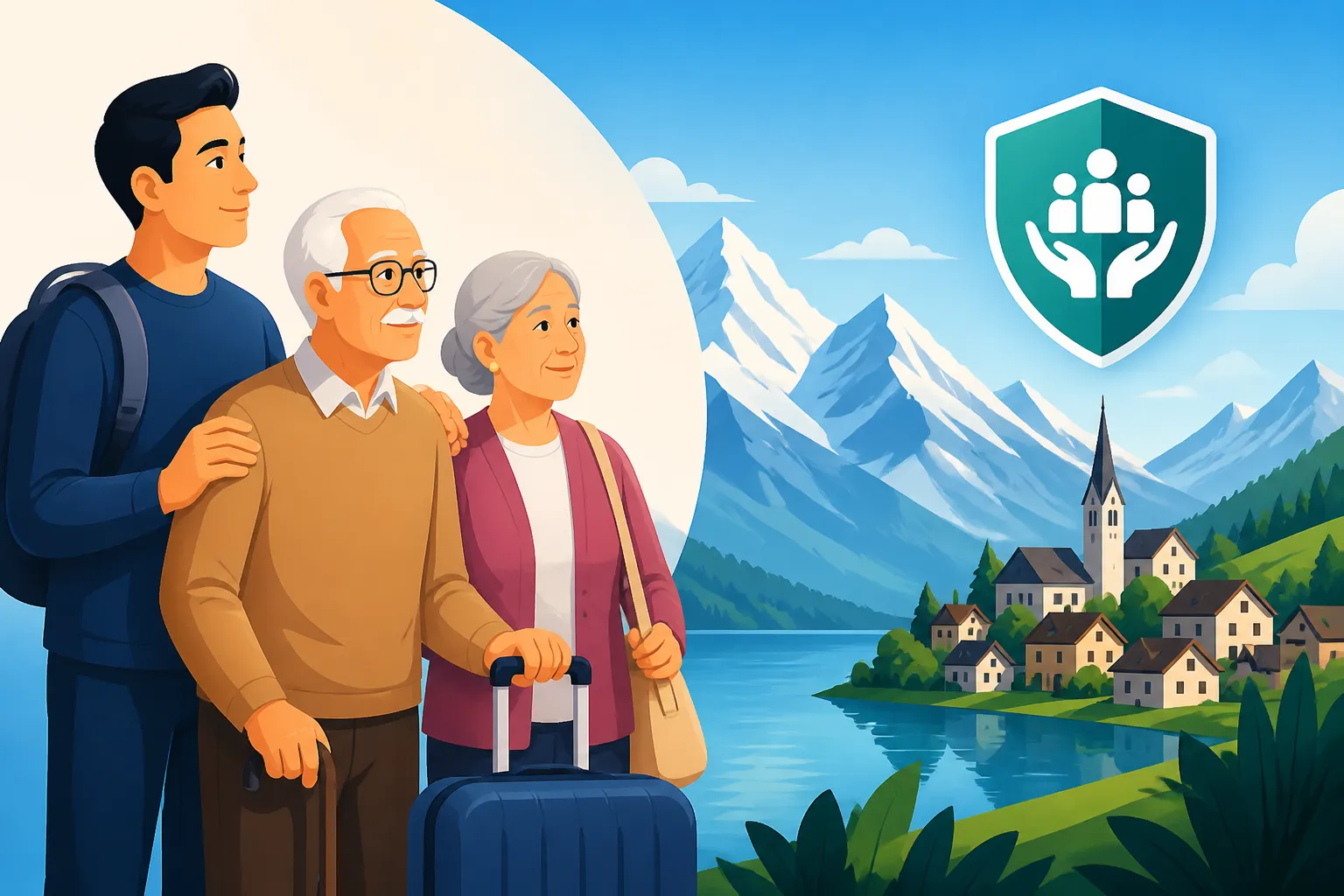
That ache in your heart, the one that whispers about your aging parents back home, is a feeling many of us expats in Switzerland know all too well. You've built a life here, perhaps started a family, and now the thought of your parents navigating their senior years alone, far away, feels increasingly heavy. It’s natural to want to bring them closer, to share this beautiful, safe country with them. But let me be blunt: bringing elderly parents to live with you in Switzerland on a dependency visa is, unfortunately, one of the most challenging immigration hurdles you'll face. It's not impossible, but the reality is far from simple, often requiring immense financial stability and proving an extreme level of dependency. This guide will walk you through the harsh truths, the legal labyrinth, and the practical considerations, so you can understand the uphill battle ahead.
The Harsh Reality: Why Switzerland Makes It So Difficult
Let's not sugarcoat it: Switzerland has very strict immigration policies, and its interpretation of "family reunification" is quite narrow. While bringing your spouse and minor children is a relatively straightforward (though still bureaucratic) process once you have a valid residence permit, extending that same right to elderly parents is an entirely different ball game. The Swiss authorities prioritize integrating immediate family units that are economically active or in critical developmental stages. Elderly parents are generally considered to be a potential burden on the social and healthcare systems, and the country is extremely cautious about allowing in individuals who are not expected to contribute economically.
This isn't about being heartless; it's a reflection of a system designed to protect its social infrastructure and maintain a certain demographic balance. Many expats come here expecting similar family reunification rules to other countries, only to be met with a stark and often heartbreaking reality. The emotional toll of this realization can be immense, and it's important to understand why it's so tough before you invest significant time, money, and hope into an application that might ultimately be denied.
Understanding the "Exceptional Hardship" Clause
The key phrase you'll encounter when researching dependency visas for parents is "cases of particular hardship" (Härtefall). This isn't a vague suggestion; it's a very high bar to clear. It means you must prove that your parents' situation is genuinely exceptional and that their continued residence in their home country would lead to an unbearable level of hardship. This isn't just about loneliness or wanting to be close; it often requires demonstrating a severe lack of care options, financial destitution, or grave health issues that cannot be addressed in their home country, and that you are their only remaining support.
For instance, if your parents have other adult children in their home country, or if there are any care facilities, pension provisions, or social structures that could support them, the Swiss authorities will expect those avenues to be exhausted first. The idea is that Switzerland should not be seen as a fallback for parental care that could otherwise be provided elsewhere. This makes the application process incredibly intrusive, as you'll need to provide extensive documentation about your parents' living conditions, health, finances, and the presence (or absence) of other family members.
The Financial Burden: More Than Just a Salary
Even if you manage to argue the "exceptional hardship," the financial requirements are staggering. You're not just proving you can support them; you're proving you can support them without them ever becoming a burden on the Swiss state. This means you need to demonstrate significant, stable, and verifiable income that can cover not only their daily living expenses but also their potentially high healthcare costs and long-term care needs. This isn't about pocket money; it's about guaranteeing a full, independent financial existence for them.
Consider the cost of living in Switzerland 2026: budgeting for singles and families. Adding two elderly individuals to your household, who won't be earning, immediately doubles or triples your financial obligations for things like housing, food, and transport. Then factor in healthcare. While your parents, if granted a permit, would be subject to the mandatory health insurance (KVG) system, basic insurance often comes with a high franchise (deductible) and copayments. For seniors, health premiums are already significantly higher than for younger individuals, and if they have pre-existing conditions, the costs can skyrocket. You might even want to consider supplementary health insurance (VVG) to cover things like private rooms or alternative therapies, which would add another layer of expense. The authorities will scrutinize every detail of your finances to ensure you can truly bear this burden.
The Legal Framework: What the Law Says About Family Reunification for Parents
Navigating Swiss immigration law is like trying to untangle a ball of yarn after a cat has played with it for a week. The relevant legal basis for bringing elderly parents to Switzerland typically falls under the Federal Act on Foreign Nationals and Integration (FNIA) and its associated ordinances. While there are explicit provisions for spouses and children under 18 (or 25 if in education for EU/EFTA nationals), the allowance for other family members, including parents, is far more restrictive.
Article 43 FNIA and Beyond: The Strict Interpretation
For family reunification beyond direct dependents (spouse and minor children), Swiss law relies on stricter interpretations. Specifically, Article 43 of the FNIA outlines the conditions under which other family members may be granted a residence permit. This is where the "particular hardship" clause comes into full effect. It’s not an automatic right, but rather a discretionary decision made by the cantonal migration authorities, subject to approval by the State Secretariat for Migration (SEM).
Here’s where it gets really tricky:
- Dependence: You must prove that your parents are truly and completely dependent on you – financially, physically, or emotionally. This means they cannot support themselves and have no other family members (children, siblings) in their home country or elsewhere who could provide care or financial assistance.
- Lack of Support Elsewhere: You need to demonstrate that there are absolutely no adequate care or support options available to them in their home country. This could involve showing insufficient social welfare, lack of suitable medical facilities, or an inability to access these due to their specific circumstances.
- Your Financial Capacity: As discussed, your financial resources must be exceptionally robust. The authorities will want to see stable, long-term income, assets, and no reliance on social welfare (Sozialhilfe) for yourself or your family. Any previous debt register entries (Betreibungen) could severely undermine your application.
- Adequate Housing: You must have sufficient living space for your parents, meeting specific cantonal requirements for room count and square footage per person. A two-bedroom apartment for a couple with two children might not be deemed adequate if you then want to add two more adults.
- Integration: While not always the primary focus for elderly parents, the authorities might consider their potential for integration into Swiss society, especially in terms of language. However, given their age, this is often weighed differently than for working-age adults.
Differences for EU/EFTA vs. Third-Country Nationals
While the "hardship" clause is generally applied strictly across the board for parents, your own permit status can subtly influence the initial conditions.
- EU/EFTA Nationals: If you are an EU/EFTA citizen holding a B or C permit, the principle of free movement theoretically allows for family reunification. However, for parents, this is still heavily restricted and often only granted if they are genuinely dependent on you for their livelihood and care. The criteria for dependency are still very high, similar to the "hardship" clause. You will still need to prove significant financial means to avoid them becoming a burden on the Swiss welfare system.
- Third-Country Nationals (TCNs): If you are a TCN on a B or C permit, the bar is even higher. Your family reunification rights are typically limited to your spouse and minor children. Bringing parents is almost exclusively reserved for the most extreme and compelling cases of hardship, where every single condition mentioned above is met beyond any doubt. The burden of proof lies entirely with you to demonstrate exceptional circumstances that leave no alternative.
The key takeaway here is that you cannot simply "apply" for a parent visa as you might for a spouse. It's a complex, multi-layered application that delves deeply into personal circumstances, supported by an overwhelming amount of evidence.
Navigating the Application Process: Documentation and Challenges
Okay, so you've understood the severity of the challenge, but you're still determined. That's admirable. The application process itself is notoriously opaque and varies slightly from canton to canton, but the general principles and required documentation remain consistent. This is where attention to detail, patience, and a thick skin for potential rejections will be your constant companions.
Required Documentation: A Mountain of Proof
Prepare for an avalanche of paperwork. You'll need to gather documents not just about yourself, but extensively about your parents and their situation back home. This often includes:
- Your Documents:
- Copies of your Swiss residence permit (B or C permit) and passport.
- Proof of stable and sufficient income (salary slips, employment contract, tax returns for several years). The figures they expect are often significantly higher than your own cost of living, to account for full parental support.
- Proof of adequate housing (rental contract, property ownership, showing sufficient space for all occupants).
- Bank statements demonstrating significant savings.
- Criminal record checks and debt register extracts (Betreibungsauszug) for yourself, proving your financial integrity.
- A declaration stating you will financially support your parents without them claiming social welfare.
- Your Parents' Documents:
- Passports and birth certificates.
- Proof of relationship (your birth certificate listing them as parents).
- Detailed medical reports (translated and often notarized) outlining any health issues, dependency on care, and prognosis. This needs to be comprehensive and clearly state why their medical needs cannot be met adequately in their home country.
- Proof of their financial situation: pension statements (or lack thereof), bank statements, property ownership (or lack thereof), showing their inability to support themselves.
- Evidence of their living situation: rental contracts, property deeds, photographs, showing inadequate or unsafe living conditions if applicable.
- Proof of lack of support from other family members: This might involve affidavits from siblings stating their inability to care for the parents, or death certificates of other children. This is particularly difficult and often a major sticking point.
- A statement (often an affidavit) from your parents expressing their complete dependency on you and their inability to live independently or receive adequate care in their home country.
Every single document from abroad will need to be officially translated into one of Switzerland's official languages (German, French, or Italian, depending on your canton) and often apostilled or legalized by the Swiss embassy in their country. This process alone can be incredibly time-consuming and expensive.
The Waiting Game and Potential Appeals
Once you submit your comprehensive dossier to your cantonal migration office (Migrationsamt), the waiting game begins. This is not a quick process. Decisions can take many months, sometimes even over a year, due to the complexity and thoroughness of the review. The cantonal authorities will assess your application based on their specific guidelines, which can sometimes differ in nuances between cantons, before forwarding it to the SEM for final approval in many cases.
During this time, don't be surprised by requests for additional information or clarification. Be prepared to provide even more evidence, perhaps updated medical reports or financial statements.
If your application is denied, it's certainly disheartening, but it's not always the absolute end of the road. You have the right to appeal the decision. This would involve submitting a formal objection (Rekurs) to the relevant administrative court. However, an appeal is another lengthy and costly process, and success is far from guaranteed, especially if the initial denial was based on a fundamental lack of meeting the "hardship" criteria. Consulting with a specialized immigration lawyer at this stage would be crucial, but remember, legal fees in Switzerland are substantial.
Considering Other Options: A Difficult Conversation
Given the extreme difficulty of obtaining a dependency visa for elderly parents, many expats explore alternative solutions, which often involve difficult compromises.
- Regular Visits: The most common approach is frequent visits between Switzerland and the parents' home country. This might mean you travel more often, or they visit you for shorter periods (within Schengen visa limits, if applicable). While not ideal, it maintains closeness.
- Assisted Living/Care in Home Country: Exploring high-quality assisted living or care options in their home country, if available and affordable, can sometimes be a more realistic solution, allowing you to contribute financially without needing a Swiss permit.
- Relocating to a Different Country: Some expats, facing this harsh reality, consider relocating to other European countries with more lenient family reunification rules for parents, or even returning to their parents' home country if their situation allows.
- "Golden Visas" or Investment Schemes: For very wealthy individuals, some cantons offer residency based on significant lump-sum taxation or investments. However, this is for ultra-high net worth individuals and typically still doesn't guarantee family reunification for dependent parents; it's usually for family members who are also financially independent. This is not a viable option for most.
This discussion highlights the immense practical and emotional challenges. While brands like Sirelo can assist with the logistics of moving if a permit is granted, or if you're considering moving elsewhere, the initial hurdle of the visa itself requires a different kind of support. Similarly, having a robust international health insurance plan like Cigna Global might be a temporary measure or a supplementary option, but it won't circumvent the KVG mandatory insurance requirement once a residency permit is secured. The focus must be on meeting the permit criteria first and foremost.
Life in Switzerland for Elderly Parents: Practical Considerations Beyond the Permit
Let's imagine, for a moment, that you've done it. You've navigated the bureaucratic maze, proven exceptional hardship, and your parents have been granted a residency permit. Congratulations! That's an incredible feat. But the journey doesn't end there. Now, the real practicalities of integrating them into Swiss life begin, and these, too, come with significant challenges.
Healthcare System Access and Costs
Once your parents are officially residents, they will be required to register for mandatory basic health insurance (KVG) within 90 days of their arrival, just like any other resident. This is non-negotiable. As discussed in Healthcare in Switzerland for Expats: The Complete System Overview (2026), these premiums are often the highest for seniors, and pre-existing conditions won't be excluded from basic coverage.
While basic KVG covers a wide range of services, including doctor visits, hospital stays in a general ward, and prescription medications (minus your franchise and copay), it's crucial to understand The Swiss Franchise System: How Deductibles and Copays Work. For an elderly person with chronic conditions, you can quickly hit your chosen franchise (e.g., CHF 2,500) and then still pay 10% of costs (up to CHF 700 annually) as a copay. This adds up quickly.
Many families also consider Supplementary Health Insurance (VVG): What It Covers and When to Buy It for elderly relatives. These plans can cover things like alternative medicine, dental care (which is largely not covered by KVG), private hospital rooms, or additional home care services. However, supplementary insurance is not mandatory, and unlike KVG, providers can reject applicants based on age or pre-existing conditions, or impose significant waiting periods and higher premiums.
Beyond insurance, you'll need to navigate finding suitable medical care. Finding an English-speaking family doctor (Hausarzt) in major cantons is possible, but for specialists, language might become a barrier. Consider the practicalities of accompanying them to appointments and acting as a translator, or hiring professional translation services.
Social Integration and Language Barriers
Switzerland can be a wonderful place to live, but it's also known for its reserved social customs. For elderly individuals, especially those who don't speak a local language (German, French, or Italian), social integration can be incredibly isolating. While many younger expats find their communities through work or international groups, your parents might struggle more.
- Language: Learning a new language in old age is incredibly difficult. Without it, simple tasks like grocery shopping, using public transport, or interacting with neighbors can become frustrating. This increases their dependency on you.
- Community: Joining local clubs (Vereine) or senior groups can be a great way to meet people, but again, language is often a prerequisite. Expat groups are usually geared towards working professionals or families with children, leaving a gap for elderly parents.
- Daily Life: Many everyday rules and neighborhood etiquette, like quiet hours and recycling, are important in Switzerland. While you can guide them, these cultural differences can still be a source of stress or misunderstanding.
Care Options: Spitex and Long-Term Care
If your parents require home care or eventually more intensive support, you'll need to explore the options. Spitex services for elderly expat relatives living in Switzerland provide professional home care, ranging from nursing to household help. These services are often covered partly by KVG, but only with a doctor's prescription, and you will still be responsible for deductibles and copayments, plus any services not covered.
For long-term care, such as nursing homes, the costs in Switzerland are astronomical. Basic KVG insurance covers only a fraction of nursing home costs; the rest is typically covered by personal assets, cantonal subsidies (if eligible, which is unlikely if you are financially supporting them to prevent them from becoming a public burden), or private Long-Term Care Insurance in Switzerland: Planning for Aging Parents, which is extremely expensive and often difficult to obtain for seniors. This is a critical financial consideration that can quickly deplete family savings.
| Aspect | Bringing Spouse/Minor Children (Typical) | Bringing Elderly Parents (Exceptional) |
|---|---|---|
| Legal Basis | Right to Family Reunification (Art. 42 FNIA, EU/EFTA Agreements) | "Cases of Particular Hardship" (Art. 43 FNIA) |
| Dependency Proof | Generally assumed for spouse/minor children (financial, emotional) | Must prove complete and absolute dependency (financial, physical, emotional) on you, with no other support options globally. |
| Financial Capacity | Proof of sufficient income to support family without social welfare. | Proof of exceptionally high, stable income and substantial assets to cover all needs, including potentially very high healthcare/care costs, without any state support ever. |
| Alternative Support | Not a major factor for direct family. | Must prove no other family members (siblings, other children) can provide support, and no adequate care options exist in their home country. |
| Age/Health Factor | Not a primary barrier, as they may be economically active or minors. | Significant barrier due to potential burden on social/healthcare system; health status is heavily scrutinized. |
| Language Requirements | Often required for permit renewals for spouse (A1/A2). | Less emphasized for initial permit due to age, but lack of language severely impacts social integration and daily life. |
| Application Outcome | Usually successful if conditions (income, housing) are met. | Very high rate of rejection; successful outcomes are rare and highly individualized. |
This table clearly illustrates the stark difference in requirements and the magnitude of the challenge. The Swiss authorities view these applications with a fine-tooth comb, ensuring that any approval doesn't inadvertently create a future burden on their social system.
In conclusion, while your desire to bring your elderly parents to Switzerland stems from a place of deep love and responsibility, the Swiss immigration system is built with significant barriers against this particular form of family reunification. It demands a level of proven dependency and financial guarantee that very few individuals can meet. It's a journey best undertaken with eyes wide open to the profound difficulties and with realistic expectations.
Disclaimer
This article is for general informational purposes only and does not constitute professional advice. Laws, prices and regulations vary by location and change over time. Consult a qualified professional for guidance on your specific situation.