Can You Study at a Swiss University on a Dependent B Permit?
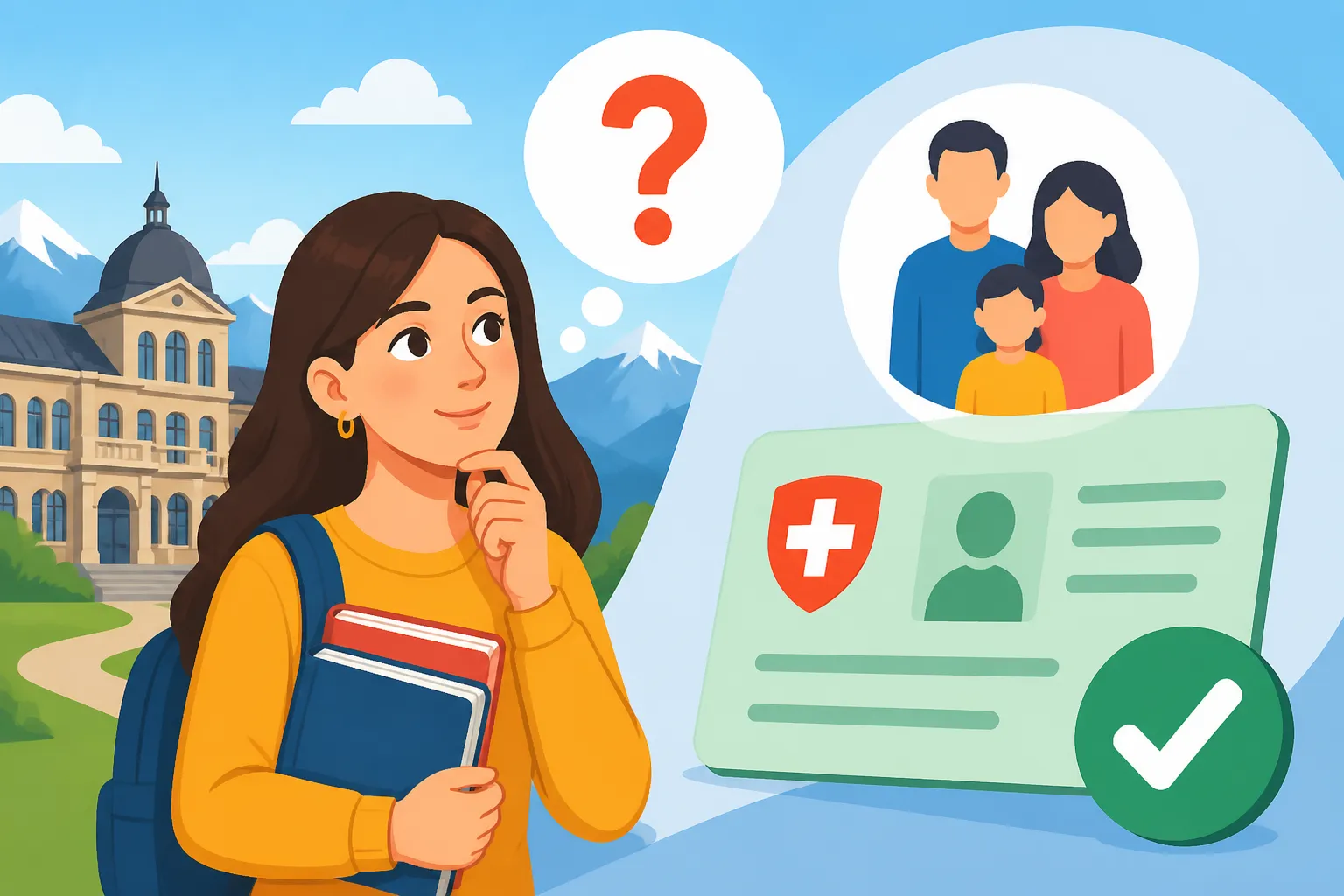
Navigating the Swiss administrative maze as a trailing spouse often feels like being a ghost in the system—you are here, but you are not quite "you" yet. I remember staring at my own residence card for hours, wondering if I was legally allowed to do anything more than grocery shopping and mountain hiking. This guide clarifies exactly how your dependent B permit functions when you decide to swap the hiking boots for a lecture hall.
Understanding Your Rights on a Dependent B Permit
The beauty of the Swiss B permit, specifically when issued under the umbrella of Family Reunification: Bringing Your Spouse and Children to Switzerland, is its inherent flexibility. Unlike a standard student visa (the Type D visa for education), a dependent B permit is a residency permit based on your relationship to a primary holder. This means your right to stay in Switzerland is tied to your spouse or partner, but your right to "activity" is surprisingly broad. In the eyes of the Swiss Federal Act on Foreign Nationals and Integration (AIG), dependents of B permit holders are generally granted the right to work and, by extension, the right to pursue education without needing a separate authorization.
When you first received your permit, you likely noticed it says "mit Erwerbstätigkeit" (with gainful employment) or similar wording. Even if it does not explicitly mention "studying," the Swiss system views education as a subset of personal development and integration. You are not required to "downgrade" to a student-specific permit to enroll in a university. In fact, doing so would be a strategic mistake, as The Swiss B Permit: Eligibility, Renewal, and Restrictions are often more favorable for dependents than for international students who are under strict timelines to finish their degrees and leave the country.
There is a psychological hurdle many expats face where they feel they need "permission" for every life change. While you must inform the migration office (Migrationsamt) if you change your primary status from "unemployed spouse" to "full-time student," this is usually a formality of data collection rather than a request for approval. Your residency is already secured by your family ties, which provides a level of security that standard international students envyingly lack. You are part of the local resident pool, not the transient student pool.
Enrollment and Admissions: The University Perspective
Swiss universities, from ETH Zurich to the University of Geneva, are well-versed in the various Residence Permits in Switzerland: L, B, C, and G Permits Explained. When you apply, the admissions office will ask for a copy of your permit. Because you hold a B permit, you are often classified as a "resident" for administrative purposes. This classification is vital because it determines your priority in certain high-demand programs and, most importantly, how your foreign prior education is scrutinized.
One of the first hurdles you will encounter is the recognition of your previous degrees. Swiss institutions are notoriously rigorous about "equivalency." If you are applying for a Master’s or PhD, your original transcripts and diplomas must be presented in one of Switzerland’s national languages or English. This is where precision matters; using a service like RushTranslate ensures that your academic history is presented in a format that the Rectorate can actually process. I have seen applications stalled for months simply because a "notarized copy" did not meet the specific Swiss canton’s standards for translation.
Beyond the paperwork, you should be aware of the Language Requirements for Swiss Permits: A1 to B2 Standards Explained. While the migration office might only require an A1 or A2 for your permit renewal, the university will likely demand a C1 level in German, French, or Italian, depending on your canton. Even if your program is in English, being a student on a dependent permit means you are expected to integrate. Use your time as a student to solidify your local language skills, as this will eventually assist you when transitioning to The Swiss C Permit (Permanent Residency): Fast-Track and Standard Routes.
Tuition Fees and Financial Realities
A common question is whether a dependent B permit holder pays "local" or "international" tuition fees. In Switzerland, this varies significantly by canton and by the specific university. Some universities, like the University of Basel or the University of Zurich, have a flat fee for all students but add a "surcharge" for international students. However, if you can prove you have been a resident in Switzerland for a certain period (usually through your B permit), you may be eligible for the lower domestic rate.
| University Type | Typical Semester Fee (Domestic/Resident) | Typical Semester Fee (International) | Dependent B Permit Status |
|---|---|---|---|
| Cantonal University | CHF 700 – CHF 1,000 | CHF 1,200 – CHF 4,000 | Often qualifies for Domestic |
| ETH / EPFL | CHF 730 | CHF 730 | Same for all |
| Applied Sciences | CHF 800 – CHF 1,200 | CHF 1,500+ | Resident status varies |
It is important to note that "resident status" for tuition is not always identical to "residency" for immigration. Some universities require you to have lived in Switzerland for two years prior to the start of your studies to qualify for the domestic rate. Always check the "Gebührenreglement" (fee regulations) of your chosen school. Regardless of the tuition, the cost of books, semester fees, and social contributions are the same for everyone.
Managing your finances as a student in one of the world's most expensive countries requires a strategy. You won't have access to Swiss federal scholarships (stipends) in most cases, as these are reserved for Swiss citizens or C permit holders. However, because your B permit allows for "Erwerbstätigkeit," you can work part-time without the 15-hour-per-week restriction that plagues those on a standard student visa. This means you can balance a 40% or 60% workload alongside your studies, providing a financial cushion that makes the Swiss price of bread a little easier to swallow.
Health Insurance and Social Security for Student Dependents
The Swiss healthcare system is a non-negotiable part of life here. As a dependent, you are already required to have Mandatory Basic Health Insurance Explained. When you become a student, your insurance status doesn't automatically change, but your "risk profile" might in the eyes of supplemental providers. You must maintain your KVG (basic insurance) coverage throughout your studies. If you are under 26, you might benefit from lower student premiums, but once you cross that age threshold, you are treated as a standard adult.
For expats who want a bit more "cushion" than the basic KVG provides—especially if you plan on traveling during semester breaks—looking into international or supplemental options is wise. While KVG covers you within Switzerland, a provider like Cigna Global can offer the kind of international portability and private room upgrades that many expats find comforting. Navigating Healthcare in Switzerland for Expats: The Complete System Overview (2027) is enough of a headache; having a secondary layer of coverage can simplify the process of seeing specialists without a long wait time.
Don't forget about the "social deductions." If you decide to work while studying, your employer will deduct AHV (pension) and ALV (unemployment insurance) from your paycheck. As a student, these contributions are still mandatory. However, they are actually beneficial in the long run. These "contribution years" count toward your future Swiss pension and help demonstrate your financial independence when it comes time to renew your permit or if you eventually face the unfortunate scenario of Changing Cantons on a B Permit: Notification and Reapplication Processes, which can sometimes trigger a review of your financial status.
Future Implications: Permits and Post-Graduation
One of the biggest advantages of studying on a dependent B permit rather than a student visa is the "aftermath." When a regular international student graduates, they have exactly six months to find a job that meets a high salary threshold and proves "national interest." As a dependent, your right to stay is not tied to your degree or your job search—it remains tied to your spouse. This takes the immense pressure off the final semester, allowing you to network and find the right job rather than the first job that will sponsor a permit.
However, life happens. It is a sobering thought, but you should be aware of What Happens to Your Spousal Visa if You Divorce a Swiss Citizen? or if your spouse's contract ends. If you are in the middle of a degree and your "dependency" vanishes, you would then have to apply to convert your permit into an independent student B permit. The migration office generally looks favorably on students who are halfway through a degree, provided they can prove they have the financial means to finish without relying on social welfare.
Finally, keep an eye on your long-term goals. Every year you spend studying on a B permit counts toward the residency requirements for The Swiss C Permit (Permanent Residency): Fast-Track and Standard Routes. In many cantons, the years spent as a student on a "dependent" permit are viewed as full years of integration, especially if you are active in the community. Unlike "student years" for non-EU nationals on a Type D visa, which are sometimes only counted at 50% or not at all for the C permit, your years are usually counted at 100% because your residency was never "temporary" in nature.
Conclusion and Final Checklist
To summarize, yes, you absolutely can study on a dependent B permit, and in many ways, it is the "gold medal" of student statuses in Switzerland. You have the freedom to work more hours, you often pay lower fees, and you have a much more stable residency foundation.
Before you head to the registrar's office, ensure you have:
- A valid B permit that allows gainful employment.
- Certified and translated copies of your previous diplomas (consider RushTranslate for this).
- A clear understanding of the language requirements for your specific program.
- Proof of your current Swiss health insurance (KVG).
- A confirmation from your spouse's employer or your own bank statements showing financial stability.
Switzerland is a country that respects education and hard work. By using your time as a dependent to gain a Swiss qualification, you aren't just passing the time—you are building a bridge from being a "trailing spouse" to being a vital, integrated member of the Swiss professional landscape.
Disclaimer
The information provided in this article is for general informational purposes only and does not constitute legal or professional advice. Swiss immigration laws and university policies are subject to frequent changes and vary significantly between cantons. Always consult with the official Cantonal Migration Office or the admissions department of your specific university before making any decisions regarding your residency status or enrollment.