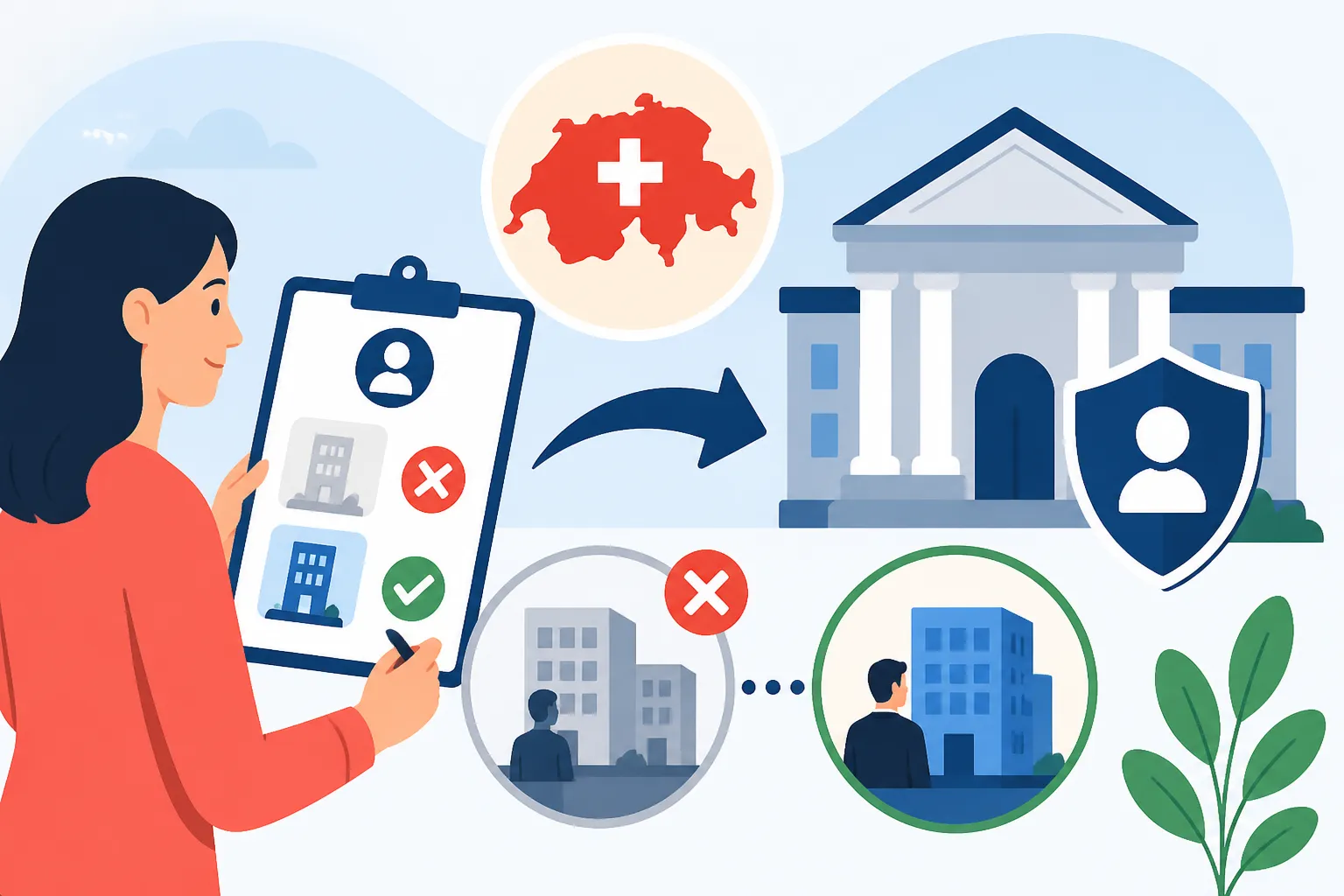
Reporting Changes of Employer to the Cantonal Migration Office
Navigating the administrative labyrinth of a job change in Switzerland can feel like trying to summit the Eiger in a blizzard without a map. I remember sitting in my tiny studio apartment in Zurich, staring at my B permit and realizing that my right to live in this beautiful country was legally tethered to a company I was about to leave. This guide solves the confusion around reporting changes of employer to the Cantonal Migration Office, ensuring your residency remains secure while you transition to your next professional chapter.
Understanding Your Residency Status and the Change of Employer
The very first thing you need to realize is that in the eyes of the Swiss authorities, not all residence permits are created equal. Your reporting obligations—and whether you are even allowed to switch jobs—depend almost entirely on your nationality and the specific annotations on your permit card. For many of us, the permit is more than just an ID; it is a contract with the Swiss state that says we are here for a specific purpose. When that purpose (your current job) changes, the contract must be updated.
The Linked B Permit vs the Open Market
If you are a non-EU/EFTA national (often referred to as a "Third-Country National"), your permit is frequently "tied" (mit Bedingungen) to your employer. This is particularly common during your first few years in the country. In this scenario, the permit was granted based on a specific labor market test where your employer had to prove they couldn't find a local to fill the role. If you want to change jobs, it isn't just a matter of "reporting" the change; the new employer often has to go through the How Employers Prove 'Inländervorrang' to Hire a Non-EU Citizen process all over again.
On the other hand, EU/EFTA citizens generally enjoy full labor market mobility. For these lucky expats, the process is much more of a "notification" than a "request for permission." However, failing to provide that notification can still lead to significant headaches down the line when it comes time for Renewing Your Swiss Residence Permit: The Verfallanzeige Form Explained. The Swiss system thrives on up-to-date data, and being "off the grid" for even a few months regarding your employment status can trigger a flurry of sternly worded letters from the Migrationsamt.
The Role of the Cantonal Migration Office
It is important to remember that Switzerland is a federalist country. While there are federal laws, the execution of immigration policy happens at the cantonal level. This means the Residence Permits in Switzerland: L, B, C, and G Permits Explained are managed by different offices depending on where you live. In Zurich, you’ll be dealing with the Migrationsamt des Kantons Zürich; in Geneva, it is the Office cantonal de la population et des migrations (OCPM); and in Vaud, you'll visit the Service de la population (SPOP). Each has its own forms, its own online portal, and its own peculiar way of doing things. You must report the change to the office in the canton where you reside, even if your new office is across a cantonal border.
The Practical Workflow: How to Notify the Authorities
Once you have signed your new contract and handed in your resignation, the clock starts ticking. You generally have a window of 14 days from the start of your new position to notify the authorities, though I always recommend doing it as soon as the contract is finalized. Waiting until the last minute is a recipe for stress, especially if the Migration Office decides they need additional documentation that takes time to procure.
What Documentation Do You Actually Need
The requirements vary, but generally, you will need to provide a copy of your new employment contract, a copy of your current permit, and a completed "change of employer" form, which most cantons provide on their websites. For non-EU citizens, this is much more involved. You may need to provide a CV, copies of your diplomas, and a written justification from the new employer explaining why you are the perfect fit for the role. If your original documents are not in a national language (German, French, or Italian), you will likely need certified translations. I’ve found that using a service like RushTranslate can be a lifesaver here, as the Migration Office is notoriously picky about the quality and certification of translated legal documents.
The Timing of Your Notification
Timing is everything. If you are on an L permit, which is a short-term permit often tied to a specific project or quota, switching employers can be exceptionally tricky. Because these permits are often part of a specific quota, the authorities may view a change of employer as a "new" application rather than a simple transfer. This is why it is vital to understand the EU/EFTA vs Third-Country Nationals: Immigration Differences in Switzerland before you sign a new offer. If you are an EU citizen on a B permit, you usually have the right to start work immediately and notify the office within 14 days. If you are a non-EU citizen, you technically should not start the new job until the Migration Office has approved the transfer, a process that can take anywhere from four to twelve weeks.
| Permit Type | Nationality | Action Required | Timing |
|---|---|---|---|
| B Permit | EU/EFTA | Notification (Informational) | Within 14 days of start |
| B Permit | Third-Country | Application (Request for Change) | Before starting new job |
| L Permit | All | Strict Re-evaluation | Before starting new job |
| C Permit | All | None (Usually updated at renewal) | N/A |
| G Permit | All | Notification of Work Location Change | Within 14 days |
Canton-Specific Nuances: Zurich, Geneva, and Beyond
Every canton has its own "personality" when it comes to bureaucracy. In my experience, Zurich is highly digitalized but incredibly rigid. They expect the forms to be filled out perfectly, and they will not hesitate to send them back if a signature is missing. Geneva, meanwhile, can feel a bit more "analog" and sometimes suffers from longer processing times, especially during the summer months when half the staff is on holiday.
Navigating Local Variations in Reporting
In Zurich, the process is often handled via the Gesuch Stellenwechsel form. You can usually mail this in via registered mail—always use registered mail (Einschreiben) so you have proof of delivery! In Geneva, you might find yourself interacting with the OCPM via their online platform, but don't be surprised if they ask you to show up in person for a "biometric update" if your card is close to expiry. If you are living in a smaller canton like Zug or Schwyz, the process is often much more personal. You might even be able to walk into the local Gemeinde (municipality) and have them help you forward the papers to the cantonal level. This "hyper-local" service is one of the perks of living in the smaller cantons, where the officials often know the local employers personally.
Potential Pitfalls and How to Avoid Them
The biggest mistake I see expats make is assuming that "no news is good news." In Switzerland, if the Migration Office is silent, it doesn't mean your change of employer has been approved; it might just mean it’s sitting in a tall stack of folders. If you start a new job without the proper authorization (especially as a non-EU resident), you are technically working illegally. This can lead to fines for both you and your new employer, and in extreme cases, it can jeopardize your The Swiss B Permit: Eligibility, Renewal, and Restrictions.
Consequences of Failing to Report
If you fail to report a change of employer and the authorities find out later—perhaps during your permit renewal or when you apply for The Swiss C Permit (Permanent Residency): Fast-Track and Standard Routes—they may view this as a breach of your residency conditions. They are particularly sensitive to "gaps" in employment. If you quit your job in January but didn't start the new one until March, and you didn't report that gap, they may ask searching questions about how you supported yourself. This is where having a comprehensive health insurance plan, such as those offered by Cigna Global, can be helpful to show you remained covered during your transition, even if your mandatory Swiss KVG insurance remained active.
Impact on Your Permit Renewal and Future C Permit
The Migration Office keeps a "dossier" on every foreigner. Every interaction, every late notification, and every job change is recorded. When you eventually apply for permanent residency (the C permit), the officials will review this dossier to see if you have been a "compliant" resident. Frequent job changes aren't necessarily a problem, but a history of failing to report those changes suggests a lack of integration or a disregard for Swiss law. This can slow down your application or, in some cantons, result in a denial if they believe you are not sufficiently "integrated" into the administrative norms of Swiss life.
What Happens if You Become Unemployed?
Sometimes, the "change of employer" isn't a choice—you might be laid off or your company might close. In this case, the reporting obligation is even more critical. You must register with the Regional Placement Office (RAV) immediately. To understand the financial side of this, you should look into RAV and Unemployment Benefits: How to Register and What You Get.
From a permit perspective, being on unemployment doesn't automatically mean you lose your permit. As long as you are receiving benefits, your residency is usually secure. However, the Migration Office will be notified by the RAV. If your permit is nearing its expiration date while you are unemployed, the authorities will look closely at your "employability." This is a stressful time, and many expats wonder What Happens to Your B Permit if You Claim RAV (Unemployment). The short answer is: as long as you are actively looking for work and have a path back to employment, the Swiss system is generally designed to support you, not kick you out.
Final Steps and Checklist for a Smooth Transition
Before you open that bottle of Swiss wine to celebrate your new job, make sure you've ticked all the administrative boxes. The peace of mind that comes from knowing your paperwork is in order is worth the few hours of effort it takes to navigate the Migration Office's requirements.
- Verify your permit type: Check if your permit is "tied" to your employer.
- Download the forms: Get the specific "Stellenwechsel" or "Annonce de changement d'employeur" form from your canton's website.
- Gather your contract: Ensure your new contract is signed by both parties.
- Send via registered mail: Never just drop it in a regular mailbox. Keep the receipt!
- Inform your new HR: Ensure they have also done their part, especially if you are a non-EU citizen.
- Check your insurance: Ensure there is no gap in your accident coverage, as your old employer’s coverage ends on your last day.
Managing your residency is a core part of the expat experience in Switzerland. It can feel bureaucratic and cold, but it’s just the Swiss way of ensuring everyone is accounted for and the labor market remains stable. Treat the Migration Office with respect, provide the data they ask for, and you'll find that they are actually quite efficient at helping you move forward in your career.
Disclaimer
This guide is intended for informational purposes only and does not constitute legal advice. Immigration laws and cantonal practices in Switzerland are subject to frequent changes. Always consult the official website of your specific Cantonal Migration Office or seek professional legal counsel to confirm the latest requirements for your individual situation.