Schengen Visa (Type C): Tourist and Short-Business Rules for TCNs
Navigating the Swiss Schengen visa process as a Third-Country National often feels like trying to solve a high-stakes puzzle where the rules are written in invisible ink. I remember the frantic weeks before my parents first visited me in Zurich, obsessing over bank statements and insurance fine print just to ensure they wouldn't be turned away at the border. This guide solves that uncertainty by breaking down the Type C visa rules, financial requirements, and bureaucratic hurdles for tourists and business travelers alike.
Defining the Type C Schengen Visa for Switzerland
The Type C Schengen Visa is the standard "short-stay" authorization that allows individuals to enter the Schengen Area, including Switzerland, for up to 90 days within any 180-day period. For many of us living here, this is the primary mechanism our friends, family, and business partners use to visit. While Switzerland is not a member of the European Union, it is a fully integrated member of the Schengen Area, meaning that a visa issued by Switzerland allows travel to France, Germany, Italy, and beyond—and vice versa.
However, the Swiss authorities are known for their precision. When you apply for a Type C visa through a Swiss consulate, they expect a higher level of documentary rigor than perhaps the Italian or Spanish counterparts might. It is essential to understand the distinction between this short-stay visa and longer-term residency. If your goal is to stay longer than three months, you should instead look into the Residence Permits in Switzerland: L, B, C, and G Permits Explained to understand the long-term landscape.
The Rolling 90/180 Day Rule Explained
One of the most frequent points of confusion I see in the expat community involves the "90/180 day rule." This is not a simple "90 days per calendar year" limit. Instead, it is a rolling window. To determine if a visitor is legal, an immigration officer looks back at the last 180 days from any given date. If the visitor has already spent 90 days in the Schengen zone during that period, they must leave.
I always advise visitors to use an online Schengen calculator before booking return flights. If you miscalculate even by a single day, you risk a Visa Overstay Penalty in Switzerland: Entry Bans and Fines, which can make future visits nearly impossible. The Swiss border police are meticulous about scanning stamps, and "I didn't know" is never an acceptable excuse in their eyes. For those looking to work remotely while visiting, keep in mind that Switzerland is quite strict, as discussed in Does Switzerland Have a Digital Nomad Visa Available in 2026?—the Type C is primarily for leisure or very specific, non-lucrative business activities.
Defining the Third-Country National (TCN)
A Third-Country National is essentially anyone who is not a citizen of an EU or EFTA (Switzerland, Norway, Iceland, Liechtenstein) country. This includes citizens of the United States, United Kingdom, India, China, Canada, and many others. However, there is a sub-distinction: "Annex II" citizens (like those from the US, UK, or Canada) are visa-exempt for short stays, while "Annex I" citizens (like those from India, South Africa, or Turkey) must apply for a physical Type C visa sticker before traveling.
Understanding your specific status is the first step. Even if you are visa-exempt, you are still bound by the 90-day limit and the entry requirements regarding funds and insurance. There are significant EU/EFTA vs Third-Country Nationals: Immigration Differences in Switzerland that dictate not just how you visit, but how you might eventually transition to living here if that is your long-term goal.
Navigating the Swiss Consulate Application Maze
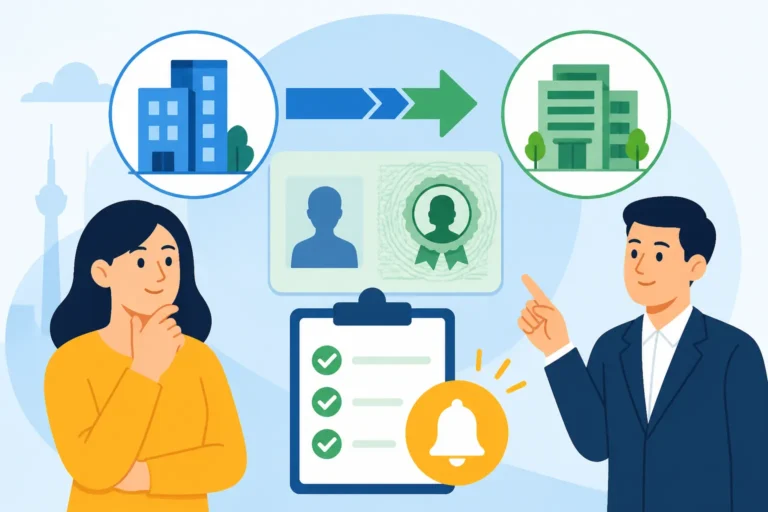
If you are a TCN who requires a visa, the application process usually begins at a Swiss representation in your home country or where you hold legal residence. Because the Swiss value efficiency, many consulates now outsource the initial document collection to service providers like VFS Global or TLScontact. Do not let this fool you; the decision-making power remains entirely with the Swiss federal and cantonal authorities.
Timing is everything. You can apply up to six months before your intended travel date, but no later than 15 days before. From personal experience, 15 days is cutting it dangerously close. In peak summer or ski seasons, the wait times for appointments can stretch into weeks. I always recommend starting the process at least three months in advance to account for any requested "additional documentation" that might arise.
Documentary Requirements and Proof of Funds
The Swiss authorities want to see that you have a "stable" reason to return home and enough money to support yourself while you are here. Generally, they expect you to prove you have at least CHF 100 per day for your stay (around CHF 30 per day if you are a student). This proof usually takes the form of the last three to six months of original bank statements.
Beyond the money, you will need a valid passport (issued within the last 10 years and valid for at least three months after you leave Switzerland), two passport photos, and a flight itinerary. Note that they often ask for a "reserved" itinerary rather than a fully paid ticket, as they don't want you to lose money if the visa is denied. If you are staying with a friend, the authorities may require a Verpflichtungserklärung: Sponsoring a Visitor's Financial Guarantee Letter, which is a formal document where your host takes financial responsibility for you.
Mandatory Health Insurance Coverage
You cannot enter Switzerland on a Type C visa without travel medical insurance that covers at least EUR 30,000 for emergency medical expenses and repatriation. The policy must be valid for the entire Schengen Area and the full duration of your stay. This is a non-negotiable point.
While many basic travel policies exist, for those with complex health needs or those visiting from countries with limited coverage, I often suggest looking at robust international providers. Cigna Global is a frequent choice for expats and their visiting relatives because their documentation is widely recognized by Swiss consulates and meets all the technical "repatriation of remains" and "emergency evacuation" clauses that Swiss officials look for. Having a clear, English-language certificate from a brand like Cigna Global can often prevent the "back-and-forth" emails from the consulate questioning the validity of your coverage. For more details on this, check out the specific Health Insurance Requirements for Sponsoring a Tourist Visa Letter guide.
Distinct Paths: Tourist vs. Business Intent
While both fall under the Type C umbrella, the specific evidence you need depends on whether you are coming to see the Matterhorn or to attend a board meeting in Zug. The Swiss are very careful about ensuring that "business visits" don't turn into "undeclared work."
Short-Term Business Activities
On a Type C business visa, you are generally allowed to attend meetings, negotiate contracts, and participate in trade fairs. However, as soon as you start "performing a service" for a Swiss company—even if you are paid by your employer back home—you might be crossing into territory that requires a work permit. This is where the concept of "Inländervorrang" or Swiss-first hiring doesn't usually apply for a 90-day visit, but the authorities still watch for abuses. If you are unsure if your activity counts as work, it's worth reviewing How Employers Prove 'Inländervorrang' to Hire a Non-EU Citizen to see the rigor applied to the labor market.
For a business visa, you must provide an invitation letter from the Swiss company. This letter needs to be specific: it should state the purpose of the visit, the duration, and who is covering the travel and living expenses. It must be signed by someone with signing authority for the Swiss entity.
Tourist and Private Visit Protocols
If you are visiting as a tourist, your itinerary is your best friend. The consulate wants to see hotel bookings for every night of your stay. If you are planning a multi-country trip, you should apply to the consulate of the country where you will spend the most time. If you are spending equal time in three countries, you apply to the one you enter first.
For private visits (staying with friends or family), the requirements shift. Your host may need to provide a copy of their Swiss passport or B/C permit. I have seen cases where the "migration office" in the host's canton actually visits the apartment to ensure there is enough space for the guest. If you are in the process of moving and haven't registered your own home yet, make sure you complete Registering at the Kreisbüro: What Documents Do Expats Need to Bring? before trying to host someone officially.
| Requirement | Tourist Visa | Business Visa |
|---|---|---|
| Proof of Funds | Personal bank statements | Personal or Company bank statements |
| Accommodation | Hotel reservations | Hotel or Company-provided housing |
| Invitation | Not required (Itinerary instead) | Formal letter from Swiss company |
| Daily Allowance | CHF 100/day (general) | Usually covered by company |
| Insurance | Mandatory (min. EUR 30k) | Mandatory (min. EUR 30k) |
Compliance and Documentation Standards
The Swiss administration is famously "paper-heavy." If your documents—such as marriage certificates for a spouse's visa or birth certificates—are not in German, French, Italian, or English, they must be translated. This is a common point of failure for many applicants.
Translation and Notarization Needs
Standard translations from your local neighborhood translator often won't cut it. The consulate usually requires "certified" translations. In my years of helping friends with their applications, I’ve found that using a specialized service like RushTranslate is the most efficient route. Because RushTranslate understands the specific formatting and certification standards required for official immigration documents, it reduces the risk of the consulate rejecting a document because the "stamp" wasn't official enough.
Keep in mind that some documents also require an Apostille or a legalization stamp from your home country’s foreign ministry. This is especially true for Translation and Apostille Requirements for Marriage Certificates, which are often required if you are traveling with a spouse.
The Biometric Appointment Experience
If you haven't applied for a Schengen visa in the last 59 months, you will need to appear in person to provide biometric data (fingerprints and a digital photo). This is a straightforward but strictly timed event. I recommend arriving at least 15 minutes early. If you miss your window, you might not get another one for weeks.
During the interview, be honest and consistent. If your application says you are staying in Zurich but you tell the officer you’re mostly going to Geneva, it triggers red flags. The Swiss system is interconnected; the information you give at the consulate will likely be visible to the officer when you land. You can read more about what to expect upon arrival in our guide on Biometrics and Airport Immigration: What Happens at Swiss Border Control.
Arriving and Staying Legally in Switzerland
Once you have your visa or if you are from a visa-exempt country, the final hurdle is the border itself. Carrying a visa does not guarantee entry; it only allows you to travel to the border. The border police in Zurich and Geneva are professional but very thorough.
Border Control Expectations
Always carry a "travel folder" with you. Even if you have the visa in your passport, the officer might ask to see your return ticket, your insurance certificate (from Cigna Global or another provider), and your proof of accommodation. I’ve seen people sent to secondary screening because they couldn't produce a hotel address on their phone.
They will also ask about the purpose of your visit. If you are here for a business meeting, have the name and address of the company ready. If you are a TCN who is currently living in another Schengen country on a permit, make sure you have your physical residence card. If you've lost it, you’ll need to follow the steps for What Happens if You Lose Your Swiss Residence Card (Ausländerausweis) immediately.
Tracking Your Days and Avoiding Overstays
It is incredibly easy to lose track of time when you are enjoying the Swiss Alps. However, Switzerland uses the "Entry/Exit System" (EES) which digitally records every movement of TCNs. There is no "hiding" an overstay. Even an overstay of a few hours can result in a fine of several hundred Swiss Francs and a record in the SIS (Schengen Information System).
If you find yourself in an emergency—such as a medical crisis or a natural disaster—that prevents you from leaving before your 90 days are up, you must contact the cantonal migration office (Migrationsamt) before your visa expires. They can, in very rare "hardship" cases, grant a short extension. But generally, the 90-day rule is absolute. If you plan to move here permanently, start the correct process early rather than trying to "bridge" a stay on a Type C visa.
Disclaimer
This guide is intended for informational purposes only and does not constitute legal advice. Swiss immigration laws and Schengen visa regulations are subject to frequent changes. Always verify requirements with the official Swiss State Secretariat for Migration (SEM) or the nearest Swiss consulate before making travel arrangements or submitting applications.